• KGS/USD = 0.01144 0%
  • KZT/USD = 0.00194 0%
  • TJS/USD = 0.10841 -0.37%
  • UZS/USD = 0.00008 0%
  • TMT/USD = 0.28571 0.28%
  • KGS/USD = 0.01144 0%
  • KZT/USD = 0.00194 0%
  • TJS/USD = 0.10841 -0.37%
  • UZS/USD = 0.00008 0%
  • TMT/USD = 0.28571 0.28%
  • KGS/USD = 0.01144 0%
  • KZT/USD = 0.00194 0%
  • TJS/USD = 0.10841 -0.37%
  • UZS/USD = 0.00008 0%
  • TMT/USD = 0.28571 0.28%
  • KGS/USD = 0.01144 0%
  • KZT/USD = 0.00194 0%
  • TJS/USD = 0.10841 -0.37%
  • UZS/USD = 0.00008 0%
  • TMT/USD = 0.28571 0.28%
  • KGS/USD = 0.01144 0%
  • KZT/USD = 0.00194 0%
  • TJS/USD = 0.10841 -0.37%
  • UZS/USD = 0.00008 0%
  • TMT/USD = 0.28571 0.28%
  • KGS/USD = 0.01144 0%
  • KZT/USD = 0.00194 0%
  • TJS/USD = 0.10841 -0.37%
  • UZS/USD = 0.00008 0%
  • TMT/USD = 0.28571 0.28%
  • KGS/USD = 0.01144 0%
  • KZT/USD = 0.00194 0%
  • TJS/USD = 0.10841 -0.37%
  • UZS/USD = 0.00008 0%
  • TMT/USD = 0.28571 0.28%
  • KGS/USD = 0.01144 0%
  • KZT/USD = 0.00194 0%
  • TJS/USD = 0.10841 -0.37%
  • UZS/USD = 0.00008 0%
  • TMT/USD = 0.28571 0.28%
17 December 2025

Our People > Aliya Haidar

Aliya Haidar's Avatar

Aliya Haidar

Journalist

Aliya Haidar is a Kazakhstani journalist. She started her career in 1998, and has worked in the country's leading regional and national publications ever since.

Articles

The Contested Legacy of Kazakhstan’s Independence Day: From Sovereignty to Unrest and Reinvention

On December 16, 2025, Kazakhstan marks the 34th anniversary of its independence. The story of this national holiday mirrors the nation’s own complex path toward sovereignty and statehood. A Difficult Legacy On December 16, 1991, Kazakhstan adopted the Law “On State Independence of the Republic of Kazakhstan,” officially becoming the last Soviet republic to leave the USSR. The date came at the tail end of the so-called “parade of sovereignties,” when other republics had already declared independence. This delay led to a popular saying: “Kazakhstan turned off the lights in the USSR.” In the early years of independence, the holiday was celebrated widely, often with several days off. Yet the date also evokes painful memories. Just five years earlier, in December 1986, the capital city of Alma-Ata (now Almaty) witnessed what are now known as Jeltoqsan köterılısı - the December Events. On December 16, 1986, the Communist Party of Kazakhstan abruptly dismissed First Secretary Dinmukhamed Konaev and replaced him with Gennady Kolbin, a party official from the Russian city of Ulyanovsk with no ties to the republic. This Moscow-imposed decision sparked protests by students and young people that turned violent. While the full causes and consequences remain partially unexplored, the uprising is widely seen as an early expression of resistance to Soviet central control and the imposition of non-Kazakh leadership. The protests were brutally suppressed. For several days, unrest continued in the city, with some incidents fueled by ethnic tensions. In the years since, the December Events have become symbolic of both state repression and the early stirrings of Kazakh nationalism. Because of the proximity of dates, many citizens continue to conflate the date of independence with the December Events. For years, the national holiday was therefore overshadowed by grief and division. Unrest in the Oil Region Independence Day was further marred in 2011 by violent unrest in the oil-rich Mangistau region after months of unresolved labor disputes. On December 16 of that year, striking workers from the OzenMunaiGas company in the town of Zhanaozen clashed with police after demanding higher wages. The protests escalated into riots, with government buildings, hotels, and vehicles set ablaze. ATMs were looted, and a state of emergency was declared. Official figures state that about 20 people were killed and over 100 were injured. The Zhanaozen tragedy underscored deep socioeconomic disparities, particularly in regions rich in resources but lacking infrastructure and basic services. From Old to New Kazakhstan Over time, Independence Day became closely associated with unrest and national trauma. Analysts suggest that full investigations into the December 1986 and 2011 events were hindered by the political legacy of Nursultan Nazarbayev, Kazakhstan’s first president. Nazarbayev held senior posts during the Soviet period and later presided over the country during the Zhanaozen crackdown. In June 2019, Kassym-Jomart Tokayev succeeded Nazarbayev as president and launched a platform of gradual political reform. However, his efforts were reportedly obstructed by entrenched elites aligned with the Nazarbayev era, often referred to as “Old Kazakhstan.” Public discontent boiled over again in January...

1 day ago

Kazakhstan Looks to Reduce Dependence on Russian Oil Transit Routes

Escalating drone attacks on Russian infrastructure amid the ongoing war in Ukraine, including key facilities in Novorossiysk and the Orenburg region, are compelling Kazakhstan to accelerate its search for alternative oil export routes. In this context, the Caspian Pipeline Consortium (CPC), which transits Russian territory, is increasingly viewed as an unreliable option for transporting the country’s crude oil. In November, damage to the VPU-2 single-point mooring at the Yuzhnaya Ozereyevka terminal near Novorossiysk disrupted operations. Only VPU-1 remains functional, while VPU-3 is undergoing scheduled maintenance. As a result, CPC oil shipments have dropped. The pipeline accounts for over 80% of Kazakhstan’s oil exports, more than 1% of global production. The Kazakh Ministry of Energy clarified that exports were not fully halted and that efforts are underway to reroute shipments. First Kashagan Oil Shipment to China via Atasu-Alashankou On December 8, Reuters reported that Kazakhstan would begin exporting oil from the Kashagan field directly to China for the first time via the Atasu-Alashankou pipeline. The route, which leads to Xinjiang, has previously been used for other fields but not for Kashagan. According to the report, Kazakhstan plans to export 50,000 tons of crude oil through this channel. Of that, the Chinese oil company, China National Petroleum Corporation (CNPC), will receive approximately 30,000 tons, while Japan’s Inpex will take 20,000 tons. Although the pipeline’s annual capacity is around 10 million tons, it has been operating below capacity, averaging 85,000-86,000 tons per month. The Kazakh government had initially planned to ship 1 million tons via this pipeline in 2025, less than the 1.2 million tons exported in 2024. In the first ten months of 2025, shipments reached 858,000 tons, according to industry sources. Kashagan is among Kazakhstan’s most strategic assets and one of the largest oil and gas fields discovered globally in the past 40 years. Operated by the NCOC consortium, which includes ExxonMobil, Shell, TotalEnergies, CNPC, Inpex, and KazMunayGas, the field produces more than 15 million tons of oil annually. Until now, nearly all of this was transported via the CPC. Redirecting Oil Amid Infrastructure Damage On December 10, KazTransOil, the national oil pipeline operator, announced that it had redirected oil exports from the CPC system to alternative routes. In December 2025 alone, an additional 360,000 tons of oil are expected to be exported to Russia (via Samara), China, and across the Caspian Sea. Increases in exports from the original plan include: Atyrau-Samara pipeline: +232,000 tons; To China: +72,000 tons; and through the port of Aktau to the Baku-Tbilisi-Ceyhan (BTC) pipeline: +58,000 tons. KazTransOil has also stated it will allow oil companies to temporarily store oil at its tank farm. This would enable greater flexibility in shipment scheduling, optimize pipeline operations, and help maintain uninterrupted deliveries. Rail transport is also being considered to further diversify logistics. In 2024, Kazakhstan exported 54.9 million tons of oil through the CPC. Additional exports included 8.8 million tons via the Atyrau-Samara pipeline, 3.6 million tons via Aktau, and 1.2 million tons to China via Atasu-Alashankou. The BTC...

5 days ago

China’s Power Play in Central Asia’s Energy Sector

China is steadily expanding its influence in Central Asia’s oil and gas sector through multi-billion-dollar investments, long-term supply agreements, and a growing network of strategic partnerships. From Kazakhstan to Turkmenistan, Beijing’s state-backed companies are securing key upstream and midstream assets, financing new petrochemical and pipeline projects, and positioning themselves as indispensable players in the region’s resource development. This expansion is driven not only by China’s rising energy demand, but also by Beijing’s ambition to establish durable overland energy corridors that reduce reliance on maritime routes vulnerable to disruption. Central Asia’s existing and planned pipelines provide China with rare direct access to oil and gas fields across its western frontier, making the region a focal point of its broader energy-security strategy and a cornerstone of Beijing’s efforts to diversify supply while deepening political and economic footholds across Eurasia. Kazakhstan Eyes Chinese Investment Amid Lukoil Sanctions Kazakhstan may seek to transfer Russian company Lukoil’s stake in the offshore Kalamkas-Khazar oil and gas project to a new partner, with some industry channels, including the Telegram channel Energy Monitor, speculating about possible Chinese interest. Lukoil, which has been targeted by Western sanctions, is reportedly planning to exit Kalamkas-Khazar Operating LLP, a joint venture with KazMunayGas (KMG). Each company currently holds a 50% stake. Some commentators have suggested that a Chinese investor could step in, but no replacement has been officially confirmed. Seconded engineers from KMG Engineering are expected to be withdrawn from the project as of January 1, 2026, with several Kalamkas-Khazar staff members temporarily reassigned to other KMG subsidiaries until a new partner is confirmed. The project is considered highly promising, with earlier estimates citing reserves of 81 million tons of oil and 22 billion cubic meters of gas. New exploration has identified additional oil-bearing structures. A final investment decision (FID) worth more than $6.5 billion was originally expected by the end of 2025. However, U.S. sanctions against Lukoil have delayed progress. Located 120 km from the Kashagan field in the North Caspian Basin, the Kalamkas-Khazar block comprises the Kalamkas-More and Khazar fields. The site is situated in Kazakhstan’s Mangistau Region, 60 km from the Buzachi Peninsula. KazMunayGas Chairman Askhat Khasenov previously confirmed that production was expected to begin in 2028-2029, with peak output reaching four million tons annually. Lukoil was sanctioned by the UK on October 15, followed by the U.S., complicating ongoing negotiations. Despite this, major projects where Lukoil holds minority stakes, such as Tengiz, Karachaganak, and the Caspian Pipeline Consortium, have not been impacted. A Lukoil withdrawal would create a rare opening for China to secure its first significant offshore position in the North Caspian, a zone historically dominated by Western majors and Russian firms. Such an entry would represent a notable shift in Kazakhstan’s offshore partnership landscape. Beijing's Billion-Dollar Energy Deals in Kazakhstan In September 2025, President Kassym-Jomart Tokayev announced a series of energy deals with China valued at $1.5 billion. During his official visit to China, more than 70 commercial agreements totaling approximately $15 billion were signed, several...

2 weeks ago

Kazakhstan–Uzbekistan Partnership Signals a New Era in Central Asia

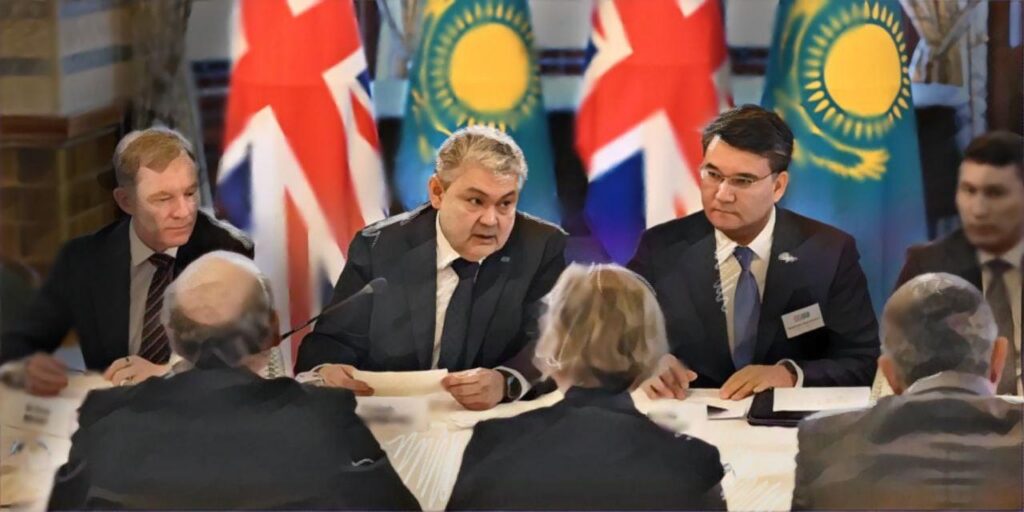
For many years, Kazakhstan and Uzbekistan were seen as regional rivals, with many analysts believing this long-standing competition impeded the realization of sustainable regional strategies. However, leadership changes and expanded cooperation frameworks in Central Asia have significantly shifted these dynamics. Today, countries in Central Asia are shaping policies at the intersection of Western, Chinese, and Russian interests, whilst looking even further afield. As Kazakhstan and Uzbekistan assert themselves more on the global stage, they are increasingly finding common ground. In part because of their geographic size and numbers, Kazakhstan and Uzbekistan are seen as the leading states in Central Asia. Kazakhstan has the largest territory by far, while Uzbekistan boasts the largest population, which stands in excess of 37 million. Both nations possess significant resources and development potential. While their current leadership has dismissed notions of rivalry, its roots stretched back for decades. Historical Competition Tensions between the two republics date to the Soviet era, when the rivalry was evident even to ordinary citizens. The influence of Dinmukhamed Kunaev, First Secretary of the Central Committee of the Communist Party of Kazakhstan, often clashed with that of his Uzbek counterpart, Sharaf Rashidov. Beyond personal rivalries between republican leaders, Soviet-era administrative borders were often drawn without regard for demographic realities or resource flows. Competition for Moscow’s attention and investment funding pushed union republics to emphasize different sectors - Kazakhstan’s development of virgin lands turned it into a major grain hub, while Uzbekistan long benefited from its cotton industry - creating distinct economic identities that later persisted into independence. These divergent economic structures shaped early regional competition and informed differing policy priorities in the 1990s and 2000s. Both republics had substantial industrial capacity, though analysts argue that Kazakhstan maintained an edge in economic growth. The Baikonur Cosmodrome, still operational today, was also a long-standing strategic asset within Kazakhstan’s borders. Following the collapse of the Soviet Union, this rivalry only intensified. Nursultan Nazarbayev and Islam Karimov, then presidents of Kazakhstan and Uzbekistan, were widely viewed as competing for regional leadership. While their economies were initially on par, Uzbekistan gradually turned inward, while Kazakhstan opened to foreign investment, particularly in the extractive sector. In the 2000s, despite successful border delimitation, disputes flared over boundaries, water, and natural resources. Some analysts contend that it was this lingering friction that hindered efforts to preserve the Aral Sea, once the world’s fourth-largest lake, which has now largely disappeared, at least in its southern section, causing dust storms so vast they are visible from space. In 2002, the border villages of Bagys and Khiyobon, inhabited by ethnic Kazakhs but situated in Uzbekistan, demanded to be recognized as part of Kazakhstan. These territories had been transferred to Uzbekistan in 1956. They were officially reincorporated into Kazakhstan only in 2021. Presidents Reject Rivalry Narrative Kazakh political scientist Gaziz Abishev maintains that there is no leadership struggle today between Kazakhstan and Uzbekistan. “An important point that was made is that there is no unhealthy rivalry between Kazakhstan and Uzbekistan, or between Kazakhs...

4 weeks ago

U.S. Eases Sanctions on Key Kazakh Oil Projects

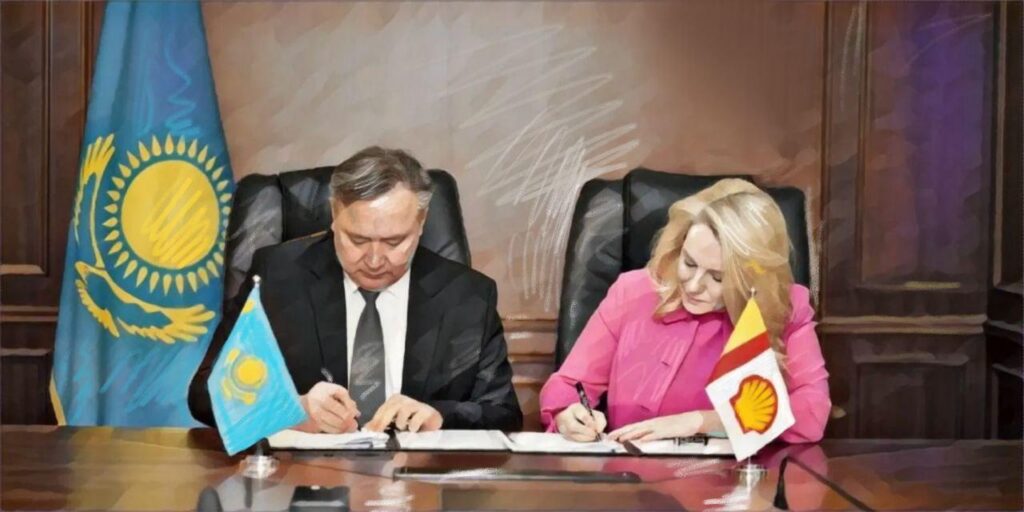
The Caspian Pipeline Consortium (CPC), oil producer Tengizchevroil (TCO), and the Karachaganak field have been granted permission to resume services and conduct transactions related to their operational activities, following a United States Treasury Department decision to ease sanctions. The Tengiz and Karachaganak fields are located in Kazakhstan, and Kazakh oil is exported through the CPC system. In October, the U.S. Treasury added Russian oil giants Lukoil and Rosneft, along with 34 of their subsidiaries, to its latest package of sanctions. However, experts now suggest that the exemption of key projects in Kazakhstan could have a stabilizing effect on the country's oil sector and its broader economy. The U.S. Treasury’s Office of Foreign Assets Control (OFAC) issued General License No. 124B, allowing services and other transactions required to maintain the operations of the CPC, Tengizchevroil, and the Karachaganak project, even when sanctioned entities such as Lukoil and Rosneft are involved. The license does not permit any transactions related to the sale or transfer of shares in these projects. Kazakhstan’s Minister of Energy, Yerlan Akkenzhenov, confirmed on November 12 that the government is working to have the Karachaganak field fully exempt from the U.S. sanctions regime. The CPC system links oil fields in western Kazakhstan and parts of Russia with a marine terminal in Novorossiysk on Russia’s Black Sea coast. It remains the main export route for Kazakh oil, carrying more than 80% of the country’s crude. The system has an annual capacity of about 83 million tons. CPC shareholders include Kazakhstan, holding a combined 20.75% through KazMunayGas (19%) and Kazakhstan Pipeline Ventures LLC (1.75%). Other shareholders include Chevron Caspian Pipeline Consortium Company (15%), Lukoil International GmbH (12.5%), Mobil Caspian Pipeline Company (7.5%), Rosneft-Shell Caspian Ventures Limited (7.5%), BG Overseas Holdings Limited (2%), Eni International N.A. N.V. (2%), and Oryx Caspian Pipeline LLC (1.75%). The Russian government and Transneft also hold significant stakes. Tengizchevroil LLP, the operator of the Tengiz field, is a joint venture between Chevron (50%), ExxonMobil Kazakhstan Ventures Inc. (25%), KazMunayGas (20%), and Lukoil (5%). Tengiz is one of Kazakhstan’s largest oil fields, with reserves estimated at 3.1 billion tons. The Karachaganak field is among the world’s largest, with development carried out by the Karachaganak Petroleum Operating consortium. Shell and Eni serve as joint operators, and the partnership also includes Chevron (18%), Lukoil (13.5%), and KazMunayGas (10%). On November 13, it was reported that KazMunayGas is considering acquiring Lukoil’s stake in the Karachaganak project, reflecting efforts to manage shifting ownership dynamics under the sanctions environment.

1 month ago