• KGS/USD = 0.01144 0%
  • KZT/USD = 0.00212 0%
  • TJS/USD = 0.10543 -0.09%
  • UZS/USD = 0.00008 0%
  • TMT/USD = 0.28530 0%
  • KGS/USD = 0.01144 0%
  • KZT/USD = 0.00212 0%
  • TJS/USD = 0.10543 -0.09%
  • UZS/USD = 0.00008 0%
  • TMT/USD = 0.28530 0%
  • KGS/USD = 0.01144 0%
  • KZT/USD = 0.00212 0%
  • TJS/USD = 0.10543 -0.09%
  • UZS/USD = 0.00008 0%
  • TMT/USD = 0.28530 0%
  • KGS/USD = 0.01144 0%
  • KZT/USD = 0.00212 0%
  • TJS/USD = 0.10543 -0.09%
  • UZS/USD = 0.00008 0%
  • TMT/USD = 0.28530 0%
  • KGS/USD = 0.01144 0%
  • KZT/USD = 0.00212 0%
  • TJS/USD = 0.10543 -0.09%
  • UZS/USD = 0.00008 0%
  • TMT/USD = 0.28530 0%
  • KGS/USD = 0.01144 0%
  • KZT/USD = 0.00212 0%
  • TJS/USD = 0.10543 -0.09%
  • UZS/USD = 0.00008 0%
  • TMT/USD = 0.28530 0%
  • KGS/USD = 0.01144 0%
  • KZT/USD = 0.00212 0%
  • TJS/USD = 0.10543 -0.09%
  • UZS/USD = 0.00008 0%
  • TMT/USD = 0.28530 0%
  • KGS/USD = 0.01144 0%
  • KZT/USD = 0.00212 0%
  • TJS/USD = 0.10543 -0.09%
  • UZS/USD = 0.00008 0%
  • TMT/USD = 0.28530 0%

Our People > Dmitry Pokidaev

Dmitry Pokidaev's Avatar

Dmitry Pokidaev

Journalist

Dmitry Pokidaev is a journalist based in Astana, Kazakhstan, with experience at some of the country's top media outlets. Before his career in journalism, Pokidaev worked as an academic, teaching Russian language and literature.

Articles

Kazakhstan to Require Up to 3 Million Skilled Workers in Coming Years

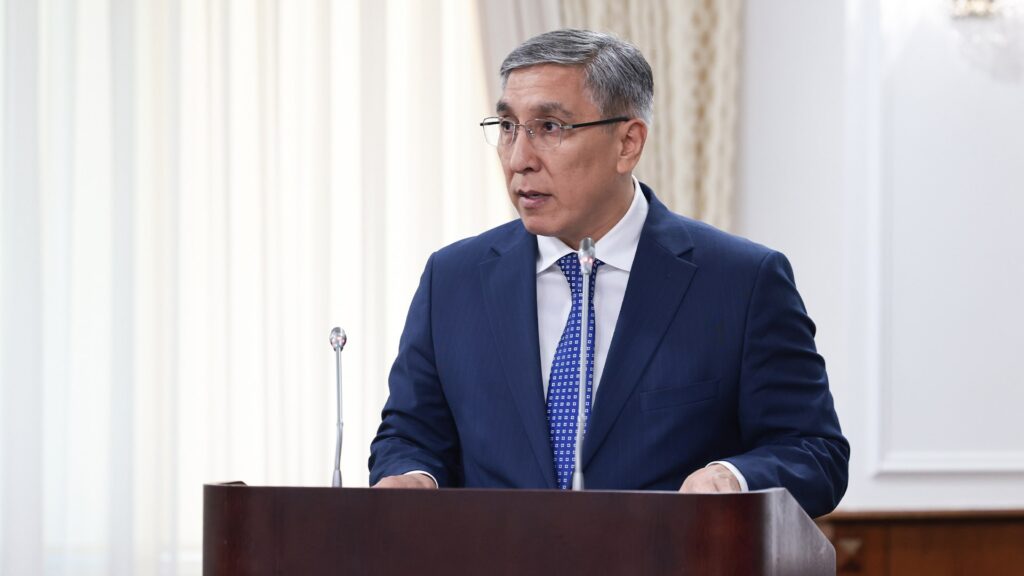
Kazakhstan will need approximately 3 million qualified specialists over the next three to five years, according to Deputy Minister of Labor and Social Protection of the Population Askar Biakhmetov. Speaking at a recent government meeting, Biakhmetov emphasized that this forecast should guide national strategies in education, vocational training, and workforce retraining. Workforce Priorities Data from the Ministry of Labor show that the highest demand (29%) will be for professionals in public services, including government administration, education, healthcare, and social security. This is followed by business services (21%), logistics and transport (16%), industry (13%), and construction and agriculture, each accounting for 7%. “These data must be taken into account when approving professional standards, developing educational programs, allocating state education grants, and organizing retraining initiatives,” Biakhmetov said. He noted the importance of prioritizing retraining programs, as automation and technological change continue to render many professions obsolete, while new sectors demand different competencies. Structural issues persist, including uncompetitive wages and regional imbalances in the labor force, particularly a labor surplus in the south and shortages in the north. Internal migration has also led to oversaturation in major urban centers, straining social and municipal infrastructure. The Ministry also flagged informal employment as a major challenge. In 2024, an estimated 30% of the working-age population were employed without pension contributions. Moreover, about 30% of university graduates are working in fields unrelated to their studies. “Often, graduates don’t study what they want due to low grant scores. As a result, they are trained in one field but work in another,” Biakhmetov explained. By 2025, Kazakhstan’s economically active population is projected to reach 11.3 million, about 60% of the total population of 20.3 million. The unemployment rate currently stands at 4.6%. Looking ahead, the annual growth of the labor force is expected to hit 360,000 by 2035. To address the evolving demands of the economy, the Ministry of Labor is developing an AI-based digital platform designed to identify skills gaps across enterprises and match individuals with relevant job vacancies or training programs. Linking Investment to Job Creation Prime Minister Olzhas Bektenov underscored the need for both foreign and domestic investors to take greater responsibility for employment generation within the scope of active and planned investment projects. He stipulated that at least 30% of investment budgets should be allocated to wages. “An Innovative Project Navigator has been developed to monitor employment trends and ensure investors meet their obligations. Currently, the system covers only large projects, but by September 1, data on all investment projects for 2025-2027 must be entered,” Bektenov said. He also ordered that key performance indicators (KPIs) for regional and municipal leaders regarding employment expansion be introduced starting in 2026. As previously reported by The Times of Central Asia, 979,000 people were employed in Kazakhstan in 2024.

9 months ago
EU Grants Kazakhstan Exemption to Transit Coal Through Sanctioned Russian Ports

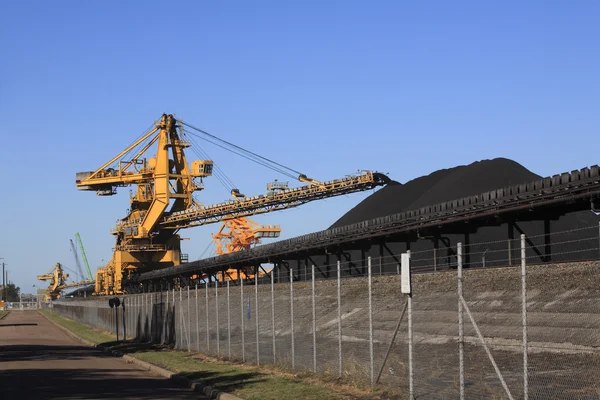
The European Union has granted Kazakhstan an exemption permitting the transit of Kazakh coal through select Russian ports previously restricted under EU sanctions. The decision, included in the EU’s 18th package of sanctions, aims to secure Kazakhstan’s coal exports to Europe. The exemption follows months of negotiations led by the Ministry of Trade and Integration, the Ministry of Foreign Affairs, and Kazakhstan’s Permanent Mission to the EU. The talks were prompted by sanctions introduced in February 2024 under the 16th EU sanctions package, which included a ban on transactions with Ust-Luga port, one of the main routes for Kazakh coal shipments to the EU. “To resolve the situation, work was carried out at various levels and an official request was sent to the European Commission asking for changes to the sanctions regime,” the ministry stated. “As a result, the 18th package of EU sanctions contains amendments allowing transactions with a number of Russian ports for the transit of coal of Kazakh origin.” Conditions of the Exemption The exemption is conditional and tightly regulated: Only coal of Kazakh origin may be transited; Ownership of the cargo must not involve entities from countries under EU sanctions, including Russia and Belarus; The designated Russian ports may be used solely for transit purposes, specifically loading and dispatch, without any procurement or production activities on site. Trade Impact Kazakhstan remains a key coal supplier to the European market. In 2022, it exported 4.4 million tons of coal to the EU, generating $419.2 million, representing 45% of total coal exports. Although volume increased to 6.1 million tons in 2023 (54.3%), falling global prices reduced revenue to $382 million. In 2024, exports declined to 5.2 million tons worth $312.5 million (51.8%). During the first five months of 2025, Kazakhstan exported 1.6 million tons to the EU, generating $82.9 million and accounting for 38.5% of total coal exports over that period. “Despite the temporary decline in indicators, the measures taken are creating conditions for the restoration of export flows and increased stability of logistics routes,” the ministry said. “Kazakhstan will continue to work to protect trade interests, support national exports, and strengthen economic ties with key partners.” As previously reported by The Times of Central Asia, domestic coal consumption in Kazakhstan is expected to decrease due to government plans to phase out pilot coal-fired power plants in favor of renewable energy and low-carbon technologies, including gas. 

9 months ago

ADB Raises Kazakhstan’s Economic Growth Forecast, Warns of Higher Inflation

The Asian Development Bank (ADB) has revised upward its economic growth forecast for Kazakhstan for both 2025 and 2026, while also raising its inflation projections. The updated outlook was published in the July edition of the Asian Development Outlook. Growth Outlook Strengthened According to the ADB’s latest report, Kazakhstan’s GDP is now expected to grow by 5.1% in 2025, up from the 4.9% forecast issued in April. The projection for 2026 has also been increased from 4.1% to 4.3%. Key growth sectors include: Transport: +21% Construction: +16.9% Manufacturing: +8.7% Mining: +6.1% Particular emphasis is placed on the early expansion of oil production at the Tengiz field, which launched ahead of schedule. This, combined with Kazakhstan’s increasing oil exports within the framework of OPEC+ quotas, has bolstered the growth outlook. As previously reported by The Times of Central Asia, in June, Kazakhstan raised production for the third consecutive month, contributing positively to GDP growth. "Growth in tax revenues has allowed for increased government investment in capital projects and the social sector," the ADB commented. "The early launch of the Tengiz expansion has strengthened prospects for the extractive industry. OPEC+'s May 31 decision to continue raising production supports this trend, as Kazakhstan is utilizing its full capacity." Inflation Pressures Intensify Despite the improved growth outlook, the ADB now expects inflation to reach 10.2% by the end of 2025, up from the 8.2% forecast in April. For 2026, inflation is projected at 8.4% (previously 6.5%). Data from Kazakhstan’s National Statistics Bureau indicates that annual inflation reached 11.3% in May and 11.8% in June. Paid services remain the primary inflation driver, though monthly price increases slowed modestly from 0.9% in May to 0.8% in June. The ADB notes rising inflationary pressure across the broader Caucasus and Central Asia subregion. The regional average is now expected to hit 7.8% in 2025 and 6.7% in 2026 both higher than the previous forecasts of 6.9% and 5.9%, respectively. Supporting Forecasts The Eurasian Development Bank (EDB) also anticipates robust economic expansion in Kazakhstan, projecting GDP growth of 5.5% in 2025, up from 4.8% in 2024, with sustained momentum through 2026-2027. However, the EDB likewise foresees persistent inflation, expecting it to reach 11.9% by year-end. Earlier, Deputy Prime Minister Serik Zhumangarin reported that the Kazakh economy grew by 6.2% in the first half of 2025, the country’s fastest growth rate since 2011.

9 months ago

Kazakhstan PM Urges Joint Action to Save the Caspian Sea

Kazakh Prime Minister Olzhas Bektenov has urged the five Caspian littoral states to coordinate efforts in response to the steadily declining water levels of the Caspian Sea, describing it as one of the region’s most pressing environmental threats. Speaking at the inaugural International Environmental Conference in Manzherok, Russia, Bektenov emphasized the urgency of a collective response. “Since the early 2000s, the water level in the Caspian Sea has been steadily declining. To study this and other challenges, Kazakhstan has established the Caspian Sea Research Institute. Scientists’ forecasts are alarming. We need decisive joint measures,” Bektenov stated, according to his press service. The Caspian Sea is bordered by Kazakhstan, Russia, Iran, Azerbaijan, and Turkmenistan. As previously reported by The Times of Central Asia, the sea’s water level dropped to less than 29 meters below sea level by summer 2025, a historic low. The northern Caspian, which borders Kazakhstan and Russia, is experiencing the most rapid desiccation. In addition to the Caspian issue, Bektenov addressed other major environmental concerns. He highlighted Kazakhstan’s work in the Aral Sea region, where the country currently chairs the International Fund for Saving the Aral Sea. Key priorities include reinforcing the Kokaral Dam, restoring the Syr Darya delta, revitalizing the fishing industry, and reforesting the dried seabed. Kazakhstan is also establishing a saxaul nursery on the desiccated Aral seabed to produce 1.5 million seedlings annually. The goal is to cover up to 40% of Kazakhstan’s portion of the former sea with saxaul forests. Bektenov also underscored the growing threat of glacier melt. Experts warn that Central Asia’s glaciers could shrink significantly by 2100. The UNESCO Central Asian Regional Glaciological Center, based in Almaty, is already serving as a key platform for research and monitoring. Kazakhstan, he added, is ready to implement joint hydrotechnical initiatives, including reservoir regulation and the introduction of automated water accounting systems. Bektenov concluded by noting the symbolic importance of the forum’s location in the Altai region, often regarded as the cradle of Turkic civilization and a cornerstone of cultural and humanitarian cooperation.

9 months ago

Turkish Safi Holding Eyes Sugar Factory Investment in Kazakhstan

Turkish industrial conglomerate Safi Holding has expressed interest in developing a high-tech sugar processing facility in Kazakhstan, according to the country's Ministry of Agriculture. The announcement followed a meeting between Agriculture Minister Aidarbek Saparov and Safi Holding CEO Safi Atakan. The two sides discussed the proposed plant’s specifications, which include the capacity to process up to 1 million tons of sugar beets annually and produce approximately 140,000 tons of sugar. The estimated investment ranges from $150 million to $200 million. Potential sites for the factory are currently under consideration. According to the ministry, the key criteria for site selection include the availability of arable land for beet cultivation and proximity to necessary infrastructure. Safi Atakan praised Kazakhstan’s agro-industrial potential, particularly in sugar production. "Kazakhstan presents favorable conditions for expanding sugar processing operations," he noted. A similar initiative is underway by UAE-based Al Khaleej Sugar, one of the world’s largest sugar producers, which is planning a plant in southern Kazakhstan. Industry Gaps and Import Dependence Kazakhstan’s sugar sector is currently under strain due to limited processing capacity. There are four sugar factories in operation: AksuKant (Taldykorgan district), Koksu Sugar Factory (Almaty region), and the Merken and Taraz factories in the Zhambyl region. Of these, three process locally grown sugar beets, while the facility in Taraz handles imported cane sugar. Despite a record harvest of 1.2 million tons of sugar beets in 2024, only about 700,000 tons were processed, exposing significant inefficiencies in the processing chain. In 2023, Kazakhstan produced 243,000 tons of sugar, less than half of its domestic demand. The remainder was imported, primarily from Russia. However, reliance on imports has proven volatile. In the summer of 2022, Russia’s temporary export ban led to a spike in domestic sugar prices. In response, the Kazakh government imposed seasonal export restrictions, which have been extended through 2025, to stabilize local markets.

9 months ago