• KGS/USD = 0.01143 -0%
  • KZT/USD = 0.00193 -0%
  • TJS/USD = 0.10881 0%
  • UZS/USD = 0.00008 0%
  • TMT/USD = 0.28575 0%
  • KGS/USD = 0.01143 -0%
  • KZT/USD = 0.00193 -0%
  • TJS/USD = 0.10881 0%
  • UZS/USD = 0.00008 0%
  • TMT/USD = 0.28575 0%
  • KGS/USD = 0.01143 -0%
  • KZT/USD = 0.00193 -0%
  • TJS/USD = 0.10881 0%
  • UZS/USD = 0.00008 0%
  • TMT/USD = 0.28575 0%
  • KGS/USD = 0.01143 -0%
  • KZT/USD = 0.00193 -0%
  • TJS/USD = 0.10881 0%
  • UZS/USD = 0.00008 0%
  • TMT/USD = 0.28575 0%
  • KGS/USD = 0.01143 -0%
  • KZT/USD = 0.00193 -0%
  • TJS/USD = 0.10881 0%
  • UZS/USD = 0.00008 0%
  • TMT/USD = 0.28575 0%
  • KGS/USD = 0.01143 -0%
  • KZT/USD = 0.00193 -0%
  • TJS/USD = 0.10881 0%
  • UZS/USD = 0.00008 0%
  • TMT/USD = 0.28575 0%
  • KGS/USD = 0.01143 -0%
  • KZT/USD = 0.00193 -0%
  • TJS/USD = 0.10881 0%
  • UZS/USD = 0.00008 0%
  • TMT/USD = 0.28575 0%
  • KGS/USD = 0.01143 -0%
  • KZT/USD = 0.00193 -0%
  • TJS/USD = 0.10881 0%
  • UZS/USD = 0.00008 0%
  • TMT/USD = 0.28575 0%
21 December 2025

Our People > Times of Central Asia

Times of Central Asia's Avatar

Articles

Kazakhstan Claims Success in Asset Recovery, But Transparency Questions Linger

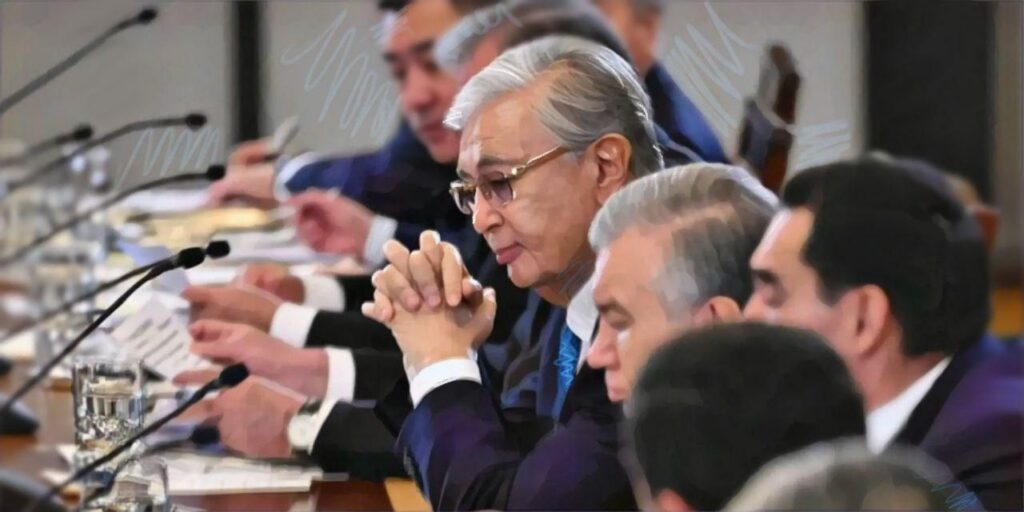
Kazakhstan’s authorities have presented the results of the campaign to recover illegally acquired or transferred assets as a major success. In September 2025, during his address to the nation, President Kassym-Jomart Tokayev signaled a transition from asset recovery to broader investor-protection priorities. According to Prosecutor General Berik Asylov, recoveries totaling hundreds of billions of tenge have been returned to the state since the launch of the asset-recovery campaign. This includes not only cash and securities, but also land plots, business assets, and luxury property. Overall, official estimates put the total value of assets clawed back under the campaign at around 1.2–1.3 trillion tenge (roughly $2.3 billion), though only part of this amount has been directly credited to the state budget. A tax on indulgence When the law “On the Return of Illegally Acquired Assets to the State” was adopted in 2023, it was presented not merely as a fiscal tool but as a means of restoring historical justice. As part of the concept of building a “Fair Kazakhstan,” the authorities promised that assets once hidden in offshore accounts or invested in luxury real estate abroad would be redirected toward social development. Two years later, it is clear that the assets have indeed been returned. Yet instead of a transparent process in which citizens could clearly see how recovered funds were being used, the system has created a dense layer of bureaucracy. Money has been accumulated in the Special State Fund (SSF), the operating mechanisms of which continue to raise questions among experts. Despite official reports highlighting the construction of social facilities financed with seized assets, public debate over the transparency of the fund has not subsided. The authorities have also declined to publish the names of former asset owners or detailed information on specific accounts, enterprises, or land plots transferred to the state. A defining feature of the campaign was the rejection of a purely punitive approach. Instead, the government introduced a mechanism of “voluntary return,” effectively offering members of the elite a compromise: return swathes of your illegally acquired wealth, and the state will refrain from pursuing past offenses. The law clearly defined the target group, focusing on individuals owning assets valued at more than 13 million MCI, or roughly $100 million. This ensured pressure on large capital holders while shielding medium-sized businesses. At the same time, the closed nature of the list created a powerful instrument of leverage over the business elite. Experts have described this approach as a “tax on indulgence.” Rather than engaging in lengthy and uncertain international legal battles over offshore assets, Astana has opted for pretrial settlements. In legal terms, this takes the form of procedural agreements in which suspects acknowledge wrongdoing, return assets, and receive reduced sentences or exemption from liability. The most prominent and controversial example is the case of Kairat Satybaldy, a nephew of former president Nursultan Nazarbayev. After returning assets reportedly worth approximately $1.4 billion, he received a reduced sentence and was released ahead of schedule. From a fiscal standpoint,...

2 days ago

Thousands Donate in Name of Uzbek-American Student Killed at Brown University

A fundraising campaign dedicated to an 18-year-old Uzbek-American student who was killed in a shooting at Brown University in Rhode Island has collected more than half a million U.S. dollars. MukhammadAziz Umurzokov, who went to high school in Virginia, and another Brown student, 19-year-old Ella Cook of Alabama, died in the attack in a university building on December 13. Nine other students were injured. Law enforcement agencies are searching for the suspect and have not publicly commented on a possible motive. One of Umurzokov’s sisters, Samira Umurzokova, set up a GoFundMe page that had drawn more than 10,000 donations totaling over $500,000 by Thursday. “Our family is incredibly devastated by this loss. Any donations will help significantly with any expenses my family will have to face, and the rest of the funds will be donated to charity in his name,” the page reads. Without providing personal details, it lists a William Ackman as making the top donation of $18,000. American billionaire investor William, or Bill, Ackman, has been active in other fundraising campaigns, including the GoFundMe campaign for Ahmed al-Ahmed, a man who disarmed one of the two shooters in the attack at Sydney’s Bondi Beach that killed 15 people on December 14. Al-Ahmed was hospitalized after being shot. One of two gunmen, believed to have been inspired by the Islamic State group, was killed; the second was injured and has been charged with murder and terrorism. Umurzokova has said that her brother, who was a first-year student at Brown, had suffered Chiari malformation, in which brain tissue extends into the spinal canal, as a child. He wanted to become a doctor so that he could help people in the same way that he was helped, she said. “He’s a real person. He had real ambitious goals and aspirations, like anyone else would,” Umurzokova said in a CNN interview. “I want people to know that him and the other victims are not just numbers. They’re not just statistics. They’re real people and real families are genuinely hurting like crazy because of their loss.” Umurzokova said her parents wanted people to “hear their son’s name, see their son’s picture, instead of, you know, seeing ‘two dead nine injured.´” Cook, the other student who was killed in the Brown shooting, was a sophomore focusing on French and mathematics-economics.

3 days ago

U.S. Eases Restrictions on Entry of Turkmenistan Nationals

The United States has lifted a suspension on the entry of citizens of Turkmenistan with nonimmigrant visas into the U.S. The suspension had been imposed under an order signed in June by President Donald Trump that banned or curbed the entry of nationals from 19 countries. On Tuesday, Trump issued another order that expanded entry restrictions on people from countries deemed to have what the White House called “demonstrated, persistent, and severe deficiencies” in screening and vetting. However, in contrast to other countries that were mentioned, the new order had good things to say about Turkmenistan, one of the most isolated, tightly controlled countries in the world. Since the suspension announced in June, “Turkmenistan has engaged productively with the United States and demonstrated significant progress in improving its identity-management and information-sharing procedures,” the new order said. “The suspension of entry into the United States of nationals of Turkmenistan as nonimmigrants on B-1, B-2, B-1/B-2, F, M, and J visas is lifted. Because some concerns remain, the entry into the United States of nationals of Turkmenistan as immigrants remains suspended.” B-1 (business) and B-2 (tourism) refer to non-immigrant visas for people who want to stay temporarily in the U.S. F, M, and J visas are for non-immigrant visas used by students and other visitors enrolled in exchange programs. Relatively few people from Turkmenistan seek entry into the United States, possibly because of the tight controls on emigration in their own country. President Serdar Berdymuhamedov joined other leaders from Central Asia for a summit with Trump in Washington in November.

4 days ago

The Digital Future of Central Asia: Who Is Shaping It, and How?

Digital security is now a key component of most processes in every country. A large share of organizations is moving, or has already moved, their processes online, which requires increased attention and control. Many Central Asian countries are already rolling out AI technologies at the state level. Financial institutions, social systems, crypto services, rental services, and other high-risk areas can no longer develop effectively without biometric identification and AI. Central Asia is gradually developing its own biometric landscape, and if we look at it not as a set of disparate projects but as an emerging infrastructure, it becomes clear that the countries are moving at very different speeds. Kazakhstan: Leader in Biometrics and Digital Identity in the Region Today, Kazakhstan is the undisputed leader in Central Asia in the field of biometric technologies. In this region biometrics has long gone beyond isolated pilots and has become part of the digital infrastructure on which a significant part of the economy operates.  Unlike neighboring countries, where biometrics is most often limited to video surveillance or exclusively state initiatives, Kazakhstan has developed a mature market of independent developers and technology companies creating competitive products both for private organizations and for government platforms. Thanks to active digitalization, biometrics in the country has become not an add-on, but the primary mechanism for identity verification. The state additionally stimulates this process: it expands the use of biometric identification in ministerial processes, strengthens the requirements for remote verification, and transfers critical services, such as the issuance of an Electronic Digital Signature (EDS), to biometric authentication. In this way, an environment is being built in which online processes gain full legal validity and the population receives convenient access to services without the need to visit physical offices. Kazakhstan’s key distinction is that it has a full-fledged biometrics market, not just government-driven initiatives. The private sector actively invests in biometric solutions, integrates them into its processes, and competes on the quality of the user experience. Banks strive to reduce entry barriers for clients,   MFIs (software development kits) increase protection against fraud, crypto exchanges strengthen their compliance structure, and marketplaces implement biometric identification to secure transactions. This has created an effect unique for the region: biometrics has ceased to be a one-off project and has turned into an everyday part of business. Against this background, independent local companies are developing that are capable of creating advanced technological solutions within the country. Among them, Biometric.Vision stands out in particular, an international company originating from Kazakhstan, one of the key players in the Kazakhstani market that has formed its own technological stack and operates across several industries. The company has become a technological partner for banks, financial organizations, government services, and regulated industries, providing software modules for remote identification, biometric verification, liveness checks, and fraud prevention. Local products make it possible to respond quickly to new regulatory requirements, adapt to them, and address the real needs of local businesses. For Kazakhstan, the presence of local players in the biometrics market is...

4 days ago

Roscosmos: Damaged Baikonur Launch Pad To Be Ready in Early 2026

Russia’s space agency Roscosmos says a Baikonur Cosmodrome launch pad that was damaged during the lift-off of a crewed spacecraft in late November is being repaired and will be ready to resume operations at the end of February next year. “The manned program continues,” Roscosmos said following two weeks of speculation about the impact of delays on crewed flights from the leased Baikonur facility in Kazakhstan. If Russia meets its repair schedule, it would beat some predictions that said the launch pad might not back in operation for up to two years. More than 130 Roscosmos employees, working in two shifts from 8 a.m. to midnight, and 18 heavy vehicles are involved in replacing a service cabin that was damaged in the launch of the Soyuz MS-28 craft that took two Russian cosmonauts and one American astronaut to the International Space Station, the agency said on Monday. “Work has begun on priming and painting the cabin parts. As they become ready, they will be transported to the launch pad. Some of the equipment is already there,” Roscosmos said. “After priming and painting the parts, specialists will begin installing the cabin and conducting autonomous tests.” Space journalists and analysts said the previous mobile service platform was not properly secured during the November launch and collapsed into a flame duct below the launch pad. A cargo flight to the International Space Station had been scheduled for this month from Baikonur but was delayed after the mishap.

5 days ago

Trump and Tokayev Secure a Historic $4.2 Billion Locomotive Deal

Washington, D.C. – The United States and Kazakhstan have finalized the largest locomotive agreement in history, a $4.2 billion deal that underscores American industrial strength and deepens ties between the two nations. The announcement came following a call between President Donald Trump and Kazakhstan’s President Kassym-Jomart Tokayev, which officials say directly helped bring the deal across the finish line. The U.S. Department of Commerce confirmed that Pennsylvania-based Wabtec will supply about 300 Evolution Series locomotives, in kit form, to Kazakhstan’s state railway over the next decade. Commerce Secretary Howard Lutnick emphasized the scale of the export package, writing on X that the deal is “more than just a huge success story. It’s about American innovation leading the world, supporting thousands of jobs in TX & PA, and strengthening the U.S.–Kazakhstan partnership.” For Trump, the Pennsylvania tie is notable — the state is both home to Wabtec and a perennial battleground in presidential politics. What Trump and Tokayev said President Trump celebrated the breakthrough personally on Truth Social: “I just concluded a wonderful call with the Highly Respected President of Kazakhstan, Kassym-Jomart Kemeluly Tokayev. They have signed the largest Railroad Equipment Purchase in History, $4 Billion Dollars Worth of United States Locomotives and Rail Equipment”. He continued: “Congratulations to President Tokayev on his great purchase. This Country, and the World, was built on reliable, beautiful Railroads. Now they will be coming back, FAST!” Earlier in September, Trump had told reporters he had a “great conversation” with Tokayev — a remark that signaled improving ties between Washington and Astana ahead of the deal. On Sept. 22, the Commerce Department formally confirmed the $4.2 billion agreement. Commerce Secretary Howard Lutnick, in a separate statement on X, emphasized that the leaders’ engagement helped pave the way and argued the deal strengthens an enhanced strategic partnership while embedding American technology in Eurasian connectivity. President Tokayev, for his part, has emphasized transport and logistics as central to Kazakhstan’s role as a “link between Europe and Asia,” calling for expanded rail infrastructure and modern customs systems. In July, amid tariff tensions, he assured Trump in a letter that Kazakhstan was “ready for constructive dialogue” and was confident a compromise could be reached — a posture that laid groundwork for the closer economic cooperation reflected in this deal. Why It Matters: Unlocking Regional Corridors to the West The locomotives will reinforce capacity along the Trans-Caspian “Middle Corridor,” a trade route carrying goods from Central Asia through the South Caucasus and into Europe—an alternative to Russian and Iranian transit that governments have accelerated since 2022. A critical gap in that chain was addressed through U.S.-brokered diplomacy in August 2025, when President Trump hosted Armenian Prime Minister Nikol Pashinyan and Azerbaijani President Ilham Aliyev at the White House. The two leaders signed a peace declaration after decades of conflict and committed to reopening transport links, most notably a 42-kilometer passage through Armenia’s Syunik province, commonly called the Zangezur corridor or the Trump Route for International Peace and Prosperity (TRIPP). By...

3 months ago