• KGS/USD = 0.01144 0%
  • KZT/USD = 0.00205 0%
  • TJS/USD = 0.10813 -0.18%
  • UZS/USD = 0.00008 0%
  • TMT/USD = 0.28571 0.28%
  • KGS/USD = 0.01144 0%
  • KZT/USD = 0.00205 0%
  • TJS/USD = 0.10813 -0.18%
  • UZS/USD = 0.00008 0%
  • TMT/USD = 0.28571 0.28%
  • KGS/USD = 0.01144 0%
  • KZT/USD = 0.00205 0%
  • TJS/USD = 0.10813 -0.18%
  • UZS/USD = 0.00008 0%
  • TMT/USD = 0.28571 0.28%
  • KGS/USD = 0.01144 0%
  • KZT/USD = 0.00205 0%
  • TJS/USD = 0.10813 -0.18%
  • UZS/USD = 0.00008 0%
  • TMT/USD = 0.28571 0.28%
  • KGS/USD = 0.01144 0%
  • KZT/USD = 0.00205 0%
  • TJS/USD = 0.10813 -0.18%
  • UZS/USD = 0.00008 0%
  • TMT/USD = 0.28571 0.28%
  • KGS/USD = 0.01144 0%
  • KZT/USD = 0.00205 0%
  • TJS/USD = 0.10813 -0.18%
  • UZS/USD = 0.00008 0%
  • TMT/USD = 0.28571 0.28%
  • KGS/USD = 0.01144 0%
  • KZT/USD = 0.00205 0%
  • TJS/USD = 0.10813 -0.18%
  • UZS/USD = 0.00008 0%
  • TMT/USD = 0.28571 0.28%
  • KGS/USD = 0.01144 0%
  • KZT/USD = 0.00205 0%
  • TJS/USD = 0.10813 -0.18%
  • UZS/USD = 0.00008 0%
  • TMT/USD = 0.28571 0.28%

Our People > Henry Kuvin

Henry Kuvin's Avatar

Henry Kuvin

Contributor

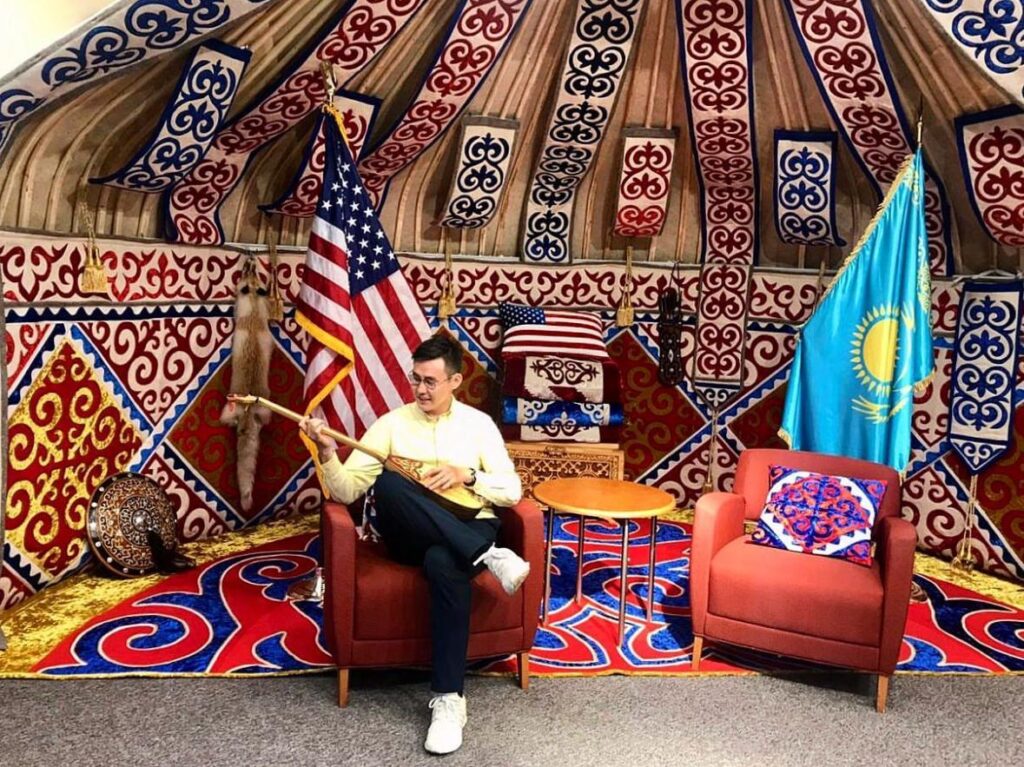
A New England native, Kuvin currently resides in Almaty, Kazakhstan. He started learning Russian when he was 13, and his language journey has taken him to various ex-Soviet states for extended periods of time. Prior to working for The Times of Central Asia, Henry taught English at Narxoz University through the Princeton in Asia fellowship program. Kuvin is a graduate of the George Washington University’s Elliott School of International Affairs and an avid film photographer.

Articles

Tashkent Supermarket Expands to Manhattan, Bringing Central Asian Flavors and Culture to the West Village

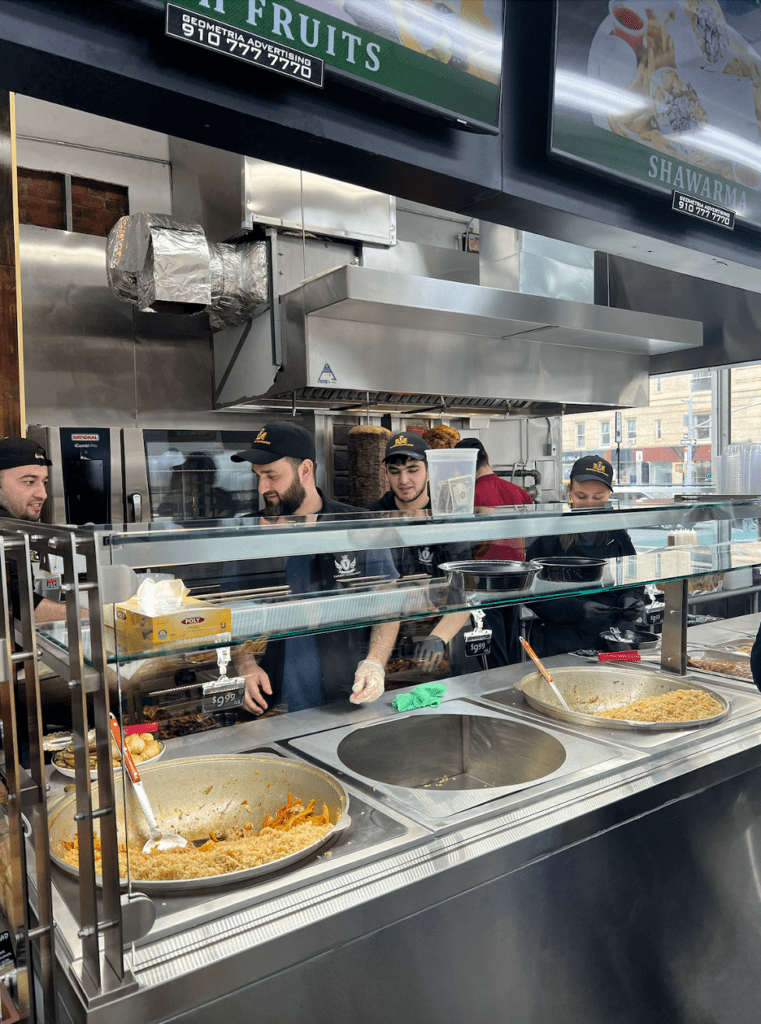
After years of the iconic Brighton Beach grocery store and its ever-fresh hot bar, Tashkent Supermarket announced it would open its first Manhattan location in 2022, spurring excitement and anticipation in the West Village. 378 Sixth Avenue is now home to an intoxicating array of fresh Central Asian foods, imported products, and friendly faces sharing incredible cultures. TCA went to the new Manhattan branch to talk to patrons about their thoughts on the new location, how the food tastes, and their knowledge of Uzbekistan and Central Asia. We first spoke with Margarita, an ethnic Russian who has lived in New York for the past three years. Before moving to New York, she lived in Tashkent for 16 years. [caption id="attachment_29912" align="aligncenter" width="936"] Located right at the West 4th Street-Washington Square subway stop, Tashkent Supermarket sees a lot of foot traffic[/caption] “I’ve been to this location a few times already; it’s good but not quite as big as the flagship store in Brighton,” she told me. “I go for the imported Russian food; their grechka (buckwheat) is the best, and their hot bar tastes exactly like the food I miss from Uzbekistan. I go to their stores thrice a week, and importantly, the prices are very competitive for New York, especially meat and produce.” Among the American produce and packaged products, Armenian juices, Russian cookies, and Uzbek seasonings line the shelves. Unfamiliar patrons pick up and inspect foreign products and inspect them. Two girls, who admitted they didn't know much about Uzbekistan or Central Asia, peered through the store's window, watching people place syrniki (cottage cheese pancakes) into plastic containers. "These pancakes really caught my eye," one said. "I've tried Afghan food before, but never Uzbek or other Central Asian cuisine. This supermarket in my neighborhood will help expand my palate and let me try new things." [caption id="attachment_29913" align="aligncenter" width="936"] Hot bar food includes fresh salads, chubereki, samsa, manty, and pastries[/caption] Ilona, a native of Vilnius, Lithuania, has lived in New York for over 25 years, and her whole family loves Tashkent Supermarket. “It is a slice of home in New York, and they have a great selection of products from the former Soviet Union. It is the only place in the city where I can find the ingredients I need to make my favorite food. Parsley root, dill, and other herbs are my main purchases here. I love this store and its community so much.” Aizhan, an ESL teacher from Almaty, has lived in New York for nine years. “It is my first time at the Manhattan location. It is excellent, and the prices are very reasonable. They are my go-to for catering orders, and everyone is always happy with the quality and taste of the food. They do a phenomenal job making [Central Asian] food. I have not been back [to Kazakhstan] in years, but coming to Tashkent Supermarket makes me feel like I have transported myself back to Almaty.” Michele, a New York native, traveled to Uzbekistan,...

1 year ago

A Taste of Kazakhstan: Interview with Almaty’s Apple City Cider

Englishman Alexander Thomas is the passionate founder of Apple City Cider, an Almaty-based craft cidery dedicated to producing high-quality, locally sourced ciders that celebrate tradition with a modern twist. With a deep-rooted love for orchards and fermentation, Thomas blends innovation with time-honored techniques to create crisp, flavorful ciders. TCA: What first brought you to Almaty, and what kept you here? AT: I used to work for the world’s largest publishing group, where I reported on different market sectors. When I covered aviation, I used to fly around the world to speak to different airline CEOs to discuss their route strategies and fleets. I first came to Kazakhstan to interview Air Astana’s CEO, Peter Foster. I was supposed to fly to Paris to speak with KLM and Air France, but that meeting was canceled, so I flew back to London. Sitting next to me, little did I know, was my future wife. In the same company, I very much enjoyed the coverage of the drinks industry. I had originally wanted to make wine in the south of France, but after marrying a Kazakh girl, we decided to start our business in Kazakhstan. Instead of pressing grapes in the South of France, we began pressing apples in Almaty. TCA: Can you tell us the inspiration for Apple City Cider? AT: We started the business because no one was making cider in the birthplace of the apple, around that time, cider was not even available to purchase in Kazakhstan. Around the same time we went on sale, another alcohol manufacturer began to produce cider as well, but we are the only cider specialists; the main business of the others is spirits and other alcoholic drinks. [caption id="attachment_28689" align="aligncenter" width="1706"] Image: TCA, Henry Kuvin[/caption] TCA: How did Almaty respond to your business idea, and what were the main challenges when establishing your company? AT: Consumers are very happy with the product and happy that we started our business here. Like other local companies, Almaty Cider has received a lot of positive support from the city; they love how it’s called “Almaty Cider.” The concept of eating locally and supporting local businesses is a global phenomenon, and Almaty is no exception. The fact that Almaty is the birthplace of the apple, proven by science, made it the ideal location to start such a business. The Malus Sieversii apple, native to the Almaty region, is perfect for cider. The levels of tannins, fruit sugar, and acidity, while not ideal for eating, make a great-tasting cider. TCA: Almaty, the place of abundant apples, does not have a huge cider culture – how has this changed since you established the business, and where do you see it going? AT: Cider was not available even as an imported product until about three to four years ago. Since then, we have seen imported brands come to the market, and people have developed a taste for it. In Russia, for example, there are now over 100 independent cideries. The first person...

1 year ago

Powering the Green and Economic Revolution: An Interview With Andi Aranitasi, Head of the EBRD in Uzbekistan

As the Head of the European Bank for Reconstruction and Development (EBRD) in Uzbekistan, Andi Aranitasi plays a key role in driving the country’s economic transformation. Under his leadership, the EBRD has expanded its investments in key sectors such as energy, infrastructure, and private enterprise, supporting Uzbekistan’s shift toward a more open and sustainable economy. With a focus on green energy, digitalization, and financial reforms, Aranitasi’s efforts contribute to the nation’s long-term development and integration into global markets. In 2024, the EBRD set an investment record in Uzbekistan by signing off on 34 projects worth €938 million (US $960 million). The country once again became the leading recipient of the Bank’s funding in Central Asia, with 55% of the Bank’s investments going towards green economy projects. The EBRD has supported Central Asia's first renewable hydrogen facility by providing a $65 million financing package to a joint venture of ACWA Power and Uzkimyosanoat, which will help to decarbonize the fertilizer production sector in Uzbekistan. The Bank also organized an A/B loan of US$ 226 million for developing, designing, constructing, and operating a 200MW solar photovoltaic power plant and a 501MWh battery energy storage system (BESS) in the Tashkent region. This is one of the most significant EBRD-supported BESS projects in the economies where the Bank operates. Its sovereign loan of $66.4 million to the National Electric Grid of Uzbekistan (NEGU) will support the construction of a 230 km 500 kV transmission line in the Navoi region. This project will help to eliminate bottlenecks in the grid, reduce electricity outages, and facilitate the integration of renewables. The EBRD’s sovereign loan of $238 million, meanwhile, will help rehabilitate a key road and build a bridge across the Amu Darya River in the Khorezm region, thus contributing to sustainable transport connections. The country’s financial sector attracted over €300 million from the EBRD through trade finance limits and loans to local financial institutions. It offered credit lines and risk-sharing agreements to such domestic lenders as Hamkorbank, Ipoteka Bank, TBC Bank Uzbekistan, and Uzbek Leasing International. Special attention was paid to the development and support of SMEs, including those needing energy efficiency improvements and owned and managed by youth and women. The EBRD also increased its equity investment in TBC Uzbekistan, the country’s first digital bank. Additionally, the EBRD and the government of Uzbekistan agreed to work jointly on the successful privatization of one of the country’s largest state-owned lenders, Asakabank. In 2024, the EBRD’s Advice for Small Business program in Uzbekistan launched 60 projects, increasing its outreach to domestic SMEs. Half of these were with women entrepreneurs, and over 40% were in rural areas. More than 80,000 entrepreneurs nationwide were reached through specialized training, networking, online outreach, and knowledge-sharing events. Throughout 2024, the EBRD was actively engaged in policy dialogue with the national authorities, which facilitated the approval of several key legal acts, such as laws on privatization, the electricity market, and subsoil use. TCA spoke with Andi Aranitasi. TCA: The EBRD has been involved...

1 year ago

Art and Inspiration: Capturing the Essence of Almaty

With colorful illustrations of landmarks, natural monuments, and city-life moments, Aidana Niyazalieva’s postcards of Almaty stand out. TCA spoke with the artist to learn more about her inspiration, creative process, and challenges behind her postcards and the Almaty arts scene. TCA: What inspired you to start making postcards of Almaty? I've been drawing since I can remember; everything surrounding me – my room, the streets, and the buildings – inspires me. This led me to study architecture. However, after working as an architect, I realized that my passion for drawing was stronger. I decided to try it, eventually devoting myself to illustration and turning this hobby into a profession. I started with the city I grew up in, Almaty, and created a few postcards of the views I walked past the most. This became a way to combine everything I love - art, architecture, and my love for the city. TCA: How do you decide which landmarks, views, or themes to feature in your postcards? I choose places and themes close to me that evoke an emotional connection in people. Usually, the ideas come from my walks around the city. During my walks, I take many photos for possible drawings. Sometimes, a few buildings of the same type could grow into a series of illustrations, as in the “Houses“ postcard set that was united by the old houses of the Soviet period located in a Golden Square area. Also, I might get requests from people about places they would like to see, as happened with the Kazakhstan Hotel or Esentai River illustrations. TCA: What is your favorite spot in Almaty to capture in your art, and why? My favorite place in Almaty is the old city center. Its unique architecture, with characteristic features from different periods from neoclassical to modernist buildings, and its streets with cafes and terraces have always attracted my attention. Those buildings keep their history, whether these are old houses with sophisticated details or monumental facades of theaters and institutes. When I'm there, I always look closely at small elements like the carved balconies, window frames, mosaics, and patterns on the facades – I try to capture them in every illustration. TCA: Are there specific stories or personal memories behind some of your postcard designs? As a local, I have a personal connection to almost every location I illustrate. Capturing a place authentically requires more than just visual reference - it also needs an emotional connection. That’s why I barely draw locations I’ve never visited. Behind almost every illustration is a moment tied to the place. For example, the Kasteyev Museum holds a special place in my heart. My grandma used to take me there often when I was little, and it’s where I first took art lessons. So, I decided to create this illustration to capture the architecture of the museum and the memories connected to the place. TCA: Can you walk us through the creative process behind designing a postcard? Firstly, after the location is...

1 year ago

Bridging Borders: Louis Albertini on Central Asia’s Tech Growth, Startup Challenges, and Building Global Connections

Louis Albertini has been involved in technology and startups across the United States and Kazakhstan for a decade, working with Silicon Valley and venture capital-backed startups based in Kazakhstan, including ORBI and Farel. He is passionate about supporting founders in succeeding in the U.S. market and building connections between the U.S. and Kazakhstan. TCA spoke with Louis to gain insights from his experiences in the Kazakhstan market.   TCA: Can you share your career journey in Kazakhstan and what motivated you to work in diverse roles like marketing, consulting, and startups? Louis: I arrived in Kazakhstan in July 2015 as a Princeton in Asia fellow and spent a year working in the President's Office at KIMEP University with Dr. Chan Young Bang. I served as his communications officer, writing official correspondence, liaising with different departments, and managing the day-to-day affairs of the office. After my PiA fellowship ended, I decided to stay in Almaty and start exploring the nascent startup scene. In 2016, I joined the founding team of a startup called ORBI, which developed 360-degree video recording glasses. This was the first Kazakhstani startup that attracted significant venture financing and was invited to interview at Y Combinator in 2016. We raised about $7 million for the company and secured $350 thousand in pre-orders, the largest ever for a Kazakh start-up. Back then, the YC batches were extremely small, and interviews were conducted in person at their historic but now-closed 320 Pioneer Way office in Mountain View. This was my first applied experience with Kazakhstan startups, and I've been involved ever since.   TCA: What inspired you to create Redfern Partners, and how did you help address the challenges SMBs and tech companies face in Central Asia? Louis: Working at the American Chamber of Commerce gave me some insight into the market research landscape in Kazakhstan, primarily by listening to business leaders complain about available options. Besides the major consulting firms like McKinsey and BCG, which are more focused on quasi-state projects that need stamps of approval, the SMB space for high-quality independent research was largely empty. The Big 4 have variations of market research services, but their core specialty is audit and tax. Most local incumbents were formed in the early 1990s and use outdated methodologies that produce inaccurate or trivial insights. International research firms lack local coverage and rely on a loose patchwork of freelancers. Redfern was formed to offer high-quality, independent market research services to fill this void. We completed about twenty projects and continue to be a partner for the European Bank for Reconstruction and Development (EBRD) small business initiative.   TCA: What common mistakes did you see SMBs in the region make, and how did you help them overcome these? Louis: The SMB space in Kazakhstan is hugely underserved and overlooked, offering the largest surface area regarding technology adoption. In the US, SMBs employ nearly half of the American workforce, representing 45% of America's GDP. In Kazakhstan, the market is mainly asymmetrical, with large players...

1 year ago

“Success is Possible in Kazakhstan”: An Interview with Fashion Brand Qazaq Republic

Qazaq Republic has become a popular brand among young people in Kazakhstan. The brand has become a success story for entrepreneurship within Kazakhstan and Central Asia. The Times of Central Asia spoke with Yermek Kazym, co-founder and CEO, to learn more about the brand, its message, and how it achieved its success. TCA: Qazaq Republic celebrates Kazakhstan’s heritage through fashion. What inspired the brand's creation, and what is its story? When the founder of Qazaq Republic, Saken Joldas, was studying in the US, he would always bring gifts from Kazakhstan for his friends. But the available options were always uninspiring. This led him to dream about creating something more appealing to showcase modern Kazakhstan's vibrant youth culture and style. In 2016, when the mayor of Almaty announced a competition to design a new city logo, Saken shared his designs with the public. He created digital versions of the design to print on mugs and t-shirts and posted them on Facebook. The response from the community was incredible—people loved the concept and showed great interest in purchasing the items. That’s how the idea for the brand began to take form, starting right in his kitchen. The first big order came from the Duty-Free store at Almaty Airport. They requested around 30 t-shirts to sell. As the business grew, Qazaq Republic was given space at the biggest toy and bookstore in Almaty, Meloman. With the rise in sales, we decided to open QR’s very first store. When designing it, we even considered adding a coffee shop in case the store didn’t work out. QR’s first store opened in November 2019 on 47 Mametova street, but then the pandemic hit. While malls were closing, our store had the advantage of being a standalone store. To help people feel better during difficult times, we created unique cotton masks with the phrase “Bari jaqsy bolady” (Everything will be alright). Instead of selling them, we gave them free of charge with orders over 5,000 tenge. Customers started placing smaller orders just to get these masks, giving us a strong sense of support and confidence that we were on the right track. TCA: Could you walk us through the creative process of designing a typical Qazaq Republic collection? We’ve built a solid foundation now. People used to think we were just buying ready-made items and putting our logo on them, but that's not the case. Like global brands such as Nike and Ikea, we design our products in Kazakhstan while outsourcing production and manufacturing to trusted partner factories in Turkey and China. We oversee every detail, from creating labels and designs to developing patterns, ensuring complete control over the process. This approach allows us to concentrate more on perfecting our products. The brand's uniqueness lies in creating products that make everyday life comfortable and functional while staying modern and high-quality. TCA: Who is the target audience for Qazaq Republic, and how has it evolved since the brand’s inception? When we first launched our brand, we assumed it...

1 year ago

Securing EIB Funding in Kyrgyzstan: An Interview with VP Kyriacos Kakouris

Central Asia is rapidly developing its economy, with several international financial institutions successfully operating here. Among them is the European Investment Bank. Vice-President Kyriacos Kakouris spoke with The Times of Central Asia about its activity in Kyrgyzstan. TCA: Could you briefly introduce the European Investment Bank (EIB) and its main objectives in Kyrgyzstan? KK: The EIB is more than a bank, it is part of the EIB Group, one of the largest multilateral financial institutions in the world with a unique position allowing it to mobilize large-scale financing. The European Investment Bank, as the long-term financing institution of the European Union, is closely aligned with EU priorities, such as the EU-Central Asia strategy and the EU Global Gateway strategy, and is ready to play a more significant role in helping Kyrgyzstan respond more effectively to current and future challenges. The Bank has already been involved in economic development, transport, and climate action operations. We are interested in supporting the development of a competitive and environmentally friendly private sector that can incorporate modern and green technologies into various sectors. TCA: What are the EIB's priorities for supporting economic growth and sustainability in Kyrgyzstan? KK: EIB Global launched its activity in Kyrgyzstan in 2014 and up to now, has signed three separate operations worth a total of €112 million. We have established a very positive relationship with the Embassy of Kyrgyzstan in Brussels, which is essential for our dialogue with the Kyrgyz authorities. All operations involve co-financing either with other international financial institutions like the World Bank and the European Bank for Reconstruction and Development (EBRD) or development institutions such as KfW. So far, the Bank has approved lending operations for three projects on power transmission, water and waste management, and the agri-food sector, in line with the priorities defined in the EU-Central Asia and the EU Global Gateway strategies. The main aims of these projects are to protect the environment and take action against climate change. We will soon sign a €9 million top-up for the completion of the Kyrgyz section of the high-voltage transmission line known as CASA-1000. This project is part of a larger regional electricity scheme called Central Asia - South Asia Electricity Transmission and Trade initiative, covering Kyrgyzstan, Tajikistan, and Pakistan. This project is essential for developing trade in sustainable renewable electricity between the countries, using energy generated from renewable hydropower sources in the region. This will alleviate power shortages and increase export revenue in Kyrgyzstan and Tajikistan. TCA: How does the EIB's role differ from that of other development banks or financial institutions? KK: The EIB is the EU bank, and its shareholders are the 27 EU Member States. EIB Global is focused on EU policy priorities such as the EU strategy on Central Asia and the EU Global Gateway, supporting the green transition, boosting technological innovation, bolstering security and defense, and supporting regional cohesion and the development of social infrastructure. Our commitment to international development and capital market integration secures Europe’s strong global presence. Our...

1 year ago

EBRD’s Transformative Investments in Kyrgyzstan: An Interview With Hüseyin Özhan, Managing Director for Central Asia

The European Bank for Reconstruction and Development (EBRD), established in 1991, has been working in the Kyrgyz Republic since 1992 and has invested in over 250 projects amounting to over €1 billion. TCA sat down with Hüseyin Özhan to discuss the bank’s operations in Kyrgyzstan. TCA: Could you briefly introduce the EBRD and its main objectives within Kyrgyzstan? Özhan: The European Bank for Reconstruction and Development (EBRD) is owned by 73 shareholders as well as the EU and the EIB and has been operating in Kyrgyzstan for over 30 years. During this time, we have invested in more than 250 projects, surpassing €1 billion in total investments across the country. As an international financial institution, our operations in Kyrgyzstan are guided by a country strategy jointly prepared by the EBRD and local stakeholders and approved by the Bank’s Board of Directors. This year marks a significant milestone, as we have approved a new five-year country strategy outlining our priorities in Kyrgyzstan. We focus on fostering private sector growth and enhancing competition and also invest in infrastructure and sovereign-guaranteed projects. These efforts position the EBRD as one of the most influential international players in Kyrgyzstan. TCA: You mention the bank recently approved its new five-year strategy for Kyrgyzstan; could you share what this plan entails? Özhan: Our country's strategies are built on diagnostics conducted to identify transition gaps. These strategies align with the EBRD’s Strategic and Capital Framework and the Bank’s medium-term strategy and combine elements of the reform agenda and investment needs. The new strategy for Kyrgyzstan focuses on three key priorities: private sector development and competitiveness, the green economic transition with an emphasis on decarbonization and energy efficiency, and improved connectivity across the country. These priorities align closely with Kyrgyzstan’s recent reform agenda and development goals, which aim to enhance competitiveness, attract foreign investment, boost trade, and strengthen the country’s regional relevance. Decarbonization and resource efficiency are particularly critical, as Kyrgyzstan is significantly impacted by regional water scarcity. This makes sustainable water management a central focus, with numerous projects planned to support sustainable development in this sector. Additionally, developing the private sector, particularly local businesses, is vital. The EBRD works closely with the government in this regard, not only by providing funding but also through initiatives like “risk-sharing networks” and advisory programs for small businesses. These efforts help enhance productivity, relevance, and competitiveness, ensuring that Kyrgyzstan’s private sector is well-equipped to thrive in the market. TCA: How does EBRD’s mission differ from other development banks or financial institutions in the region? Özhan: Our institution has a slightly different approach to delivering our work and fostering transition in Kyrgyzstan. Unlike some other international financial institutions (IFIs) that provide budget support, the EBRD operates on a project-by-project basis and channels most of its resources to support good private-sector initiatives. A recent example of project finance is the signing of water projects in three cities in Kyrgyzstan. These sovereign lending agreements, signed with the Ministry of Finance, aim to modernize regional water...

2 years ago

Min-Kush — The Kyrgyz Time Capsule

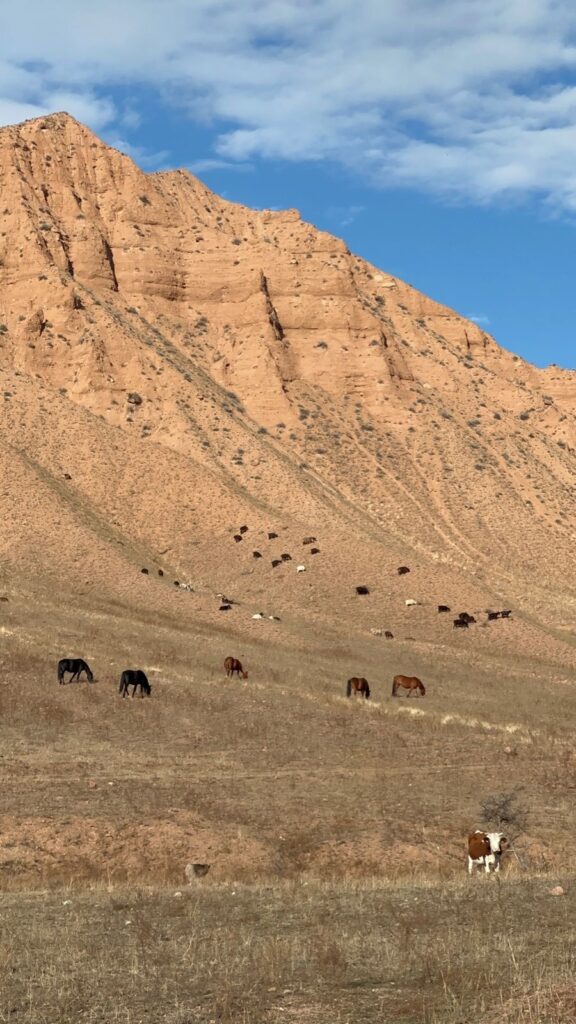
Although Min-Kush is only about 100 miles from Bishkek, as the crow flies, the mountains make us travel 250 miles. We reached a scenic viewpoint along the road, and I stopped to take a picture. I exited the truck and approached a horse with dramatic snow-capped mountains peeking through the clouds. A man came and invited us to ride his horse around his farm. This is his farm, his 75 sheep, and his horse. The horse and I galloped around the farm, chatted with the farmer, and got back on the road. This was my first time on horseback after a year and a half in Central Asia. Min-Kush, once a prosperous town nestled in the Kyrgyz mountains known for its bustling uranium mining industry, has hit the end of the road literally and figuratively. Coming down the A367 highway, a nondescript road sign says “Min-Kush” with an arrow pointing left. We turned, and the road seamlessly transformed from pavement to dirt. It is the last and only settlement on this road off of the highway. The only other vehicles we pass are semi-trucks carrying tons of coal destined for Kyrgyzstan and China.   [caption id="attachment_25324" align="aligncenter" width="1200"] @TCA H.Kuvin[/caption] The city peaked at around 20,000 in the 1980s, but today’s number hovers around 3,500. Established in 1955, the apartments and houses are built in the Stalinist architectural style. The vibrant blue paint that once covered the wooden panels is faded, and sections of the buildings are caved in, but people still live here. The contrast in one building is stark. On the top floor, there are broken windows and unhinged shutters. On the bottom floor, there are new window frames and flowers on the windowsill. The blossoming life on the windowsill is far from what it once was. We stopped and chatted with some locals and asked about their lives. “When Moscow supported us, we had everything: stores, schools, factories, and a hospital. Now…nothing, but we cannot dwell on things. Life is better now than it was after the fall of the USSR.” The man asks for a cigarette and a light; my French friend complies with his request. The main draw of Min-Kush for me is an abandoned felt pen factory. I’ve seen pictures online of some incredible Soviet banners that serve as a time capsule in the mountains. We asked if anyone knew where to find it, and a man told us it was torn down and replaced by a soccer field. As night set in, we looked for a guesthouse of sorts. I had read online that there is one, but there are no signs or information about it anywhere. We stop by a man fixing his Soviet Chaika car on the side of the road. He tells us the hotel is right up the road. We drive to an unlit building where two men are fixing another truck. We chatted, and he made a phone call. Ten minutes later, a lady shows up, unlocks the...

2 years ago

American Chamber of Commerce in Kyrgyzstan: Future Development and Investment Climate

As Central Asia continues to become a regional hub for trade and innovation, The Times of Central Asia spoke with Altynai Asanova, the Executive Director of the American Chamber of Commerce in the Kyrgyz Republic, to discuss the investment climate in Kyrgyzstan, economic trends, and future development. TCA: I see that your background is primarily in hotel management and sales; how did you transition from this role to your current position? “My background includes 18 years in the hotel business. Ten years at Hyatt, starting in food and beverage and ending in the hotel sales department; then, I worked at the Orion Hotel for the pre-opening and opening stage for about three years. After this, I was hired by Sheraton, one of the Marriott chain hotels, to work on the pre-opening and opening stage for two years. I was still involved with the business audience and wanted to continue working with the stakeholders and companies who know me.” TCA: How would you describe the hospitality industry in Kyrgyzstan? Is it mainly in Bishkek or other regions? “It is developing; before, it was only the Hyatt. Now, there are three or four chain hotels in Bishkek. It is good that there are more players in the market. It is developing day by day. The development is mainly in Bishkek, but we have good perspectives for Issyk Kul as long as the roads and infrastructure are completed. The chain hotels are also becoming interested in Issyk Kul. The good thing is that enough businessmen understand and accept the market challenges in Issyk Kul. They know it will not be financially stable at launch since the busy season is only about 50 days. But if the hotels provide full service and comfort, people will travel there for the full season.” TCA: Stepping away from hospitality, what did American investment in Kyrgyzstan look like ten years ago?” “Before, there was an American base in Kyrgyzstan. During that time, the hospitality business was amazing. The rates were high considering the charter flights and pilots who needed a place to stay. Now, these rooms are listed at the lowest rates. At that time, the Hyatt was the only five-star hotel in Bishkek, so all the American guests were staying at the Hyatt. The investment climate dropped after the U.S.-Kyrgyzstan agreement ended. There is opportunity, but it goes slowly.” TCA: Since then, what has changed in the business climate? “Business-wise, if we look from the angle of the association, we do not have any purely American business; we have franchise members: KFC, Hyatt, Sheraton, and some banks. It would be nice to have purely American [businesses] here.” TCA: Who are the current major investors in the Kyrgyz market? And is competition relevant to win contracts with local companies? “China, Russia, Kazakhstan, the Netherlands, and Turkey are the main investors. Before making any contracts or tenders, we need to understand the possibilities of our market, ‘Is our country ready to accept this level of business?’ The first question...

2 years ago