• KGS/USD = 0.01144 0%
  • KZT/USD = 0.00204 0%
  • TJS/USD = 0.10782 0%
  • UZS/USD = 0.00008 0%
  • TMT/USD = 0.28490 0%
  • KGS/USD = 0.01144 0%
  • KZT/USD = 0.00204 0%
  • TJS/USD = 0.10782 0%
  • UZS/USD = 0.00008 0%
  • TMT/USD = 0.28490 0%
  • KGS/USD = 0.01144 0%
  • KZT/USD = 0.00204 0%
  • TJS/USD = 0.10782 0%
  • UZS/USD = 0.00008 0%
  • TMT/USD = 0.28490 0%
  • KGS/USD = 0.01144 0%
  • KZT/USD = 0.00204 0%
  • TJS/USD = 0.10782 0%
  • UZS/USD = 0.00008 0%
  • TMT/USD = 0.28490 0%
  • KGS/USD = 0.01144 0%
  • KZT/USD = 0.00204 0%
  • TJS/USD = 0.10782 0%
  • UZS/USD = 0.00008 0%
  • TMT/USD = 0.28490 0%
  • KGS/USD = 0.01144 0%
  • KZT/USD = 0.00204 0%
  • TJS/USD = 0.10782 0%
  • UZS/USD = 0.00008 0%
  • TMT/USD = 0.28490 0%
  • KGS/USD = 0.01144 0%
  • KZT/USD = 0.00204 0%
  • TJS/USD = 0.10782 0%
  • UZS/USD = 0.00008 0%
  • TMT/USD = 0.28490 0%
  • KGS/USD = 0.01144 0%
  • KZT/USD = 0.00204 0%
  • TJS/USD = 0.10782 0%
  • UZS/USD = 0.00008 0%
  • TMT/USD = 0.28490 0%

Our People > Javier M. Piedra

Javier M. Piedra's Avatar

Contributor

Javier M Piedra is a financial consultant with over 40 years of work experience in private and public sectors, international development, finance, marketing and advisory across multiple disciplines (corporate and retail banking, SMEs, hedge fund management, credit reporting, restructuring and sovereign and corporate risk management). He is former acting Assistant Administrator for Asia at USAID in President Trump's first administration.

Articles

Opinion: Indian Ambassador Says Shared Spiritual Legacy Reflects Indo-Uzbek Solidarity

TASHKENT, June 10, 2026 - Indian Ambassador to Uzbekistan Smita Pant used her official remarks at the Termez Dialogue 2026 to argue that connectivity between Central and South Asia cannot be judged by infrastructure alone. Roads, railways, ports, energy links, financial channels, and digital systems are essential. But durable cooperation also depends on confidence, cultural memory, and a willingness to treat sovereignty as a condition for partnership rather than an obstacle to it. The second meeting of the Termez Dialogue was held under the theme “Peace, Connectivity, and Resilience: Shaping the Foundation for Shared Prosperity.” It was organized by the Institute for Strategic and Regional Studies under the President of Uzbekistan and the Ministry of Foreign Affairs of Uzbekistan, in partnership with CICA. The forum fits into a wider Uzbek diplomatic push to reconnect Central and South Asia through political dialogue, trade, transport, climate cooperation, and cultural exchange. Pant’s address stood out because it placed the human dimension of connectivity at the center of the discussion. The broader idea associated with the Termez platform was captured in the phrase: “Eurasia needs not lines of division, but spaces of trust.” For India and Uzbekistan, that argument has particular force. Their relationship is not only diplomatic. It rests on older movements of people, ideas, language, food, faith, scholarship, and trade. That history gives modern policy a deeper base. Central and South Asia are often discussed today through the language of corridors, transit costs, sanctions risk, and access to ports. Those questions are real. The International North-South Transport Corridor, Chabahar, air freight links, customs procedures, and digital payment systems all matter to India’s practical engagement with Central Asia. But the old routes that connected India, Uzbekistan, Afghanistan, and the wider Eurasian space carried more than goods. They also carried habits of coexistence. “Connectivity is not just material. It is not just about roads and rail. It is also cultural, spiritual, financial, and digital,” she said, reminding delegates that human relationships and shared values constitute the most resilient infrastructure of all. [caption id="attachment_50469" align="aligncenter" width="2508"] Indian Ambassador to Uzbekistan, Smita Pant. Photo: Embassy of India, Tashkent [/caption] This is not a decorative point. Central Asia’s geography makes connectivity a strategic necessity, but its history shows that routes endure only when they are trusted. The UN General Assembly resolution on strengthening connectivity between Central and South Asia gave international backing to this agenda in 2022. The harder question now is how to make that connectivity commercially viable, politically acceptable, and socially useful. Pant’s answer was to frame India’s approach around sustainability and sovereignty. “India's approach on connectivity is guided by a very simple mantra – it must be built on the bedrock of financial sustainability and local priorities and should not bypass ideas connected to national sovereignty and independence. India’s approach to connectivity dictates that relations must be transparent, fair and benefit the person on the ground,” she said. That line is important because connectivity projects can easily become abstract. Maps look clean from a...

1 day ago

U.S. Moves from Dialogue to Action on Critical Minerals in Kazakhstan

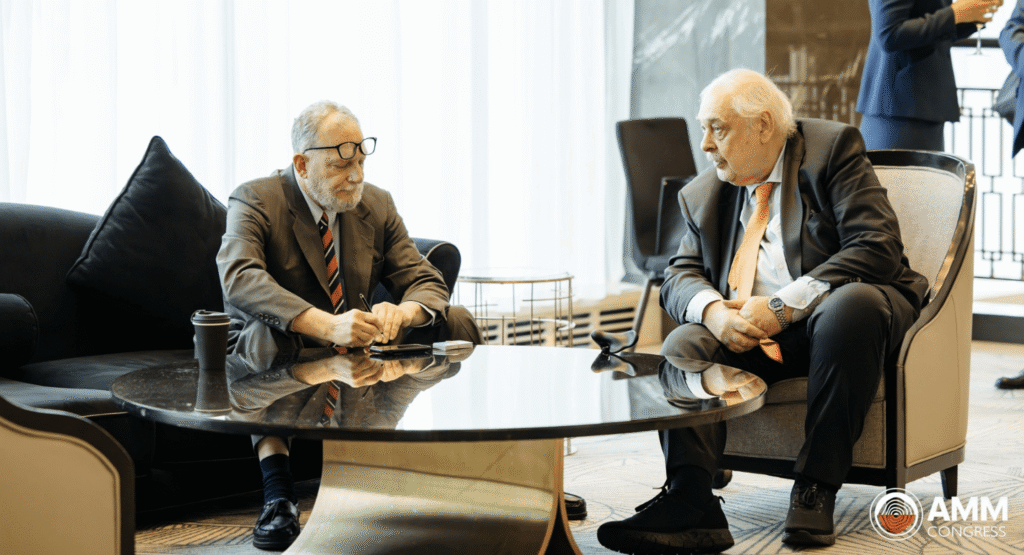
ASTANA — David L. Fogel, Assistant Secretary of Commerce and Director General of the United States and Foreign Commercial Service, told delegates at the 16th International Astana Mining & Metallurgy (AMM) Congress in Astana on June 11-12 that the United States is moving from discussion to strategic execution in Central Asia’s critical minerals sector. Fogel’s responsibilities at Commerce include leading the International Trade Administration’s Global Markets unit, which focuses on commercial diplomacy, export promotion, advocacy for U.S. companies, and foreign investment. Speaking in Astana, where the AMM Congress gathered top-level mining, metallurgy, technology, finance, and government leaders, Fogel said the United States had brought a historically large delegation to Kazakhstan, including more than 20 U.S. companies and representatives from across the U.S. government. The AMM Congress is one of the region’s major mining and metallurgy platforms. Fogel framed the visit as part of a broader U.S. strategic push to strengthen supply-chain resilience at a time of heightened global competition over minerals essential to energy, infrastructure, advanced manufacturing, and emerging technologies. Critical minerals, he said, are now among the top priorities for the United States, not only in terms of sourcing, but also processing. That emphasis is consistent with the Trump administration’s wider policy focus on processed critical minerals and derivative products as issues tied to economic security, national security, and America’s industrial base. Fogel placed the visit within the Trump administration’s broader effort to give Central Asia greater strategic attention, particularly as critical minerals, connectivity, and supply-chain resilience move higher on Washington’s agenda. He said the current push reflects sustained engagement from senior U.S. officials, including Ambassador Sergio Gor, U.S. Special Envoy for South and Central Asian Affairs, and is being carried forward in country by the U.S. team in Kazakhstan under U.S. Ambassador Julie Stufft. Fogel emphasized execution, saying talks related to the C5+1 Critical Minerals Dialogue the day before focused on turning a shared vision for cooperation into practical outcomes. “How do we take this vision of cooperation and put it into actionable projects?” he asked. According to Fogel, the objective is to turn plans into tangible ventures that can attract capital, technology, and long-term business participation. Fogel’s point was that the United States is looking for projects that strengthen critical minerals supply chains while building strategic relationships, rather than organizing endless rounds of declarations that lead nowhere. He presented the process as a disciplined commercial and strategic effort of identifying the right opportunities, minimizing risk for companies weighing where to direct their resources, applying consistent international standards, and creating conditions in which American companies can compete. [caption id="attachment_50309" align="aligncenter" width="1774"] Image: TCA[/caption] The practical implication of Fogel’s remarks was that enthusiasm for mineral resources alone is not enough to draw major long-term investment. Companies need reliable mapping, credible surveys, and consistent international standards that allow projects to be assessed and financed. In that sense, geological data and standards are not technical details, but the bridge between mineral potential and bankable projects backed up by solid in-country partners....

6 days ago

Kazakhstan and Saudi Arabia Sign Mining Cooperation MOU at AMM Congress

ASTANA — Kazakhstan and Saudi Arabia signed a Memorandum of Understanding (MOU) on cooperation in rare earth metals, critical minerals, and the broader mining space at the opening of the Astana Mining & Metallurgy Congress 2026 (AMM) on June 11, marking a significant new step in the two countries’ efforts to expand industrial and critical minerals ties. The MOU was signed by Kazakhstan’s Prime Minister Olzhas Bektenov and Saudi Arabia’s Minister of Industry and Mineral Resources, Bandar bin Ibrahim Al-Khorayef, who arrived in Astana to attend the AMM. The document aims to develop and strengthen cooperation between the Ministry of Industry and Mineral Resources of Saudi Arabia and the Ministry of Industry and Construction of the Republic of Kazakhstan in the field of mineral resources through the exchange of expertise in the mining industry, modern technologies used in mineral resource exploration, and raw materials evaluation. The agreement also covers cooperation across the mining value chain, but with a focus on rare earths and other mineral resources. Both sides are seeking to strengthen collaboration in extraction, processing, and higher value-added production. The signing comes as Kazakhstan is working to attract more investment into critical minerals and downstream processing, while Saudi Arabia is expanding its role in global mining and mineral supply chains as part of its wider economic diversification strategy. Bektenov and Al-Khorayef also held talks in Astana ahead of the congress. According to the Kazakh government, the discussions focused on further cooperation in the mining and metallurgical sectors and in concretizing prospects for joint projects in high-demand and scarce minerals. The sides also discussed investment and trade opportunities as well as geologic mapping and processing, leading to higher value-added production. The signing of the MOU at AMM, considered one of Central Asia’s main mining and metallurgy forums, had a diplomatic dimension at a time when rare earths and critical minerals are moving higher on the agendas of governments and investors. The congress brings together government officials, mining companies, investors, equipment suppliers, and industry experts. For Kazakhstan, the MOU fits into a broader effort to position the country not only as a source of mineral resources, but also as a platform for processing and higher-value production. Astana has been promoting geological exploration, investment in processing capacity, and strategic partnerships with foreign governments and companies. As Kazakhstan seeks to bring more of the value chain onshore, it is building on examples such as titanium production at Ust-Kamenogorsk Titanium and Magnesium and zinc processing at Kazzinc’s integrated facilities. For Saudi Arabia, the agreement reflects Riyadh’s growing interest in international mining partnerships. The Kingdom has been seeking to develop its domestic mineral sector while securing access to strategic raw materials needed for industrial development, clean energy technologies, and advanced manufacturing. At its AMM booth in Astana, Saudi Arabia’s Ministry of Industry and Mineral Resources highlighted its upcoming Future Minerals Forum, set for January 2027 in Riyadh; it is one of the world's leading mining events. Kazakhstan and the other Central Asian countries will be...

6 days ago

Opinion: Building Bridges Across Eurasia – Termez Dialogue 2026 Opens in Tashkent

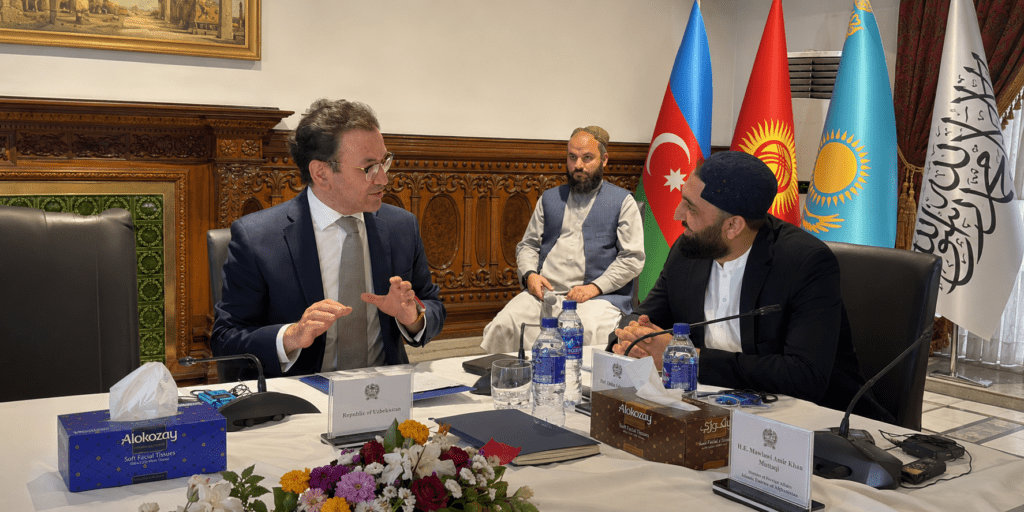
The second meeting of the Termez Dialogue on Connectivity between Central and South Asia opened on June 4 in Tashkent, Uzbekistan, bringing together senior representatives from Central Asia, South Asia, China, Russia, the Gulf Cooperation Council, Iran and Afghanistan for a high-level exchange on the future of regional connectivity and cooperation under the theme: “Peace, Connectivity, and Resilience: Shaping the Foundation for Shared Prosperity”. Eldor Aripov, director of the Institute for Strategic and Regional Studies under the President of Uzbekistan, opened the forum and highlighted its role in strengthening Central–South Asia connectivity. Under his leadership, it has become a respected venue for promoting regional cooperation and sustainable development. Aripov said Eurasia needs “not new dividing lines but spaces of trust, joint development, and open dialogue.” The agenda covered geopolitics, security, trade, investment, culture, climate resilience, and sustainable development. Aripov began by emphasizing the origins of the Termez Dialogue and its strategic purpose, which reflects Uzbekistan’s vision of fostering stronger ties between neighboring regions through cooperation and mutual benefit without sacrificing sovereign autonomy “The Dialogue’s essence lies in consistently building interstate relations on the principles of mutual benefit, good-neighborliness, and preventive diplomacy. What makes this platform unique is its inclusiveness — its ability to bring together not only government officials and diplomats, but also leading experts, scholars, business representatives, and civil society institutions.” This statement positioned the Termez Dialogue as a cornerstone of Uzbekistan’s vision for regional diplomacy. The idea was reinforced in 2022, when the UN General Assembly adopted resolution A/RES/76/295, “Strengthening Connectivity between Central and South Asia.” A recurring theme throughout Aripov’s remarks was inclusivity – understood in a non-ideological sense. He argued that lasting regional partnerships require participation from a diverse range of stakeholders. Reflecting on the platform’s progress, Aripov pointed to its rapid evolution into a recognized forum for regional engagement. He acknowledged the need to continue to build trust across sectors and borders. “In just one year, our platform has established itself as an effective venue for discussing transregional connectivity, developing practical initiatives, and strengthening trust among governments, experts, and international organizations,” Aripov said. This achievement demonstrates the Dialogue’s growing influence across Eurasia. The Chairman also made clear that the forum is entering a new phase. The focus, he said, must now shift from ideas to implementation. “Today’s meeting is intended to mark a qualitative transition — from conceptual discussions to practical implementation and the development of concrete mechanisms for transregional cooperation.” The statement reflects a commitment to delivering tangible outcomes and lasting partnerships. Aripov outlined that shared prosperity is one of the strongest foundations for regional stability: “When states are interconnected through shared economic interests and value chains, the risks of confrontation and instability naturally decrease.” This vision places trade, investment, and infrastructure cooperation at the heart of regional peacebuilding. “Alongside economics and climate issues,” Aripov argued, “culture remains an important pillar of our dialogue. Strong connectivity is not measured only in material terms. Very often, it is rooted in shared historical memory and common...

2 weeks ago

Washington Meets Ashgabat as Turkmen-American Business Cooperation Association Debuts

On May 7, the Turkmen-American Business Cooperation Association (TABCA) and the Embassy of Turkmenistan in Washington marked the organization’s official launch through a series of daylong events attended by members of the business community, diplomats, and dignitaries, including senior representatives from the U.S. Department of Commerce. Serving as a definitive bridge between the business communities of the United States and Turkmenistan, TABCA aims to promote bilateral trade, support market access initiatives, and encourage strategic partnerships and innovation across key sectors. More than 50 Turkmen and American companies joined the meetings, underscoring Ashgabat’s continued push toward a more open and globally engaged economy—one that inevitably brings both opportunity and risk. According to Esen Aydogdyyev, Turkmenistan’s Ambassador to the United States, “We are committed to cultivating broad international partnerships where agreements contribute to national development, economic resilience, and long-term independence for its citizens. Ashgabat is seeking broader investor and commercial engagement, which is compatible with our strategic autonomy and non-aligned status.” [caption id="attachment_48630" align="aligncenter" width="901"] (L/R) Viktoriya Frolova, Commerical Specialist, U.S. Embassy Turkmenistan, former Ambassador of Turkmenistan to the U.S., Meret Orozov, Chairman of the Board, Turkmen American Business Cooperation Association Nurgeldi Meredov, and Mr.Maksat Annamyradov, Board Member, Turkmen American Business Cooperation Association. Image: Kakajan Ovezov, Begench Arazalyyev[/caption] The initiative reflects Turkmenistan’s effort to strengthen ties with Western investors while maintaining its neutrality and independent foreign policy. Economic growth is strongest, the participants echoed, when enterprise creates broad opportunity and shared prosperity. Ambassador Aydogdyyev said that “priority areas for cooperation include trade and commerce, energy, transportation and communications, agriculture, renewable energy, the chemical and food sectors, as well as environmental protection. We especially value entrepreneurship and small business partnerships between Turkmenistan and the United States. In addition, we want Turkmen entrepreneurs to play a role in supporting economic growth and employment opportunities in the United States, which they are already contributing to today.” Win-Win is the Guiding Principle TABCA’s official launch in Washington is more than symbolic—it reflects a meaningful new chapter in U.S.-Turkmenistan relations, grounded in practical business cooperation and a shared commitment to cross-border investment. While some observers in Turkmenistan remain cautious about the risk of outside geopolitical agendas or economic models that favor a narrow set of interests under the banner of long-term prosperity and commercial diplomacy, the focus today is on building fair opportunity, productive partnership, and tangible commercial results. “U.S. and Turkmen businesses are already helping drive jobs and economic growth in both countries—a reminder of why stronger commercial ties matter,” said Nurgeldi Meredov, TABCA’s Chairman. “Our goal is to expand trade, boost investment, and create long-term partnerships that open new opportunities for companies on both sides.” [caption id="attachment_48631" align="aligncenter" width="712"] Jamila Kerimova, founder of “Ish nokady” (standing); image: Kakajan Ovezov, Begench Arazalyyev[/caption] At TABCA’s morning session, Turkmen businesses highlighted B2B engagement and SME growth opportunities, showcasing companies in logistics, e-commerce, manufacturing, consulting, and real estate. The presentations were followed by networking aimed at fostering direct commercial partnerships. Nurgeldi Meredov, alongside Meret Orazov, former Ambassador of Turkmenistan...

1 month ago

SelectUSA Investment Summit: U.S.-Kazakhstan Trade and Investment Relations on the Rise

Despite global economic headwinds and ongoing conflict in the Middle East, Kazakhstan is doubling down on its efforts to deepen commercial ties with the United States, an ambition on full display at this year’s SelectUSA Investment Summit in National Harbor, Maryland, near Washington, D.C. The annual forum, organized by the U.S. Department of Commerce, serves as the U.S. government’s flagship platform for attracting foreign direct investment. While SelectUSA is designed to attract foreign direct investment into the United States, Kazakhstan’s presence also reflects a broader shift: Kazakhstani companies are increasingly looking for ways to enter and scale in the U.S. market. [caption id="attachment_48403" align="aligncenter" width="1280"] Magzhan Ilyassov, Ambassador of Kazakhstan to the U.S. - image: TCA[/caption] “Kazakhstan views the United States not only as a strategic partner, but as an emerging priority destination for long-term investment and technological collaboration,” said Magzhan Ilyassov, Kazakhstan’s ambassador to the United States. “One of our missions is to facilitate collaboration for Kazakh companies to enter the American market while strengthening bilateral trade and innovation ties.” That vision is being driven in large part by Kazakhstan’s private sector. “We already have a significant number of companies operating in the U.S. market, including in fintech and construction,” said Timur Turlov, founder and CEO of Freedom Holding Corp. “We have learned how to meet international standards, and the products being developed within our ecosystems today are becoming truly global. I genuinely believe that our competitiveness has grown, and our business culture has matured. We are now going to see many more success stories of our companies expanding beyond Kazakhstan.” SelectUSA says its investment summit has helped generate more than $250 billion in new U.S. investment projects, supporting more than 125,000 jobs across the United States and its territories. This year marked a milestone in that evolving relationship. Kazakhstan became the first country from Central Asia and the South Caucasus to host an investment and trade roundtable at SelectUSA. The roundtable, focused on “Strategic Sectors and U.S. Market Entry Opportunities,” brought together government officials, investors, and business leaders, underscoring Kazakhstan’s transition from participant to initiative-taking player within SelectUSA. [caption id="attachment_48401" align="aligncenter" width="833"] U.S. Ambassador to Kazakhstan, Julie Stufft - image: TCA[/caption] U.S. Ambassador to Kazakhstan Julie Stufft said that a delegation of 30 Kazakhstani firms representing various business sectors has come to the U.S. for the summit to pursue trade and investment prospects. "This is a historic event for our relations and for Kazakhstani business - one that truly demonstrates the level of development Kazakhstani companies and investors have achieved, enabling them to enter the world's largest market: the United States," Ambassador Stufft stated. The roundtable highlighted a clear trend: Kazakhstani firms are increasingly looking outward. Companies from sectors including manufacturing, agri-tech, healthcare, food production, and digital platforms presented plans for entering or expanding in the U.S. market, while also outlining the challenges of regulatory compliance, localization, and competition. Support from institutions like SelectUSA and the U.S. Commercial Service remains critical in navigating these complexities. Economic conditions are...

1 month ago

Kazakhstan Central Bank Chief Eyes Deeper U.S. Investment Links

Addressing senior executives from more than a dozen Fortune 100 companies active in Kazakhstan at a U.S. Chamber of Commerce-hosted event in Washington, D.C., on April 14, Timur Suleimenov, Governor of the National Bank of Kazakhstan, laid out the country’s economic outlook and later spoke with The Times of Central Asia on a range of related issues. He was accompanied by Erzhan Kazykhan, President Kassym-Jomart Tokayev’s Special Representative for Negotiations with the United States, Deputy Foreign Minister Alibek Kuantyrov, and Kazakhstan’s Ambassador to the United States, Magzhan Ilyassov. [caption id="attachment_47306" align="aligncenter" width="1536"] Timur Suleimenov, Governor of the National Bank of Kazakhstan, with Javier Piedra[/caption] Kazakhstan’s U.S. Financial Stakes Amid Growth and Inflation Suleimenov offered a compelling case for Kazakhstan’s economy, citing steady growth, higher investment flows, and a deepening consumer market. Kazakhstan’s economy expanded 6.5% in 2025, marking a third straight year of growth above 5%. GDP per capita surpassed $15,000 – compared to approximately $3,162 in Uzbekistan and about $2,420 in Kyrgyzstan. Fixed-income investments rose 15% year-on-year, and foreign direct investment climbed to 20.5% (from 14.5%), broadening beyond oil. Suleimenov emphasized the Central Bank’s strong stewardship, citing a new tax and budget code to enhance fiscal discipline and monetary policy that supports investment, stressing that, “We will deal with inflation pressures and external shocks simultaneously while managing cryptocurrencies and private digital payments systems, which can weaken central bank control over money and policy transmission. The markets suggest that we have been doing an excellent job in a complex environment.” The government, Suleimenov said, is on track to consolidate the budget, with the deficit projected at 2.5% this year, 1.7% next year, and 0.9% by 2028, adding that this will strengthen fiscal-monetary coordination, and noting Kazakhstan’s debt-to-GDP ratio of 24% remains low compared with countries such as the United States (125%), Japan (230%), Italy (137%). As inflation declined to 11% in March 2026 from 11.7% the previous month, Suleimenov reassured TCA that officials regard it as transitory, saying that “inflation was driven by resilient domestic demand backed by fiscal and quasi-fiscal stimulation, external price pressures (Russian inflation, global food prices), increasing regulated prices (utilities and fuel), and tax reform (a VAT increase from 12% to 16%), with volatile and elevated inflation expectations. For these reasons, we responded with rate hikes and liquidity tightening, bringing inflation down to about 11%, with a further easing expected to single digits by the end of this year.” Suleimenov reaffirmed that “the United States is integral to Kazakhstan’s financial system and long-term asset strategy.” He noted that Kazakhstan manages approximately $190 billion in long-term assets, including some $75 billion in National Bank reserves, $60 billion in the National Fund, and $55 billion in the unified pension fund. Around one-third of these assets are invested in U.S. securities, while roughly $50 billion is managed by American firms, underscoring deep financial ties beyond industrial investment. TCA asked how U.S. sanctions and export controls affect Kazakhstan, a concern that was especially acute in the initial stages of the Russo-Ukrainian...

2 months ago

Kyrgyz Minister Sydykov Courts Investment in Washington

On the occasion of the annual IMF/World Bank meetings in Washington this week, the Prime Minister of Kyrgyzstan, Adylbek Kasymaliev, led a delegation to Washington D.C. for World Bank and IMF meetings, the Department of State Annual Bilateral Consultations, a meeting with Secretary of State Rubio, Deputy Secretary Landau and Under Secretary Hooker, as well as a number of other constructive dialogues and engagements with scholars, researchers, and authors. This trip marks the second high-level U.S. visit in a year, signaling Washington’s strategic interest and Kyrgyzstan’s willingness to deepen cooperation. Bakyt Sydykov, Kyrgyzstan’s Minister of Economy and Commerce, accompanied the Prime Minister. The delegation’s visit to Washington reinforces President Sadyr Japarov’s statement to President Donald Trump during the November 2025 C5+1 Summit, “I am confident that this event will provide an excellent opportunity for U.S. businesses to expand cooperation in sectors such as agriculture, e-commerce, information technology, transportation and logistics, tourism, and banking.” Following Japarov’s lead, Sydykov is actively engaging private and multilateral partners; state and Commerce meetings are meant to keep things moving and steady investor confidence. This shift towards deeper diplomatic, investment, and development ties is striking and certainly welcome in Washington. The shift reflects both an evolving Central Asian geopolitical landscape, post-Afghanistan dynamics, economic needs, diversification goals, and troubles in West Asia. Deeper engagement is also driven by ambitions to enhance regional transport and logistics integration. Kyrgyzstan’s approach departs from zero-sum logic, prioritizing win-win pragmatism and mutual gains. Minister Sydykov In an interview with The Times of Central Asia, Minister Sydykov said that this visit builds on the International Monetary Fund’s (IMF) recent official mission to Bishkek (March 18–April 1, 2026) and that “our banking sector is strong and well capitalized, as affirmed by the IMF, and we are well prepared against risk, enhancing oversight in the context of global volatility.” Commenting on the government’s fiscal management following the IMF’s guidance, Sydykov said: “To expand fiscal flexibility, we are mobilizing revenue across a range of standard taxation measures and raising expenditure efficiency with responsible internal wage policies, rationalized energy subsidies, and public investment management. We are pinpointing more prudent debt management measures, enhancing risk oversight, and rolling out tracking metrics to uphold long-term sustainability and credibility.” ⁠Looking forward, Sydykov noted that Kyrgyzstan is monitoring outlook risks related to external volatility, while also insisting that “we are working to hold down domestic inflation – always a challenge with rapid economic growth – and lower fiscal pressures. We assess that these endogenous variables remain manageable, even with increased exposure to cross-border trade and capital flows. While external volatility lies beyond our direct control, Kyrgyzstan is working with the IMF, other multilaterals, and domestic banks to maintain and build resilience. We are therefore strengthening buffers, recalibrating policies, and advancing accounting reforms to support performance and sustainable growth.” Responding to the ADB’s latest forecasts, Sydykov said Kyrgyzstan’s economy is moving toward greater stability and growth. After an 11.1% surge in 2025, growth is expected to slow to 8.9% in 2026 and 8.4%...

2 months ago

Minister Sydykov on the Bakai Bank Verdict and Kyrgyzstan’s Economic Path Forward

On April 13 in Washington, D.C., The Times of Central Asia’s Javier M. Piedra spoke with Kyrgyzstan’s Minister of Economy and Commerce, Bakyt Tolomushevich Sydykov, regarding the April 7 verdict in the “Bakai Bank vs. Open Dialogue Foundation” case before the Enterprise Court of Brussels - an important legal win for Kyrgyzstan and its stance in international financial markets. In a verdict with international implications for Kyrgyzstan and the region, the Enterprise Court of Brussels sided with Bakai Bank, a Kyrgyz financial institution, in connection with a high-profile defamation case between Bakai Bank and Open Dialogue Foundation (ODF) – finding that ODF published allegations about the bank’s financial conduct without sufficient evidence. The judgment marks a significant development in a cross-border reputational and financial dispute, setting a visible bar for accountability and offering a more balanced snapshot of Kyrgyz efforts to cultivate transparency and compliance in its banking sector. Kyrgyz government officials responded to the ruling with a practical and positive outlook, acknowledging that the country has prioritized policy, monitoring, and enforcement steps to bolster integrity and trust in its institutions. This ruling is expected to reinforce public confidence and strengthen the long-term resilience of Kyrgyzstan’s governance framework. In Washington D.C. this week, Sydykov told TCA that, “We welcome this decision not just as an affirmation of Bakai Bank, but also for our broader financial system. It helps to convey our message to policymakers, diplomats, investors, and partners that Kyrgyzstan is open for business – and a ready contributor to regional and international trade. Our financial institutions operate in line with international standards, compliance expectations, and responsible governance. We are glad to move forward with strengthening our banking system and growing Kyrgyzstan’s economy for the benefit of its citizens.” Case background The proceedings were brought before the French-speaking Enterprise Court of Brussels (Tribunal de l’entreprise francophone de Bruxelles) after Bakai Bank challenged a series of publications issued by the Open Dialogue Foundation in 2023. The NGO had alleged that Bakai Bank was involved in facilitating financial transactions linked to sanctions circumvention and networks connected to Russian capital flows following the expansion of Western sanctions in early 2022. Bakai Bank rejected these allegations as unsubstantiated and damaging to its international reputation and access to financial markets. It subsequently filed a civil action in Belgium, where the ODF is active and publishes much of its advocacy material. Court proceedings and findings In its judgment, the Brussels court examined whether the Open Dialogue Foundation had sufficient factual grounds to support its published claims. The court found that the NGO’s statements were presented as factually assertive allegations rather than opinion or conjecture, thereby requiring a higher evidentiary threshold. The court concluded that the ODF had failed to provide adequate supporting evidence for its assertions regarding Bakai Bank’s alleged involvement in illicit financial activity. As a result, the court determined that the publications were unlawful in their form and impact, particularly in relation to reputational harm inflicted on the bank. The ruling ordered the ODF...

2 months ago

Opinion – Kazakhstan’s New Constitution Sends a Key Signal for Global Partners

In a nationwide referendum on March 15, over 87% of voters approved a new constitution for Kazakhstan. It was a significant victory for President Tokayev and his administration, all the more so because voter turnout exceeded 73%. Kazakhstan’s new constitution is a key signal for global partners. It replaces the old bicameral system with a unicameral legislature, establishes the Halyk Kenesi (People’s Council), an advisory body intended to promote national dialogue, and creates a vice presidency to provide for clearer succession at the top of the state. The new constitution is the outcome of a strategy that has been building for some time. Now, backed by a clear majority, Kazakhstan’s leadership is seeking to strengthen governance by redistributing power, lessening political ambiguity, and grounding politics in shared values—however difficult that may be to accomplish. All of this is being pursued despite—and perhaps because of—the nation’s history of corruption and nepotism. Kazakhstan’s constitutional reforms were deliberate, structural measures designed to reorient the country’s governmental machinery toward what supporters describe as the common good. That, at least, is the stated intention, reflected in a slogan often used by backers of the new constitution: “A strong president, an influential parliament, and an accountable government.” Some outside observers have viewed the new constitution favorably, framing it as an effort to streamline governance and clarify institutional roles, while others have warned that the changes could impede sociopolitical progress and human rights by prioritizing stronger governance. Some also see the reforms as signaling a move toward more restrictive political practices. These alarmist interpretations are overstated. Astana’s constitutional reforms fit into an ongoing political effort, using the law to strengthen civic involvement and the well-being of the community as a whole, not just individual interests. The new constitution did not emerge ex nihilo for the purpose of freezing elite advantages at the expense of the people, as others in Kazakhstan and the broader region have done in the past. That interpretation of constitutional change in Central Asia overlooks the government’s broader reform agenda, whatever its perceived shortcomings. In his March 31 article, A New Constitution for a Just, Strong, and Prosperous Kazakhstan, President Tokayev framed Kazakhstan as a rules-oriented state, emphasizing rights, judicial independence, and impartial institutions—an approach that stands out regionally despite open questions about follow-through. Tokayev emphasized that “The new constitution is about people, not just better government.” The constitution’s largest section is dedicated to protecting freedoms and rights based on common sense and traditional values, including privacy, personal data, private property, and home inviolability. Judicial independence is reinforced to ensure that all citizens receive qualified, impartial defense – at least that’s the intent. Amendments require a public referendum, ensuring that fundamental choices remain popular. Religious liberty is guaranteed in a secular society. The constitution also presents Kazakhstan as a more attractive and predictable place to do business, for both domestic and foreign investors. The constitution, according to Tokayev, “sets clear rules for economic activity.” As such, the reforms create a political culture that aims...

2 months ago