• KGS/USD = 0.01143 0%
  • KZT/USD = 0.00216 0%
  • TJS/USD = 0.10684 -0.28%
  • UZS/USD = 0.00008 0%
  • TMT/USD = 0.28571 0%
  • KGS/USD = 0.01143 0%
  • KZT/USD = 0.00216 0%
  • TJS/USD = 0.10684 -0.28%
  • UZS/USD = 0.00008 0%
  • TMT/USD = 0.28571 0%
  • KGS/USD = 0.01143 0%
  • KZT/USD = 0.00216 0%
  • TJS/USD = 0.10684 -0.28%
  • UZS/USD = 0.00008 0%
  • TMT/USD = 0.28571 0%
  • KGS/USD = 0.01143 0%
  • KZT/USD = 0.00216 0%
  • TJS/USD = 0.10684 -0.28%
  • UZS/USD = 0.00008 0%
  • TMT/USD = 0.28571 0%
  • KGS/USD = 0.01143 0%
  • KZT/USD = 0.00216 0%
  • TJS/USD = 0.10684 -0.28%
  • UZS/USD = 0.00008 0%
  • TMT/USD = 0.28571 0%
  • KGS/USD = 0.01143 0%
  • KZT/USD = 0.00216 0%
  • TJS/USD = 0.10684 -0.28%
  • UZS/USD = 0.00008 0%
  • TMT/USD = 0.28571 0%
  • KGS/USD = 0.01143 0%
  • KZT/USD = 0.00216 0%
  • TJS/USD = 0.10684 -0.28%
  • UZS/USD = 0.00008 0%
  • TMT/USD = 0.28571 0%
  • KGS/USD = 0.01143 0%
  • KZT/USD = 0.00216 0%
  • TJS/USD = 0.10684 -0.28%
  • UZS/USD = 0.00008 0%
  • TMT/USD = 0.28571 0%

Our People > Joe Luc Barnes

Joe Luc Barnes's Avatar

Joe Luc Barnes

Regional Editor and Journalist

Joe Luc Barnes is a British journalist and author who focuses on the countries of the former Soviet Union. He has a Master’s degree in Russian and East European Politics from the University of Oxford. His book, “Farewell to Russia: A Journey Through The Former USSR”, will be published by Elliott and Thompson in Spring 2026.

Articles

Metro Expansion Key to Almaty Infrastructure Plans

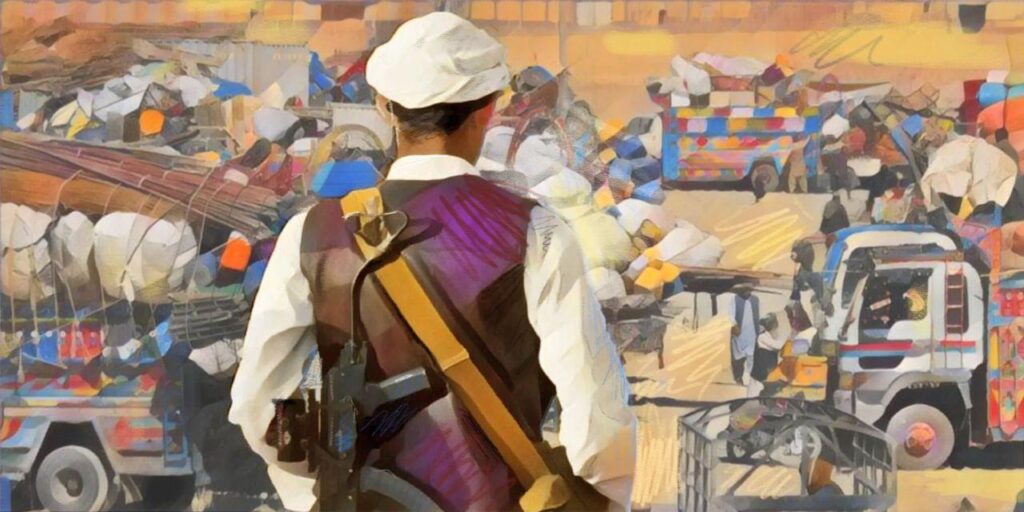
Next year, Almaty plans another incremental step in the development of its public transport infrastructure with the opening of a new station at Kalkaman. This should see the tentacles of the transport system shift towards the west of the city. In the future, there are also plans to extend the metro north to Alatau, where the government’s “smart city” is being developed. Investment in public transport is welcome, particularly with vocal complaints from residents about ever-increasing traffic problems and their contribution to the city’s winter smog. “The expansion of the metro is considered one of the key tools for improving the environmental situation in Almaty,” a spokesperson for the Almaty mayor’s office (or Akimat), told The Times of Central Asia. “Increasing the share of passenger transportation via the subway reduces the use of cars, decreases traffic congestion, lowers emissions, and contributes to improved air quality.” The ambitious new metro project is in addition to over 600 new buses expected to be added to the Almaty Bus fleet this year. But despite these schemes, the traffic problem shows little sign of abating. It begs the question: has the city got public transport priorities right? [caption id="attachment_39565" align="aligncenter" width="1600"] New-look trolleybuses and electro-buses can be seen as part of Almaty’s modern fleet; image: TCA, Joe Luc Barnes[/caption] The rise of the automobile “Traffic jams in Almaty began in the early 2000s, when the economic situation improved and people started buying cars,” Dauren Alimbekov, a high-profile blogger on Almaty transport, told The Times of Central Asia. He adds that the privatisation of other forms of public transport exacerbated this problem. The tram network was suspended in 2015 after two high-profile accidents, with the tracks being dismantled in 2017. Its disappearance coincided almost exactly with the arrival of ride-hailing services such as Yandex Go! in July 2016. By 2023, over 200,000 residents were moonlighting as Yandex Go! drivers to earn extra money. “In recent decades, the city has been planned with cars in mind, with major thoroughfares such as Al-Farabi almost totally lacking in convenient pedestrian crossings,” said Alimbekov. This influx of drivers has created problems. Private cars are a major contributor to air pollution in the city. On some days earlier this year, Almaty recorded the worst pollution in the world. [caption id="attachment_39564" align="aligncenter" width="1600"] A lack of dedicated bus lanes slows journey times and prevents more people from using public transport; image: TCA, Joe Luc Barnes[/caption] Public transport That is not to say that there is no public transport in the city. Indeed, the Almaty Metro is the only metro system in Central Asia to have opened since the collapse of communism. Trains began running in 2011, but they only travelled between an initial five stations. Two more opened in 2015, which saw a spike in passenger numbers. Today, there are eleven stations, although most of these remain along Abay Avenue, giving it little practical value to most residents. The metro system does not connect to either of the city’s main train...

6 months ago

Made in Kazakhstan: Building an AI for a Nation

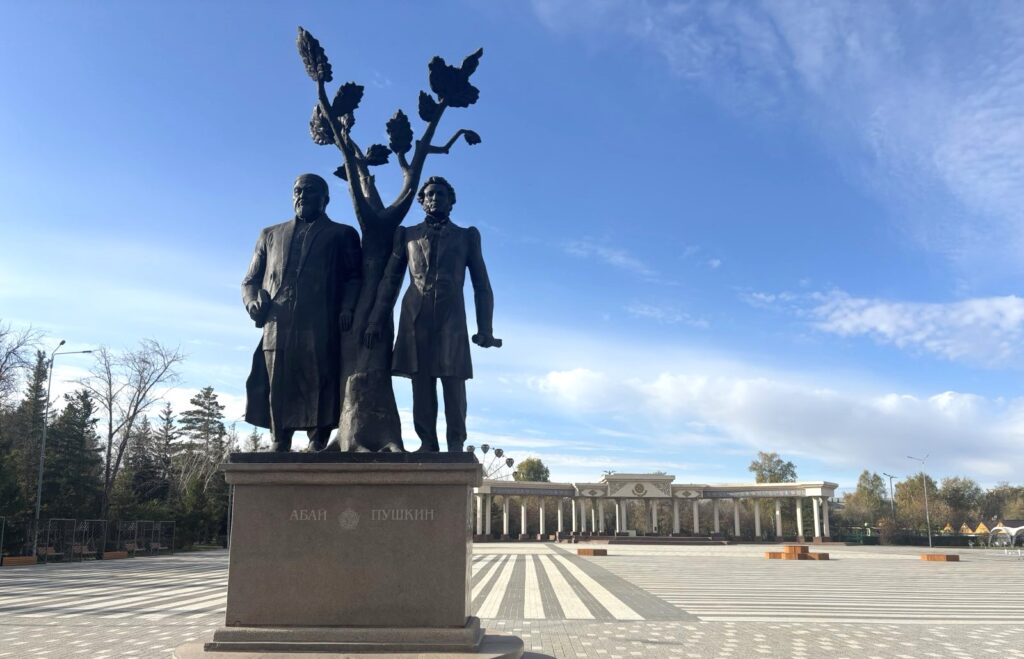
On a cold November morning at Al-Farabi University in Almaty, students gathered in a drafty lecture hall, many still wrapped in their coats. The setting was more reminiscent of a forgotten Soviet-era classroom than a venue for cutting-edge technology. But amid the peeling paint and rickety seats, some of the country’s most ambitious young researchers had come to discuss Kazakhstan’s latest steps into the world of artificial intelligence. The star billing came from the Institute of Smart Systems and Artificial Intelligence (ISSAI) at Nazarbayev University in Astana. Last year, the institute released KazLLM, its first Large Language Model (LLM), to much fanfare, inspired by a philosophy of building AI systems that understand the country’s language and culture rather than borrowing second-hand from Silicon Valley. But can Kazakhstan keep pace in the global AI race? And despite the government’s efforts to back local products, can it convince the population to use them over Western alternatives? Recent developments The Institute’s founder, Doctor Huseyin Atakan Varol, was keen to stress that steps have been taken to develop Kazakhstan’s native AI ecosystem over the past twelve months. “Since the release of KazLLM last year, we have witnessed what I would describe as a ‘Cambrian explosion’ of generative AI development,” he told The Times of Central Asia. “The KazLLM project enabled us to create the team and amass the know-how to build a new generation of multilingual and multimodal models tailored to Kazakhstan’s needs.” Among these, he lists Oylan, a multimodal language–audio-vision model; MangiSoz, a multilingual speech and text translation engine; TilSync, a real-time subtitle and translation engine; and Beynele, a text-to-image generation model. All these models have been fine-tuned to better reflect Kazakh culture and linguistic norms. “In short, we are building AI made in Kazakhstan, by Kazakhstani youth, for Kazakhstan –models that understand the language, culture, and needs of the people,” said Amina Baikenova, ISSAI’s Acting Deputy Director of Product and External Affairs, in an interview with TCA. [caption id="attachment_39061" align="aligncenter" width="1600"] The old lecture hall at Al-Farabi University, Almaty; image: TCA, Joe Luc Barnes[/caption] Much of this progress stems from the enthusiasm of a generation of students, whom Kazakhstan has invested heavily in training. Indeed, the country has become a magnet for young researchers from across Central Asia. “After completing my bachelor’s degree in Kyrgyzstan, I was looking for opportunities to build my research career. That’s why I moved to Kazakhstan,” said Adam Erik, an ISSAI student from Bishkek. “Kazakhstan has become a scientific center of Central Asia.” Erik believes strongly in building local language models. “There is a thing called bias in data sets,” he said. “Models from the U.S., China, or Europe are incredible, but they’re trained mostly on Western culture and literature. Local solutions are still necessary.” These sentiments reflect a common frustration among researchers: even the best global AI systems stumble when asked about Kazakh idioms, rural social norms, or local history. The data used to train the world’s most powerful models rarely includes more than a sliver...

6 months ago

Petropavl – A City of Two Tales

No one seems to like the name Petropavl. The city, situated in northern Kazakhstan in a peninsula of territory that juts into Russian Siberia, has long lived between two worlds. From monuments to manhole covers, there have long been conflicting stories about who belongs here. In the Russian telling, the city was founded as a fortress on “empty steppe” in 1752 by Tsarist troops, named for Saints Peter and Paul – in Russian, Petropavlovsk. For over a century, it remained a frontier post that guarded the empire’s edge before the push into Central Asia in the mid-nineteenth century. Yet for Kazakhs, this place was never empty: long before the Cossacks came, nomadic Kazakhs from the Middle Zhuz grazed their herds here along the Ishim River, calling the place Qyzyljar – “the red ridge”. [caption id="attachment_38326" align="aligncenter" width="1600"] Manhole covers imprinted with Qyzyljar; image: TCA, Joe Luc Barnes[/caption] Since independence, Kazakhstan has restored the names of thousands of cities, towns, and villages across the country in order to give the land a more Kazakh stamp. But Qyzyljar has not returned. Instead, the authorities’ immediate solution has been to Kazakh-ify the Russian name, leaving us with Petropavl. It’s a fudge that satisfies no one, and the official name is rarely heard on the city streets. In this overwhelmingly Russian-speaking city, most continue to call it “Petropavlovsk,” or even “Piter,” echoing Saint Petersburg’s nickname. Ethnic Russians Ethnic Russians now make up just under half the population of the North Kazakhstan region. In individual cities such as Petropavl, the proportion is far higher, although official information is hard to come by. The boundaries of Kazakhstan’s provinces, or oblasts, were gerrymandered in 1997 to soften perceptions of Russian dominance, but a mere walk around the city makes it clear that about two-thirds of the population is not Kazakh. These numbers and the region’s proximity to Russia have long made it a focus of uneasy attention. When Moscow annexed Crimea in 2014, President Vladimir Putin remarked that Kazakhstan had “never had statehood” before Nursultan Nazarbayev, and Dmitri Medvedev called it an “artificial state” in 2022 (although he subsequently claimed to have been hacked). Other Russian lawmakers have called northern Kazakhstan “a gift from Russia,” while nationalist commentators as far back as Solzhenitsyn have called for Northern Kazakhstan to be “reunited” with Russia. Dr. Petr Oskolkov, affiliated researcher at the Begin-Sadat Center for Strategic Studies, was part of a team that undertook research on the ethnic Russian population in Kazakhstan in 2020-21, and believes that these fears are overblown. “Initially, there was a lack of public trust in the prospects of Kazakhstani statehood, especially among Russian-speakers. Nowadays, these doubts are absent,” he told The Times of Central Asia. “Moreover, the overall level of the identification with Kazakhstan, and the quality of life, have both grown significantly since the 1990s, so the idea [of separatism] has lost its main appeal.” [caption id="attachment_38320" align="aligncenter" width="1200"] Soviet mosaic; image: TCA, Joe Luc Barnes[/caption] Nevertheless, doom-mongers in Astana worry that Petropavlovsk...

6 months ago

Kazakhstan’s Two Futures on Display at Energy and Digital Forums in Astana

As the temperatures in Astana dipped below zero this week, the capital played host to two international gatherings that offered sharply contrasting visions of Kazakhstan’s future. On one bank of the Ishim River, industry veterans and government officials gathered for Kazakhstan Energy Week in the cavernous halls of the Independence Palace. Just across town, the Astana Digital Bridge forum drew swarms of young entrepreneurs and tech enthusiasts to the gleaming Expo Center.  The Old Guard Assembles Energy Week opened at 10 a.m. sharp on Thursday, October 2nd. Beneath gold-and-jade ceilings, chandeliers clinging to them like stalactites, padded white leather chairs were lined up neatly on stage. They were filled by some of the oil industries leading lights; dark suits were de rigueur. Over lunch, a string quartet performed Gardel’s Por Una Cabeza, while the final evening saw delegates invited to see Verdi’s Rigoletto at Astana’s ostentatious opera house.  The format was carefully stage managed. Executives delivered their speeches like lecturers at a school assembly, with the audience listening politely. Questions from the floor were not invited. There was a certain quiet bullishness amongst those present – the air of an industry that had been written off, but far from ready to concede relevance. Oil and gas continue to provide 35% of GDP and 75% of exports, despite talk of an energy transition. “We expected a tailing off in demand on a global level, and this has not happened,” said Richard Howe, Executive Vice President of Shell’s Exploration and Production division during a panel of energy executives. Beside him, Askhat Khassenov, Chairman of the Board at KazMunayGas, was a little more smug – “It looks like oil and gas are going to be around for a lot longer than some had anticipated,” he said. Nevertheless, regular attendees at Kazakhstan’s annual energy shindig noted that the event was notably quieter than in previous years. Russians were absent, and Europeans few and far between. Delegations from neighboring Central Asian and Middle Eastern states padded out the numbers, perhaps reflecting countries in a similar situation. The audience skewed heavily male and middle-aged. While a side event titled “Women in Oil” took place in a nearby hall, the real worry was generational. Both Howe of Shell and Bakhodirjon Sidikov of Uzbekneftegas admitted that talent – or the lack of it – was their biggest challenge. Concerns about the lack of top scientists have also been taken up at the highest level. “Today, 90% of university graduates have bachelor's degrees. Meanwhile, the proportion of PhD holders is less than 1%,” President Kassym-Jomart Tokayev said earlier this week. “Therefore, it is necessary to increase the number of grants for doctoral studies, with preference given to technical specialties.” If the message of Energy Week was that Kazakhstan’s present still runs on oil and gas, it was also clear the sector is worried about who will run it tomorrow.  [caption id="attachment_37005" align="aligncenter" width="355"] Image: Joe Luc Barnes, TCA[/caption] New Kazakhstan For the future talent, you only had to drive...

7 months ago

Almaty Gears Up to Host Real Madrid’s Galácticos

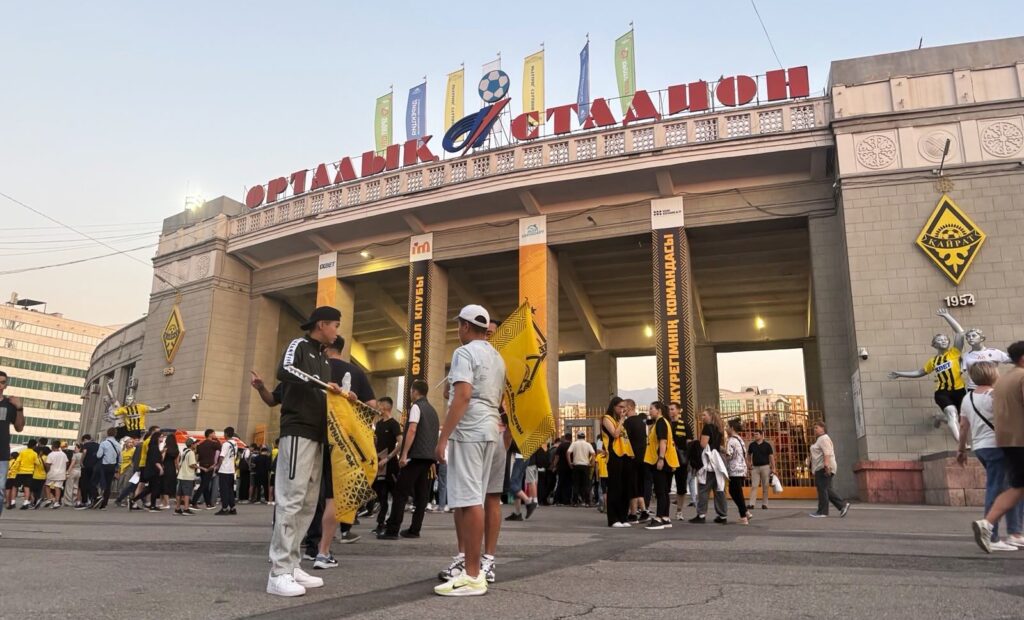
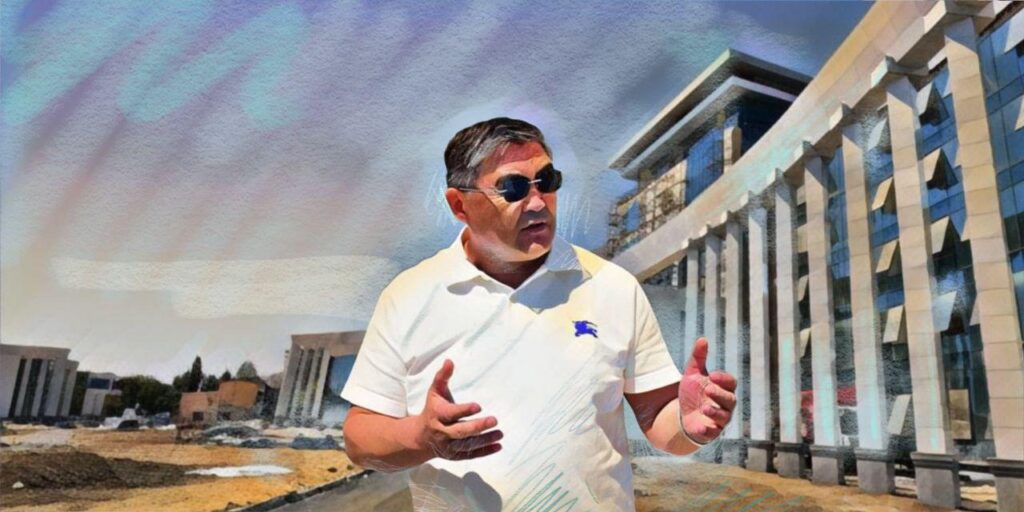
Football fans across Kazakhstan are preparing for arguably the biggest sporting occasion in the country’s history on Tuesday. Kairat Almaty play their first ever home Champions League game against the mighty Real Madrid at the Almaty Central Stadium. The arrival of Madrid’s Galácticos has electrified the city, with fans camping outside the Intercontinental Hotel in Almaty just to catch a glimpse of the visiting superstars. Kairat lost their first match 4-1 to Sporting Lisbon, a scoreline that the management felt didn’t do justice to a spirited performance. “The team lost focus for about five minutes, conceding three goals, but never gave up and scored a goal in the Champions League – the first in our club’s history. That experience is valuable,” Kairat Boranbaev, the club’s president, told The Times of Central Asia at the club’s training complex this week. “We understand that the Champions League has the 36 best teams in Europe, so the level is extremely high. We don’t stress about the result; the team gains huge experience.” Boranbaev said, proudly adding that six Kairat academy products played in the match. [caption id="attachment_36737" align="aligncenter" width="1600"] Kairat Almaty President, Kairat Boranbaev; image: TCA, Joe Luc Barnes[/caption] A Ten-Year Journey The fifty-nine-year-old president and business magnate is not surprised his club has reached the higher echelons of European football. “This strategic work was built more than ten years ago, and we have been moving toward it all these years. I think it’s a natural result, a systematic effort by our club.” Boranbaev says that when he took over the club’s presidency in 2012, the facilities were well below par. Kairat is traditionally Kazakhstan’s most storied club, their famed black-and-yellow jerseys representing all-Kazakhstan in the Soviet Top League in the communist years. But they had fallen on hard times in the independence era, even splitting into two rival clubs for a time. “When we arrived, there was only one burned-down base from Soviet times,” Boranbaev told TCA. “We started developing, learning what football really is. Today, all the infrastructure is established, youth player development is in place, and the coaching staff training is organized. That’s why the results we’ve achieved today are the outcome of years of stable, professional management.” [caption id="attachment_36738" align="aligncenter" width="1600"] Kairat Almaty's third qualifying round tie against Slovan Bratislava; image: TCA, Joe Luc Barnes[/caption] Nurturing Youth Kairat differs from other Kazakh teams in the emphasis they place on their academy. While clubs such as FK Astana and Aktobe often import talent rather than investing in grassroots football, Kairat aims to develop its own. The club’s most famous academy product is seventeen-year-old Dastan Satpaev, who will move to London side Chelsea upon turning eighteen. But during TCA’s tour of the stadium complex, we bump into the club’s newest teenage star, Sherhan Kalmurza, the eighteen-year-old goalkeeper who has been catapulted into the first XI due to injuries to other senior players. “He’s become famous,” booms Boranbaev. “He now has 40,000 Instagram followers after just two games!” Kairat’s president notes that...

7 months ago