• KGS/USD = 0.01143 0%
  • KZT/USD = 0.00198 0%
  • TJS/USD = 0.10695 -0.37%
  • UZS/USD = 0.00008 0%
  • TMT/USD = 0.28575 0%
  • KGS/USD = 0.01143 0%
  • KZT/USD = 0.00198 0%
  • TJS/USD = 0.10695 -0.37%
  • UZS/USD = 0.00008 0%
  • TMT/USD = 0.28575 0%
  • KGS/USD = 0.01143 0%
  • KZT/USD = 0.00198 0%
  • TJS/USD = 0.10695 -0.37%
  • UZS/USD = 0.00008 0%
  • TMT/USD = 0.28575 0%
  • KGS/USD = 0.01143 0%
  • KZT/USD = 0.00198 0%
  • TJS/USD = 0.10695 -0.37%
  • UZS/USD = 0.00008 0%
  • TMT/USD = 0.28575 0%
  • KGS/USD = 0.01143 0%
  • KZT/USD = 0.00198 0%
  • TJS/USD = 0.10695 -0.37%
  • UZS/USD = 0.00008 0%
  • TMT/USD = 0.28575 0%
  • KGS/USD = 0.01143 0%
  • KZT/USD = 0.00198 0%
  • TJS/USD = 0.10695 -0.37%
  • UZS/USD = 0.00008 0%
  • TMT/USD = 0.28575 0%
  • KGS/USD = 0.01143 0%
  • KZT/USD = 0.00198 0%
  • TJS/USD = 0.10695 -0.37%
  • UZS/USD = 0.00008 0%
  • TMT/USD = 0.28575 0%
  • KGS/USD = 0.01143 0%
  • KZT/USD = 0.00198 0%
  • TJS/USD = 0.10695 -0.37%
  • UZS/USD = 0.00008 0%
  • TMT/USD = 0.28575 0%
25 January 2026

Our People > Joe Luc Barnes

Joe Luc Barnes's Avatar

Joe Luc Barnes

Journalist

Joe Luc Barnes is a British journalist and author who focuses on the countries of the former Soviet Union. He has a Master’s degree in Russian and East European Politics from the University of Oxford. His book, “Farewell to Russia: A Journey Through The Former USSR”, will be published by Elliott and Thompson in Spring 2026.

Articles

The Battle to Keep Kazakhstan Reading

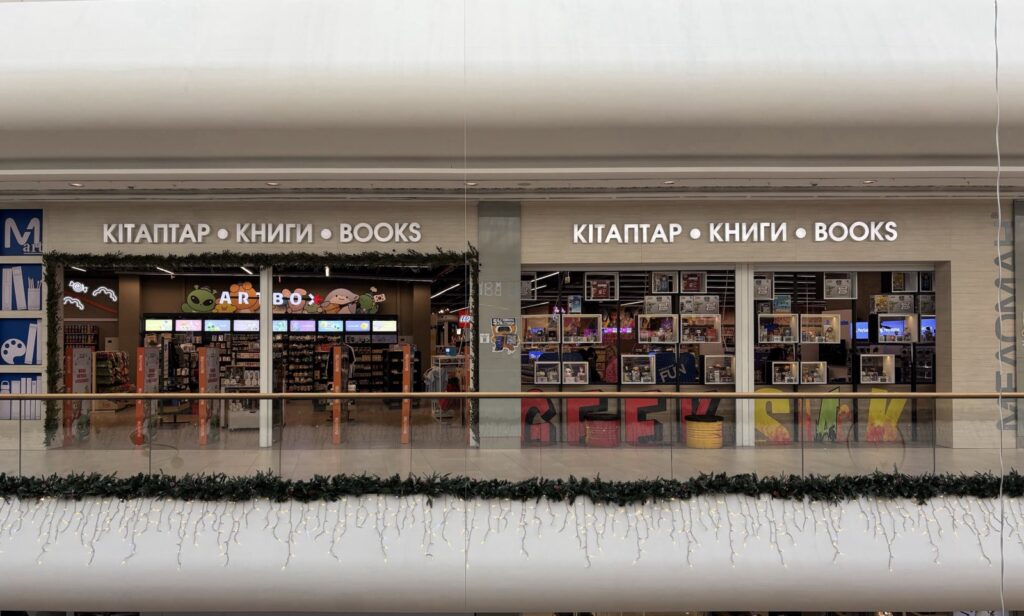
Mika’s Books and Pencils was a hole-in-the-wall bookstore in Almaty, but in December 2025, it was forced to vacate its former premises in the center of the city. “The rent was simply too high,” the store’s owner, Elmira Kireyeva, told The Times of Central Asia. Mika’s is not Kazakhstan’s only struggling bookseller. Kireyeva describes the situation for bookstores across the country as “extremely difficult,” even for the large chains. Physical bookstores are firstly threatened by the growth of e-commerce. In 2024, Kazakhstanis purchased over 2.3 million books on Wildberries, a Russian site similar to Amazon. This represented a 52% increase from 2023. But the economic situation is also having an effect. “Taxes have increased, including VAT on books. At the same time, people’s incomes are shrinking, so books are becoming a luxury,” Kireyeva said, noting that books are often printed abroad, which has seen them become a victim of the falling purchasing power of the national currency, the tenge. More worryingly for booksellers is that people are reading less than they once did. This is part of a global phenomenon, particularly among the young. A large share of undergraduate students in the United States claim to have never read a book. British historian Sir Niall Ferguson has recently argued that this decline is evident across the West, while the number of Russians who read at least once a week fell from 49% to 28% between 1994 and 2019. Many believe technology is to blame. “In the age of social media, human attention faces unprecedented competition,” Shyngys Muqan, founder of Mazmundama, a Kazakh-language publisher, told TCA. “Platforms built around short-form video are especially effective because they exploit a basic neurological tendency: the pursuit of dopamine with minimal cognitive effort. Compared to reading, scrolling requires little concentration, imagination, or sustained mental work, yet it delivers immediate emotional reward.” Kireyeva agrees that screens have certainly had an effect. “It’s not just phones; it’s also information overload. People can’t read long texts anymore – social media has trained us to read only short fragments,” she said. [caption id="attachment_42613" align="aligncenter" width="1600"] The classic literature section in Meloman, one of Kazakhstan's largest book chains; image: Joe Luc Barnes[/caption] Kazakhstan has been affected worse than most. According to CEOWorld’s Book Reading Index 2024, Kazakhstanis read less than almost every country in the world. Of the 102 countries surveyed, Kazakhstan ranked 95th, with the average Kazakhstani reading just 2.77 books a year. This was behind every other Central Asian country surveyed (Kyrgyzstan – 3.96; Turkmenistan – 3.18; Tajikistan – 4.01), and far behind Russia (11). The results led one local newspaper to quip that, at this rate, it would take the average Kazakhstani 2.5 years to read the entire Harry Potter series. There are various structural factors which make Kazakhstan a particularly barren zone for readers. The first is geography – people in rural areas are very poorly served, and library collections are small. While Almaty residents spend an average of 2,300 tenge ($4.50) per family per quarter...

2 days ago

Nomad TV: Russia’s Latest Media Venture in Kyrgyzstan

Kyrgyzstan has a new TV station. At first glance, it’s the kind of cozy, local news channel satirized in 2004’s Anchorman. The headline item on December 10th was the fact that it had snowed in Bishkek, with the on-screen reporter treading around the city asking residents whether they felt cold. “Not really,” is the general response, given that plummeting temperatures are hardly a new phenomenon in the Kyrgyz capital. “What kind of precautions did you take against the weather?” the reporter asks one gentleman. “Put on a hat and gloves,” comes the droll reply. This piece is followed by an interview with a representative of the city’s police service, advising people to tread carefully on the icy pavements. Similar soft news items follow: an interview on the progress of Asman eco-city on Lake Issyk Kul; the modernization of a factory in Bishkek; and the announcement of a new coach for the national football team. These are hardly stories to make waves. Indeed, most people in Bishkek are unaware of the new channel’s existence. “It hasn't been a major discussion point; the only presence that I felt is this huge, green box that has been installed on the central square,” Nurbek Bekmurzaev, the Central Asian editor of Global Voices, told The Times of Central Asia, referring to the broadcaster’s temporary studio at the heart of the city. Yet Nomad is one of the best-funded media outfits in the country, offering salaries twice as high as those paid by rival organizations. And, in one form or another, it seems clear that the money is coming from the Russian state. So why has the Kremlin, which is hardly underrepresented in Kyrgyzstan’s media sphere, decided to throw such sums at a local news station? [caption id="attachment_40853" align="aligncenter" width="1600"] Nomad TV’s temporary studio on Ala-Too square in the heart of Bishkek; image: TCA, Joe Luc Barnes[/caption] A Bold Start Nomad’s initial coverage was not so banal. On November 23, the channel began broadcasting with a cascade of high-profile interviews linked to Vladimir Putin’s state visit to Kyrgyzstan on November 25-27. This followed a lavish launch ceremony at the city’s opera house, attended by Russian Foreign Ministry spokeswoman, Maria Zakharova, and the Kyrgyz deputy Prime Minister Edil Baisalov. Putin himself lauded the new channel in his speech on November 26, and gave its chief editor, Natalia Korolevich, an exclusive interview the following day. This followed a feverish autumn, which the broadcaster had spent poaching talent from newsrooms around Bishkek. This included Mirbek Moldabekov, a veteran broadcaster from the state television channel, UTRK; the head of Sputnik in Kyrgyzstan, Erkin Alimbekov; and his wife, Svetlana Akmatalieva, a journalist from the National TV and Radio Corporation. The channel’s producer is Anna Abakumova, a former RT journalist who gained fame reporting from Russian-occupied territories in Ukraine. These aggressive recruitment tactics have split the profession in Kyrgyzstan. Journalist Adil Turdukolov asserted in an interview with Exclusive.kz that anyone who has chosen to work for Nomad “is not particularly concerned with...

1 month ago

Icy Relations Between Pakistan and Afghanistan Threaten Central Asian Trade Plans

On November 25, the Afghan authorities accused Pakistan of a new round of airstrikes in eastern Afghanistan. The bombing killed nine children and a woman, injuring several others. The attacks are the latest escalation in rapidly worsening tensions between Islamabad and the Taliban-led government in Kabul, with key border crossings currently closed, and Afghan refugees being expelled from Pakistan. At the heart of the crisis is Pakistan’s claim that Kabul is providing support to the Tehrik-e-Taliban Pakistan (Pakistani Taliban, or TPP), a militant group seeking to topple Pakistan’s government and impose its strict interpretation of Islamic law. The fallout may ripple beyond bilateral relations, with significant consequences for Central Asian trade, particularly the Pakistan-Afghanistan-Uzbekistan plan for a Trans-Afghan railway. The planned 647-kilometer line is set to connect the northern Afghan city of Mazar-e-Sharif with Peshawar in Pakistan. When combined with existing infrastructure, this will mean that trains can travel from southern Uzbekistan all the way to the Pakistani ports of Gwadar and Karachi, granting landlocked Uzbekistan and Afghanistan a long-sought gateway to the Indian Ocean. But mounting instability, along with Islamabad’s willingness to shut borders as leverage, may now place the project in serious jeopardy. “The moment a state weaponizes geography, every financier in Tashkent, Moscow, or Beijing prices in risk, delays commitments, and quietly explores alternative alignments,” Anant Mishra, Marie Skłodowska-Curie Research Fellow at the International Centre for Policing and Security at the University of South Wales, told The Times of Central Asia. So, what are the prospects for salvaging the Trans-Afghan railway? How can Pakistan and Afghanistan de-escalate? And what does this turmoil mean for Central Asia’s wider economic ambitions? A sudden frost On July 17, Uzbekistan’s Transport Minister Ilkhom Makhkamov, Pakistan’s Railway Minister Muhammad Hanif Abbasi, and Afghanistan’s acting Public Works Minister Mohammad Esa Thani signed an agreement to conduct a feasibility study for the proposed railway. Many hoped the railway would presage a new era of fraternal relations between Central and South Asia. “Civil society, the intelligentsia, media, and business community of Pakistan have been loudly calling for intimate trade relations with the Central Asian Republics,” Khadim Hussain, Research Director at the Centre for Regional Policy and Dialogue (CRPD), Islamabad, told TCA. For Uzbekistan, which has aggressively pursued diversification of trade routes to reduce reliance on transit through Iran and Kazakhstan, the project promised a cheaper, faster corridor to global markets. According to Nargiza Umarova, Head of the Center for Strategic Connectivity at the Institute for Advanced International Studies, University of World Economy and Diplomacy in Tashkent, the trans-Afghan is one of two high-priority transport projects, along with the China-Kyrgyzstan-Uzbekistan railway – work on which began in April 2025. But the ink had barely dried on the July accord when tensions between Afghanistan’s Taliban government and Islamabad began escalating, throwing the ambitious railway into doubt. [caption id="attachment_40211" align="aligncenter" width="1600"] Uzbek passenger and freight trains parked in Andijan; image: TCA, Joe Luc Barnes[/caption] In early October, Pakistan launched an airstrike in Kabul targeting the leader of the...

2 months ago

Metro Expansion Key to Almaty Infrastructure Plans

Next year, Almaty plans another incremental step in the development of its public transport infrastructure with the opening of a new station at Kalkaman. This should see the tentacles of the transport system shift towards the west of the city. In the future, there are also plans to extend the metro north to Alatau, where the government’s “smart city” is being developed. Investment in public transport is welcome, particularly with vocal complaints from residents about ever-increasing traffic problems and their contribution to the city’s winter smog. “The expansion of the metro is considered one of the key tools for improving the environmental situation in Almaty,” a spokesperson for the Almaty mayor’s office (or Akimat), told The Times of Central Asia. “Increasing the share of passenger transportation via the subway reduces the use of cars, decreases traffic congestion, lowers emissions, and contributes to improved air quality.” The ambitious new metro project is in addition to over 600 new buses expected to be added to the Almaty Bus fleet this year. But despite these schemes, the traffic problem shows little sign of abating. It begs the question: has the city got public transport priorities right? [caption id="attachment_39565" align="aligncenter" width="1600"] New-look trolleybuses and electro-buses can be seen as part of Almaty’s modern fleet; image: TCA, Joe Luc Barnes[/caption] The rise of the automobile “Traffic jams in Almaty began in the early 2000s, when the economic situation improved and people started buying cars,” Dauren Alimbekov, a high-profile blogger on Almaty transport, told The Times of Central Asia. He adds that the privatisation of other forms of public transport exacerbated this problem. The tram network was suspended in 2015 after two high-profile accidents, with the tracks being dismantled in 2017. Its disappearance coincided almost exactly with the arrival of ride-hailing services such as Yandex Go! in July 2016. By 2023, over 200,000 residents were moonlighting as Yandex Go! drivers to earn extra money. “In recent decades, the city has been planned with cars in mind, with major thoroughfares such as Al-Farabi almost totally lacking in convenient pedestrian crossings,” said Alimbekov. This influx of drivers has created problems. Private cars are a major contributor to air pollution in the city. On some days earlier this year, Almaty recorded the worst pollution in the world. [caption id="attachment_39564" align="aligncenter" width="1600"] A lack of dedicated bus lanes slows journey times and prevents more people from using public transport; image: TCA, Joe Luc Barnes[/caption] Public transport That is not to say that there is no public transport in the city. Indeed, the Almaty Metro is the only metro system in Central Asia to have opened since the collapse of communism. Trains began running in 2011, but they only travelled between an initial five stations. Two more opened in 2015, which saw a spike in passenger numbers. Today, there are eleven stations, although most of these remain along Abay Avenue, giving it little practical value to most residents. The metro system does not connect to either of the city’s main train...

2 months ago

Made in Kazakhstan: Building an AI for a Nation

On a cold November morning at Al-Farabi University in Almaty, students gathered in a drafty lecture hall, many still wrapped in their coats. The setting was more reminiscent of a forgotten Soviet-era classroom than a venue for cutting-edge technology. But amid the peeling paint and rickety seats, some of the country’s most ambitious young researchers had come to discuss Kazakhstan’s latest steps into the world of artificial intelligence. The star billing came from the Institute of Smart Systems and Artificial Intelligence (ISSAI) at Nazarbayev University in Astana. Last year, the institute released KazLLM, its first Large Language Model (LLM), to much fanfare, inspired by a philosophy of building AI systems that understand the country’s language and culture rather than borrowing second-hand from Silicon Valley. But can Kazakhstan keep pace in the global AI race? And despite the government’s efforts to back local products, can it convince the population to use them over Western alternatives? Recent developments The Institute’s founder, Doctor Huseyin Atakan Varol, was keen to stress that steps have been taken to develop Kazakhstan’s native AI ecosystem over the past twelve months. “Since the release of KazLLM last year, we have witnessed what I would describe as a ‘Cambrian explosion’ of generative AI development,” he told The Times of Central Asia. “The KazLLM project enabled us to create the team and amass the know-how to build a new generation of multilingual and multimodal models tailored to Kazakhstan’s needs.” Among these, he lists Oylan, a multimodal language–audio-vision model; MangiSoz, a multilingual speech and text translation engine; TilSync, a real-time subtitle and translation engine; and Beynele, a text-to-image generation model. All these models have been fine-tuned to better reflect Kazakh culture and linguistic norms. “In short, we are building AI made in Kazakhstan, by Kazakhstani youth, for Kazakhstan –models that understand the language, culture, and needs of the people,” said Amina Baikenova, ISSAI’s Acting Deputy Director of Product and External Affairs, in an interview with TCA. [caption id="attachment_39061" align="aligncenter" width="1600"] The old lecture hall at Al-Farabi University, Almaty; image: TCA, Joe Luc Barnes[/caption] Much of this progress stems from the enthusiasm of a generation of students, whom Kazakhstan has invested heavily in training. Indeed, the country has become a magnet for young researchers from across Central Asia. “After completing my bachelor’s degree in Kyrgyzstan, I was looking for opportunities to build my research career. That’s why I moved to Kazakhstan,” said Adam Erik, an ISSAI student from Bishkek. “Kazakhstan has become a scientific center of Central Asia.” Erik believes strongly in building local language models. “There is a thing called bias in data sets,” he said. “Models from the U.S., China, or Europe are incredible, but they’re trained mostly on Western culture and literature. Local solutions are still necessary.” These sentiments reflect a common frustration among researchers: even the best global AI systems stumble when asked about Kazakh idioms, rural social norms, or local history. The data used to train the world’s most powerful models rarely includes more than a sliver...

2 months ago