• KGS/USD = 0.01144 0%
  • KZT/USD = 0.00206 0%
  • TJS/USD = 0.10715 -0.46%
  • UZS/USD = 0.00008 0%
  • TMT/USD = 0.28490 -0.28%
  • KGS/USD = 0.01144 0%
  • KZT/USD = 0.00206 0%
  • TJS/USD = 0.10715 -0.46%
  • UZS/USD = 0.00008 0%
  • TMT/USD = 0.28490 -0.28%
  • KGS/USD = 0.01144 0%
  • KZT/USD = 0.00206 0%
  • TJS/USD = 0.10715 -0.46%
  • UZS/USD = 0.00008 0%
  • TMT/USD = 0.28490 -0.28%
  • KGS/USD = 0.01144 0%
  • KZT/USD = 0.00206 0%
  • TJS/USD = 0.10715 -0.46%
  • UZS/USD = 0.00008 0%
  • TMT/USD = 0.28490 -0.28%
  • KGS/USD = 0.01144 0%
  • KZT/USD = 0.00206 0%
  • TJS/USD = 0.10715 -0.46%
  • UZS/USD = 0.00008 0%
  • TMT/USD = 0.28490 -0.28%
  • KGS/USD = 0.01144 0%
  • KZT/USD = 0.00206 0%
  • TJS/USD = 0.10715 -0.46%
  • UZS/USD = 0.00008 0%
  • TMT/USD = 0.28490 -0.28%
  • KGS/USD = 0.01144 0%
  • KZT/USD = 0.00206 0%
  • TJS/USD = 0.10715 -0.46%
  • UZS/USD = 0.00008 0%
  • TMT/USD = 0.28490 -0.28%
  • KGS/USD = 0.01144 0%
  • KZT/USD = 0.00206 0%
  • TJS/USD = 0.10715 -0.46%
  • UZS/USD = 0.00008 0%
  • TMT/USD = 0.28490 -0.28%

Our People > Naima Morelli

Naima Morelli's Avatar

Naima Morelli

Journalist

Naima is an arts writer and journalist specialized in contemporary art from Asia-Pacific and the MENA region. She has written for the Financial Times, Al-Jazeera, The Art Newspaper, ArtAsiaPacific, Internazionale and Il Manifesto, among others, and she is a regular contributor to Plural Art Mag, Middle East Monitor and Middle East Eye as well as writing curatorial texts for galleries. She is the author of three books on Southeast Asian contemporary art.

Articles

Altynai Osmo’s New Show in New York: Restoring Female Narratives

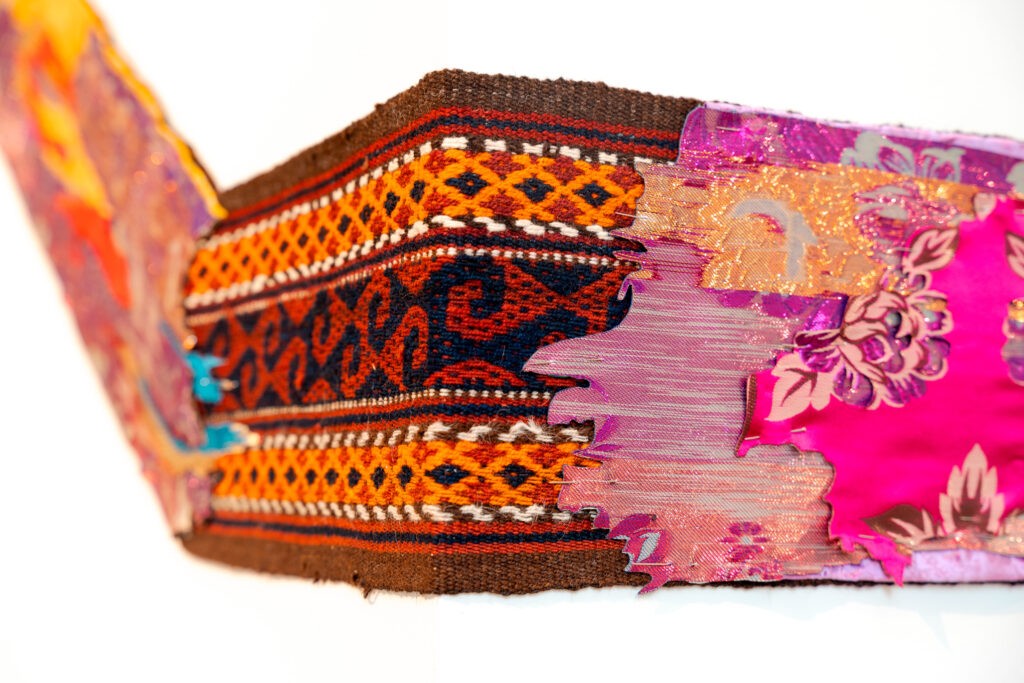
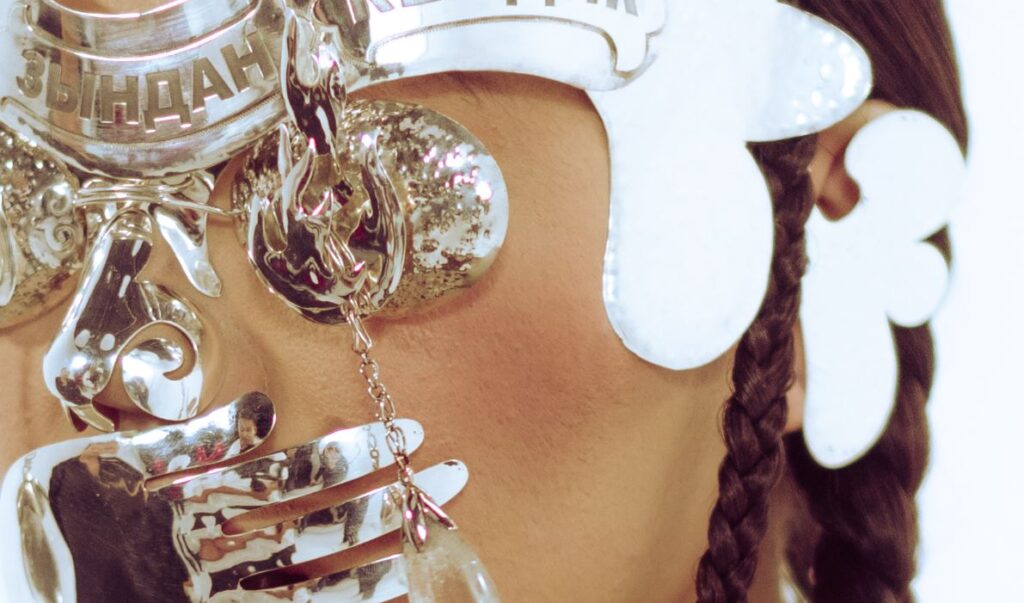
In the heart of Tribeca in New York, the Sapar Contemporary Art Gallery has launched a new exhibition, Beneath the Earth and Above the Clouds, which brings Central Asian narratives to the forefront. This dual show – which runs until May 15, 2025 - features Altynai Osmo and Aya Shalkar, two artists who have been devoted to exploring female narratives in the region, and do this through works that are both steeped into tradition, and modern and vibrant at the same time. The Times of Central Asia spoke with Altynai Osmo, a multimedia artist from Kyrgyzstan whose work weaves the threads of nomadic heritage with contemporary expression. Born in Bishkek and nurtured by the serene shores of Lake Issyk-Kul, Osmo's artistic journey is deeply rooted in the traditions of her homeland. A graduate of Central Saint Martins in London, she seamlessly blends mediums — textiles, metals, video, and installation — to explore themes of identity, matriarchy, and the evolving role of women in Central Asian societies. Her works such as Blessing Yurt, a red fringed costume inspired by the Kyrgyz nomadic traditional dwelling, not only pay homage to ancestral practices but also challenges present-day socio-political narratives. Speaking with TCA, Osmo reflects on the layers of meaning in her new series, her enduring engagement with mythology and matriarchy, and how her practice bridges personal memory and collective history. [caption id="attachment_31131" align="aligncenter" width="2231"] Image courtesy of Altynai Osmo/Sapar Contemporary Art Gallery[/caption] TCA: Can you tell me about how your previous practice led to this new series for the show? My previous work has always involved exploring the intersections of feminine identity, cultural memory, and inherited spirituality in Central Asia, particularly in Kyrgyzstan. This new series evolved naturally from that foundation. It reflects a more layered and intentional engagement with Central Asian history, mythology and matriarchal histories — particularly the symbolic and spiritual dimensions that have often been erased, distorted and forgotten. The materials and narratives I use now draw more explicitly from the Kyrgyz epic, Manas, ancestral craftsmanship, and belief systems like Tengrism, allowing me to express deeper reflections on women's roles across time. TCA: Your Kyrk Kyz series reinterprets the legendary warrior women of Central Asia. How does this mythology resonate with contemporary Kyrgyz identity and gender roles? The Kyrk Kyz legend, with its origin in female strength and collective action, presents a striking contrast to the more patriarchal norms that dominate present-day Kyrgyz/Central Asian society. Revisiting these stories reminds us that women were once seen as the protectors of land, lineage, and cultural continuity. By reimagining these warriors through my art, I want to challenge modern gender expectations and inspire a reconnection to a more empowering view of womanhood that is already rooted in our collective past. [caption id="attachment_31132" align="aligncenter" width="2560"] Image courtesy of Altynai Osmo/Sapar Contemporary Art Gallery[/caption] TCA: The use of felt in your masks ties your work to nomadic traditions. How does the choice of materials reinforce the themes of your work? Felt is not just a...

1 year ago

Future Nostalgia: Alexander Ugay’s Parisian Debut at NIKA Project Space

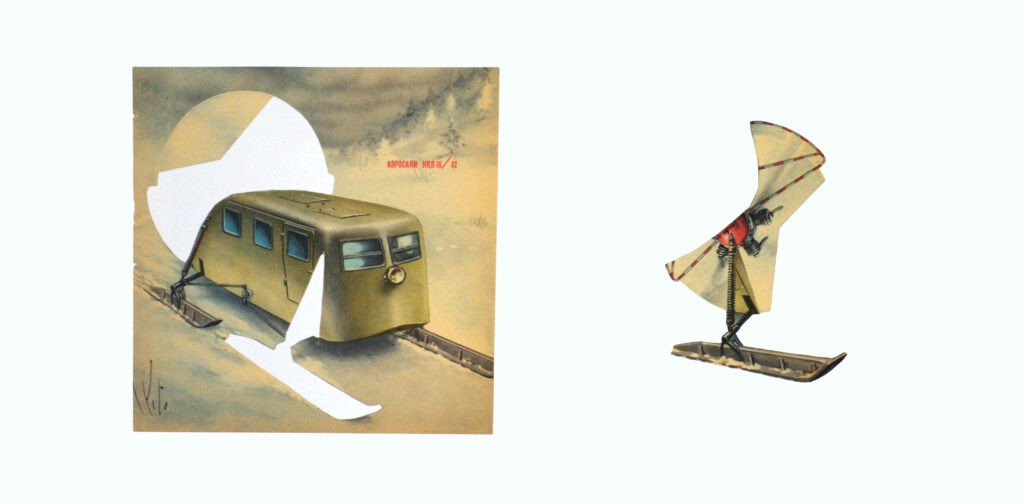
Have you ever had that feeling of “Future Nostalgia” - as Dua Lipa would put it – when looking at old sci-fi movies that imagined a future that never came to pass? The fact that this future didn’t materialise might be as might be seen as both a blessing and a disappointment, as artist Alexander Ugay has us reflecting upon with his Parisian debut. Born in Kazakhstan to a Korean family deported under Stalin’s regime, Ugay’s work is heavily inspired by his own experience and is layered with echoes of ancestral trauma, the faded promise of Soviet modernity, and the flickering ghost of a future once imagined but that never fully came to fruition. A child of engineers and inventors, Ugay grew up among circuits and cyanotypes, and in his art, he uses materials such as 8mm film and VHS tape. With this vintage spirit, his body of work looks at the past to speak of the present, and posits a critique of the techno-utopianism of the Soviet 1970s, as much as today's AI-driven image culture. In his new show, More than Dreams, Less than Things, at NIKA Project Space Paris, Ugay looks at the origins of image-making both literally and philosophically. Inspired by Ibn al-Haytham’s Book of Optics, the artist reanimates the ancient camera obscura, letting light seep through the book’s pages to birth abstract images: faded records of a presence. The exhibition, which opened on March 16, explores the tension between technological progress and the way this can be disrupted by the power of imagination and poetry - eminently human things - by looking at the intersection of photography, technology, and diasporic memory. His show, curated by Elena Sorokina, situates an emergence of Central Asian narratives coming more and more to the forefront of the international art and cultural world of Europe. Through the lens of Soviet futurism, Ugay explores a broader vision of seeing in an age where so much remains invisible. TCA spoke with Ugay about the way he approaches his art, his sources, and how he conceives images not as finished objects but as processes — mutable, unstable, and deeply human. [caption id="attachment_30561" align="aligncenter" width="2560"] 03_Alexander Ugay, More than Dreams, Less than Things. Courtesy of the artist[/caption] TCA: Where does the title for your new show, More than Dreams, Less than Things, come from? The title came about after reading Henri Bergson's book, Matter and Memory. I really liked the idea that an image is not only the relationship between absence and presence but also intensity and density. This idea made up for my dissatisfaction with the notion of resolution in photography. The title, in this case, is not just a definition of the image but a key to understanding its substantive basis. The image is the surface of the ‘grand contract’ between necessity and freedom, memory and matter, entropy and being. TCA: In More than Dreams, Less than Things, you use the camera obscura technique. How does this historical process relate to your exploration...

1 year ago

Uzbekistan at the 2025 Venice Biennale: Ekaterina Golovatyuk on the Modernist Legacy of a Soviet-Era Solar Furnace

Is it possible to preserve architectural heritage while working towards sustainability? And what to make of the architectural relics of the past century? Can they somehow take on new meaning rather than remaining a representation of dystopias and utopias of the past? All these questions and more are addressed by the Uzbekistan Pavilion at the 2025 Venice Architecture Biennale. Running alternate years with the Art Biennale, this is undoubtedly one of the most important architectural events in the international arena. Promising to be a thought-provoking exploration of Soviet-era scientific ambition, modernist architectural heritage, and the challenges of sustainability in a rapidly changing world, the pavilion hosts the research of GRACE studio - an architectural firm established by Ekaterina Golovatyuk and Giacomo Cantoni - which operates at the intersection of built heritage, contemporary urbanism, and cultural production. Commissioned by the Uzbekistan Art and Culture Development Foundation (ACDF), the pavilion responds to the theme of the Biennale’s curator, Carlo Ratti’s overarching Biennale concept of 'Intelligens'. The pavilion focuses on the Sun Institute of Material Science, originally known as the Sun Heliocomplex, a vast Soviet-era solar furnace built outside Tashkent during the Cold War to test materials at high temperatures. What emerges is the paradox of a structure designed for technological advancement that now faces questions of obsolescence and adaptation in contemporary discourse. TCA spoke with Ekaterina Golovatyuk to understand how the pavilion evolved from years of research into Tashkent’s modernist legacy and why this solar furnace has become the focal point of Uzbekistan’s presence at the Biennale. [caption id="attachment_30103" align="aligncenter" width="2560"] Heliocomplex Sun, field of heliostats, Tashkent, Uzbekistan; image: Armin Linke[/caption] TCA: The Uzbekistan Pavilion for the 2025 Venice Biennale builds on your previous research, Tashkent Modernism XX/XXI. Can you tell us how this project began? This is a project commissioned and initiated by Gayane Umerova of the Uzbekistan Art and Culture Development Foundation that works with cultural heritage, museums, and other culture-related initiatives in Uzbekistan but also promotes Uzbekistan’s culture abroad. They have curated large exhibitions in the Louvre, in the British Museum, showing historical artifacts from Uzbekistan, but also art of the 20th century, and Tashkent Modernism is part of their mission in regards to architecture. The Tashkent Modernism XX/XXI project began in 2021, when it became clear that Tashkent had started to change so rapidly that special tools had to be put in place in order to protect the recent architectural heritage that, at the time, was mostly not listed and therefore at risk. Our project team consisted of multiple experts from Uzbekistan and abroad, including a historian, Boris Chukhovich, a team of preservation specialists from Politecnico di Milano led by Davide Del Curto, urbanists Laboratorio Permanente, and an artist [photographer], Armin Linke. For this project, we started by selecting 40 buildings and then narrowed it down to 24, for which we created monographs and statements of significance that described the important values of the building as well as what parts should be absolutely kept and what parts could...

1 year ago

Interview With Sara Raza – Director of the Tashkent Centre for Contemporary Art

Sara Raza is a litmus test for the spirit of the times in the shape of an art curator.  In simple terms, art crowds can count on her direction for the Tashkent Centre for Contemporary Art (CCA) to bring the most pressing issues in contemporary art to the foreground. Indeed, the author of the book Punk Orientalism - and the namesake curatorial studio - has been just appointed as Artistic Director and Chief Curatorial Director of the CCA Tashkent, set to open in September 2025. It’s a strategic move for the Centre, which has aspirations of becoming a global arts and culture hub and is aiming at international artistic and creative exchanges, which include residencies, exhibitions, workshops, and educational programmes, and contributing to Uzbekistan’s cultural ecosystem. Transversal in her curatorial approach, London-born, New-York-based Raza is coming from a mixed Central Asian/Middle Eastern background, but she is also steeped in the heart of the Western art system, in institutions such as the Guggenheim – having taken care of a project called UBS MAP Global Art Initiative, curating the Middle East and North Africa section. Over the years, the curator has worked with artists from Asia, the Caucasus, the Middle East, Europe, and North America, and has curated shows at the Mathaf: Arab Museum of Modern Art in Doha and the Rubin Museum of Art in New York, but it is truly her book, Punk Orientalism: The Art of Rebellion, which brought a fresh approach to the sometimes highly academic field of art criticism. For Raza, artists from the former-Soviet countries and beyond hold a strong punk DIY ethos, by which they counter the Orientalist gaze they have always been subjected to by both the West and Russia. Their art is often a form of bricolage, an unexpected connection of disparate ideas used to create something entirely new. Will she bring this original approach to the direction of the museum, too? TCA spoke with Raza to find out about how she’s planning to foster cultural and educational partnerships and to support local, regional, and international artists while engaging with Uzbekistan’s rich cultural heritage. [caption id="attachment_29451" align="aligncenter" width="2560"] Centre for Contemporary Art Tashkent Artist Residencies; image: Namuna[/caption] TCA: The Centre for Contemporary Art in Tashkent is poised to become a major hub for artistic discourse in Central Asia. As its first Artistic Director and Chief Curator, how do you envision defining the institution’s identity from the ground up? My vision for CCA is less of a ground up approach, but rather one that builds on an historical and visual cultural foundation established in the 20th century that included a robust relationship with artists, intellectuals and others from the Global Majority World [a collective term for people of African, Asian, indigenous, Latin American, or mixed-heritage backgrounds, who constitute approximately 85% of the global population]. This included relationships between Harlem Renaissance figures [The Harlem Renaissance was an African American cultural movement that flourished in the 1920s and had Harlem in New York City as its symbolic...

1 year ago

Simurgh Self-Help: Slavs and Tatars’ New Show Rethinks National Symbolism

“It’s interesting that in Western symbolism you never see a delicate female eagle,” notes Payam, one-half of the artist collective Slavs and Tatars, from his studio in Berlin. “But the central-Asian Simurgh is gender-fluid, metaphysical. It doesn’t belong to this world.” The mythological figure of the Simurgh is the focus of Slavs and Tatars’ latest show at the gallery The Third Line in Dubai called “Simurgh Self-Help”. The show speaks of the importance of reclaiming and reframing cultural memories in a fractured world, and an invitation to think beyond the artificial, top-down confines of nationalism, to find cultural unity. [caption id="attachment_28951" align="aligncenter" width="2560"] Slavs and Tatars Samovar Vacuum-formed plastic, acrylic paint; Image: Courtesy of the artist and The Third Line, Dubai[/caption] The exhibition extends a lineage of conceptual inquiry, drawing upon the mystical bird Simurgh, ever-present in Persian and Central Asia mythologies, as a counterpoint to the ubiquitous, secularized eagle of Western heraldry. A constant companion of Zeus in Greek mythology, the eagle is a recurring symbol in the Western world: “Everywhere you look in the West, you find eagles,” notes Payam. “It’s on the German flag, on American football teams, on the Albanian flag. It’s a tired, secularized symbol, heavy with the weight of imperial history.” In contrast, the Simurgh exists on a different plane, one that rejects hierarchies in favor of collective transformation. [caption id="attachment_28952" align="aligncenter" width="1874"] Slavs and Tatars Samovar Vacuum-formed plastic, acrylic paint; Image: Courtesy of the artist and The Third Line, Dubai[/caption] Today the Simurgh is going through a similar secularization to the Western eagle, with Turkish SIM cards and Azerbaijani soccer teams called Simurgh. "It's easy, in some sense, for as an artist to take something which is very high and important, let's say spiritual or religious, and make it make fun of it, bring it down in a caricatural way,” says Payam. “What's very hard as an artist is to take something which has been debased and make it high again." In the show, we see works that go in either direction, presenting an alternative mythology, one that shows that cultures are fluid and interconnected. “Simurgh Self-Help,” which had previous iterations in Warsaw, Athens, and Baden-Baden, was originally started two years ago as a conceptual echo of Marcel Broodthaers’ Musée d'Art Moderne: Département des Aigles. This was a conceptual museum/artistic project created by the Belgian artist in 1968, full of artworks referenced by Slavs and Tatars in their show. [caption id="attachment_28953" align="aligncenter" width="2500"] Slavs and Tatars, Soft Power_2023, Woolen Yarn; Image: Courtesy of the artist and The Third Line, Dubai[/caption] The Simurgh, Payam explains, traverses territories from Kazakhstan to Ukraine, yet remains absent in Poland. “It’s a question of defining a region not through imposed political structures but through the myths that bubble from the ground up,” remarks Payam. The Simurgh becomes a cipher for alternative cartographies, a challenge to the top-down imposition of nationhood. If the eagle stands for conquest and dominance, the Simurgh stands for the dissolution of categories and unity...

1 year ago

In Doha, Central Asian Artists Dismantle Orientalism

Completely covered by a huge textile patchwork piece, softly moved by the wind, the façade of the Mathaf Museum in Doha promises visitors something fascinating and alluring. Coming closer, attendees could read a series of statements in various languages on the fabric. The effect of familiarity and estrangement at once was the purpose of Azerbaijani artist Babi Badalov, who realized the piece. By layering phrases in Arabic, Cyrillic, and Latin with calligraffiti and employing disjointed grammar and syntax, the artist meant to visually disrupt “linguistic imperialism” and show how Europe’s modern civilization owes much to Arab civilization. [caption id="attachment_27513" align="aligncenter" width="2560"] The Mathaf Museum in Doha; image: TCA, Naima Morelli[/caption] This specially commissioned work, called Text Still (2024), is nothing but an appetizer for the show Seeing is Believing: The Art and Influence of Gérôme. Organized by the forthcoming Lusail Museum — an institution under development in northern Doha that will house the largest collection of the so-called Orientalist art — the exhibition features loans from institutions such as the Metropolitan Museum of Art in New York and the Islamic Arts Museum in Malaysia. The main part of the show is dedicated to French artist Jean-Léon Gérôme, who lived and worked in the 19th century and was profoundly influential in his depictions of the Middle East, North Africa, and South Asia. His works shaped Western perceptions of these regions during an era when colonialism and “Oriental Studies” were cementing global power dynamics. The show included a historical and biographical exploration of Gérôme’s life, timed to celebrate the 200th anniversary of his birth, as well as a photographic section curated by Giles Hudson dedicated to visions of the Orient from Gérôme’s time to today. But it is in the third section, centered on contemporary art and called “I Swear I saw That”, that Central Asian artist really enter into a close dialogue with Gérôme’s Orientalism, turning it on its head. Sara Raza, curator of this section, takes Badalov’s textile work as a case in point: “Badalov inverts Edward Said’s mission of examining Western perceptions of the Orient, focusing instead on Eastern perceptions of the Occident, and vice versa,” she told The Times of Central Asia. Edward Said’s concept of Orientalism, as detailed in his groundbreaking 1978 work of the same name, is an institutionalized program of Western knowledge, based mostly on projections, mystification, and imagination - and includes works of art as well as the academy - which is directed to justify a supposed Western superiority and imperialism over Eastern populations. “I Swear I Saw That” interrogates Jean-Leon Gerome’s way of seeing, which Sara Raza recognizes as a “fantastical and highly mythologized vision of the East,” and looks at how artists from both the Middle East, the Arab world and Central Asia fought back. A Central Asia and Caucasus expert who works extensively in the Middle East, Raza has examined the process of the exoticization of Eastern populations for a long time. She coined the term “Punk Orientalism,” which also became the...

1 year ago

UAE Embracing the Silk Road Narrative: Central Asia at Art Abu Dhabi 2024

More than at any other time in recent history, the entire art world is this year tackling geopolitical identity issues. And while we usually delegate Biennales and non-commercial art events to take the pulse of our contemporary reality, this time an art fair took up this task: Art Abu Dhabi. This year the fair was bigger than ever and had a hugely relevant Central Asian and Caucasus section, curated by Elvira Eevr Djaltchinova-Malec, which was aptly called “Drifting identities.” Founder of the Warsaw Institute for Modern and Contemporary Asian Art (WIMCAA) Foundation - based on the spreading of Asian and global art – Djaltchinova-Malec was invited by the fair's artistic director, Dyala Nusseibeh, to curate a section that presented different aspects of the rich cultural tapestry of the region without shying away from the political concerns and instability which often characterize this part of the world. [caption id="attachment_26543" align="aligncenter" width="928"] From left to right, Abdelmonem Alserkal - prominent art patron based in Dubai, founder of the Alserkal Avenue, Alserkal Foundation, Elvira Eevr Djaltchinova-Malec, Almagul Menlibayeva, and Danagul Tolepbay image: Elvira Eevr Djaltchinova-Malec[/caption] Djaltchinova-Malec has been working on this concept of the Silk Road in different shows – namely Silk Road 2.0 - Artists re-loaded conference in Warsaw, Silk Road 2.0 - New Opportunities panel for art for 021 Art fair in Shanghai - adapting it to the changing geopolitical landscape of the region. "Our foundation was established in 2016, and already, eight years ago, we started to explore the topic of the Silk Road,” Djaltchinova-Malec told TCA. “We wanted to understand the desire of China and countries who joined Chinese projects for the New Silk Road, and we invited artists and art professionals from Vietnam, the United Kingdom, Central Asia, Kazakhstan, Germany, Tibet, France, and Ukraine for the foundation’s first conference.” The Belt and Road Initiative, sometimes referred to as the New Silk Road, is a global infrastructure development strategy adopted by the Chinese government in 2013 to invest in more than 150 countries and international organizations. [caption id="attachment_26545" align="aligncenter" width="2560"] Tapestry by Almagul Menlibayeva; image: Elvira Eevr Djaltchinova-Malec[/caption] It’s the first time that the curator is presenting these artistic geographies in the context of the Gulf. On one hand, this is opening up Central Asian narratives to an Arab public that might be curious to learn more about art in this region. On the other hand, it is helping to open markets and create access to a different pool of new collectors. Thanks to an individual outreach which started well before the fair, the experiment proved successful. "Fortunately, many collectors from the Gulf already know artists from Central Asia, as there are a few art galleries in the UAE which represent them, as well as institutions like the Sharjah Foundation,” Djaltchinova-Malec stated. In addition, many collectors and artists from Russia who are knowledgeable about Central Asian narratives and sensitive to colonization issues, are now based in the UAE. “We tried to involve as many collectors from other circles as...

1 year ago

Asia Now Creating a Market for Central Asian Art in Paris

When we think about spreading knowledge of Central Asian art in Europe, we might think of exhibitions, of festivals, of panels and talks, not necessarily of an art fair. However, in the contemporary art world, it is today the market, more than art critics, which dictates the emergence of certain art scenes as a whole. For the historically underrepresented Central Asian art market, smaller fairs represent today an important alley, more than the big fairs such as Art Basel – which just had its second Paris iteration this October. Smaller “boutique fairs,” as they are called, often present curated programming which allow a wide public – not just collectors and buyers – to enjoy the art as it was an exhibition. A selling one, of course.  In Paris, the most relevant fair which has historically presented Central Asian artists to the European public is called Asia Now, and it took place in Paris from October 17 to 20. Entirely dedicated to Asian art, the fair has historically tried to fill the gap for Central Asian art in the European market in the past ten years of its existence. The fair has selected more than 70 leading and emerging contemporary art galleries from all over the world, presenting more than 220 artists coming from 26 territories from all over Asia and its diaspora, stretching from Central Asia to the Asia-Pacific, including West, South, South-East, and East Asia. Their commitment to expanding knowledge of Central Asian art in Europe culminated last year in a show which was indeed focused on Central Asia, and curated by the artist group Slav and Tatars. While seminal Central Asian galleries such as the Aspan Gallery from Almaty and Pygmalion Gallery from Astana didn’t return to Asia Now this year, the fair still presented a number of Central Asian artists and practices, interspersed between the main show, and the booths.    Central Asian Artists in the Radicant’s Main Show The main exhibition of Asia Now was curated by Radicants, a collective founded by art critic Nicolas Bourriaud, and it was centered on sacred ceremonies seen as a powerful tool for re-examining societal structures and reconnecting with ancestral roots. Called “Ceremony,” the main show was co-curated by Nicolas Bourriaud and Alexander Burenkov, a curator of Russian origins who has been working for a long time with Central Asian narratives, which are also featured prominently in the show. [caption id="attachment_25510" align="aligncenter" width="2560"] Image: TCA, Naima Morelli[/caption] The idea of ceremony ties to the tenth anniversary of the art fair, but at the same time the curators opted to explore the nuances of ritual as both a "celebration of ancestral wisdom" and a "critical tool for interrogating and redefining established traditions and power dynamics." As Burenkov noted, the decision to use the theme of ceremony emerged after conversations with Asia Now director Alexandra Fain. “The choice fell on ‘ceremony’ in all its variability and polysemy [was used] to explore the non-obvious meanings of ritual through the eyes of contemporary artists...

2 years ago

An Exploration of Identity by Kazakh Artist Gulnur Mukazhanova

There are some abstract works that can feel like a spiritual encounter. We are all familiar with the work of Mark Rothko, a master in materializing emotions and bringing viewers to transcendence through simple hues, nuances, and color gradients. Far fewer people however, will be aware of Gulnur Mukazhanova, a Kazakh artist whose felt paintings are imbued with a tenderness that offers viewers solace and comfort, and grounded in hope, open new horizons. When I first saw the artist’s work at the Parisian art fair ‘Asia Now’ two years ago, I was immediately struck by her unique use of wool and felt in the creation of abstract art. Delicate and evocative at once, her work successfully elevates craft to the status of fine art. [caption id="attachment_21715" align="alignnone" width="732"] Photo: Estefania Landesmann: Gulnar at work[/caption] Born in Semipalatinsk, Kazakhstan, shortly before the end of the USSR, the artist has been working with textiles since beginning her practice, and influenced by Kazakh traditions, employs felt as a primary material. Mukazhanova studied at the Art Academy in Almaty and later, at the Kunst Hochschule in Berlin Weißensee. She has now lived and worked in Berlin for many years and it was here, that she started to process her Kazakh origins, heritage, and the state of society, with an international audience in mind. Spiritual and emotional, her abstractions are informed by issues concerning identity and the transformation of traditional values of her  native culture in the age of globalization. TCA caught up with Gulnur to discuss her latest work, her creative process, and how her Kazakh origins continue to influence her art. TCA: What initially drew you to art and how did your journey begin? GM: My earliest memories involve drawing animals when I was around five years old. My cousin, also an artist, had a significant influence on me and was the first person to open my eyes to the world of art. I studied art at the university in Kazakhstan and then moved to Berlin, initially to study textile design. However, I quickly realized that design wasn’t my path and so, shifted my focus to more experimental approaches with textiles. By the end of my studies in Berlin, I was fully immersed in working with felt and it has remained a central part of my practice ever since. [caption id="attachment_21716" align="alignnone" width="2500"] Photo: Thierry Bal : Öliara & the Dark Moon[/caption] TCA: Your work often carries deep emotional and historical weight, as illustrated by your series “Öliara: The Dark Moon” and your abstract self-portraits. How do you approach abstraction in these works? GM: “Öliara: The Dark Moon” was a solo show in Mimosa House in London that dealt with dark periods in Kazakh history, particularly the tragic events of "Bloody January" 2022. The series reflects on life, death, and the fragile nature of existence; themes that are unfortunately all too relevant in our world today. The felt pieces in this series are abstract allowing them a deep emotional resonance which would not be afforded by a...

2 years ago

Almaty’s Aspan Gallery Champions Central Asian Art at Home and Abroad

“It’s difficult to be a point, but it’s easy to be a line, as everything in our world is moving.” The quote by Soviet avant-garde artist Sergey Kalmykov became the title of a 2020 show by Kazakh artists Almagul Menlibayeva and Yerbossyn Meldibekov, the first exhibition by Almaty-based gallery Aspan to be staged in the UK. This concept of continuous movement aptly describes the nine-year trajectory of the Aspan Gallery, founded and directed by Meruyert Kaliyeva. Maintaining its focus on contemporary Central Asian art, the gallery is constantly expanding and adapting to the dynamic of the international art world. [caption id="attachment_20211" align="aligncenter" width="776"] Dilyara Kaipova @Aspan[/caption]   The story of how the gallery came into being is unconventional. Meruyert Kaliyeva studied art in the UK, with the intention of practicing as an artist. She soon discovered, however, that the life of an artist was not for her and explained to TCA: “To be an artist, you must sacrifice your social and family life. You must disconnect from it all, and I was not willing to do that.” At the same time, she noticed that unlike her, many individuals at art school seemed destined to become artists. "Some people don’t have the luxury of choice,” she recalls. “I felt that these people needed to focus solely on creating art, and I realised I could help unburden them from some practical preoccupations.” After four years and a half working in auction houses in the UK, Kaliyeva finally decided to return to Kazakhstan. Having quickly realised the importance of supporting artists in a region where institutional support for contemporary art is extremely limited, she opened what is now the Aspan Gallery. Kaliyeva’s mission was  twofold. In tandem with developing the Central Asian art scene locally, through staging important historical exhibitions, publishing books and catalogues, and commissioning artists, she also concentrated on disseminating knowledge of Central Asian art abroad. A case in point is Aspan’s recent, significant donation to the Stedelijk Museum in Amsterdam. The donation was curated by Robbie Schweiger, based on research conducted in Kazakhstan, Kyrgyzstan, and Uzbekistan, and with input from Kaliyeva, connections were drawn between Central Asian artists and the Stedelijk’s permanent collection. The Times of Central Asia spoke to Kaliyeva about both the donation and the growth of the Kazakh art scene over the past few years. TCA: Why did you choose the Stedelijk Museum in Amsterdam for such a significant donation? MK: We were keen to have some of our artists represented in major institutions and identified three museums as contenders. The first on the list was the Stedelijk, which already held a collection of Central Asian art. The donation comprised 22 works by 13 artists from Kazakhstan, Kyrgyzstan, and Uzbekistan, spanning almost fifty years, from 1974 to 2020. Works from the 1970s and 1980s, created by artists associated with the underground art scene of the former Soviet republics, were complemented by work made after these republics gained independence in the early 1990s., in which  artists explored national...

2 years ago