• KGS/USD = 0.01144 0%
  • KZT/USD = 0.00200 0%
  • TJS/USD = 0.10553 -0.19%
  • UZS/USD = 0.00008 0%
  • TMT/USD = 0.28490 0%
  • KGS/USD = 0.01144 0%
  • KZT/USD = 0.00200 0%
  • TJS/USD = 0.10553 -0.19%
  • UZS/USD = 0.00008 0%
  • TMT/USD = 0.28490 0%
  • KGS/USD = 0.01144 0%
  • KZT/USD = 0.00200 0%
  • TJS/USD = 0.10553 -0.19%
  • UZS/USD = 0.00008 0%
  • TMT/USD = 0.28490 0%
  • KGS/USD = 0.01144 0%
  • KZT/USD = 0.00200 0%
  • TJS/USD = 0.10553 -0.19%
  • UZS/USD = 0.00008 0%
  • TMT/USD = 0.28490 0%
  • KGS/USD = 0.01144 0%
  • KZT/USD = 0.00200 0%
  • TJS/USD = 0.10553 -0.19%
  • UZS/USD = 0.00008 0%
  • TMT/USD = 0.28490 0%
  • KGS/USD = 0.01144 0%
  • KZT/USD = 0.00200 0%
  • TJS/USD = 0.10553 -0.19%
  • UZS/USD = 0.00008 0%
  • TMT/USD = 0.28490 0%
  • KGS/USD = 0.01144 0%
  • KZT/USD = 0.00200 0%
  • TJS/USD = 0.10553 -0.19%
  • UZS/USD = 0.00008 0%
  • TMT/USD = 0.28490 0%
  • KGS/USD = 0.01144 0%
  • KZT/USD = 0.00200 0%
  • TJS/USD = 0.10553 -0.19%
  • UZS/USD = 0.00008 0%
  • TMT/USD = 0.28490 0%
20 February 2026

Our People > Nikola Mikovic

Nikola Mikovic's Avatar

Nikola Mikovic

Journalist

Nikola Mikovic is a freelance journalist, researcher and analyst based in Serbia. He covers mostly the foreign policies of Russia, Belarus and Ukraine, as well as energy-related issues.

Nikola primarily focuses on Russia’s involvement in post-Soviet space, the Middle East, and the Balkans. He writes for several publications such as Diplomatic Courier, Byline Times, CGTN, Lowy Institute, Global Comment, and World Geostratregic Insights, among others.

Articles

What Awaits Central Asia When the War in Ukraine Ends?

U.S. President Donald Trump seems resolute in his goal to end, or at least freeze, the war in Ukraine. To achieve such an ambitious objective, he is using a strategy of gradually normalizing relations with Russia, with his recent talks with Russian leader Vladimir Putin playing an important part. But how will Trump’s Russia policy impact Central Asia – a region that has traditionally been in Moscow’s geopolitical orbit, but is now aiming to develop closer ties with the West? Ever since Russia launched its full-scale invasion of Ukraine, on February 24, 2022, Kazakhstan – the region’s largest country – has been offering its services as a mediator. Astana hoped to eventually host peace talks between Russian and Ukrainian representatives. Such a possibility, at least at this point, does not seem very realistic, given that Putin and Trump are reportedly scheduled to meet in Saudi Arabia, and Kyiv and Moscow still refuse to negotiate directly.  In the month since Trump returned to the White House, he has not focused on Central Asia. That, however, does not mean that Kazakhstan, as well as the other Central Asian countries, will not play a significant role in the post-war period.  Several Russian analysts claim that Washington’s ultimate goal is to “turn Russia against China” and use Moscow as an instrument against Beijing in a potential new Cold War between the United States and the People’s Republic. Given the strategic importance of Central Asia for both Russia and China, in the long term, the region could very well become a theater for various proxy conflicts.  For the time being, however, such a scenario does not seem very probable, as there is no strong anti-Chinese sentiment in Russia, and Central Asian nations are determined to continue pursuing their “multi-vector” foreign policies, rather than picking a side in global conflicts. Thus, once the Ukraine war comes to an end, regional actors will undoubtedly seek to strengthen their political, economic, and military positions, aiming to avoid being involved in another Great Game.  Although economic indicators in Central Asia are trending upwards in many respects, higher wages in areas such as construction and the broader services sector can still be earned outside the region. Although Russia has traditionally been the top destination for Central Asian migrants, that might soon change. Faced with the growing anti-migrant sentiment that came as a result of the Crocus City Hall terrorist attack in 2024, and the fact that Russia is actively recruiting labor migrants to fight in Ukraine, many of them are expected to look for new destinations, where they can find safer conditions and better opportunities. A post-war Ukraine could be one of them. According to Vasily Voskoboynik, President of the All-Ukrainian Association of Companies for International Employment, in 2023 Ukraine needed 4.5 million migrant workers, while the International Organization for Migration and the International Labor Organization believe that it will need 8.2 million laborers. In Voskoboynik’s view, it is necessary to consider countries such as Bangladesh, Nepal, and India, as...

1 year ago

Kazakhstan is Striving for Investment Amid “Resource Nationalism”

Amid the war in Ukraine, as well as various geopolitical turbulences that threaten to fundamentally change the current global order, Kazakhstan is aiming to attract more foreign investment. The war in Ukraine has so far had a relatively positive impact on the economies of most Central Asian nations, giving Astana room to achieve its ambitious goal of attracting $150 billion in foreign direct investment by 2029.  Kazakhstan, along with other neighboring actors, used the Russian invasion of Ukraine to develop closer economic ties with the West, namely with the European Union. It is therefore no surprise that, in 2022 and 2023, the EU member Netherlands invested over $12 billion in the Kazakh economy, making it the leading foreign investor. The United States, according to the official statistics, is the second-largest investor, with Switzerland rounding out the top three. Although between 2005 and its total foreign direct investment (FDI) reached $402 billion, Kazakhstan’s innovation agenda aims to attract $150 billion of FDI in the next five years while doubling the country’s GDP. The problem is that in 2023 the inflow of foreign direct investment into Kazakhstan decreased by 32.3%, which suggests that Astana may have a hard time finding ways to attract more capital into the Kazakh economy. Experts claim that there is no comprehensive development strategy for both industries and regions in Kazakhstan, which limits investments in its economy. But the creation of platforms with tax preferences, an independent regulator, and a regulatory environment based on the principles of British law are believed to contribute to the active development of entrepreneurship. In other words, the authorities in Kazakhstan are using a model based on practices in Britain and the United Arab Emirates to attract investment, drawing inspiration from the British Common Law system, as well as the Dubai International Financial Center, which served as a reference for the Astana International Financial Center. Given that both Kazakhstan and the UAE are economies based on fossil fuel exports, it is unlikely to be a coincidence that Astana aims to use Abu Dhabi’s experiences to improve its existing arrangements with foreign corporations operating in Kazakhstan.  "Large investments require a long-term planning horizon. Therefore, the government will have to intensify negotiations regarding the extension of production sharing agreements contracts on the updated terms, favorable to the country," Kazakhstan’s President Kassym-Jomart Tokayev said on January 28, as foreign companies reportedly claim that Astana is seeking to increase its shares in key oil and gas projects in what amounts to "resource nationalism".  At the same time, the Kazakh government seeks to create a favorable investment climate for foreign companies by reducing bureaucratic obstacles, introducing tax breaks, eliminating financial audits, and ensuring the protection of the legal rights of investors. Kazakhstan has also recently introduced a Digital Nomad visa (also called a 'Neo Nomad' visa), which grants foreign nationals the right to reside in the country while working for a foreign employer. Such a move can be interpreted as another attempt to attract foreign investment in Kazakhstan. ...

1 year ago

Exploring What’s Behind Iran’s Push in Tajikistan

As Turkey increases its influence among Turkic Central Asian nations, Tajikistan – the only Persian-speaking country in the region – is looking to Iran as a potential strategic partner. Dushanbe is aiming to significantly strengthen bilateral ties with Tehran, hoping that such a move will have a positive impact on its economy; but what are the Islamic Republic’s interests in Tajikistan? On January 15, Iranian President Masoud Pezeshkian paid an official visit to Dushanbe, where he met with his Tajik counterpart Emomali Rahmon. The fact that he led a delegation of the Iranian business community suggests that Tehran plans to increase its economic presence in the landlocked Central Asian state. In 2024, the two nations increased their trade volume by nearly 50% compared to 2023. The problem, however, is that their total trade turnover reached “only” $378 million, which is rather modest compared to the $1,12 billion trade volume achieved by Tajikistan and Russia in the first seven months of 2024. From 1995 to 2013, the Islamic Republic actively invested in the economy of Tajikistan, which led to the construction of the Sangtuda-2 Hydroelectric Power Plant and the tunnel at the Anzob Pass. However, between 2013-2021, economic relations between Tehran and Dushanbe deteriorated significantly. Now, Tajikistan hopes to see more Iranian investments in its economy. "Trade and the economy are among the priority areas of our bilateral relations. We voiced our interest in developing investment cooperation with the Islamic Republic of Iran,” Rahmon said at a press conference after talks with Pezeshkian. As a result of their summit, Tajikistan and Iran significantly deepened their bilateral ties by signing 23 memoranda of understanding in sectors such as trade, energy, infrastructure, cultural exchange, and security. Since Daler Juma, Tajikistan's Minister of Energy and Water Resources attended the meeting between Tajik and Iranian delegations, it is almost certain that energy was one of the main topics that was discussed. For Dushanbe, it is crucial to secure funding for the completion of the Rogun Hydroelectric Power Plant, the Istiklol tunnel (also known as the Anzob Tunnel), where the Iranian company Farob is engaged in the construction, as well as a number of small and medium-sized projects. For Tehran, the economic aspect of cooperation with Tajikistan is undoubtedly very important, although it seems to have other ambitions in the Central Asian state as well. “Iran’s primary interest in Tajikistan is related to cultural and religious bonds, as it sees the country as part of its Persian-Iranian-Islamic civilization,” Fereshteh Sadeghi, a Tehran-based journalist who has worked with Iran's Press TV and Al Jazeera English, told The Times of Central Asia. In her view, by maintaining a good political relationship with Dushanbe, the Islamic Republic can significantly strengthen these cultural connections. “Tajiks speak Farsi, love Farsi literature, and are said to be able to recite poems by Persian or Farsi-speaking poets from memory more easily than Iranians themselves can,” she explained, pointing out that religious aspect also plays an important role in Tajik-Iranian relations. Although Tajikistan is...

1 year ago

Fossil-Fuel Rich UAE Drives Central Asia’s Green Energy Transition

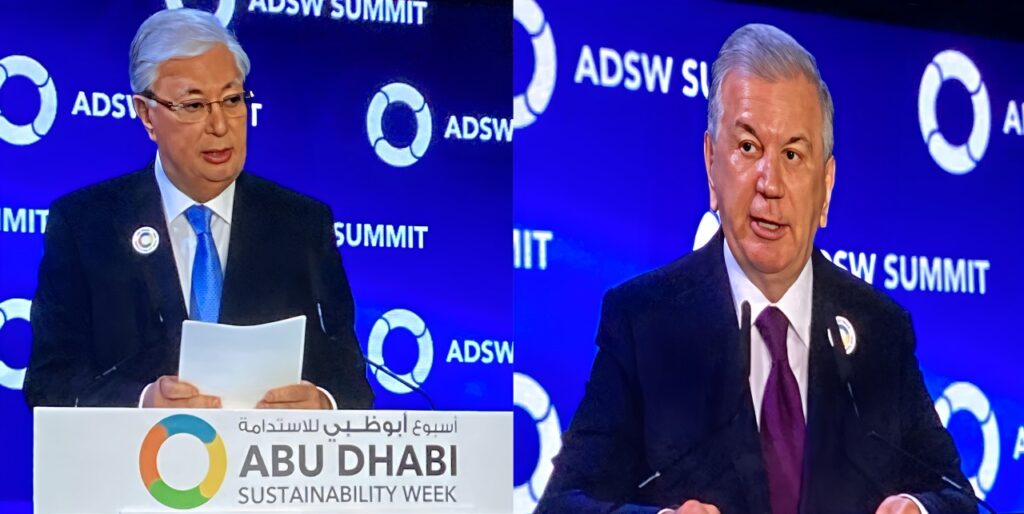
Central Asian nations, especially Kazakhstan and Uzbekistan, are seeking to develop closer ties with the oil-rich United Arab Emirates. What they need from the Gulf state is not fossil fuels, but renewable energy technology and investment in their green energy sectors. Despite being a significant oil-exporter, the UAE has managed in recent years to position itself as a regional leader in solar energy and photovoltaic solar projects. As a result, it now has global aspirations in the renewable energy industry. The Gulf country, through its semi-government-owned company, Masdar, has already invested billions of dollars in the construction of wind farms and solar plants all over the world – from the Bahamas and Barbados to Australia, as well as several African and European nations. Central Asia is no exception. In the region, the green energy giant is particularly active in Uzbekistan and Kazakhstan. It is, therefore, no surprise that, on January 14, two regional leaders, Shavkat Mirziyoyev and Kassym-Jomart Tokayev, were major guests at the Abu Dhabi Sustainability Week, a global platform focused on accelerating sustainability efforts. [caption id="attachment_27597" align="aligncenter" width="1280"] President Tokayev of Kazakhstan speaking at the Abu Dhabi Sustainability Week; image: TCA, Nikola Mikovic[/caption] Their visit to the UAE signals a strong push for a green energy transition at home. For Tashkent and Astana, cooperation with Abu Dhabi in the field of green energy can help them to achieve their ambitious goals and reduce reliance on fossil fuels, despite both being significant producers of natural gas and oil. “Together with our foreign partners, we are currently implementing more than 50 large energy projects worth a total of $26 billion,” Mirziyoyev stressed, pointing out that by 2030, the share of renewable energy sources in the country will reach 54%. [caption id="attachment_27593" align="aligncenter" width="2560"] President of Uzbekistan, Shavkat Mirziyoyev backstage at the Abu Dhabi Sustainability Week; image: TCA, Nikola Mikovic[/caption] In his view, Central Asia should turn into a “center of green economy.” The Director-General of the International Renewable Energy Agency (IRENA), Francesco La Camera, seems to share this stance. “Central Asia can play a stronger and leading role in the global energy transition. I’m confident this new partnership can accelerate the pipeline of renewable energy projects and drive green industrialization,” La Camera said at the 15th session of the IRENA Assembly, held in the UAE capital two days prior to the meetings Mirziyoyev and Tokayev had with the UAE’s leaders. According to the Uzbek President, Tashkent is interested in jointly realizing the potential of Central Asia in solar, wind, and hydro energy, as well as in developing the production of green hydrogen. Fully aware of the Central Asian state’s green energy potential, Masdar is committed to investing $2 billion in Tashkent’s clean energy projects with a total capacity of more than two gigawatts. In the most populated Central Asian nation, the UAE’s semi-state-owned company is already involved in the construction of both solar plants and wind farms. [caption id="attachment_27594" align="aligncenter" width="2560"] Abdulaziz Alobaidli, Masdar’s Chief Operating Officer, at the Abu...

1 year ago

Turkmenistan’s Geopolitical Shift Toward the West

Turkmenistan, whose foreign policy since 1995 has been based on the principle of permanent neutrality, is reportedly seeking to establish closer ties with the West, primarily with the United States. The energy-rich nation has long expressed an intention to export natural gas to Europe, but its leadership’s recent moves suggest that Ashgabat might also aim to develop closer political and economic relations with Western countries. Over the past few months, Turkmen and American officials have held several very important meetings. Most recently, on November 25, Turkmenistan’s President Serdar Berdimuhamedov hosted Steve Daines, U.S. Senator from Montana and member of the U.S. Senate Committee on Energy and Natural Resources. The fact that the Turkmen leader told the American politician that Ashgabat is “implementing a strategy for diversifying energy export routes” clearly shows that Turkmenistan’s ambition to begin exporting natural gas to Europe was on the agenda. But energy was unlikely the only reason why Daines came to Ashgabat. He also met with the Turkmen Minister of Foreign Affairs Rashid Meredov, with whom he discussed “key aspects of partnership cooperation in political and diplomatic, trade and economic, cultural, humanitarian and other spheres.” According to reports, “the active dynamics of development of political ties at the highest state level was emphasized,” indicating that Turkmenistan has begun implementing its 2023 plan to strengthen ties with the United States.  Moreover, as a result of the U.S. Senator’s visit to Ashgabat, a meeting of the Turkmenistan-US Business Council is scheduled to take place later this month. One of the reasons why the Turkmen authorities seek deeper economic ties with Washington is because they hope that such an approach can help their country join the World Trade Organization (WTO).  On November 20-22, just days before Daines’ visit to Turkmenistan, the Ministry of Finance and Economy organized a training seminar as part of the country's preparation for joining the WTO.  Interestingly enough, the U.S. Agency for International Development (USAID) “made a significant contribution to the event's preparation”, while the U.S. Ambassador to Turkmenistan Elizabeth Rood attended the seminar.  The United States undoubtedly sees Turkmenistan as an important regional actor. In February, American companies including John Deere, Boeing, Exxon Mobil, and General Electric met with the Turkmen business delegation in Washington, discussing various forms of cooperation. Nine months later, on November 6, Rahimberdi Dzhepbarov, Chairman of the Board of the State Bank for Foreign Economic Activity of Turkmenistan, was on a working visit to Washington to discuss “issues of further strengthening economic and environmental cooperation with the United States.” The following day, according to the Turkmen Ministry of Foreign Affairs, the U.S. “highly praised Turkmenistan's achievements in fulfilling its international commitments on climate change.” But Washington did not always have such a positive view on Turkmenistan. In 2018, in an annual State Department report, Ashgabat was criticized for "alleged torture, arbitrary arrests and detentions, involuntary confinement, imprisonment of political prisoners, severe corruption, lack of free and fair elections, and restrictions on freedom of religion, assembly, and movement.” Also, in...

1 year ago