
• KGS/USD = 0.01144 0%
  • KZT/USD = 0.00207 0%
  • TJS/USD = 0.10492 0.1%
  • UZS/USD = 0.00008 0%
  • TMT/USD = 0.28571 0%
  • KGS/USD = 0.01144 0%
  • KZT/USD = 0.00207 0%
  • TJS/USD = 0.10492 0.1%
  • UZS/USD = 0.00008 0%
  • TMT/USD = 0.28571 0%
  • KGS/USD = 0.01144 0%
  • KZT/USD = 0.00207 0%
  • TJS/USD = 0.10492 0.1%
  • UZS/USD = 0.00008 0%
  • TMT/USD = 0.28571 0%
  • KGS/USD = 0.01144 0%
  • KZT/USD = 0.00207 0%
  • TJS/USD = 0.10492 0.1%
  • UZS/USD = 0.00008 0%
  • TMT/USD = 0.28571 0%
  • KGS/USD = 0.01144 0%
  • KZT/USD = 0.00207 0%
  • TJS/USD = 0.10492 0.1%
  • UZS/USD = 0.00008 0%
  • TMT/USD = 0.28571 0%
  • KGS/USD = 0.01144 0%
  • KZT/USD = 0.00207 0%
  • TJS/USD = 0.10492 0.1%
  • UZS/USD = 0.00008 0%
  • TMT/USD = 0.28571 0%
  • KGS/USD = 0.01144 0%
  • KZT/USD = 0.00207 0%
  • TJS/USD = 0.10492 0.1%
  • UZS/USD = 0.00008 0%
  • TMT/USD = 0.28571 0%
  • KGS/USD = 0.01144 0%
  • KZT/USD = 0.00207 0%
  • TJS/USD = 0.10492 0.1%
  • UZS/USD = 0.00008 0%
  • TMT/USD = 0.28571 0%

Our People > Dr. Robert M. Cutler

Dr. Robert M. Cutler's Avatar

Dr. Robert M. Cutler

Senior Editor and Contributor

Robert M. Cutler has written and consulted on Central Asian affairs for over 30 years at all levels. He was a founding member of the Central Eurasian Studies Society’s executive board and founding editor of its Perspectives publication. He has written for Asia Times, Foreign Policy Magazine, The National Interest, Euractiv, Radio Free Europe, National Post (Toronto), FSU Oil & Gas Monitor, and many other outlets.

He directs the NATO Association of Canada’s Energy Security Program, where he is also senior fellow, and is a practitioner member at the University of Waterloo’s Institute for Complexity and Innovation. Educated at MIT, the Graduate Institute of International Studies (Geneva), and the University of Michigan, he was for many years a senior researcher at Carleton University’s Institute of European, Russian, and Eurasian Studies, and is past chairman of the Montreal Press Club’s Board of Directors.

Articles

Kazakhstan Could Save America’s Energy Future

The energy crisis gripping Europe has made clear for all to see the limits of solar and wind power. Years of investment and unbridled ambition have not created renewable sources that can deliver the consistent, large-scale energy that modern economies need. Nuclear power has emerged as the only viable solution for achieving zero-emissions energy while maintaining reliability. Europe’s urgent need to reduce its dependency on Russian gas has made all that even clearer. Meanwhile, the United States faces its own energy challenges. Its nuclear industry urgently requires a secure and stable uranium supply; yet U.S. foreign policy has largely overlooked Kazakhstan, the world’s largest uranium producer. It gets worse. No sitting U.S. president has ever visited Kazakhstan, which produces over 40% of the world’s natural uranium. Russia and China have filled this diplomatic vacuum, embedding themselves deeply in Kazakhstan’s energy sector. The United States and Europe must act decisively to build stronger ties with Kazakhstan and Central Asia, if they are to achieve energy independence by securing their nuclear futures. Europe’s dependence on Russian natural gas has been its geopolitical Achilles’ heel for decades. Russia's illegal war of aggression against Ukraine, driving home the need to diversify energy sources, has further increased that vulnerability. Nuclear power offers Europe a path to energy independence. This hinges, however, on access to uranium, of which Europe imports 97% of its supply. Moreover, much of that uranium is enriched in Russia, creating a dependency analogous to that on Russian gas. That problem can be solved by deepening cooperation with Kazakhstan, the world’s largest uranium producer. Unfortunately, Europe’s engagement with Kazakhstan has been half-hearted at best; yet the country's reserves are essential for powering Europe’s nuclear plants. Strategic investments and partnerships are needed to unlock Kazakhstan’s role as a reliable uranium supplier to Europe, but logistical hurdles and a lack of political focus have so far stymied efforts to make that happen. Kazakhstan, the world's leading uranium producer, offers the United States a critical opportunity to secure its energy and national-security needs, yet Washington has ignored this and made little effort to deepen its ties with Kazakhstan. By contrast, China sources 60% of its uranium imports from Kazakhstan, supported by investments in mining and nuclear fuel facilities. Likewise, Russia has, through Rosatom, forged strong partnerships with Kazatomprom. These efforts give Beijing and Moscow significant leverage over global uranium markets. The U.S., however, has failed to foster the political and economic relationships necessary for long-term nuclear-energy security. Kazakhstan is a particularly glaring case in point. Over the past two decades, Kazakhstan has come to account for nearly half of global uranium production, giving it a key position in the global uranium supply chain. Neighboring Uzbekistan, the fifth-largest producer, adds another 6%, and Mongolia also has significant undeveloped reserves of future potential. Yet Kazakhstan remains heavily dependent on Russian infrastructure for uranium transport and enrichment. Until the late 2024 signature of an agreement to supply nearly half of its annual uranium ore production to China through the...

1 year ago
Kazakhstan’s High-Stakes Balancing Act in the Aktau Crash Investigation

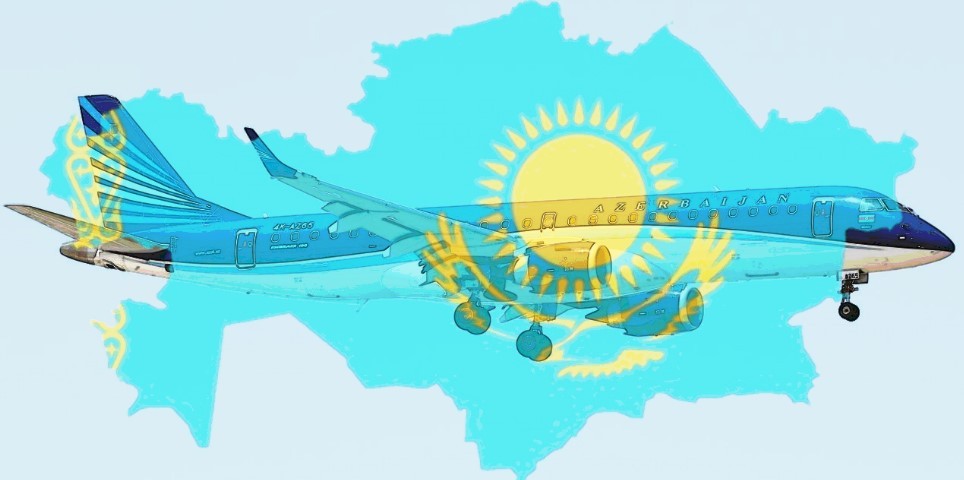
The Aktau crash of the Azerbaijan Airlines Embraer 190 aircraft, which killed 38 people on 25 December, was a tragic event with significant international repercussions. This devastating accident not only claimed lives but also raised critical questions about aviation safety and the handling of sensitive investigations. As investigators sought to determine its cause, Kazakhstan faced an important decision regarding the handling of the flight recorder. Ultimately, the country chose to transfer the recorder to Brazil, the manufacturer of the aircraft, rather than to the Interstate Aviation Committee (IAC) of the Commonwealth of Independent States (CIS), as Russia had proposed. This decision reflected both technical and diplomatic considerations, marking a crucial moment in the unfolding investigation. By taking this decision, Kazakhstan adhered to established industry procedures for aviation safety investigations. Such a step highlights the country's commitment to transparency and global norms in aviation. The move is typical of the country's foreign policy under President Kassym-Jomart Tokayev, whose long diplomatic experience leads him to emphasize a rules-based approach over political considerations and to act in accord with established procedural norms. This choice ensured that the investigation would follow established international practices, thereby lending credibility to the process and reassuring global aviation stakeholders. This behavior is also in line with Kazakhstan's broader commitment to international law and a rules-based global order. Another notable example of this approach was its endorsement of the principles of sovereignty and territorial integrity through its refusal to recognize Russia’s annexation of Crimea or the independence of the Donbas regions. These decisions were not necessarily easy ones, given Kazakhstan’s economic and security ties with Russia, but they reinforced its commitment to global standards. While some observers might frame decisions like the Aktau recorder transfer as a “snub” to Russia, such characterizations would miss the point. Like Kazakhstan’s refusal to recognize Donbas as independent and its efforts to prevent the flow of military components in violation of Western sanctions, its actions are not meant to be about rejecting one partner in favor of another. Rather, acting in its own autonomous interests, Kazakhstan seeks to "do the right thing," because this maintains a consistent international profile with a steady foreign-policy course grounded in international law and practice. Kazakhstan’s mediation efforts extend beyond formal multilateral forums, showcasing its active engagement in regional and global diplomacy. The country provided a neutral platform for discussions between opposing factions in the conflict over Syria; and it has also worked to ease tensions between Armenia and Azerbaijan, hosting purely bilateral consultations and thus demonstrating its capacity to engage constructively in regional conflicts without taking sides. These efforts are in line with Kazakhstan’s larger foreign-policy strategy to act as a principled and impartial intermediary on the global stage, fostering dialogue and reducing hostilities. Similarly, Kazakhstan’s leadership in the Conference on Interaction and Confidence-Building Measures in Asia (CICA) reflects its dedication to multilateralism and peaceful conflict resolution. Kazakhstan exemplifies the rising middle-power archetype also through its significant contributions to global nuclear non-proliferation. Its foreign policy operates on...

1 year ago

How the Azerbaijan Airlines Crash Could Shake Relations with Russia

The crash of an Azerbaijan Airlines (AZAL) airplane in Aktau, Kazakhstan, has the potential to significantly effect Azerbaijan's relations with Russia if Moscow mishandles the situation. To date, there has been a lack of transparency and responsiveness on the part of the Kremlin. The implications could include accelerating the deterioration of Moscow's influence in the region. These implications, therefore, concern not only the local countries, but any international actor having strategic interests in the South Caucasus and Central Asia, or otherwise concerned with their future role and place in the evolving post–Cold War international system.   The Facts of the Disaster Given the rapid dissemination of information in the 2020s by electronic means, whereby authentic real-time videos made by first responders to the fuselage on the ground were uploaded to social media and available worldwide within minutes, the overall outline and some details of the incident are by now generally well known. The airplane was en route from Baku to Grozny, the capital of Chechnya, when explosions in the air damaged the cabin. Very soon after, but not as a result of these explosions, the pilots completely lost all electronic orientation and navigation capabilities. According to one source close to Azerbaijan's investigation into the crash, preliminary results showed the plane was struck by a Russian Pantsir-S air defense system and its communications were then paralyzed by electronic warfare systems on the approach into Grozny. Ukrainian military drones have repeatedly targeted Russia’s southern regions, triggering Russian air defenses. “No one claims that it was done on purpose,” the source said; but “taking into account the established facts, Baku expects the Russian side to confess to the shooting down of the Azerbaijani aircraft.” After being hit, the plane was refused emergency landing permission at Grozny (2.5 kilometers from where the incident occurred) and at least two other Russian airports in the North Caucasus (Makhachkala, 155 kilometers away, and Mineral’nye Vody, 225 kilometers), before being directed by local air control out over the Caspian Sea. Once there, the pilots made the decision to try to land in Aktau (435 kilometers away). Against all odds, they succeeded in avoiding the need to ditch the aircraft into the sea, which would have undoubtedly killed all on board and also destroyed the craft, making any investigation into what had happened impossible. In the event, according to the Kazakhstani authorities, out of 62 passengers and five crew, 32 survivors were initially rescued. Captain Igor Kshnyakin, Co-pilot (First Officer) Alexander Kalyaninov, and Purser Hokuma Aliyeva died when the front wheel touched down ahead of the back wheels, as a result of which the cockpit was thrown violently away from the ongoing wreck. However, this is what created the conditions for at least some of the passengers to survive, as it split the fuselage in two. The event has garnered international attention, including for the professionalism of the crew.   What Has Happened Since At first, Kazakhstan declared its own unilateral competence to investigate the crash, which occurred on...

1 year ago

How Kazakhstan and Uzbekistan Anchor a Strategic Middle-Power Hub in Central Asia

Kazakhstan and Uzbekistan are driving Central Asia’s global significance. Together, they are turning Central Asia into a strategic middle-power hub. The two countries increasingly act as central nodes in a region key to global supply chains and, inevitably, geopolitical competition. However, they are not merely reactive to changes around them, but are highly dynamic. What does it mean to say that the region is emerging as a strategic middle-power "hub"? The notion of a hub extends beyond the national profiles of the two principals, Kazakhstan and Uzbekistan, to include the aggregation of collective influence. Central Asia is recognized as a cohesive entity in global forums. Kazakhstan’s energy wealth combines with Uzbekistan’s demographic strength, creating an influential synergy beneficial to the entire region. The interplay between their respective strengths allows them to amplify Central Asia’s voice in international institutions and negotiations collectively. By integrating their regional strategies within global frameworks — such as the Organization of Turkic States (OTS), the Shanghai Cooperation Organization (SCO), and the Conference on Interaction and Confidence Building Measures in Asia (CICA) — Kazakhstan and Uzbekistan enhance the region’s geopolitical relevance. Kazakhstan, for example, has successfully advocated for the Trans-Caspian International Transport Route (TITR, also called the "Middle Corridor"). This transcontinental trade route is emerging as a lynchpin in Eurasian logistics, connecting China to Europe via the Caspian Sea. Uzbekistan, for its part, has emphasized the integration of transport and energy infrastructure. These initiatives align with the broader vision of a unified Central Asia. The leadership of Kazakhstan and Uzbekistan has reinforced the region's collective identity as the "C5" group, also including Kyrgyzstan, Tajikistan, and Turkmenistan. This regional bloc has become a diplomatic focal point for major powers like the United States, China, Germany, and Japan. All of them engage with Central Asia through structured consultations within the C5 framework. These meetings have given the region traction in international diplomacy. The elevation of the C5 group reflects the region's new prominence. The United States engages with the C5 on issues ranging from regional security to sustainable development, emphasizing its commitment to a secure and prosperous Central Asia. China’s cooperation under the C5+1 mechanism complements its transcontinental infrastructure initiatives. Germany focuses on sustainable energy and governance, while Japan prioritizes infrastructure and technology transfers. Kazakhstan and Uzbekistan together have over two-thirds of the region's gross domestic product and two-thirds of its population. Kazakhstan's vast natural resources undergird its economic influence, while its geographic expanse (as the ninth-largest country in the world) makes it central to major connectivity initiatives. Through President Kassym-Jomart Tokayev's nuanced foreign policy, Kazakhstan has adeptly balanced relationships with major powers, ensuring that it remains a key partner for Russia, China, and the European Union. Uzbekistan has surged to prominence through its ambitious domestic reforms and proactive engagement for regional cooperation under the leadership of President Shavkat Mirziyoyev, who has implemented market liberalization measures attracting foreign investment and reinvigorating its economy. As the most populous country in Central Asia, Uzbekistan is an indispensable actor in regional affairs....

1 year ago

Russia’s Strategic Posturing and Putin’s November Visit to Kazakhstan

On November 27, 2024, Russian President Vladimir Putin’s state visit to Kazakhstan underscored the complex geopolitical and security challenges facing the region. Hosted by Kazakh President Kassym-Jomart Tokayev in Astana, the visit took place amidst heightened tensions following Russia’s deployment of its Oreshnik hypersonic missile in Ukraine on November 21. This escalation has reshaped the regional security environment, compelling Kazakhstan to confront potential spillover effects of the Ukraine conflict. Energy remained a central focus during the visit. Kazakhstan remains heavily reliant on oil exports through the pipeline of the Caspian Pipeline Consortium (CPC), which passes through southern Russia. This cooperation benefits Kazakhstan economically but, by tying Kazakhstan further into Russian energy networks, it further complicates Astana's efforts to balance relations with Moscow and Western powers. Following periodic closures of the CPC route on various pretexts, Kazakhstan has resolved to diversify its energy export strategy. It has increased shipments by barge across the Caspian Sea to enter the Baku-Tbilisi-Ceyhan (BTC) pipeline, which terminates on Turkey's coast in the eastern Mediterranean. One should not be surprised if ideas about the old Trans-Caspian Oil Pipeline (TCOP) project are taken out of deep storage for reanimation. The TCOP is an undersea link first discussed in the late 2000s between then-Presidents Nursultan Nazarbayev of Kazakhstan and Nicolas Sarkozy of France. It was shelved at the time because it did not seem geoeconomically necessary. Since then, relations between Russia and Kazakhstan have been complicated by the periodic CPC closures that, although they are given technical justification, appear politically motivated by Moscow to squeeze Astana. Kazakhstan's short-term solution, to increase oil shipments by barge across the Caspian Sea to Baku for insertion into the BTC pipeline, simply cannot attain the volumes necessary to provide a strategic alternative to the CPC. The BTC, at present, would be able to accommodate whatever volumes Kazakhstan would be able to transit to Azerbaijan including via a prospective TCOP, for export to world markets from Ceyhan. One would suppose that bilateral discussions also covered the possible participation of Rosatom in the construction and operation of Kazakhstan’s first nuclear power plant (NPP). However, no mention of this topic was made in public statements. Kazakhstan would prefer to escape the vise-like pressure between Russia and China on this matter. That is why Tokayev has discussed participation by the French firms Orano and EDF with France's President Emmanuel Macron. It has recently been suggested that it would be technically feasible for Kazakhstan to find a group of Western companies capable of executing the project. A Western consortium would have no reason to hesitate to include Kazatomprom in an appropriate role, not excluding capacity-building. The Russia-only and China-only options for the NPP's construction would be less welcoming to such a possibility. Kazakhstan's leadership has become properly sensitive to how energy partnerships are not just economic decisions, but strategic calculations in Central Asia's volatile geopolitical landscape. Indeed, Russia’s use of the Oreshnik missile against Ukraine has created an entirely new security situation. It has raised concerns that...

1 year ago