
• KGS/USD = 0.01144 0%
  • KZT/USD = 0.00211 0%
  • TJS/USD = 0.10609 0.28%
  • UZS/USD = 0.00008 0%
  • TMT/USD = 0.28530 0%
  • KGS/USD = 0.01144 0%
  • KZT/USD = 0.00211 0%
  • TJS/USD = 0.10609 0.28%
  • UZS/USD = 0.00008 0%
  • TMT/USD = 0.28530 0%
  • KGS/USD = 0.01144 0%
  • KZT/USD = 0.00211 0%
  • TJS/USD = 0.10609 0.28%
  • UZS/USD = 0.00008 0%
  • TMT/USD = 0.28530 0%
  • KGS/USD = 0.01144 0%
  • KZT/USD = 0.00211 0%
  • TJS/USD = 0.10609 0.28%
  • UZS/USD = 0.00008 0%
  • TMT/USD = 0.28530 0%
  • KGS/USD = 0.01144 0%
  • KZT/USD = 0.00211 0%
  • TJS/USD = 0.10609 0.28%
  • UZS/USD = 0.00008 0%
  • TMT/USD = 0.28530 0%
  • KGS/USD = 0.01144 0%
  • KZT/USD = 0.00211 0%
  • TJS/USD = 0.10609 0.28%
  • UZS/USD = 0.00008 0%
  • TMT/USD = 0.28530 0%
  • KGS/USD = 0.01144 0%
  • KZT/USD = 0.00211 0%
  • TJS/USD = 0.10609 0.28%
  • UZS/USD = 0.00008 0%
  • TMT/USD = 0.28530 0%
  • KGS/USD = 0.01144 0%
  • KZT/USD = 0.00211 0%
  • TJS/USD = 0.10609 0.28%
  • UZS/USD = 0.00008 0%
  • TMT/USD = 0.28530 0%

Our People > Dr. Robert M. Cutler

Dr. Robert M. Cutler's Avatar

Dr. Robert M. Cutler

Senior Editor and Contributor

Robert M. Cutler has written and consulted on Central Asian affairs for over 30 years at all levels. He was a founding member of the Central Eurasian Studies Society’s executive board and founding editor of its Perspectives publication. He has written for Asia Times, Foreign Policy Magazine, The National Interest, Euractiv, Radio Free Europe, National Post (Toronto), FSU Oil & Gas Monitor, and many other outlets.

He directs the NATO Association of Canada’s Energy Security Program, where he is also senior fellow, and is a practitioner member at the University of Waterloo’s Institute for Complexity and Innovation. Educated at MIT, the Graduate Institute of International Studies (Geneva), and the University of Michigan, he was for many years a senior researcher at Carleton University’s Institute of European, Russian, and Eurasian Studies, and is past chairman of the Montreal Press Club’s Board of Directors.

Articles

Ukrainian Drone Strike Disrupts Kazakhstan’s Oil Exports

On February 17, Ukrainian drones struck the Kropotkinskaya oil pumping station, a key component of the pipeline of the Caspian Pipeline Consortium (CPC) in Russia’s Krasnodar region. The CPC, a 1,500-kilometer pipeline, transports crude from Kazakhstan’s Tengiz field to the Black Sea port of Novorossiysk, a crucial hub for global exports. The attack, confirmed by CPC operators, resulted in the temporary shutdown of the Kropotkinskaya station, the largest such facility on Russian soil. No casualties or oil spills were reported. Ukrainian sources, including the Security Service of Ukraine (SBU) and Special Operations Forces (SOF), claimed responsibility, citing the pipeline’s role in supporting Russia’s military-industrial complex. The strike reportedly involved seven drones armed with high-explosive warheads, significantly damaging energy infrastructure, including a gas turbine unit and a substation. Russian authorities estimated a 30–40 percent reduction in CPC throughput for the next six to eight weeks, affecting global supply chains. While CPC pipeline operators have not disclosed a precise timeline for repairs, the anticipated disruptions will inevitably place additional pressure on global energy markets. The degree of damage inflicted raises questions about the vulnerability of Russian energy infrastructure and the efficacy of existing defense systems in preventing such attacks. The CPC pipeline handles a substantial share of Kazakhstan’s oil exports. In 2023, it transported 63.5 million tons, or approximately 1.27 million barrels per day (bpd), with 90 percent of that volume originating in Kazakhstan. This pipeline disruption translates into a projected drop in Kazakh oil flows from 1.143 million bpd to an estimated range of 0.69 to 0.80 million bpd. Consequently, Kazakhstan’s total crude exports—including volumes transported via alternative routes such as the Trans-Caspian corridor and rail—are expected to decline by up to 28.6 percent. The revenue impact could be severe given oil’s centrality to Kazakhstan’s economy. Even a short-term disruption will reverberate across multiple sectors, affecting fiscal revenues and potentially leading to a recalibration of investment strategies within the country’s energy sector. Although Kazakhstan has sought to diversify its oil export routes since 2022, alternatives remain limited. The Trans-Caspian International Transport Route (TITR), connecting Kazakhstan to Azerbaijan via the Caspian Sea and then onward through the Baku–Tbilisi–Ceyhan (BTC) pipeline, carried just 1.8 million tons in 2023. This is but a fraction of CPC’s capacity. Other options, such as the Druzhba pipeline to Europe and rail transport, are constrained by infrastructure bottlenecks and geopolitical risks. Given these constraints, Astana has increasingly prioritized the expansion of maritime oil exports, including investments in new tankers and port facilities. However, logistical challenges, cost considerations, and geopolitical uncertainties continue to complicate Kazakhstan’s ability to execute a seamless transition away from Russian transit routes. The attack underscores the vulnerability of Russia’s energy infrastructure amid the ongoing war. Unlike previous Ukrainian strikes targeting refineries and storage depots, this is a direct hit on a critical transit corridor with transnational implications. The disruption may accelerate Astana’s long-term push for diversification, including investment in new tankers and expanded partnerships with U.S. and European firms. In light of these developments, Kazakhstan...

1 year ago

Why Kazakhstan’s Tokayev Was Right About Diplomacy in Ukraine

When the history of the war in Ukraine is written, one question demanding extended treatment will be why diplomacy remained sidelined for so long. Conflicts involving major powers and their proxies have in recent decades (think of Korea, Vietnam, and the Balkans) finished mainly not in outright military victories but in negotiated settlements. Now, with reports of U.S. President Donald Trump reaching directly out to his Russian counterpart Vladimir Putin, it is important to reassess why the long-standing insistence on diplomacy by Kazakhstan’s President Kassym-Jomart Tokayev was not met with more support.  Tokayev’s early insistence on negotiations was instead met with scepticism. As the war ground on, Ukraine’s 2023 counteroffensive (planned and mandated by Western advisors) failed while Russia’s entrenchment in the occupied territories continued. The fact that a Trump–Putin call has taken place, bypassing European leaders, underscores the shift of view in Washington. Kazakhstan’s foreign policy approach to the war in Ukraine has been dictated by its unique geopolitical position. As a founding member of both the Eurasian Economic Union (EAEU) and the Collective Security Treaty Organization (CSTO), Kazakhstan’s economic and security ties to Russia are extensive. At the same time, its leadership has consistently pursued a multivector foreign policy, balancing engagement with China, the European Union, and the United States. Tokayev’s refusal at the June 2022 St. Petersburg International Economic Forum to recognize the so-called Donetsk and Luhansk People’s Republics signalled Kazakhstan’s commitment to sovereignty and neutrality. In November 2022, Kazakhstan began to reduce Moscow’s leverage over its energy sector by sending oil for export via the Caspian Sea, into pipelines in the South Caucasus, bypassing the established route through the Caspian Pipeline Consortium via southern Russia. Had global policymakers taken Tokayev’s warnings more seriously in 2022 and 2023, certain escalations might have been mitigated. Kazakhstan was not alone in advocating for negotiations. Turkey brokered a grain shipment deal in 2022, and the Vatican attempted discreet backchannel diplomacy. However, Kazakhstan’s deep historical and economic ties to Russia gave its perspective unique weight. Kazakhstan’s approach was pragmatic. Western states viewed engagement as legitimizing Russian aggression. From Central Asia, however, the view was that indefinite warfare would destabilize Eurasia and inflict mounting costs on all stakeholders, not least Moscow. The West dismissed calls for diplomacy as naïve or as concessions to Moscow. Western leaders continued to believe military pressure, coupled with economic sanctions, was the only viable means of deterring Russian aggression. This may have been true if the military pressure had been an order of magnitude stronger from the beginning, rather than a slow drip of weapons systems that never had a chance of making a decisive difference. The reluctance of Western leaders to consider early diplomacy was not entirely unfounded. The atrocities committed by Russian forces in Bucha and Mariupol made any engagement politically fraught. Ukraine, emboldened by Western military aid, had every reason to resist diplomatic settlements that would lock in its territorial losses. Smaller states often possess a more acute awareness of the dangers of prolonged...

1 year ago

Kazakhstan and Uzbekistan’s High-Stakes Race for Pakistan

In recent years, Kazakhstan and Uzbekistan have embarked on distinct yet complementary paths to enhance their connectivity with Pakistan. Kazakhstan has embedded itself within such institutionalized frameworks as the Middle Corridor (also known as the Trans-Caspian International Transport Route, or TITR). In this context, it has also sought to align with trans-Eurasian logistics designed to integrate South Asian trade routes into established infrastructural regimes. Uzbekistan, by contrast, marginalized from World Bank-backed corridors, has adopted a more adaptive and tactical approach by advancing alternative linkages such as the Termez–Karachi transport corridor and the Trans-Afghan Railway. Both strategies reflect the imperative to reduce dependence on Russian-controlled northern routes while leveraging Pakistan’s maritime infrastructure to reposition Central Asia within the matrix of regional and global trade. Thus, a few days ago, at a meeting with Uzbekistan’s Chamber of Commerce and Industry in Pakistan, the prospect of developing the Termez–Karachi transport corridor was discussed. Termez is on Uzbekistan's border with Afghanistan; the goods would travel via Kabul and Kandahar to Quetta, then to the Karachi port. The possibility of establishing an advanced logistics terminus in Termez with the assistance of Pakistan's National Logistics Corporation was explored. The two sides noted the need to create a permanent platform for business communications between them, such as an Entrepreneurs' Council coordinated by their respective Chambers of Commerce. This road route should not be confused with the Trans-Afghan Corridor (TAC, also called the Trans-Afghan Railway Project or the Uzbekistan–Afghanistan–Pakistan Railway Project), a $4.8 billion project to connect the three countries via 573 kilometers of rail. This rail route would run from Termez through Mazar-e-Sharif and Logar in Afghanistan, reaching Pakistan at the Kharlachi border crossing and extending to Kohat District, where a rail link southward already exists. In August 2024, the governments of Kazakhstan and Pakistan agreed to extend the TAC's route into northeast Kazakhstan to create the Trans-Afghan Multimodal Transport Corridor: multimodal because goods would arrive from Kazakhstan at Uzbekistan's Termez terminus by truck, for transshipment by rail to Pakistani ports. From there, they can reach a broad range of countries from Southeast Asia to South Asia to the Middle East. Kazakhstan, pursuing its goal to diversify its export pathways and reduce dependence on traditional northern routes, has explored several connectivity projects that have either direct or indirect implications for trade routes to Pakistan. Of these, the three most significant are the Trans-Afghan Multimodal Transport Corridor (TMTC), the Middle Corridor, and the Quadrilateral Traffic in Transit Agreement (QTTA). The Middle Corridor is the best-known of the three. Seeking to connect China to Europe via the Caspian region, it is not directly pertinent for Pakistan, but it would offer the potential to integrate with Pakistani trade routes, offering an alternative pathway for goods. The QTTA includes China, Kyrgyzstan, and Pakistan along with Kazakhstan. This transit deal aims to facilitate Kazakhstan's foreign trade by providing it with access to Pakistani ports via the Karakoram Highway, which connects Pakistan and China, thereby bypassing Afghanistan. It was agreed in 2017 and...

1 year ago

Kazakhstan and the UAE Are Building a Geoeconomic Powerhouse Spanning Asia and the Gulf

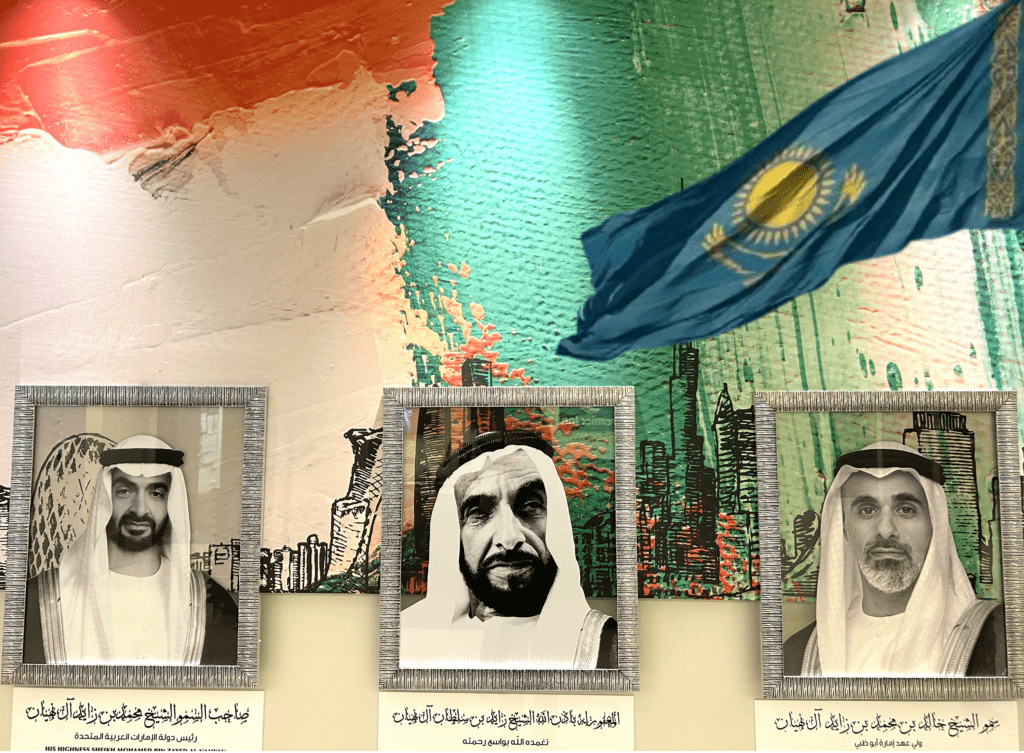
Kazakhstan President Kassym-Jomart Tokayev’s recent mid-January visit to the United Arab Emirates (UAE), to attend the Abu Dhabi Sustainability Week (ADSW) Summit, underscores the strategic importance both nations place on their bilateral ties. ADSW is a prominent global platform dedicated to accelerating sustainable development and promoting international cooperation on the global environmental agenda. The 2025 summit — with the theme, “Nexus of Next: Supercharging Sustainable Progress” — was designed specifically to explore advanced technologies such as artificial intelligence, renewable energy, and innovative sustainability solutions. As leader of the most dynamic of the Central Asian economies, President Tokayev’s presence signaled his country’s ambition to play a more prominent role in addressing environmental challenges at an international level. In his keynote speech, Tokayev addressed environmental issues that are particularly critical for Kazakhstan, including desertification, biodiversity loss, water scarcity, and food security. He emphasized his country’s multifaceted approach to these challenges, which includes digital technologies, large-scale infrastructure projects, and the development of nuclear energy as a low-carbon solution. Kazakhstan has recently launched initiatives, such as expanding solar and wind farms and implementing advanced irrigation systems to combat desertification. Tokayev also highlighted Kazakhstan’s commitment to meeting its renewable energy targets, aiming to generate 15% of its electricity from renewables by 2030, in partnership with global leaders in green technology. Overall, the ADSW Summit provided a platform for Kazakhstan to engage with international partners, share its vision for sustainable development, and explore collaborative opportunities to address global environmental challenges. Kazakhstan’s efforts include the development of the Mohammed bin Rashid Al Maktoum Solar Park, which will have a capacity of 5,000 megawatts (MW) by 2030, and participation in the Space-D programme, which enhances operational performance through nano-satellites. In particular, President Tokayev met with UAE President Sheikh Mohamed bin Zayed Al Nahyan to discuss bilateral relations. The two leaders agreed to focus on a specific economic agenda — focused on trade, investment, and sustainable development — to create positive bilateral trade dynamics. Their Joint Declaration on Strategic Investment Projects in these fields was also highlighted. Kazakhstan and the UAE have developed a dynamic and multifaceted partnership over the past three decades. Since establishing diplomatic relations in 1993, the UAE has become Kazakhstan’s leading strategic partner in the Arab world. Early cooperation focused on trade and investment but has since expanded to include sectors such as petrochemicals, energy, transport, logistics, agriculture, and aerospace. Key milestones include the establishment of direct flight routes between the two countries and the signing of long-term investment agreements in the mid-2000s. Tokayev noted that direct investment from the UAE into Kazakhstan more than doubled from 2023 to 2024, placing the country among the top ten largest foreign investors in Kazakhstan. A focal point of their discussion was the goal of increasing bilateral trade turnover to $1 billion. In this context, the Dubai International Chamber has established a representative office in Kazakhstan to boost trade and investment opportunities further still. For several years, the UAE has been expanding its cooperation with the Greater Caspian...

1 year ago

Kazakhstan’s Nuclear Power Move and Implications for the West

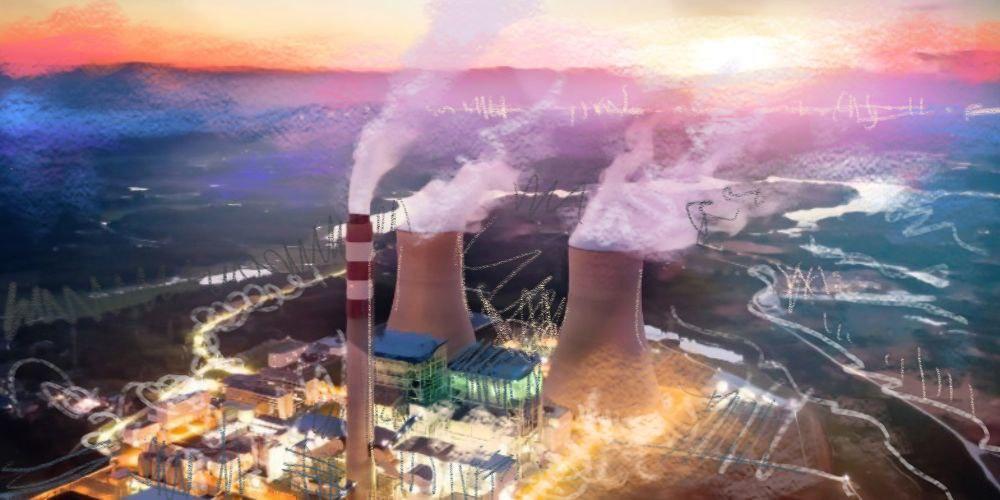
Kazakhstan’s recent referendum approving the construction of its first nuclear power plant (NPP) is a watershed moment. More than a domestic policy decision, this move puts into relief Kazakhstan's strategy for positioning itself as a linchpin in the diversification of global energy supply chains, with the world's largest uranium reserves accounting for nearly 40% of the global supply and a key geographic location. The country's ambitions align with the broader resurgence of nuclear power as an indispensable component of a sustainable energy future, countering decades of stagnation in the West and challenging the dominance of Russia and China. The renewed attention on nuclear energy arises from a convergence of systemic and technological factors. Environmental pressures to reduce reliance on fossil fuels such as gas and coal have left energy producers searching for scalable, reliable alternatives. Renewable energy sources like wind and solar, while important, remain limited by intermittency and storage challenges. At the same time, safety concerns rooted in historical disasters — Chernobyl, Three Mile Island, and Fukushima — have been mitigated by advances in reactor technology. A growing public recognition of nuclear power's viability has resulted. In this context, Kazakhstan's entry into the nuclear power arena is logical. Enhancing its ability to integrate uranium extraction with downstream nuclear fuel production would underscore its potential to play a central role in addressing global energy needs. By fostering international partnerships, Kazakhstan can leverage its resource wealth to become a critical supplier for advanced economies looking to diversify their energy mix. Kazakhstan's move comes at a time of shifting geoeconomic dynamics in the nuclear energy sector. Over the past three decades, Russia and China have consolidated their dominance, exploiting the West’s inertia. Russia has used NPP construction as a geoeconomic tool, creating dependence in such countries as Turkey and Uzbekistan. China, meanwhile, has aggressively developed its domestic nuclear infrastructure while securing global uranium supplies, particularly through investments in Africa and Central Asia. By contrast, Western nations have lagged behind, plagued by fragmented project management, skilled labor shortages, and political resistance. Anti-nuclear movements, many of which gained momentum during the Cold War with Soviet backing, have continued to stymie development in Europe and North America. The resulting industrial inertia has left Western economies vulnerable, with insufficient capacity to meet rising energy demands or counterbalance Russian and Chinese influence. Kazakhstan's emergence offers the West a rare opportunity to reverse this trend. The country’s multi-vector diplomatic strategy, emphasizing balanced relations with global powers, makes it an ideal partner for rebalancing energy supply chains. Kazakhstan’s role in global energy extends beyond uranium. The country’s geological resources overlap with deposits of rare-earth elements (REEs), which are vital for advanced defense technologies, renewable energy systems, and high-tech manufacturing. The shared extraction technologies and logistical infrastructure for uranium and REEs present opportunities for integrated resource development. NATO’s Partnership for Peace (PfP) program could play a pivotal role in this regard. By incorporating rare-earth mining and supply chain security into NATO’s Critical Energy Infrastructure Protection (CEIP) framework, member states could...

1 year ago