
• KGS/USD = 0.01144 0%
  • KZT/USD = 0.00204 0%
  • TJS/USD = 0.10435 0%
  • UZS/USD = 0.00008 0%
  • TMT/USD = 0.28571 0%
  • KGS/USD = 0.01144 0%
  • KZT/USD = 0.00204 0%
  • TJS/USD = 0.10435 0%
  • UZS/USD = 0.00008 0%
  • TMT/USD = 0.28571 0%
  • KGS/USD = 0.01144 0%
  • KZT/USD = 0.00204 0%
  • TJS/USD = 0.10435 0%
  • UZS/USD = 0.00008 0%
  • TMT/USD = 0.28571 0%
  • KGS/USD = 0.01144 0%
  • KZT/USD = 0.00204 0%
  • TJS/USD = 0.10435 0%
  • UZS/USD = 0.00008 0%
  • TMT/USD = 0.28571 0%
  • KGS/USD = 0.01144 0%
  • KZT/USD = 0.00204 0%
  • TJS/USD = 0.10435 0%
  • UZS/USD = 0.00008 0%
  • TMT/USD = 0.28571 0%
  • KGS/USD = 0.01144 0%
  • KZT/USD = 0.00204 0%
  • TJS/USD = 0.10435 0%
  • UZS/USD = 0.00008 0%
  • TMT/USD = 0.28571 0%
  • KGS/USD = 0.01144 0%
  • KZT/USD = 0.00204 0%
  • TJS/USD = 0.10435 0%
  • UZS/USD = 0.00008 0%
  • TMT/USD = 0.28571 0%
  • KGS/USD = 0.01144 0%
  • KZT/USD = 0.00204 0%
  • TJS/USD = 0.10435 0%
  • UZS/USD = 0.00008 0%
  • TMT/USD = 0.28571 0%

Our People > Sadokat Jalolova

Sadokat Jalolova's Avatar

Sadokat Jalolova

Journalist

Jalolova has worked as a reporter for some time in local newspapers and websites in Uzbekistan, and has enriched her knowledge in the field of journalism through courses at the University of Michigan, Johns Hopkins University, and the University of Amsterdam on the Coursera platform.

Articles

Uzbek Citizen Detained in Israel After Video Mocking Civilians During Rocket Alert

An Uzbek citizen working in Israel has been detained after a video circulated online showing him mocking civilians rushing to bomb shelters during a rocket alert. The video, widely shared on social media, was first posted in a Facebook group for people from Bukhara. It shows people running toward shelters after warning sirens sounded, while the man filming the scene can be heard laughing and making derogatory remarks. In the recording, he says, “Look how the rats are running,” while filming civilians attempting to reach safety during what appears to be a missile warning. The footage quickly sparked outrage among Israeli social media users, many of whom described the comments as offensive and inappropriate given that civilians were seeking protection from a potential attack. Posts circulating within the Bukharan community claimed that Israeli singer Avi Hen later recognized the individual on the street and alerted authorities. Police reportedly arrived shortly afterward and detained the man for questioning. Officials said the detention was carried out on suspicion of incitement and disturbing public order. An investigation into the case is ongoing. Meanwhile, the Embassy of Uzbekistan in Israel released an official statement addressing the incident. According to the embassy, the episode occurred on February 28, when an Uzbek citizen identified as N.H. uploaded a video to TikTok during a rocket attack while air-raid sirens were sounding. The embassy said the video contained inappropriate language and was later widely shared across Israeli social media platforms. The statement added that an Israeli citizen identified as A.H. subsequently contacted the police about the video. After learning about the situation, the embassy’s consular department contacted the Uzbek citizen and held a conversation with him. Embassy representatives also communicated with the Israeli citizen who filed the complaint. According to the embassy, the Uzbek national is currently safe, and the situation remains under the supervision of the consular department.

5 days ago
Uzbek Citizen Evacuation Flights Continue from Middle East

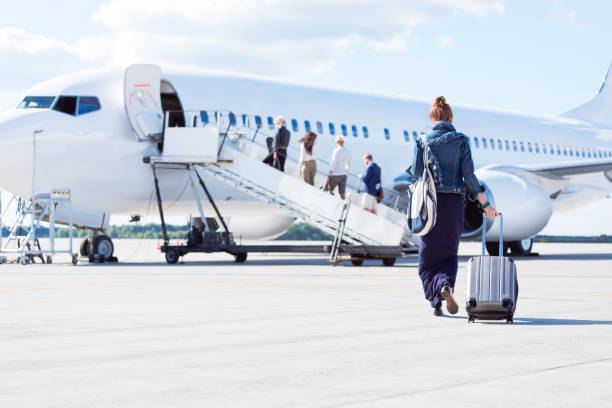
More than 9,300 citizens of Uzbekistan had been evacuated from countries in the Middle East as of March 5. According to the press service of Uzbekistan’s Ministry of Foreign Affairs, between March 1 and 10:00 a.m. local time on March 5, a total of 9,361 Uzbek citizens safely returned home from several countries in the region. Officials said the largest number of evacuees arrived from Saudi Arabia, where 8,114 people were transported to Uzbekistan on both regular and specially arranged charter flights. Another 1,192 citizens have so far been repatriated from the United Arab Emirates. Smaller groups were also evacuated from other countries in the region, including 23 citizens from Iran, 25 from Bahrain, and seven from Oman. The ministry said the return of Uzbek nationals is being organized in a structured and phased manner. Officials added that evacuation operations are currently focused on countries whose airspace remains open to civilian flights, with additional flights to be arranged once airspace restrictions are lifted elsewhere in the region. Separately, Uzbekistan’s Ministry of Transport reported that by March 5 a total of 41 special flights had been carried out to bring citizens home from the Middle East. According to the ministry, several Uzbekistan-based airlines, including Uzbekistan Airways, Centrum Air, Qanot Sharq, Fly One Asia, Fly Khiva, and Air Samarkand, have been operating evacuation flights. These included routes from Jeddah and Medina in Saudi Arabia to Tashkent, Andijan, Namangan, Urgench, Qarshi, and Samarkand, as well as flights from Dubai to Tashkent. Transport officials said that 36 flights departing from Jeddah and Medina transported 7,988 passengers to Uzbekistan. An additional five flights from Dubai carried 838 people. Several flights were still operating at the time of the ministry’s latest update, including routes from Dubai and Jeddah to Tashkent and Samarkand. Authorities stated that the evacuation process is continuing step by step and urged Uzbek citizens abroad to remain calm, follow local laws, and rely only on official information issued by Uzbekistan’s diplomatic missions and government agencies.

5 days ago

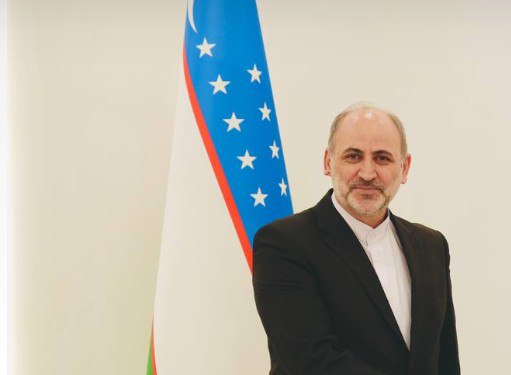
Iran’s Ambassador in Tashkent Defends Tehran’s Position on Middle East Conflict

Iran’s ambassador to Uzbekistan, Mohammad Ali Iskandari, has held a press conference in Tashkent during which he sharply criticizing the United States and Israel for the escalating war in the Middle East. According to the Uzbek diplomatic news platform UzDiplomat, Iskandari spoke with journalists about Tehran’s position on the fighting and the broader political tensions. “We are fighting a mindset, the mindset that everything belongs to them,” Iskandari said on Wednesday, referring to Israel and the United States. “We did not start this war,” the ambassador said, adding that the escalation began while diplomatic negotiations were still underway. He said the conflict was closely tied to Israel’s regional policies and the decisions of its leadership. According to Uzbek journalist Sharofiddin Tulaganov, who attended the event and later described it on his Telegram channel, Iskandari said the air strike that killed Iranian Supreme Leader Ali Hosseini Khamenei was a violation of international law. Iran’s theocratic leadership has long been a source of international concern because of its nuclear program, sponsorship of proxy forces in the Middle East, and bloody crackdowns on protesters seeking more freedom. U.S. President Donald Trump and senior administration officials cited those concerns in the run-up to the air strike campaign, indicating that the United States wants a change of leadership in Iran. The Iranian ambassador also condemned an alleged air strike that hit a school in Iran, killing, by Iskandari’s account, 168 Iranian girls between the ages of seven and twelve. The U.S. military has said it is investigating the incident. The ambassador maintained that Iran’s military actions have targeted only specific facilities, including U.S. military bases and intelligence centers belonging to the United States and Israel. However, some missiles and drones fired from Iran have reportedly hit civilian locations in several Gulf Arab states, and Azerbaijan said that drones launched from Iranian territory struck Azerbaijan’s Nakhchivan Autonomous Republic on Thursday. It said one drone fell on the terminal building of Nakhchivan International Airport, while another crashed near a school in the village of Shekerabad. Governments in Uzbekistan, Kazakhstan, and other Central Asian countries have tried to maintain a balance, keeping in touch with their Iranian counterparts while expressing support for Gulf states that have activated air defense facilities because of the Iranian threat.

6 days ago

Wallet in Telegram Launches Crypto Stocks Pilot for 27 Million Users in Uzbekistan

A new digital investment service allowing users to trade tokenized U.S. stocks directly within Telegram has been launched in Uzbekistan as part of a pilot program overseen by the country’s National Agency for Prospective Projects. On March 5, a new “Crypto Stocks” section was introduced within the Wallet feature in Telegram, giving users access to more than 60 tokenized shares and exchange-traded funds (ETFs). The one-month pilot program began in March 2026 and is being implemented with support from Asterium, described as Uzbekistan’s largest cryptocurrency exchange. The service allows users to buy, sell, store, and transfer tokenized versions of shares in major U.S. companies such as Apple, Tesla, Netflix, and Amazon, as well as ETFs tracking the broader U.S. market, including funds linked to the S&P 500 index. These assets can be sent directly to other Telegram users within the app without requiring them to open accounts on traditional brokerage platforms. According to the developers, the system is designed to make global investment tools easier to access for everyday users. Investments can start from as little as $1, allowing users to purchase fractional shares rather than full stocks. According to Global Findex 2025 data cited in the release, more than 60% of Uzbekistan’s population now has an account with a bank or other financial institution. However, barriers such as limited funds, the distance to bank branches, and the cost of financial services continue to prevent many people from accessing traditional financial products. Andrew Rogozov, founder and CEO of The Open Platform and Wallet in Telegram, said the new service aims to make global financial markets accessible through familiar digital platforms. “By bringing tokenized equities into Telegram, we’re giving millions of people their first opportunity to participate in global financial markets directly where they communicate and use digital services,” he said. Diyorbek Mukhammedov, Wallet’s regional director in Uzbekistan, said the initiative responds to growing interest in investing while addressing the complexity that often discourages new investors. Integrating the service into Telegram, he said, helps make financial tools more understandable and accessible. The system operates through integration with the xStocks platform and a partnership with the Kraken cryptocurrency exchange. Tokenized assets are issued by Backed and are designed to maintain one-to-one backing with underlying U.S. stocks and ETFs. Trading on the platform is available 24 hours a day on weekdays. Wallet in Telegram, backed by The Open Platform, reports more than 150 million registered users globally. The service became available in Uzbekistan in December 2025 after receiving a license from the National Agency for Prospective Projects.

6 days ago

Middle East Conflict May Slow Growth, but Gold and Oil Dynamics Could Cushion Impact

The escalating conflict in the Middle East could weigh on Uzbekistan’s economic growth if it persists, though higher gold prices and oil-driven gains in key partner economies may soften the impact, according to Uzbek economist Mirkomil Kholboyev. Kholboyev shared his analysis on his Telegram channel, examining both the direct and indirect channels through which the crisis could affect Central Asia’s largest economy. “Several days of geopolitical tensions in the Middle East have already turned into open military confrontation,” he wrote. “It is still difficult to say how long this situation will last. If it is short-term and the previous status quo is restored, the impact on our economy will likely be limited and temporary. But if the war continues for a longer period, the consequences could be more significant.” Direct trade exposure appears limited. According to data from Uzbekistan’s national statistics portal, the country exported $157 million worth of goods to Iran in 2025, accounting for just 0.5% of total exports. Imports from Iran totaled $421 million, or 0.9% of overall imports. Trade with Israel was even smaller, with exports of $33 million and imports of $22 million. “Even a complete halt in trade with these countries would not significantly affect total exports,” Kholboyev wrote, though he noted that export and import growth could slow. Iran also plays a role as a transit hub. Its ports are part of broader regional logistics networks, including the Central Asia-India corridor via Chabahar and the International North-South Transport Corridor (INSTC). According to a regional analytical report, Uzbekistan accounts for 5.5% of total traffic along this route, compared with 61.1% for Kazakhstan and 29.4% for Turkmenistan. Kholboyev pointed out that while some of Uzbekistan’s trade passes through Iranian ports, the country is less dependent on them than other Central Asian countries. Still, he cautioned that prolonged fighting would inevitably disrupt both direct trade and transit flows. “I do not have precise data on how much of our total foreign trade passes specifically through Iranian ports,” he wrote. “That makes it difficult to assess the full effect. But if the war continues, both direct trade and transit through Iran will suffer serious damage.” Even if trade with the wider region, including Iran and other countries affected by hostilities, were to stop entirely, Kholboyev estimates the impact would remain moderate. The region accounts for about 2.4% of Uzbekistan’s exports and 1.5% of imports. A complete halt could slow export growth by roughly 3% and imports by about 2.5%, reducing overall GDP growth by around 0.6 percentage points. A 50% reduction in trade with the region would shave an estimated 0.2-0.3 percentage points off GDP growth. Energy markets represent a more significant risk channel. As trading resumed after the latest escalation, global oil prices rose by about 9%, driven by concerns over potential disruptions in the Strait of Hormuz, through which roughly one-fifth of global oil consumption passes. “If tensions escalate further and oil flows are restricted, or if prices continue rising amid uncertainty, this could slow...

1 week ago