• KGS/USD = 0.01144 0%
  • KZT/USD = 0.00208 0%
  • TJS/USD = 0.10463 0.38%
  • UZS/USD = 0.00008 0%
  • TMT/USD = 0.28490 -0.14%
  • KGS/USD = 0.01144 0%
  • KZT/USD = 0.00208 0%
  • TJS/USD = 0.10463 0.38%
  • UZS/USD = 0.00008 0%
  • TMT/USD = 0.28490 -0.14%
  • KGS/USD = 0.01144 0%
  • KZT/USD = 0.00208 0%
  • TJS/USD = 0.10463 0.38%
  • UZS/USD = 0.00008 0%
  • TMT/USD = 0.28490 -0.14%
  • KGS/USD = 0.01144 0%
  • KZT/USD = 0.00208 0%
  • TJS/USD = 0.10463 0.38%
  • UZS/USD = 0.00008 0%
  • TMT/USD = 0.28490 -0.14%
  • KGS/USD = 0.01144 0%
  • KZT/USD = 0.00208 0%
  • TJS/USD = 0.10463 0.38%
  • UZS/USD = 0.00008 0%
  • TMT/USD = 0.28490 -0.14%
  • KGS/USD = 0.01144 0%
  • KZT/USD = 0.00208 0%
  • TJS/USD = 0.10463 0.38%
  • UZS/USD = 0.00008 0%
  • TMT/USD = 0.28490 -0.14%
  • KGS/USD = 0.01144 0%
  • KZT/USD = 0.00208 0%
  • TJS/USD = 0.10463 0.38%
  • UZS/USD = 0.00008 0%
  • TMT/USD = 0.28490 -0.14%
  • KGS/USD = 0.01144 0%
  • KZT/USD = 0.00208 0%
  • TJS/USD = 0.10463 0.38%
  • UZS/USD = 0.00008 0%
  • TMT/USD = 0.28490 -0.14%

Our People > Stephen M. Bland

Stephen M. Bland's Avatar

Stephen M. Bland

Managing Editor and Head of Investigations

Stephen M. Bland is a journalist, author, editor, commentator, and researcher specializing in Central Asia and the Caucasus. Prior to joining The Times of Central Asia, he worked for NGOs, think tanks, as the Central Asia expert on a forthcoming documentary series, for the BBC, The Diplomat, EurasiaNet, and numerous other publications.

His award-winning book on Central Asia was published in 2016, and he is currently putting the finishing touches to a book about the Caucasus.

Articles

Tokayev to Visit Kyrgyzstan for High-Level Talks on Aug. 21–22

Kazakhstan’s President Kassym-Jomart Tokayev is due in Kyrgyzstan for an official visit at the invitation of President Sadyr Japarov, with the main program set in Bishkek. An announcement, carried by state media, confirmed the trip and outlined that talks would take place on deepening political and economic ties. Local authorities have introduced traffic restrictions for Aug. 21–22, indicating a two-day schedule including protocol events and bilateral meetings. The leaders are expected to review cooperation across trade, transit, and energy, and to convene the Supreme Interstate Council, the highest bilateral forum, to sign documents prepared by their foreign ministries in recent weeks. Diplomatic sources say deliverables could include measures to ease border procedures and timelines for joint infrastructure projects. A Busier, More Formalized Partnership Kazakhstan and Kyrgyzstan have intensified engagement through 2024–2025 with frequent ministerial contacts, new investment pledges, and coordination on water-energy policy. In early August, the countries’ foreign ministers initiated a 2025–2027 cooperation plan for presidential approval at the upcoming summit. Energy is central: the governments, together with Uzbekistan and international partners, have advanced groundwork on the Kambarata-1 hydropower plant, a flagship project intended to expand clean generation and regulate seasonal flows in the Syr Darya basin. Economically, both states are members of the Eurasian Economic Union, giving their businesses a shared customs space and labor mobility framework — a recurring theme when leaders meet to resolve practical bottlenecks in border trade and logistics. Business groups on both sides are also pushing for upgrades to road and rail crossings and for the expanded use of digital customs tools. Tokayev’s program is expected to include a formal meeting with President Japarov, a session of the Supreme Interstate Council, and a signing ceremony. While detailed communiqués typically follow the talks, officials in Bishkek and Astana have signaled that this visit aims to translate recent preparatory work into specific targets on trade, transport, and energy, setting the tone for the next phase of Kazakh–Kyrgyz relations.

7 months ago
Trump-Putin Alaska Summit Ends Without Ceasefire

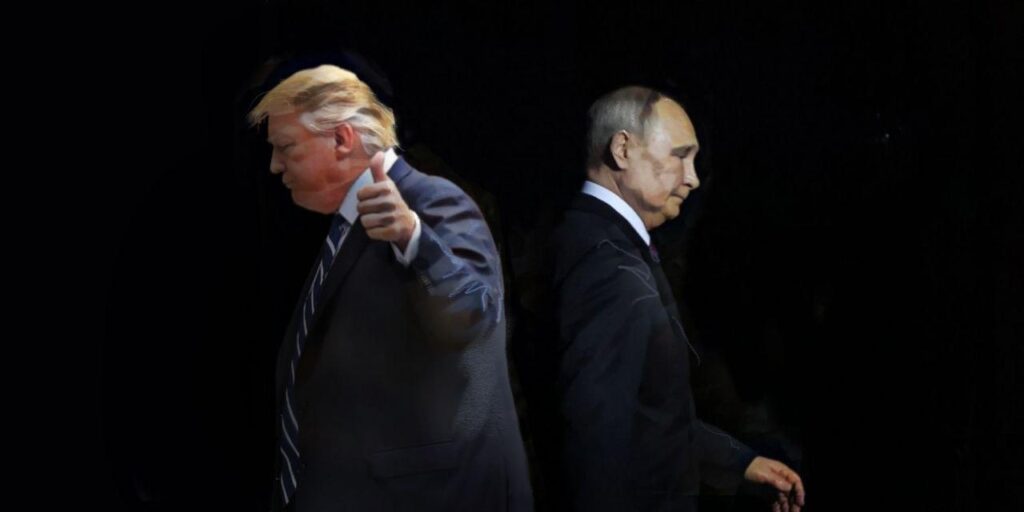
U.S. President Donald Trump and Russian President Vladimir Putin met on Friday in Alaska for their first face-to-face summit since the start of the Ukraine war. Despite optimism from the U.S. side, the talks ended without an agreement on a ceasefire. The leaders met for nearly three hours at Joint Base Elmendorf-Richardson in Anchorage, following a red-carpet welcome and military flyover. Only a handful of aides joined the private session. Afterward, Trump called the exchange “extremely productive” and said “some headway” had been made, but stressed that “there’s no deal until there’s a deal.” Putin described “progress” and “agreements,” though neither leader offered specifics, and neither took questions. No Ceasefire, Continued Dialogue Ending Russia’s invasion of Ukraine dominated the agenda. Trump had vowed to bring the war to a close quickly, but the Alaska talks produced no ceasefire. Ukrainian officials noted that Putin appeared to have “bought more time” as fighting continues. Air raid sirens sounded in Ukraine, and Russian border regions came under drone attack even as the summit unfolded. Having previously said on the way to his summit with Russian President Vladimir Putin that he wouldn’t “be happy if I walk away without some form of a ceasefire,” U.S. President Donald Trump walked away from the talks with no agreement in place, instead urging Ukrainian President Volodymyr Zelenskyy to “make a deal.” “I believe we had a very productive meeting,” Trump stated. “There were many, many points that we agreed on… I will call up NATO… I’ll of course call up President Zelenskyy and tell him about today’s meeting… We really made some great progress… I’ve always had a fantastic relationship with President Putin – with Vladimir…We were interfered with by the ‘Russia, Russia, Russia’ hoax,” he added. “Again, Mr. President, I’d like to thank you very much, and we’ll speak to you very soon and probably see you again very soon,” Trump said. “Thank you very much, Vladimir.” “Next time in Moscow,” Putin replied, chuckling, with a rare use of English, before Trump abruptly ended his press event, refusing to take any questions. Both leaders said the dialogue would continue. Trump claimed he and Putin agreed on “most things” and floated the idea of joining a future meeting between Putin and Ukrainian President Volodymyr Zelenskyy. Putin, while not referencing direct talks with Kyiv, urged Ukraine and its allies not to “derail” what he called constructive progress. Signals from Washington and Moscow Trump emphasized his desire to stop the fighting, stating, “I want the killing to stop,” and suggested he believed Putin wanted peace as well. He also said he would hold off on imposing new “severe” measures on Russia, a shift from earlier rhetoric. Trump also revealed that he would pause plans to levy tariffs on Chinese imports over Beijing’s purchases of Russian oil, saying progress in Alaska made that step unnecessary for now. Putin, meanwhile, repeated his long-standing demands that NATO expansion and other “root causes” be addressed before peace can be achieved. He warned that...

7 months ago

Trump–Putin Talks in Alaska: What Could They Mean for Central Asia?

As U.S. President Donald Trump prepares to meet Russian President Vladimir Putin at the Joint Base Elmendorf-Richardson, located just outside of Anchorage, Alaska, hopes and anxieties are reverberating across Central Asia. Trump has signaled that securing a ceasefire in Ukraine is his top priority, warning of “very severe consequences” for Moscow if Putin refuses to halt the war. For the five former Soviet republics of Central Asia, these peace talks carry high stakes. Any truce or breakdown could ripple into their economies and strategic calculus. The war has already fundamentally changed Central Asia’s strategic positioning, accelerating diversification away from Russian dependence. With Trump and Putin poised to negotiate, Central Asian leaders are mindful that all possible outcomes - a ceasefire, a prolonged conflict, or a major power realignment - could each reshape the region’s economic fortunes and foreign policy choices. Central Asian Stances on the Ukraine War All five Central Asian governments have officially maintained neutrality on the Ukraine conflict. On the first UN General Assembly resolution of March 2, 2022, Kazakhstan, Kyrgyzstan, and Tajikistan abstained, while Uzbekistan and Turkmenistan did not vote. On subsequent resolutions, Uzbekistan abstained alongside Kazakhstan, Kyrgyzstan, and Tajikistan; Turkmenistan continued not to vote. None has recognized Russia’s claims to Ukrainian territory. Seated beside Putin at a plenary session of the St. Petersburg International Economic Forum in June 2022, referring to them as “quasi-state territories,” President Kassym-Jomart Tokayev of Kazakhstan refused to recognize the independence of the so-called Donetsk and Lugansk People’s Republics. “Modern international law is the United Nations Charter,” Tokayev stated. Despite maintaining ties with Russia, Kazakhstan has boosted its engagement with China, Turkey, and Europe during the conflict. Whilst publicly affirming that it will comply with Western sanctions on Russia, Kazakhstan has stated that it will continue to prioritize its economic interests, vowing not to “blindly follow” such measures when they harm its domestic industries. “Kazakhstan will continue to comply with the sanctions but will pursue a balanced policy to minimize the impact on its own economy,” Deputy Prime Minister Serik Zhumangarin said in August 2024. Uzbekistan has adopted a similar “balanced and neutral” approach to the war in Ukraine. In March 2022, then-Foreign Minister Abdulaziz Kamilov stated that Uzbekistan “recognizes the independence, sovereignty and territorial integrity of Ukraine, and does not recognize the Luhansk and Donetsk People’s Republics.” Despite Kamilov leaving his position shortly after making this statement, the nation’s position appears largely unchanged. Calling for an immediate end to “hostilities and violence,” Tashkent has expanded links with Turkey, China, and the EU. According to a U.S. State Department report from 2024, “Uzbekistan formally committed to adhering to U.S. and EU sanctions and trade restrictions on Russia.” Kyrgyzstan has continued to maintain a close economic relationship with Moscow while abstaining from all key United Nations resolutions concerning the Ukraine war. President Sadyr Japarov has said the country “adheres to a neutral position” and that exports to Russia are civilian in nature. In January 2025, Kyrgyzstan’s Keremet Bank was designated by the U.S....

7 months ago

Starlink Officially Launches in Kazakhstan

In a landmark step toward bridging Kazakhstan’s digital divide, SpaceX’s satellite internet service Starlink has officially begun operations in the country. As of today, residents and organizations across Kazakhstan can legitimately purchase and activate Starlink satellite terminals to access high-speed internet — even in the most remote regions. From Pilot to Public Rollout Kazakhstan's engagement with Starlink began as early as late 2023, when the government deployed the system in a pilot phase to connect rural schools with fast broadband service. By mid‑2024, over 1,700 schools were brought online under the “Accessible Internet” national program. On June 12, 2025, the Ministry of Digital Development, Innovation, and Aerospace Industry signed a formal agreement with Starlink, committing the company to fully comply with Kazakhstan’s information security and telecommunications laws. The agreement paved the way for the official rollout to citizens, entities, and government bodies. Why This Matters Kazakhstan's vast geography and dispersed settlement patterns have long challenged conventional broadband expansion. Fiber optics and cell towers reach most urban areas - but remote pastures, mountain villages, and certain infrastructure sites remain underconnected or entirely offline. Starlink's low-Earth-orbit satellite constellation provides a modern solution: delivering high-speed, low-latency internet without reliance on terrestrial infrastructure. This opens avenues not only for education and healthcare in rural schools and clinics, but also for mobile services, infrastructure projects, and remote industrial operations. Official Reactions In June, Minister Zhaslan Madiyev highlighted the significance of this milestone: “Until today, Starlink operated in Kazakhstan in pilot mode, providing internet only in schools. Now, finally, we have reached an agreement: the company agreed to comply with all the requirements of our legislation … our citizens will be able to officially and legally connect to satellite internet.” On Starlink’s official X account, the company announced: “Starlink’s high-speed, low-latency internet is now available in Kazakhstan!” The deployment aligns with President Kassym‑Jomart Tokayev’s national “Accessible Internet” initiative, aiming to ensure that no region is left behind in digital connectivity.

7 months ago

Uzbekistan, India Boost Strategic Partnership in High-Level Call

Uzbek President Shavkat Mirziyoyev spoke with Indian Prime Minister Narendra Modi on August 12, 2025, in a telephone conversation aimed at deepening the strategic partnership between Uzbekistan and India. The two leaders discussed expanding cooperation across trade, connectivity, healthcare, technology, and cultural exchanges, with Modi describing their conversation as “fruitful.” Posting on X, Modi stated that “We reviewed the progress achieved in key areas of our bilateral cooperation and reaffirmed our shared resolve to further advance the India-Uzbekistan Strategic Partnership.” Ahead of India’s 79th Independence Day, Mirziyoyev highlighted the longstanding friendship between the two nations. The talks underscored Uzbekistan’s growing role as a vital partner in Central Asia for India, as both countries seek to bolster regional stability and their economic development. Since Uzbekistan’s independence in 1991, the country has steadily built ties with India, which was among the first to recognize its sovereignty. The two nations formally established diplomatic relations in 1992 and elevated their engagement with a Strategic Partnership declaration in 2011. Uzbekistan has hosted several visits by Modi, most recently in September 2022, when he participated in the 22nd SCO summit held in Samarkand. Mirziyoyev has visited India on two occasions. Uzbekistan plays a central role in Central Asian connectivity initiatives such as the China–Kyrgyzstan–Uzbekistan railway project, enhancing trade routes and regional cooperation. It is also exploring collaboration with India in healthcare and technology, alongside efforts to promote cultural and educational exchanges that strengthen ties between their peoples. Bilateral economic ties are steadily growing, with trade between India and Uzbekistan reaching approximately $756.6 million in 2023, up from $444.2 million in 2020. Indian exports include pharmaceuticals, machinery, and food products, while Uzbekistan supplies fruits, fertilizers, and textiles. More than 300 Indian companies now operate in Uzbekistan, encouraged by a new Bilateral Investment Treaty signed in 2024, which is aimed at boosting joint ventures in healthcare, IT, and tourism. Both governments have signaled their intent to diversify into renewable energy, agriculture, and hospitality. Connectivity is a key pillar of the partnership. Uzbekistan is working with India on projects like the International North–South Transport Corridor and seeking operational access to Iran’s Chabahar Port, which would give Tashkent a direct route to the Indian Ocean. Security and defense cooperation have intensified since the creation of the Joint Working Group on Defense in 2019. The two countries hold the annual Dustlik military exercises, alternating between India and Uzbekistan, to strengthen counter-terrorism and urban warfare capabilities. The sixth edition was held in Pune from April 16–28, 2025, underscoring growing interoperability between the two militaries. Uzbek forces regularly train at Indian military academies, and discussions are underway on defense industry collaboration. Cultural and educational ties also remain vibrant. Bollywood and Indian music enjoy enduring popularity in Uzbekistan. Around 10,000 Indian students now study across Uzbek institutions, particularly in medicine. On the tech side, ministers agreed this year to launch an India–Central Asia Digital Partnership Forum, with Uzbekistan offering to host the inaugural meeting, linking India’s digital public infrastructure experience with Central Asia’s modernization...

7 months ago