• KGS/USD = 0.01144 0%
  • KZT/USD = 0.00213 0%
  • TJS/USD = 0.10605 0.57%
  • UZS/USD = 0.00008 0%
  • TMT/USD = 0.28530 0%
  • KGS/USD = 0.01144 0%
  • KZT/USD = 0.00213 0%
  • TJS/USD = 0.10605 0.57%
  • UZS/USD = 0.00008 0%
  • TMT/USD = 0.28530 0%
  • KGS/USD = 0.01144 0%
  • KZT/USD = 0.00213 0%
  • TJS/USD = 0.10605 0.57%
  • UZS/USD = 0.00008 0%
  • TMT/USD = 0.28530 0%
  • KGS/USD = 0.01144 0%
  • KZT/USD = 0.00213 0%
  • TJS/USD = 0.10605 0.57%
  • UZS/USD = 0.00008 0%
  • TMT/USD = 0.28530 0%
  • KGS/USD = 0.01144 0%
  • KZT/USD = 0.00213 0%
  • TJS/USD = 0.10605 0.57%
  • UZS/USD = 0.00008 0%
  • TMT/USD = 0.28530 0%
  • KGS/USD = 0.01144 0%
  • KZT/USD = 0.00213 0%
  • TJS/USD = 0.10605 0.57%
  • UZS/USD = 0.00008 0%
  • TMT/USD = 0.28530 0%
  • KGS/USD = 0.01144 0%
  • KZT/USD = 0.00213 0%
  • TJS/USD = 0.10605 0.57%
  • UZS/USD = 0.00008 0%
  • TMT/USD = 0.28530 0%
  • KGS/USD = 0.01144 0%
  • KZT/USD = 0.00213 0%
  • TJS/USD = 0.10605 0.57%
  • UZS/USD = 0.00008 0%
  • TMT/USD = 0.28530 0%

Our People > Stephen M. Bland

Stephen M. Bland's Avatar

Stephen M. Bland

Managing Editor and Head of Investigations

Stephen M. Bland is a journalist, author, editor, commentator, and researcher specializing in Central Asia and the Caucasus. Prior to joining The Times of Central Asia, he worked for NGOs, think tanks, as the Central Asia expert on a forthcoming documentary series, for the BBC, The Diplomat, EurasiaNet, and numerous other publications.

His award-winning book on Central Asia was published in 2016, and he is currently putting the finishing touches to a book about the Caucasus.

Articles

Putin in Tajikistan for CIS Summit Amid Migration Tensions

When President Vladimir Putin arrives in Dushanbe on 8 October for his first state visit, Tajikistan will briefly become the focal point of regional diplomacy. Currently holding the rotating chair of the Commonwealth of Independent States (CIS), Dushanbe is preparing to host both the CIS Heads of State Council and the second Russia–Central Asia summit. For Moscow, Central Asia has remained a priority since the invasion of Ukraine, and the visit highlights what is at stake for both Russia and its host. Tajikistan depends heavily on Russia for security, trade, and employment opportunities for its citizens, but relations have been tested by the aftermath of the March 2024 Crocus City Hall attack, which exposed the fragility of migration-driven economics and the risk of renewed extremism. An Old Relationship Tested by New Tensions Russia and Tajikistan have been closely entwined since the collapse of the Soviet Union. Putin has already made twelve trips to Tajikistan since taking office, and this will be his first with state‑visit status. Security cooperation remains the backbone of the relationship. Russia’s 201st military base in Tajikistan - formerly the 201st motor rifle division and now Moscow’s largest overseas facility - has long been billed as a shield along the Afghan frontier; the two sides continue to coordinate through the CSTO (Collective Security Treaty Organization), and within the SCO (Shanghai Cooperation Organization) framework. Trade between the two nations has expanded despite sanctions headwinds. On the eve of the visit, presidential aide Yuri Ushakov said bilateral turnover rose by more than 17 % in the first seven months of 2025, and reached about US$1.5 billion in 2024. Russia accounts for over 22 % of Tajikistan’s foreign trade. Meanwhile, more than 1.2 million Tajik citizens work in Russia, making up about 16 % of all foreign workers there. They remitted US$1.8 billion back home last year, roughly 17 % of Tajikistan’s GDP. This symbiosis means that the two leaders routinely discuss labor migration and social issues alongside security and trade. Yet the relationship has been strained by a wave of xenophobia following the Crocus City Hall attack, which killed 145 people, which the Russian authorities accused militants from Tajikistan of perpetrating. As previously reported by The Times of Central Asia, following the arrest of four Tajik suspects, Central Asian migrants in Russia have faced arson attacks, beatings, and boycotts of their businesses. Russian law enforcement has launched aggressive street inspections and created special units to check hostels and businesses frequented by Central Asians. Even long‑time Tajik residents with Russian citizenship have reported menacing phone calls and threats. In the wake of the attack, diaspora leaders urged compatriots not to leave their homes, and the Tajik interior ministry publicly rebutted Russian media reports, stating that three of the four suspects named were not involved. Those pressures hit a country heavily reliant on remittances. The World Bank’s 2025 update estimates that money sent home by migrants accounted for 49 % of Tajikistan’s GDP in 2024. Since the start of the Ukraine war, Russian politicians and media have become increasingly hostile toward Central Asian migrants, leading Moscow to deactivate all foreign‑owned SIM cards and...

6 months ago

Kyrgyzstan Snap Election: Democracy on Edge or Politics as Usual?

On September 25, Kyrgyzstan’s parliament voted to dissolve itself, clearing the way for snap elections. As previously reported by The Times of Central Asia, deputies approved the dissolution by an 84–0 vote, with five abstentions and one absence. The election will now take place on November 30, under revised electoral rules. The new system divides the country into 30 constituencies, each of which elects three deputies, at least one of whom must be a woman. Lawmakers justified the move by pointing to the costs and logistical burdens of overlapping parliamentary and presidential campaigns, arguing that holding parliamentary elections a year early would streamline preparations and reduce the administrative strain. Critics, however, have suggested the real motivation is political, noting that pro-government blocs stand to benefit from locking in deputies under the new majoritarian system by mobilizing local administrative resources, especially after years of pressure on opposition groups and independent media. “Regarding the early elections, I fully support this decision,” Eldar Turatbek, founder of the Legalize political party, told The Times of Central Asia. “There is no point in waiting another year until the end of the 7th convocation’s term, especially when you consider that after the 2020 revolution, most deputies spent a year in temporary status anyway. In essence, they have already ‘worked off’ their five-year term.” Japarov’s Centralization of Power The dissolution also fits into a broader cycle of political reshuffles across the region. Both Kyrgyzstan and Kazakhstan have undergone rapid personnel and institutional changes in recent months, with Bishkek’s early vote reflecting President Sadyr Japarov’s emphasis on electoral timing, and, analysts argue, designs to cement his grip on power. The step arrives in a political environment that has grown markedly more centralized since Japarov’s rise during the turmoil of 2020. New restrictions on online media and internet traffic have narrowed the space for civil society, measures the government frames as necessary to restore order and promote national values. Rights advocates, however, warn of democratic backsliding in a country once seen as the most pluralistic in Central Asia. Opposition journalist Bolot Temirov offered a blunt assessment as to the reasons why the authorities are holding early parliamentary elections. “In recent years, the president’s entourage and the head of the State Committee for National Security have acquired money, and now want to show off their deputy badges,” he told TCA. “Kamchybek Tashiyev will try to get as many of his people into parliament as possible to strengthen his position in the confrontation with Sadyr Japarov and his team. Mandates have long since become a commodity, and parliamentary seats are for sale.” International IDEA has recorded a decline in civil liberties and checks on executive authority under the current administration, and Kyrgyzstan’s trajectory makes this moment especially significant. The country has experienced three revolutions since independence - in 2005, 2010, and 2020 - each triggered by discontent over corruption, contested elections, and concentrated presidential power. These upheavals reshaped institutions but also entrenched a cycle of volatility that continues to cast a...

6 months ago

Kazakhstan Expands Role as a Regional Logistics Hub at TransLogistica 2025

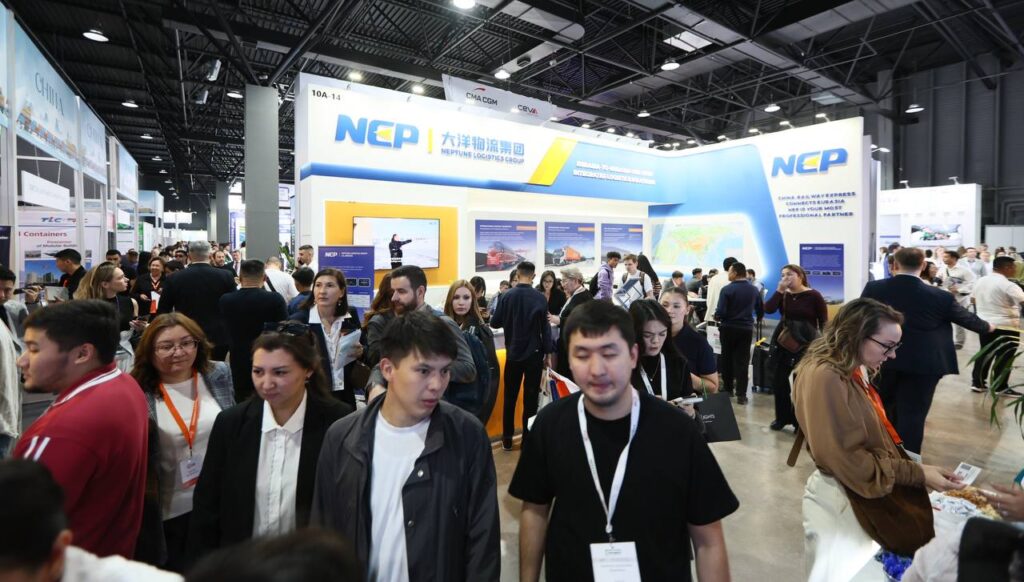
Almaty has reinforced its status as Central Asia’s logistics capital with the opening of the 28th Kazakhstan International Exhibition Transport and Logistics - TransLogistica Kazakhstan 2025. The event, being held at the Atakent Exhibition Center from September 30 to October 2, has gathered 303 exhibitors from 21 countries, underscoring the growing international interest in Kazakhstan’s transport sector. Organizers reported a 21% increase in participation compared with 2024, with new entrants from India, Romania, and Pakistan joining companies from Kazakhstan, China, and Russia. National pavilions represented Belarus, Latvia, Lithuania, and Estonia. Diplomatic and business delegations from several countries, including Finland and Pakistan, also attended. The event combined an exhibition floor with technical seminars led by logistics firms presenting developments in warehousing, machinery, and digital solutions. A central session was the VII International Business Forum “New Silk Way,” which featured a video address by President Kassym-Jomart Tokayev. In his remarks, Tokayev announced the launch of a second track on the Dostyk–Moyynty railway, a project intended to expand export and transit capacity on the Trans-Kazakhstan corridor linking China and Europe. [caption id="attachment_36805" align="aligncenter" width="1280"] Image: TransLogistica Kazakhstan 2025[/caption] Another focus was the Trans-Caspian International Transport Route, known as the Middle Corridor. Kazakhstan and Azerbaijan signed a memorandum aimed at strengthening the route’s role as a multimodal link between Asia and Europe. The agreement follows a series of regional initiatives to adapt to new transport realities and diversify trade flows away from more traditional corridors. Beyond high-level sessions, participants examined practical issues facing the sector. Delegates also visited the Burunday Container Terminal to review operations in intermodal freight and storage. TransLogistica 2025 was organized by Iteca and ICA Events Group with support from Kazakhstan’s Ministry of Transport and the national rail operator Kazakhstan Temir Zholy. While annual exhibitions often serve as promotional platforms, the scale of this year’s event and the agreements announced highlight Kazakhstan’s broader effort to position itself as a transit hub at the center of Eurasian trade routes.

7 months ago

From Hydropower to Human Capital: Japarov Plans Strategic Visit to Japan

Kyrgyz President Sadyr Japarov is preparing for a visit to Japan that underscores growing strategic ties between the two countries. Kyrgyz officials say they plan to sign energy and infrastructure agreements in Tokyo, including support for a training center for the national electric grid and upgrades at the Kurpsai hydropower plant, according to Trend, citing the Kyrgyz Energy Ministry. The same report notes that grant funding from Japan’s international cooperation programs will back grid training and modernization efforts. The timing reflects Tokyo’s recent step-up in activity vis-à-vis Central Asia. As previously reported by The Times of Central Asia, in late August 2025, Japan’s foreign minister undertook a multi-country tour that emphasized long-term engagement and connectivity across the region. Japanese officials framed their approach as trust-building, focused on people-to-people links, infrastructure, and practical cooperation. Energy cooperation is expected to feature prominently during the visit. Kyrgyz officials say the Japan-backed training center is moving through final approval, and modernization of the Kurpsai facility is planned with Japanese grant support. Bishkek has also invited Japanese participation in additional hydropower projects, positioning Japan as a technology and financing partner in Kyrgyzstan’s power sector. Labor mobility and skills are another focus. The authorities in Kyrgyzstan have been working with Japanese counterparts to create safe, legal pathways for Kyrgyz workers. In July, Kyrgyz officials met with Japan’s construction human-resources association to align training standards and prepare workers for job opportunities in Japan, and free Japanese-language courses were launched in Bishkek to improve employability for prospective migrants. Education and cultural exchange underpin the relationship. Over three decades, Japan has funded scholarships, exchanges, and language programs that connect Central Asian students to Japanese universities. An overview of these initiatives highlights how education has become a durable pillar of Japan’s regional engagement, building familiarity with Japanese business practices and technology among Kyrgyz graduates. For Bishkek, the visit is about turning ongoing cooperation into signed projects and new resources. Officials point to the grid training center and Kurpsai upgrades as near-term deliverables, while the broader agenda includes workforce programs and academic ties. The message from both sides is continuity: steady, practical steps rather than headline-grabbing announcements. Regionally, Japan’s approach offers Central Asian countries additional partners for finance, training, and technology. For Kyrgyzstan, deeper ties with Tokyo complement existing relationships while helping diversify investment sources and markets. The outcome to watch is whether the visit locks in concrete funding and timelines for priority energy and skills initiatives outlined by the Kyrgyz side.

7 months ago

From Jalal-Abad to Manas: Kyrgyzstan Writes Its Epic in Stone

On September 18, Kyrgyz President Sadyr Japarov signed a law renaming the city of Jalal-Abad to Manas. Parliament had previously approved the bill unanimously on 10 September 2025, with lawmakers declaring that the change aims to strengthen national ideology and perpetuate the legacy of the Kyrgyz people’s national hero, Manas. The law will come into force ten days after its official publication. History of Jalal-Abad The city long known as Jalal-Abad sits in southern Kyrgyzstan, about 520 kilometers from Bishkek, near the Uzbek border. It traces its origins to a 19th-century caravanserai and spa. Jalal-Abad was first recognized as a town in 1877 under the Russian Empire, and its status was reaffirmed in 1927 during the Soviet period. Today, it is a regional hub of light industry, agriculture, and services, with a population of more than 180,000. The city is famed for its mineral springs and the nearby walnut forests of the Ferghana foothills, which have been used for centuries as sources of food and medicine. Jalal-Abad has also been a focal point of Kyrgyz political life, serving as a southern stronghold during waves of protest that reshaped national politics. Why “Manas”? The Manas epic occupies a foundational place in Kyrgyz cultural identity. Recited by generations of manaschi (epic singers), it recounts the deeds of Manas, a legendary tribal leader who united the Kyrgyz and defended them from foreign enemies. The trilogy (Manas, Semetey, Seytek) runs to hundreds of thousands of lines, making it the longest epic poem in the world. UNESCO describes the work as “an oral encyclopedia of the Kyrgyz people,” a living tradition that preserves values of unity, honor, hospitality, and courage. Performances of the epic remain central to weddings, funerals, and public celebrations. By renaming Jalal-Abad to Manas, lawmakers are seeking to embed these ideals in the civic identity of one of Kyrgyzstan’s largest cities. Political Debate and Local Reactions The renaming bill was introduced by Kudaibergen Bazarbaev, head of the State Agency for Civil Service and Local Government Affairs, and supported by both the Jalal-Abad City Council and the president’s regional representative. The cost of the change is estimated at about 15 million Kyrgyz som (roughly $150,000), to be paid from the local budget. The debate in parliament highlighted the symbolic weight of the change. MP Mirlan Samyikozho told colleagues: “There should be no news on the Internet about Manas prostitutes, Manas corrupt officials, Manas rapists in the future.” Others suggested shifting the image of Manas away from the traditional horse-mounted warrior to that of a just ruler on a throne. Supporters say the change reflects the wishes of residents and strengthens national pride. Critics argue it diverts attention from pressing issues such as infrastructure and employment. On social media, reactions have been mixed. An Instagram post documenting the decision drew both celebratory comments about cultural pride and skeptical remarks about municipal spending priorities. The Epic as National Symbol For many Kyrgyz, the name Manas is synonymous with the nation itself. The epic is woven...

7 months ago