
• KGS/USD = 0.01144 0%
  • KZT/USD = 0.00208 0%
  • TJS/USD = 0.10463 0.38%
  • UZS/USD = 0.00008 0%
  • TMT/USD = 0.28490 -0.14%
  • KGS/USD = 0.01144 0%
  • KZT/USD = 0.00208 0%
  • TJS/USD = 0.10463 0.38%
  • UZS/USD = 0.00008 0%
  • TMT/USD = 0.28490 -0.14%
  • KGS/USD = 0.01144 0%
  • KZT/USD = 0.00208 0%
  • TJS/USD = 0.10463 0.38%
  • UZS/USD = 0.00008 0%
  • TMT/USD = 0.28490 -0.14%
  • KGS/USD = 0.01144 0%
  • KZT/USD = 0.00208 0%
  • TJS/USD = 0.10463 0.38%
  • UZS/USD = 0.00008 0%
  • TMT/USD = 0.28490 -0.14%
  • KGS/USD = 0.01144 0%
  • KZT/USD = 0.00208 0%
  • TJS/USD = 0.10463 0.38%
  • UZS/USD = 0.00008 0%
  • TMT/USD = 0.28490 -0.14%
  • KGS/USD = 0.01144 0%
  • KZT/USD = 0.00208 0%
  • TJS/USD = 0.10463 0.38%
  • UZS/USD = 0.00008 0%
  • TMT/USD = 0.28490 -0.14%
  • KGS/USD = 0.01144 0%
  • KZT/USD = 0.00208 0%
  • TJS/USD = 0.10463 0.38%
  • UZS/USD = 0.00008 0%
  • TMT/USD = 0.28490 -0.14%
  • KGS/USD = 0.01144 0%
  • KZT/USD = 0.00208 0%
  • TJS/USD = 0.10463 0.38%
  • UZS/USD = 0.00008 0%
  • TMT/USD = 0.28490 -0.14%

Our People > Stephen M. Bland

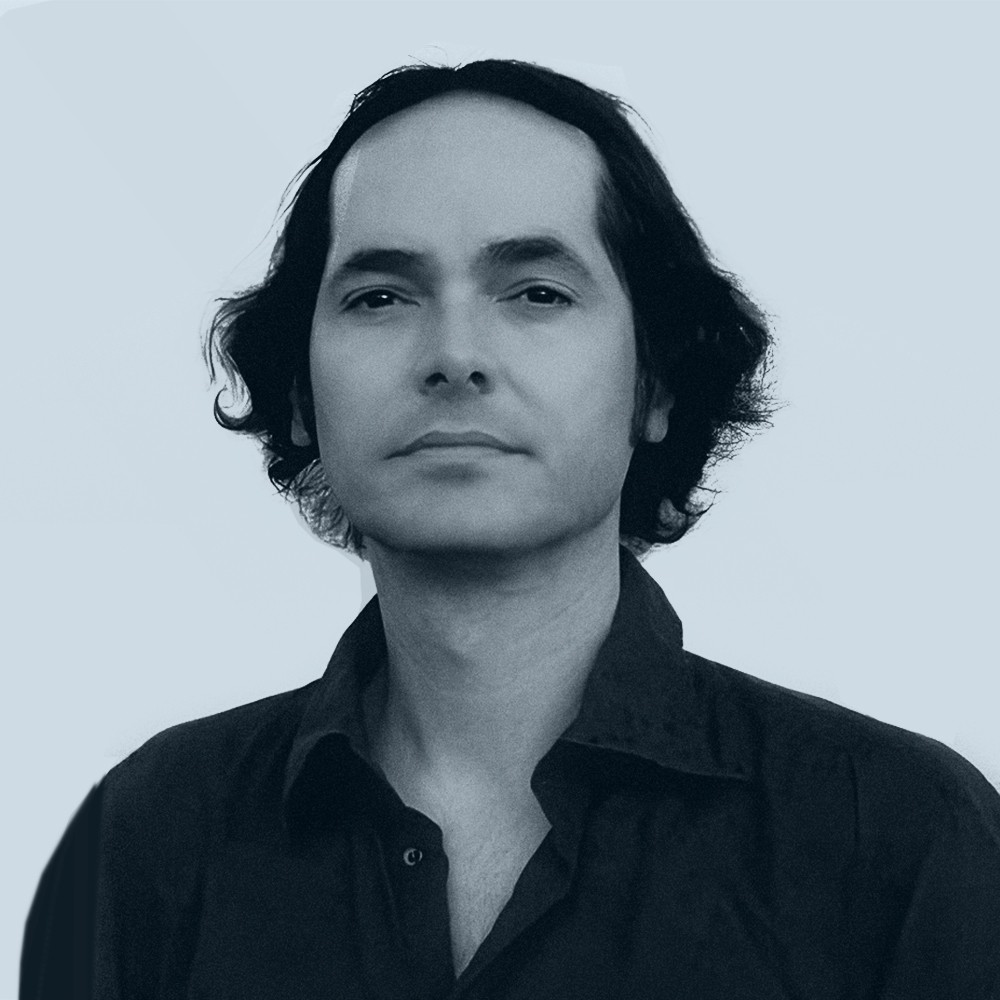
Stephen M. Bland's Avatar

Stephen M. Bland

Managing Editor and Head of Investigations

Stephen M. Bland is a journalist, author, editor, commentator, and researcher specializing in Central Asia and the Caucasus. Prior to joining The Times of Central Asia, he worked for NGOs, think tanks, as the Central Asia expert on a forthcoming documentary series, for the BBC, The Diplomat, EurasiaNet, and numerous other publications.

His award-winning book on Central Asia was published in 2016, and he is currently putting the finishing touches to a book about the Caucasus.

Articles

Armenia’s PM to Visit Kazakhstan Amid Historic Peace Breakthrough and Economic Opportunities

Astana is preparing to host Armenian Prime Minister Nikol Pashinyan on an official visit scheduled for late 2025. On August 12, President Kassym-Jomart Tokayev had a call with Pashinyan, during which, according to an official statement, he praised the "outstanding qualities" of the Armenian Prime Minister, "as a politician with strong political will and a strategic vision of the national interests of his state." The forthcoming trip follows what U.S. Secretary of State Marco Rubio described as "the beginning of a peace deal" between Armenia and Azerbaijan, which was signed in Washington, D.C. on August 8, 2025, marking a pivotal moment in the South Caucasus after decades of conflict. At the White House, Pashinyan and Azerbaijani President Ilham Aliyev signed a framework pledging to respect each other’s territorial integrity, renounce the use of force, and dissolve the long-standing OSCE Minsk Group mediation format. The agreement also approved the creation of a major transit corridor — dubbed the Trump Route for International Peace and Prosperity (TRIPP) — linking Azerbaijan’s mainland to its exclave of Nakhchivan via Armenian territory. Kazakh President Kassym-Jomart Tokayev welcomed the accord as a “historic achievement” that not only ends a decades-long military standoff but also creates space for a deeper regional economic and diplomatic reset. In recent talks, Pashinyan briefed Tokayev on the details of the framework, the decision to dissolve the Minsk Group, and the TRIPP initiative. Both leaders emphasized the potential for new investment opportunities emerging from the stability the deal promises to bring and agreed to maintain an active political dialogue. For Kazakhstan, the visit reinforces its positioning as a neutral mediator between Eurasian powers, willing to offer diplomatic platforms for peace talks. In May 2024, Astana hosted ministerial-level Armenia–Azerbaijan negotiations in Almaty. With the TRIPP corridor set to enhance connectivity across the South Caucasus, Kazakhstan’s role in facilitating regional integration could expand beyond mediation into infrastructure, trade, and energy cooperation. Economically, the corridor offers Armenia new opportunities to become a transit hub between Central Asia and Europe, while Kazakhstan could benefit from more direct westward routes for its exports. Previous bilateral meetings have already laid the groundwork for business forums and joint initiatives in transport, technology, and investment, and the visit could provide the political momentum needed to bring these plans to fruition. Challenges remain, however. In Armenia, nationalist factions have criticized the peace deal, with border demarcation and the fallout from the Second Nagorno-Karabakh War remaining sensitive issues. Iran has also expressed opposition to the TRIPP corridor, citing concerns over shifting regional influence. Yet both Yerevan and Astana appear determined to use the current diplomatic window to solidify long-term cooperation. As the South Caucasus recalibrates, Pashinyan’s upcoming visit to Astana will test whether the political optimism generated in Washington can translate into tangible projects. For Kazakhstan, this presents an opportunity to deepen bilateral ties, demonstrate its growing influence as a stabilizing force, and secure a stake in the region’s new economic and geopolitical landscape.

7 months ago

OCA Magazine Shines Spotlight on Education in Eurasia

The latest edition of OCA Magazine (UK) focuses on the challenges and opportunities facing education in Central Asia, the CIS, and neighbouring regions. The special issue, OCA Magazine: Education, explores digital transformation, women’s access to higher education, and the drive to modernise universities in a fast-changing global environment. The special edition includes success stories from Kazakhstan’s Al-Farabi Kazakh National University and Saken Seifullin Kazakh Agrotechnical Research University, where AI, digital campuses, and international double-degree programmes are reshaping learning. The issue also features insights from British tourism expert, Sophie Ibbotson, who predicts that by 2033, tourism in Uzbekistan could generate over 290,000 direct jobs, making hospitality and creative education a national priority. The Methodica School and Tashkent International School, pioneers of innovative and multicultural learning, are also in the spotlight, as well as Tajikistan’s cultural renaissance, where music education and the work of composer Tolibkhon Shakhidi exemplify the fusion of tradition and modernisation. The edition, supported by Hertfordshire Press and the Eurasian Creative Guild (London), is distributed to universities, diplomatic missions, and cultural institutions worldwide. A digital version is available at ocamagazine.com.

8 months ago

Uzbek Official Dismissed After Viral Lap-Sitting Video Sparks Gender Debate

A government official in Uzbekistan has been dismissed following the circulation of a video showing him with a female subordinate sitting on his lap during an online meeting. The footage, which went viral on social media, prompted a public backlash, with the Ministry of Employment and Labor issuing a statement describing the incident as a “violation of the ethics of a civil servant.” The dismissal of the head of the district department of employment and poverty reduction in Samarkand was confirmed by the ministry. The woman in the video, reportedly an assistant at the agency, has not been publicly named and is believed to have resigned voluntarily. The incident has sparked a broader discussion about workplace conduct, gender dynamics, and women’s rights in Uzbekistan, where traditional norms continue to influence professional and personal life. Gender and Power in the Uzbek Workplace In recent years, Uzbekistan has made significant progress regarding the participation of women in public life. Women currently hold about 32 seats in the 150-member Legislative Chamber of the Oliy Majlis (national parliament). However, their visibility in executive positions and technical fields remains limited. In Uzbekistan, only 35.4 % of the population aged between 15–64 in the labor force are women, and they earn about 34 % less than men. The World Bank estimates that equal participation and wages could boost the country's GDP by 29 % and lift over 700,000 people out of poverty. The government has introduced various reforms aimed at improving gender equality, including protections against domestic violence, promoting women's entrepreneurship, and gender budgeting initiatives. However, critics argue that these measures are often symbolic or inconsistently enforced. Cultural Taboo and Social Media The lap-sitting video has sparked a wave of internet commentary from both men and women in Uzbekistan, where public discussions of gender roles are often muted. Some saw the video as a clear example of workplace harassment and power imbalance, while others downplayed its significance or blamed the woman involved. Observers argue that the case highlights deeper structural issues within Uzbek institutions, where entrenched gender hierarchies and informal power dynamics often go unchallenged. In many areas of public and private life, the country remains deeply patriarchal, and whilst public discourse around consent, professional boundaries, and gender equality is growing, it remains nascent. A Moment for Change? The government’s decisive response to the video may signal a growing awareness of public expectations and international scrutiny. For activists and reformers, the hope is that this moment can serve as more than a spectacle and lead to more conversations about power, professionalism, and the role of women in modern Uzbekistan. As one widely shared comment on Telegram put it: “It’s not about the lap. It’s about who gets to sit at the table.”

8 months ago

Exile and Empire: Dostoevsky’s Years in Semey, Kazakhstan

Semey, Kazakhstan – In the windswept, seemingly infinite steppe of eastern Kazakhstan stands a city with a dual, haunting legacy. It is a place where one of the world's literary giants plumbed the depths of the human soul, and where, a century later, humanity sought to master the power to extinguish itself. This is Semey, formerly Semipalatinsk, a city whose soil is steeped in the memory of both Fyodor Dostoevsky's exile and the Soviet Union's atomic ambition. For Fyodor Dostoevsky, one of Russia’s most celebrated writers, Semey was not a destination of choice but of punishment. Arrested in 1849 for his involvement with the Petrashevsky Circle — a group of intellectuals who read and discussed banned political texts — Dostoevsky was sentenced to death, only to be spared at the last moment in a mock execution ordered by Tsar Nicholas I. His sentence was commuted to four years of hard labour in the Omsk fortress, followed by compulsory military service in Semipalatinsk. Arriving in 1854, Dostoevsky spent nearly five years in Semipalatinsk, a provincial outpost on the Russian Empire’s edge, where exiles, soldiers, and bureaucrats mingled with Kazakh nomads and merchants. Though his official role was that of a soldier in the Siberian Line Battalion, his time here marked a critical period of transformation — politically, spiritually, and literarily. Semey offered isolation, but also introspection. Deprived of literary contact, Dostoevsky was forced inward. His exposure to suffering — in prison, in exile, and his struggles with epilepsy — sharpened the moral and psychological vision that would later define Crime and Punishment, The Idiot, and The Brothers Karamazov. In letters from this time, he describes long walks through the barren steppe and his growing fascination with the Kazakh people, whose customs and resilience left a lasting impression. During his years in Semey, Dostoevsky also began to reengage with the intellectual world. Thanks to the leniency of local officials, he was able to read, write, and eventually re-enter literary circles. It was here he completed Uncle’s Dream and The Village of Stepanchikovo, and began work on Notes from the Dead House, a fictionalised account of his time in prison that marked a decisive shift from romanticism to the raw psychological realism for which he became renowned. Despite its remoteness, Semey in the 1850s was not without its cultural encounters. Dostoevsky formed a lasting friendship with Chokan Valikhanov, a Kazakh nobleman, ethnographer, and military officer, whose liberal views and deep knowledge of Central Asian culture helped broaden Dostoevsky’s perspective on the empire’s outer subjects. Their conversations influenced Dostoevsky’s thinking on race, empire, and the spiritual dignity of non-Russian peoples — ideas that subtly permeate his later works. In 1853, aged 18, Valikhanov graduated from the Cadet Corps and was commissioned as a cornet in the Army Cavalry. He was then assigned as an officer to the 6th Regiment of the Siberian Cossack Army. Later, through the Main Administration of the Region, he was appointed as an officer of special assignments. In 1858–1859, he...

8 months ago

“Be a Man”: Bishkek Vice Mayor Detained in Public Showdown

The Vice Mayor of Bishkek, Zhamalbek Yrsaliev, has been detained during a public meeting in the Tunguch neighborhood, presided over by Kamchybek Tashiyev, the controversial Chairman of Kyrgyzstan’s State Committee for National Security (GKNB). Residents at the July 16 meeting accused Yrsaliev of illegally occupying a 1,500 m² municipal land plot where unauthorized commercial kiosks and children's attractions had been operating for six years without any lease payments. According to Economist.kg, this misuse cost the city budget over 2.9 million Kyrgyz som ($33,160), and stalled the planned development of a public square and playground. During the meeting, Tashiyev confronted Yrsaliev directly. In a moment caught on video, he told the vice mayor to take responsibility for his actions and “Be a man,” ordering the security services to detain him immediately. Officers escorted Yrsaliev from the event to the GKNB headquarters. According to Sputnik Kyrgyzstan, Yrsaliev admitted responsibility and apologized, but Tashiyev continued to reprimand him, telling Yrsaliev, “You will not deceive the people.” The investigation is ongoing. The charges against Yrsaliev include abuse of office and corruption. Alongside him, officials from the Lenin and Oktyabr district administrations were also detained during the same operation, according to preliminary reports. Appointed as vice mayor in May 2024, Yrsaliev previously served as vice-mayor of Bishkek for housing and communal services, and akim of the Pervomaisky district. The arrest marks another chapter in Kyrgyzstan’s sweeping anti-corruption campaign under President Sadyr Japarov. In January 2023, former Deputy Prime Minister Zhenish Razakov was detained on suspicion of a $1 million fraud and abuse of office, and in December 2024, the authorities arrested the head of the state tax service and his deputy. While Yrsaliev’s detention has been officially framed as part of an anti-corruption effort, it unfolds within a broader political climate in Kyrgyzstan marked by increasing executive consolidation and the expanded role of the GKNB in domestic affairs. Independent watchdogs, including Freedom House, have noted a rise in politically motivated prosecutions and diminished judicial independence in recent years, raising concerns that cases such as this may serve not only legal but also political purposes. Further updates are expected as the investigation continues.

8 months ago
