• KGS/USD = 0.01144 0%
  • KZT/USD = 0.00207 0%
  • TJS/USD = 0.10415 -0.19%
  • UZS/USD = 0.00008 0%
  • TMT/USD = 0.28571 0%
  • KGS/USD = 0.01144 0%
  • KZT/USD = 0.00207 0%
  • TJS/USD = 0.10415 -0.19%
  • UZS/USD = 0.00008 0%
  • TMT/USD = 0.28571 0%
  • KGS/USD = 0.01144 0%
  • KZT/USD = 0.00207 0%
  • TJS/USD = 0.10415 -0.19%
  • UZS/USD = 0.00008 0%
  • TMT/USD = 0.28571 0%
  • KGS/USD = 0.01144 0%
  • KZT/USD = 0.00207 0%
  • TJS/USD = 0.10415 -0.19%
  • UZS/USD = 0.00008 0%
  • TMT/USD = 0.28571 0%
  • KGS/USD = 0.01144 0%
  • KZT/USD = 0.00207 0%
  • TJS/USD = 0.10415 -0.19%
  • UZS/USD = 0.00008 0%
  • TMT/USD = 0.28571 0%
  • KGS/USD = 0.01144 0%
  • KZT/USD = 0.00207 0%
  • TJS/USD = 0.10415 -0.19%
  • UZS/USD = 0.00008 0%
  • TMT/USD = 0.28571 0%
  • KGS/USD = 0.01144 0%
  • KZT/USD = 0.00207 0%
  • TJS/USD = 0.10415 -0.19%
  • UZS/USD = 0.00008 0%
  • TMT/USD = 0.28571 0%
  • KGS/USD = 0.01144 0%
  • KZT/USD = 0.00207 0%
  • TJS/USD = 0.10415 -0.19%
  • UZS/USD = 0.00008 0%
  • TMT/USD = 0.28571 0%

Our People > Tamila Olzhbaekova

Tamila Olzhbaekova's Avatar

Tamila Olzhbaekova

Journalist

Tamila Olzhabekova is a journalist, award-winning illustrator, and a volunteer, curator and event organizer in the DOSTAR diaspora of Kazakhstan organization.
Prior to working for The Times of Central Asia, she has written for Peter Tv, First Line, Five Corners, Sport.Kz, and numerous other publications. A campaigner for interethnic harmony and the protection of stray animals, she studied at St. Petersburg State University.

Articles

Hidden but Brave: The LGBTQ+ Fight for Acceptance in Kazakhstan

The LGBTQ+ community in Kazakhstan remains largely invisible, but that does not mean it does not exist. While homosexuality is not criminalized in the country, public perception remains mixed. In major cities, particularly Almaty, the situation is relatively tolerant, but in the regions, LGBTQ+ people still face significant discrimination and fear. The Times of Central Asia spoke with Arsen, a resident of Almaty (who requested anonymity due to safety concerns), about the realities of being gay in Kazakhstan, the challenges he faces, and why, despite the difficulties, he chooses to stay there. Arsen lives and works in Almaty, widely regarded as Kazakhstan’s most open-minded city. Here, he can attend LGBTQ+ gatherings and has a supportive circle of friends. However, even in this relatively accepting environment, complete openness remains a risk. “In Almaty, you don’t feel completely alone. There are places to relax, like gay clubs, and there’s a sense of community. But holding hands with another man on the street? No, that’s still dangerous. I wouldn’t even risk prolonged eye contact with someone,” he says. “The risk of aggression is always there, especially in remote parts of the city. I’ve heard of people facing hostility just because they ‘look different.’ And it’s not even about dressing brightly - it's just the prevailing mentality. I’m always surprised that, despite life being so difficult here, some people still believe being gay is a choice.” Despite these challenges, Arsen sees progress. He believes younger generations are becoming more accepting, largely thanks to the internet, which provides exposure to alternative viewpoints. “I notice more open-minded people among my generation. In Almaty, many don’t care about someone’s orientation. People here usually don’t mind what you wear or whether you have piercings, for example. Even those who don’t support LGBTQ+ rights tend to be indifferent rather than aggressive,” he says. However, outside of Almaty and Astana, the situation is far more difficult. In smaller cities and rural areas, conservative values dominate, and LGBTQ+ individuals often conceal their identities — even from close friends. “I know guys from small towns who moved to Almaty because they were terrified back home. They hid every hint of their orientation. Coming out could mean harassment or even violence. Many don’t even consider dating or using LGBTQ+ apps because it’s simply too dangerous.” A particularly painful issue within Kazakhstan’s LGBTQ+ community is internalized homophobia - self-directed negativity toward one’s own identity or others in the community. “I’ve always been surprised by how some gay people openly dislike other gay people. They want to be seen as ‘normal,’ so they try to blend in with the crowd. But in doing so, they reinforce harmful stereotypes and make things worse for everyone.” The situation is especially difficult in Kazakhstan’s southern cities, where traditional values often take precedence over personal freedoms. “Even though Almaty is in the south, I think it’s much harder to be gay in places like Shymkent, Taraz, or Turkistan. In those cities, you could get beaten up for it,” Arsen...

1 year ago
Gender Inequality in Marriage: The Role of the Kelin in Kyrgyzstan

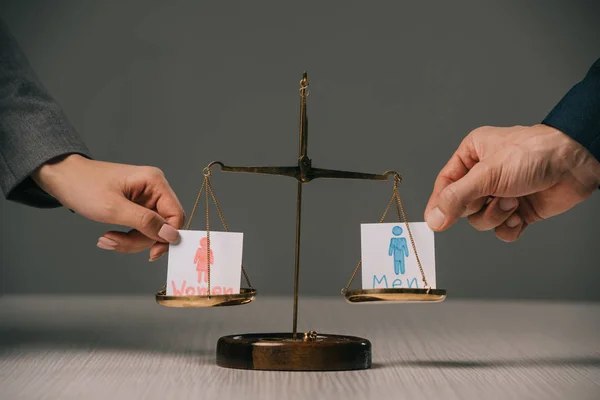
Gender inequality in marriage remains a significant issue in Kyrgyzstan, particularly with regard to the role of the kelin - the daughter-in-law - who is traditionally expected to shoulder numerous household responsibilities. In this patriarchal society, women often face pressure from their husbands' families, limited career opportunities, and an unequal division of domestic labor. According to recent data, 12.9% of women in Kyrgyzstan marry before the age of 18. This figure nearly doubles in rural areas compared to urban ones, reflecting stark regional disparities. Many families continue to uphold traditional expectations for women, especially the kelin, who is considered responsible for caring for her husband, his parents, the children, and the household. The Kelin: Between Tradition and Change Kyrgyz women have varying attitudes toward their role in the family. While some accept these expectations as part of their cultural heritage, others see them as a problem requiring change. Personal Stories Aizhan, 24, Osh (name changed): "After marriage, I was expected to leave my job and devote myself fully to the household. Although my husband supports my career aspirations, there is pressure from both his parents and mine. In the early years of our marriage, I had to prove that I was a good wife - cooking, cleaning, and pleasing my mother-in-law - even though I had the opportunity to build a career. My parents also insisted that I focus on household duties to avoid being ridiculed by others. This frustrates me, but my husband stands by me." Nuria, 25, Naryn (name changed): "In our social circle, it is rare for young couples to strive for equality in marriage. Traditional expectations remain strong, and sometimes compromises are necessary to maintain peace in the family. Early in my marriage, I didn’t feel much pressure, but after the birth of my child, I was often reminded that my primary role was now to be a mother and the keeper of the hearth." Ainura, 23, Bishkek (name changed): "In the capital, it's easier to be independent. More people here support the idea of equal rights. However, even in Bishkek, many girls face the expectation of becoming perfect kelins. This pressure usually comes from parents who cling to traditional values." Societal Expectations Beyond Marriage For many young women, gendered expectations begin long before they marry. From an early age, girls are taught to prioritize marriage and family above personal ambitions. Saule, 22, Bishkek: "I’m 20 and don’t want to get married yet, but my relatives constantly hint that ‘the clock is ticking’ and that I should start looking for a groom. They don’t understand that I have other plans. Sometimes they introduce me to potential suitors, which is awkward and frustrating." In some families, restrictions are imposed on daughters to preserve their "marriage prospects." Kamilla, 23, Bishkek: "I was often told to be modest, avoid friendships with boys, and dress conservatively because ‘I had to get married.’ Many girls like me missed out on a full teenage experience. However, I’ve noticed that the younger generation...

1 year ago

Activists in Almaty and Kostanai Fined for Protests Supporting Temirlan Yensebek

Courts in Almaty and Kostanai have fined activists who held solitary protests supporting detained satirist Temirlan Yensebek. Each activist was ordered to pay 196,600 KZT (approximately $371). In Almaty, journalist Akmaral Dzhakibayeva was detained by police after staging a protest in front of the State Academic Opera and Ballet Theater. She held a placard reading "Satire is not a crime" for 25 minutes before being taken away by officers. Dzhakibayeva’s protest was not only in support of Yensebek but also dedicated to journalists previously arrested for similar demonstrations. On the same day in Kostanai, activist Sergey Zinchenko was detained after holding a protest in front of the Kazakh Drama Theater. Like Dzhakibayeva, he displayed a poster with the same message: "Satire is not a crime." Temirlan Yensebek, the creator of the satirical platform Qaznews24, was arrested on January 17. The following day, a court ordered him to be held in custody for two months as part of an investigation into charges of “inciting interethnic discord.” This charge carries penalties ranging from fines and restricted freedom to imprisonment of two to seven years. Previously, journalists Asem Zhapisheva and Ruslan Biketov were also arrested in Almaty for 15 days after participating in solitary protests supporting Yensebek. Yensebek’s detention has sparked widespread public criticism. Members of the journalistic community and broader society have condemned the actions against him, calling for greater protections for freedom of speech and the right to peaceful protest.

1 year ago

Gender Expectations in Kazakhstan: How Boys and Girls are Raised Differently

From childhood, boys and girls in Kazakhstan are raised with clearly defined roles based on gender stereotypes. These attitudes are instilled through the family, media, and educational system, creating pressure on children to conform to specific expectations. Boys are prepared for leadership and career success, while girls are prepared for family life and the role of model kelinka (daughter-in-law). The UNDP Analytical Report (2024) emphasizes that patriarchal attitudes still persist in Kazakhstan. These stereotypes are transmitted through key institutions of socialization, including the family, educational institutions, and the media, and shape the perception of gender roles as strictly fixed. Expectations for boys and girls are established from an early age. For boys, parents often buy cars, construction sets, and tool kits, reinforcing the idea that a man is a protector, provider, and builder. Boys are expected to do well in school and go to university. The phrase "You are a man; you must be strong" often defines their upbringing. It is believed that a boy should be raised to be independent and able to earn money. Daniyar, 20, student from Almaty: "When I was a teenager, I was constantly told that I should be responsible and strong. Crying or showing weakness was considered a shame. I couldn't even express my emotions freely. I think this had a big impact on my worldview. Madiyar, 22, artist: "Like many boys, I faced the belief that creativity was not for men. Until I achieved some success, my parents constantly discouraged me, not because it didn't seem lucrative, but simply because I'm a man." Girls are given dolls, toy kitchens, and dishes from an early age to instill domestic skills. Parents often say: "You must learn to cook to be a good wife.” Girls are taught to be obedient, modest and caring. Family conversations often boil down to the fact that a girl should marry and become an exemplary kelinka, responsible for caring for her husband, his parents, and their children. Aizhan, 25, Taraz: "When I was a child, my brother could do whatever he wanted - go out, play with friends, but I was constantly told: "Wash the dishes" or "Learn to cook, who will marry you otherwise?". No one talked about my education, it was considered not as important as being able to bake baursaks (a Kazakh sweet bread).” Karima, 26, a teacher from Astana: "In our family, education for girls was not considered a priority. I was often told: "You will get married, why do you need higher education?" I had to fight this stereotype to go to university.” Lera, 21, student, Astana: "I didn't really face any problem in choosing a profession. My parents encouraged my choice to enroll in physics. However, at the university, gender inequality is rampant. Some professors are always saying that math is not for women or that we came here to find husbands. I think that's a big problem, too." In addition to parental guidance, traditional Kazakh gender roles are reinforced through the media. Traditional...

1 year ago

2025 Asian Youth Games Moved from Tashkent to Bahrain

The Olympic Council of Asia (OCA) has announced that the 3rd edition of the Asian Youth Games in 2025, which had been due to be hosted in Tashkent, is to be moved to Bahrain. This decision was put down to some of the venues in the Uzbek capital being unready. Uzbekistan's National Olympic Committee (NOC) issued a statement explaining that the country had asked the OCA to postpone the competition for one year. There have been delays in the construction of the $289 million Olympic Campus due to post-pandemic constraints. However, the OCA refused the postponement because the 2025 Games are a selection stage for the 2026 Youth Olympic Games in Dakar, Senegal. As a result, the event will now be hosted by Bahrain. The OCA recommended that Uzbekistan focus on preparations for other sporting events, such as the Islamic Solidarity Games or the Asian Indoor and Martial Arts Games. "The construction of the Olympic City remains a key project for the development of sports in Uzbekistan. We intend to complete its construction on time and turn it into a base for major international competitions," the NOC said.

1 year ago