
• KGS/USD = 0.01144 0%
  • KZT/USD = 0.00205 0%
  • TJS/USD = 0.10784 0%
  • UZS/USD = 0.00008 0%
  • TMT/USD = 0.28490 0%
  • KGS/USD = 0.01144 0%
  • KZT/USD = 0.00205 0%
  • TJS/USD = 0.10784 0%
  • UZS/USD = 0.00008 0%
  • TMT/USD = 0.28490 0%
  • KGS/USD = 0.01144 0%
  • KZT/USD = 0.00205 0%
  • TJS/USD = 0.10784 0%
  • UZS/USD = 0.00008 0%
  • TMT/USD = 0.28490 0%
  • KGS/USD = 0.01144 0%
  • KZT/USD = 0.00205 0%
  • TJS/USD = 0.10784 0%
  • UZS/USD = 0.00008 0%
  • TMT/USD = 0.28490 0%
  • KGS/USD = 0.01144 0%
  • KZT/USD = 0.00205 0%
  • TJS/USD = 0.10784 0%
  • UZS/USD = 0.00008 0%
  • TMT/USD = 0.28490 0%
  • KGS/USD = 0.01144 0%
  • KZT/USD = 0.00205 0%
  • TJS/USD = 0.10784 0%
  • UZS/USD = 0.00008 0%
  • TMT/USD = 0.28490 0%
  • KGS/USD = 0.01144 0%
  • KZT/USD = 0.00205 0%
  • TJS/USD = 0.10784 0%
  • UZS/USD = 0.00008 0%
  • TMT/USD = 0.28490 0%
  • KGS/USD = 0.01144 0%
  • KZT/USD = 0.00205 0%
  • TJS/USD = 0.10784 0%
  • UZS/USD = 0.00008 0%
  • TMT/USD = 0.28490 0%

Our People > Tamila Olzhbaekova

Tamila Olzhbaekova's Avatar

Tamila Olzhbaekova

Journalist

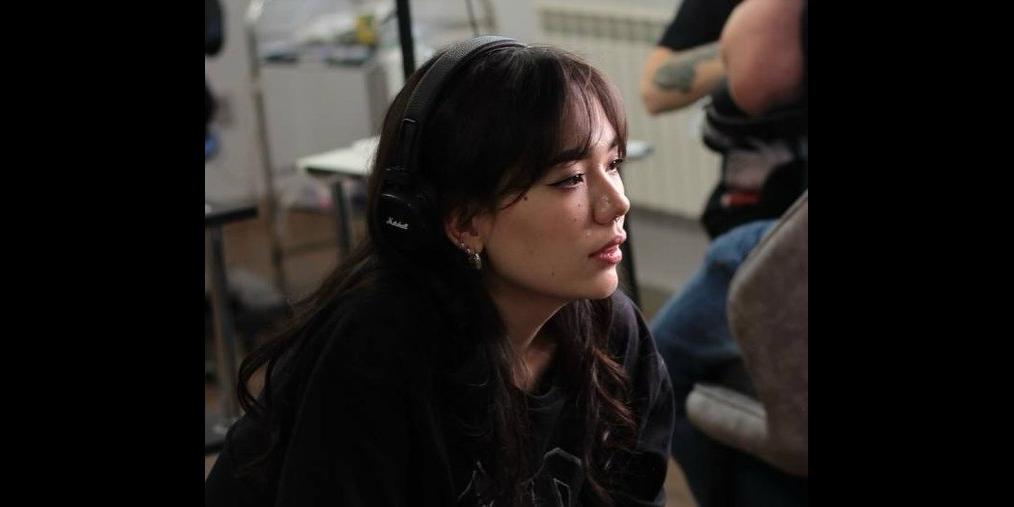
Tamila Olzhabekova is a journalist, award-winning illustrator, and a volunteer, curator and event organizer in the DOSTAR diaspora of Kazakhstan organization.
Prior to working for The Times of Central Asia, she has written for Peter Tv, First Line, Five Corners, Sport.Kz, and numerous other publications. A campaigner for interethnic harmony and the protection of stray animals, she studied at St. Petersburg State University.

Articles

Abortion in Kazakhstan: Legal but Still Taboo

Abortion is legal in Kazakhstan, but social stigma makes the decision difficult for many women. They often face pressure from doctors, a lack of understanding from their families, and feelings of guilt reinforced by societal attitudes. What is the reality of reproductive rights in the country, and why does the topic remain so sensitive? Conversations at the Doctor’s Office Under Kazakhstani law, women have the right to terminate a pregnancy at their discretion until the twelfth week. After that, abortion is only allowed on medical or social grounds. In practice, however, women frequently encounter judgment - even from medical professionals. A group of women who shared their experiences with The Times of Central Asia. To protect their identities, the names of interviewees have been changed. "When I went to a public clinic for an abortion, the doctor asked: ‘Does your husband know? Do your parents know? Are you sure? You’ll never be able to give birth again!’" Aigul, 26, told TCA. "I felt like I was committing a crime. Instead of simply doing their job, the nurses were discussing my choices. It was unsettling. At a time like that, doctors should be more careful with their words." Such attitudes persist even in private clinics, where patients pay for the procedure. "The doctor asked me, ‘What if your mother hadn’t given birth to you?’ I felt so uncomfortable. I cried after the procedure - not because of the pain, but because of the shame they made me feel," said 25-year-old Asel. Shame and Family Pressure Abortion remains a taboo subject in many Kazakhstani families. Young women facing an unplanned pregnancy often fear telling their relatives, expecting judgment and pressure. "I knew that if my mother found out, she would scream and accuse me of sin. So, I secretly took the money and went to a private clinic. I wasn’t scared of the procedure itself - I was scared that if I got caught, they would force me to give birth," said 29-year-old Aidana. The stigma is particularly strong in traditional families, where abortion is considered unacceptable. Some women find themselves with no say in the decision. "A friend of mine got pregnant at a young age. Her parents were strictly against abortion — they said it was shameful. I don’t even know what happened to her because they moved away immediately to avoid gossip," said 24-year-old Dilara. Even those who have never had an abortion feel ashamed. Many girls grow up being told that abortion is not just a medical procedure, but a disgrace. "All my life, I heard that abortion was something horrible, and my friends said the same. We thought it was a crime, but years later, I finally realized that it’s a choice," 21-year-old Kamila shared with TCA. Alternatives and Contraception: How Accessible Are They? A major factor contributing to the demand for abortion is the limited access to contraception and the lack of sex education. Schools in Kazakhstan do not offer mandatory sex education, leading to widespread...

1 year ago

Cultural Appropriation: How the YAKA Brand Sparked Outrage in Kyrgyzstan

A scandal has erupted in Kyrgyzstan over the Russian clothing brand YAKA, founded by Anna Obydenova. The company, which produces clothing, accessories, and carpets adorned with stylized Kyrgyz ornaments, has faced backlash after claiming exclusive copyright to its designs. This move has sparked widespread outrage among Kyrgyz citizens, who accuse the brand of appropriating their cultural heritage. Social Media Backlash The controversy first gained traction on social media, where users quickly pointed out the alleged appropriation. One of the first to speak out was Uulzhan Bekturova, who posted an Instagram story highlighting that YAKA’s so-called “skirt” from its YAKA Unique collection was, in fact, a traditional Kyrgyz garment known as a beldemchi. She addressed the brand directly: “No, this is not a ‘skirt’ from your YAKA Unique collection, it is our beldemchi! Stop stealing our culture! Shame on you!” Her post quickly went viral, triggering a wave of public indignation. Further fueling the controversy was a statement on YAKA’s official website claiming that the brand was created “in honor of the 100th anniversary of Kyrgyzstan’s independence.” This historical inaccuracy (Kyrgyzstan gained independence only 34 years ago, in 1991) led to further accusations of ignorance and cultural insensitivity. Another source of outrage was YAKA’s warning that copying its designs was prohibited, which many saw as an attempt to monopolize traditional Kyrgyz patterns. TikTok Outrage and Calls for Boycott Public discontent was particularly intense on TikTok, where users criticized YAKA’s actions. One user, @rrrrrramilya, posted a viral video condemning the brand’s claim over Kyrgyz symbols: “A clothing brand has patented Kyrgyz patterns, registering them as their property. They justify it by saying ‘Made in Kyrgyzstan’ is on each product and that Kyrgyz artisans create them. So, if it’s made in Kyrgyzstan, is that OK? No! Manufacturing in a country does not give you the right to own its culture. Making something in Kyrgyzstan does not mean you get exclusive rights to traditional symbols!” Another user, @yido.kg, explained why cultural appropriation is such a sensitive issue: “The problem is that culture bearers are often discriminated against because of their own culture, while others use it as a fashion trend. But this isn’t just fashion - it’s the heritage of an entire people.” These videos gained widespread support, with many users calling for a boycott of YAKA products and demanding legal protection of Kyrgyz cultural heritage at the international level. Voices from Kyrgyzstan TCA spoke with Kyrgyz citizens to gauge their perspectives on the issue. Aisulu, 20, from Bishkek, expressed her frustration: “I am proud of our culture and traditions. It’s terrible when someone tries to profit from our heritage without our consent.” Mairam, 24, from Osh, added: “Our ornaments are not just patterns; they are part of our soul. No one should have the right to appropriate them.” Beksultan, 26, from Bishkek, emphasized the need for action: “We must unite and protect our cultural heritage. Cases like this should not go unnoticed.” YAKA’s Response and a New Controversy In response to the backlash,...

1 year ago

Hidden but Brave: The LGBTQ+ Fight for Acceptance in Kazakhstan

The LGBTQ+ community in Kazakhstan remains largely invisible, but that does not mean it does not exist. While homosexuality is not criminalized in the country, public perception remains mixed. In major cities, particularly Almaty, the situation is relatively tolerant, but in the regions, LGBTQ+ people still face significant discrimination and fear. The Times of Central Asia spoke with Arsen, a resident of Almaty (who requested anonymity due to safety concerns), about the realities of being gay in Kazakhstan, the challenges he faces, and why, despite the difficulties, he chooses to stay there. Arsen lives and works in Almaty, widely regarded as Kazakhstan’s most open-minded city. Here, he can attend LGBTQ+ gatherings and has a supportive circle of friends. However, even in this relatively accepting environment, complete openness remains a risk. “In Almaty, you don’t feel completely alone. There are places to relax, like gay clubs, and there’s a sense of community. But holding hands with another man on the street? No, that’s still dangerous. I wouldn’t even risk prolonged eye contact with someone,” he says. “The risk of aggression is always there, especially in remote parts of the city. I’ve heard of people facing hostility just because they ‘look different.’ And it’s not even about dressing brightly - it's just the prevailing mentality. I’m always surprised that, despite life being so difficult here, some people still believe being gay is a choice.” Despite these challenges, Arsen sees progress. He believes younger generations are becoming more accepting, largely thanks to the internet, which provides exposure to alternative viewpoints. “I notice more open-minded people among my generation. In Almaty, many don’t care about someone’s orientation. People here usually don’t mind what you wear or whether you have piercings, for example. Even those who don’t support LGBTQ+ rights tend to be indifferent rather than aggressive,” he says. However, outside of Almaty and Astana, the situation is far more difficult. In smaller cities and rural areas, conservative values dominate, and LGBTQ+ individuals often conceal their identities — even from close friends. “I know guys from small towns who moved to Almaty because they were terrified back home. They hid every hint of their orientation. Coming out could mean harassment or even violence. Many don’t even consider dating or using LGBTQ+ apps because it’s simply too dangerous.” A particularly painful issue within Kazakhstan’s LGBTQ+ community is internalized homophobia - self-directed negativity toward one’s own identity or others in the community. “I’ve always been surprised by how some gay people openly dislike other gay people. They want to be seen as ‘normal,’ so they try to blend in with the crowd. But in doing so, they reinforce harmful stereotypes and make things worse for everyone.” The situation is especially difficult in Kazakhstan’s southern cities, where traditional values often take precedence over personal freedoms. “Even though Almaty is in the south, I think it’s much harder to be gay in places like Shymkent, Taraz, or Turkistan. In those cities, you could get beaten up for it,” Arsen...

1 year ago

Gender Inequality in Marriage: The Role of the Kelin in Kyrgyzstan

Gender inequality in marriage remains a significant issue in Kyrgyzstan, particularly with regard to the role of the kelin - the daughter-in-law - who is traditionally expected to shoulder numerous household responsibilities. In this patriarchal society, women often face pressure from their husbands' families, limited career opportunities, and an unequal division of domestic labor. According to recent data, 12.9% of women in Kyrgyzstan marry before the age of 18. This figure nearly doubles in rural areas compared to urban ones, reflecting stark regional disparities. Many families continue to uphold traditional expectations for women, especially the kelin, who is considered responsible for caring for her husband, his parents, the children, and the household. The Kelin: Between Tradition and Change Kyrgyz women have varying attitudes toward their role in the family. While some accept these expectations as part of their cultural heritage, others see them as a problem requiring change. Personal Stories Aizhan, 24, Osh (name changed): "After marriage, I was expected to leave my job and devote myself fully to the household. Although my husband supports my career aspirations, there is pressure from both his parents and mine. In the early years of our marriage, I had to prove that I was a good wife - cooking, cleaning, and pleasing my mother-in-law - even though I had the opportunity to build a career. My parents also insisted that I focus on household duties to avoid being ridiculed by others. This frustrates me, but my husband stands by me." Nuria, 25, Naryn (name changed): "In our social circle, it is rare for young couples to strive for equality in marriage. Traditional expectations remain strong, and sometimes compromises are necessary to maintain peace in the family. Early in my marriage, I didn’t feel much pressure, but after the birth of my child, I was often reminded that my primary role was now to be a mother and the keeper of the hearth." Ainura, 23, Bishkek (name changed): "In the capital, it's easier to be independent. More people here support the idea of equal rights. However, even in Bishkek, many girls face the expectation of becoming perfect kelins. This pressure usually comes from parents who cling to traditional values." Societal Expectations Beyond Marriage For many young women, gendered expectations begin long before they marry. From an early age, girls are taught to prioritize marriage and family above personal ambitions. Saule, 22, Bishkek: "I’m 20 and don’t want to get married yet, but my relatives constantly hint that ‘the clock is ticking’ and that I should start looking for a groom. They don’t understand that I have other plans. Sometimes they introduce me to potential suitors, which is awkward and frustrating." In some families, restrictions are imposed on daughters to preserve their "marriage prospects." Kamilla, 23, Bishkek: "I was often told to be modest, avoid friendships with boys, and dress conservatively because ‘I had to get married.’ Many girls like me missed out on a full teenage experience. However, I’ve noticed that the younger generation...

1 year ago

Activists in Almaty and Kostanai Fined for Protests Supporting Temirlan Yensebek

Courts in Almaty and Kostanai have fined activists who held solitary protests supporting detained satirist Temirlan Yensebek. Each activist was ordered to pay 196,600 KZT (approximately $371). In Almaty, journalist Akmaral Dzhakibayeva was detained by police after staging a protest in front of the State Academic Opera and Ballet Theater. She held a placard reading "Satire is not a crime" for 25 minutes before being taken away by officers. Dzhakibayeva’s protest was not only in support of Yensebek but also dedicated to journalists previously arrested for similar demonstrations. On the same day in Kostanai, activist Sergey Zinchenko was detained after holding a protest in front of the Kazakh Drama Theater. Like Dzhakibayeva, he displayed a poster with the same message: "Satire is not a crime." Temirlan Yensebek, the creator of the satirical platform Qaznews24, was arrested on January 17. The following day, a court ordered him to be held in custody for two months as part of an investigation into charges of “inciting interethnic discord.” This charge carries penalties ranging from fines and restricted freedom to imprisonment of two to seven years. Previously, journalists Asem Zhapisheva and Ruslan Biketov were also arrested in Almaty for 15 days after participating in solitary protests supporting Yensebek. Yensebek’s detention has sparked widespread public criticism. Members of the journalistic community and broader society have condemned the actions against him, calling for greater protections for freedom of speech and the right to peaceful protest.

1 year ago

Gender Expectations in Kazakhstan: How Boys and Girls are Raised Differently

From childhood, boys and girls in Kazakhstan are raised with clearly defined roles based on gender stereotypes. These attitudes are instilled through the family, media, and educational system, creating pressure on children to conform to specific expectations. Boys are prepared for leadership and career success, while girls are prepared for family life and the role of model kelinka (daughter-in-law). The UNDP Analytical Report (2024) emphasizes that patriarchal attitudes still persist in Kazakhstan. These stereotypes are transmitted through key institutions of socialization, including the family, educational institutions, and the media, and shape the perception of gender roles as strictly fixed. Expectations for boys and girls are established from an early age. For boys, parents often buy cars, construction sets, and tool kits, reinforcing the idea that a man is a protector, provider, and builder. Boys are expected to do well in school and go to university. The phrase "You are a man; you must be strong" often defines their upbringing. It is believed that a boy should be raised to be independent and able to earn money. Daniyar, 20, student from Almaty: "When I was a teenager, I was constantly told that I should be responsible and strong. Crying or showing weakness was considered a shame. I couldn't even express my emotions freely. I think this had a big impact on my worldview. Madiyar, 22, artist: "Like many boys, I faced the belief that creativity was not for men. Until I achieved some success, my parents constantly discouraged me, not because it didn't seem lucrative, but simply because I'm a man." Girls are given dolls, toy kitchens, and dishes from an early age to instill domestic skills. Parents often say: "You must learn to cook to be a good wife.” Girls are taught to be obedient, modest and caring. Family conversations often boil down to the fact that a girl should marry and become an exemplary kelinka, responsible for caring for her husband, his parents, and their children. Aizhan, 25, Taraz: "When I was a child, my brother could do whatever he wanted - go out, play with friends, but I was constantly told: "Wash the dishes" or "Learn to cook, who will marry you otherwise?". No one talked about my education, it was considered not as important as being able to bake baursaks (a Kazakh sweet bread).” Karima, 26, a teacher from Astana: "In our family, education for girls was not considered a priority. I was often told: "You will get married, why do you need higher education?" I had to fight this stereotype to go to university.” Lera, 21, student, Astana: "I didn't really face any problem in choosing a profession. My parents encouraged my choice to enroll in physics. However, at the university, gender inequality is rampant. Some professors are always saying that math is not for women or that we came here to find husbands. I think that's a big problem, too." In addition to parental guidance, traditional Kazakh gender roles are reinforced through the media. Traditional...

1 year ago

2025 Asian Youth Games Moved from Tashkent to Bahrain

The Olympic Council of Asia (OCA) has announced that the 3rd edition of the Asian Youth Games in 2025, which had been due to be hosted in Tashkent, is to be moved to Bahrain. This decision was put down to some of the venues in the Uzbek capital being unready. Uzbekistan's National Olympic Committee (NOC) issued a statement explaining that the country had asked the OCA to postpone the competition for one year. There have been delays in the construction of the $289 million Olympic Campus due to post-pandemic constraints. However, the OCA refused the postponement because the 2025 Games are a selection stage for the 2026 Youth Olympic Games in Dakar, Senegal. As a result, the event will now be hosted by Bahrain. The OCA recommended that Uzbekistan focus on preparations for other sporting events, such as the Islamic Solidarity Games or the Asian Indoor and Martial Arts Games. "The construction of the Olympic City remains a key project for the development of sports in Uzbekistan. We intend to complete its construction on time and turn it into a base for major international competitions," the NOC said.

2 years ago

Uzbekistan and China Introduce Visa-Free Regime for 30 Days

The heads of the foreign ministries of Uzbekistan and China have signed an agreement which will allow citizens of both countries to travel without visas for up to 30 days. This was announced by Uzbek Foreign Minister Bakhtiyor Saidov. The document was signed December 1 in Chengdu during a business forum. Saidov emphasized that the agreement will be an important step towards strengthening bilateral ties, and developing trade and cultural exchange between the countries. The initiative to simplify the visa regime was discussed last spring during Uzbek President Shavkat Mirziyoyev's state visit to China. Until now, Uzbeks had to obtain a visa to travel to China, while Chinese citizens from March 2021 could visit Uzbekistan without visas for up to 10 days. The date when the visa-free regime will come into effect will be announced later.

2 years ago

One Billion Points for Planting Trees: Payme Users Helping Green Navoi

By allowing users to donate their accumulated points to good causes, the Payme app, part of the Payme Mahalla, has, since its launch in December 2022, funded projects for schools in Uzbekistan and Karakalpakstan, including the purchase of computers, sports equipment and stationery. Users of the Payme payment service have collected a billion points to support the project to turn Navoi green, a scheme initiated by ecoactivist and blogger Mutabar Khushvaktova (urikguli). Thanks to this action, more than a thousand trees were planted on the territory of Navoiazot JSC in November alone. The project began in October, when Khushvaktova announced a fundraiser for tree planting on her blog. Initially, the collection progressed slowly, but since Payme connected its users through the Mahalla loyalty program, in just a few days the required amount was raised, confirming that thousands of people are willing to support environmental initiatives. The trees were planted under the guidance of biologists and soil scientists. Garden elms, ideally suited to the climatic conditions of the region, were selected for the project. The site for planting was coordinated with the local authorities, with Navoiazot JSC taking care of the trees.

2 years ago

Choking on Smog: Kazakhstan’s Ust-Kamenogorsk forced to suspend in-person schooling amid rising air pollution

The city of Ust-Kamenogorsk in eastern Kazakhstan has once again found itself at the center of an environmental scandal, with polluted air and unfavorable weather conditions causing deteriorating health among its citizens and forcing schoolchildren to move to distance learning. Smog in the city: complaints and consequences In the last week of November, unfavorable weather conditions hit Ust-Kamenogorsk, aggravating the problem of air pollution. Citizens complained of worsening health: headaches, nausea, vomiting, coughing, and fever. Children, who have to breathe polluted air on their way to school, are particularly affected. Parents have repeatedly expressed their outrage, demanding action. In response to the latest complaints, the authorities transitioned some 53,000 of the city's schoolchildren to distance learning on November 28-29. This marked the first time in the city's history that education was suspended due to the environmental situation. Weather forecasters say that the unfavorable weather conditions will continue until at least the end of November. This means that Ust-Kamenogorsk residents will continue to suffer from smog, and children will probably remain in distance learning. Environmentalists weigh in Azamat Tauyrbekov, head of the Department of Ecology for the East Kazakh region, said that environmental agencies are working hard these days, conducting air measurements throughout the city. However, inspections of enterprises are complicated by bureaucratic procedures: access to production facilities requires an official application with evidence of violation. On November 28, joint inspections took place at two large enterprises in the region: Kazzinc and an oil extraction plant. So far, the results of the inspections have not been published, but activists and citizens continue to insist on the need for more transparent controls over emissions. Citizen frustration boils over Residents of Ust-Kamenogorsk are discussing the air pollution situation on social networks, sharing their complaints and worries. In comments on the Instagram platform one can see messages such as: - "It is impossible to breathe, even at home." - "My head hurts, I feel weak, feverish, have a sore throat, watery eyes, stuffy nose." - "How is it possible to poison almost 400,000 people? We pay taxes to be destroyed?" - "There is a taste of metal and acid in my mouth." Despite the fact that the problem has become a reason for creating memes and jokes about smog, reactions such as these reveal the deep dissatisfaction and anxiety of the city's residents. People are starting to openly demand that authorities strengthen control over emissions from enterprises and take real measures to improve the environmental situation in the city.

2 years ago