
• KGS/USD = 0.01144 0%
  • KZT/USD = 0.00193 -0%
  • TJS/USD = 0.10832 0.09%
  • UZS/USD = 0.00008 0%
  • TMT/USD = 0.28490 0%
  • KGS/USD = 0.01144 0%
  • KZT/USD = 0.00193 -0%
  • TJS/USD = 0.10832 0.09%
  • UZS/USD = 0.00008 0%
  • TMT/USD = 0.28490 0%
  • KGS/USD = 0.01144 0%
  • KZT/USD = 0.00193 -0%
  • TJS/USD = 0.10832 0.09%
  • UZS/USD = 0.00008 0%
  • TMT/USD = 0.28490 0%
  • KGS/USD = 0.01144 0%
  • KZT/USD = 0.00193 -0%
  • TJS/USD = 0.10832 0.09%
  • UZS/USD = 0.00008 0%
  • TMT/USD = 0.28490 0%
  • KGS/USD = 0.01144 0%
  • KZT/USD = 0.00193 -0%
  • TJS/USD = 0.10832 0.09%
  • UZS/USD = 0.00008 0%
  • TMT/USD = 0.28490 0%
  • KGS/USD = 0.01144 0%
  • KZT/USD = 0.00193 -0%
  • TJS/USD = 0.10832 0.09%
  • UZS/USD = 0.00008 0%
  • TMT/USD = 0.28490 0%
  • KGS/USD = 0.01144 0%
  • KZT/USD = 0.00193 -0%
  • TJS/USD = 0.10832 0.09%
  • UZS/USD = 0.00008 0%
  • TMT/USD = 0.28490 0%
  • KGS/USD = 0.01144 0%
  • KZT/USD = 0.00193 -0%
  • TJS/USD = 0.10832 0.09%
  • UZS/USD = 0.00008 0%
  • TMT/USD = 0.28490 0%
19 December 2025

Our People > Vagit Ismailov

Vagit Ismailov's Avatar

Vagit Ismailov

Journalist

Vagit Ismailov is a Kazakhstani journalist. He has worked in leading regional and national publications.

Articles

Kazakhstan Increases Criminal Penalties for Attacks on Medical Workers

Kazakhstan’s Mazhilis (lower house of parliament) has approved amendments to the Criminal and Criminal Procedure Codes aimed at strengthening penalties for violence and threats against medical personnel, including doctors, paramedics, and ambulance drivers, while on duty. The legislation introduces a new article establishing specific criminal liability for actions that endanger the life, health, and safety of medical workers. The law also defines penalties based on the severity of the offense. For threats of violence, penalties include: A fine of 200 to 500 monthly calculation indices (MCI), with 1 MCI currently equivalent to $7.66; Or corrective labor in the same amount; Or community service for up to 300 hours; Or restriction or deprivation of liberty for up to 2 years. If the threats occur under aggravating circumstances, the punishment increases to 2-3 years of restricted freedom or imprisonment. For acts of violence not posing a risk to life or health, penalties include: A fine of 500 to 1,000 MCI; Or corrective labor; Or community service for up to 600 hours; Or restriction or deprivation of liberty for 2-3 years. The most serious offenses, violence that endangers life or health, carry prison sentences of 5 to 10 years. If aggravating factors are present, the term increases to 7 to 12 years. The amendments also clarify the jurisdiction of internal affairs bodies, granting them authority to conduct preliminary investigations and inquiries into cases involving attacks on medical workers. According to the Ministry of Health, more than 280 assaults on healthcare personnel have been recorded in Kazakhstan since 2019. In tandem with the legal changes, the government is expanding protective measures. Round-the-clock police posts have been established at 152 hospitals nationwide. In Astana and Almaty, a pilot project has equipped 10 ambulance teams with smart video badges. The Ministry of Health reports that these devices have helped reduce conflicts with patients by 90%. In July, The Times of Central Asia reported that Kazakhstan’s health minister had demanded an end to violence against medical workers, saying attacks on doctors and ambulance crews had crossed a “red line” and threatened the safety of the profession.

23 hours ago

Japan Steps Out of the Shadows With First Central Asia Leaders’ Summit

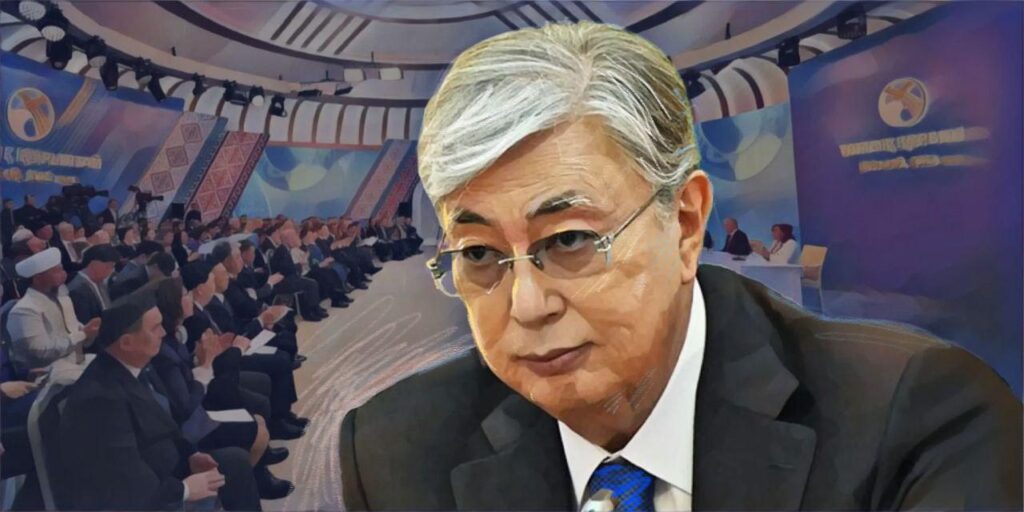
On December 19-20, Tokyo will host a landmark summit poised to reshape Eurasian cooperation. For the first time in the 20-year history of the “Central Asia + Japan” format, the dialogue is being elevated to the level of heads of state. For Japan, this represents more than a diplomatic gesture; it signals a shift from what analysts often describe as cautious “silk diplomacy” to a more substantive political and economic partnership with a region increasingly central to global competition over resources and trade routes. The summit will be chaired by Japanese Prime Minister Sanae Takaichi. The leaders of all five Central Asian states, Kazakhstan, Kyrgyzstan, Tajikistan, Turkmenistan, and Uzbekistan, have confirmed their participation. Alongside the plenary session, bilateral meetings and a parallel business forum are scheduled to take place. Why Now? Established in 2004, the “Central Asia + Japan” format has largely functioned as a platform for foreign ministers and technical cooperation. According to Esbul Sartayev, assistant professor at the Center for Global Risks at Nagasaki University, raising the dialogue to the head-of-state level marks a deliberate step by Japan to abandon its traditionally “secondary” role in a region historically dominated by Russia and China. This shift comes amid a changing geopolitical context: disrupted global supply chains, intensifying competition for critical and rare earth resources, and a growing U.S. and EU presence in Central Asia. In this environment, Tokyo is promoting a coordinated approach to global order “based on the rule of law”, a neutral-sounding phrase with clear geopolitical resonance. Unlike other external actors in Central Asia, Japan has historically emphasized long-term development financing, technology transfer, and institutional capacity-building rather than security alliances or resource extraction. Japanese engagement has focused on infrastructure quality, human capital, and governance standards, allowing Tokyo to position itself as a complementary partner rather than a rival power in the region. Economy, Logistics, and AI The summit agenda encompasses a range of priorities: sustainable development, trade and investment expansion, infrastructure and logistics, and digital technology. Notably, the summit is expected to include a new framework for artificial intelligence cooperation aimed at strengthening economic security and supply chain development. It is also likely to reference expanded infrastructure cooperation, including transport routes linking Central Asia to Europe. As a resource-dependent country, Japan sees Central Asia as part of its evolving “resource and technological realism” strategy. For the Central Asian states, this presents a chance to integrate into new global value chains without being relegated to the role of raw material suppliers. Kazakhstan: Deals Worth Billions The summit coincides with Kazakh President Kassym-Jomart Tokayev’s official visit to Japan from December 18-20. During the visit, more than 40 agreements totaling over $3.7 billion are expected to be signed. These span energy, renewables, digitalization, mining, and transport. Participants include Samruk-Kazyna, KEGOC, Kazatomprom, KTZ, and major Japanese corporations such as Marubeni, Mitsubishi Heavy Industries, Toshiba, and JOGMEC. Japan’s ambassador to Kazakhstan, Yasumasa Iijima, has referred to Kazakhstan as a future Eurasian transport and logistics hub, highlighting its strategic role in developing the Trans-Caspian...

24 hours ago

Tajikistan Remains in 113th Place in Global Social Progress Index

The newly released Global Social Progress Index offers a mixed assessment of Tajikistan, where improvements in water and sanitation have been overshadowed by a sharp decline in civil liberties, limiting the country's overall advancement in global rankings. Tajikistan ranks 113th out of 170 countries in the AlTi 2025 Global Social Progress Index, with a score of 58.15 points, according to the latest report from the international research initiative AlTi Global Social Progress Index. The index evaluates non-economic aspects of quality of life, including healthcare, education, rights, and freedoms. Covering data from 2011 to 2024, the report shows Tajikistan has improved its overall score by 5.98 points over the period. However, the country was classified as having “stagnant indicators” in 2024, reflecting a lack of measurable progress in the past year. One of the most significant achievements noted in the report is Tajikistan’s improvement in access to water and sanitation. Since 2011, this component has risen by 38.83 points, placing the country among the global leaders in this area. The report notes that investments in water and sanitation infrastructure have long-term impacts on public health, education, and social well-being, contributing meaningfully to the country’s overall index score. Conversely, the most concerning decline has been in the Rights & Voice category, which includes measures of political rights, freedom of speech, media independence, academic freedom, and equality before the law. Tajikistan's score in this area has dropped by 15.94 points since 2011, placing it among the ten countries with the worst downward trends in civil liberties worldwide. According to the report, this deterioration in rights and freedoms is the primary barrier to further social progress in Tajikistan. Within the Central Asia region, which has generally seen upward trends since 2011, Tajikistan ranks lowest. Kazakhstan currently ranks 58th, Uzbekistan 76th, and Kyrgyzstan 81st. The report concludes that sustainable social progress in the region is impossible without significant improvements in civil rights and freedoms. While infrastructure development and educational gains are important, they cannot offset systemic issues related to political and civil liberties.

2 days ago

Kazakhstan Fast-Tracks Delivery of Caspian Pipeline Equipment

Kazakhstan has expedited the delivery of two new offshore berthing facilities for the Caspian Pipeline Consortium (CPC), a move prompted by recent drone attacks on CPC infrastructure. The initiative aims to restore the stability of oil exports and ensure uninterrupted operations at the key marine terminal in Novorossiysk. The two new remote mooring devices (RMDs) were procured from a manufacturer in the United Arab Emirates for installation at the CPC Marine Terminal. Kazakhstan’s Energy Minister Yerlan Akkenzhenov announced on December 15 in Astana that the delivery timeline has been moved up from April 2026 to January 2025. “The Ministry of Energy of the Republic of Kazakhstan and the national oil and gas company KazMunayGas are making every effort to deliver the two new RMD units. We are now pushing ahead with this and plan to deliver them in January,” said Akkenzhenov, highlighting the logistical complexity of transporting the technologically advanced equipment to Novorossiysk. According to the CPC press service, the two devices being replaced, CPC-1 and CPC-2, were originally commissioned in 2001. The contract for their replacement was signed in January 2024, and both new units are expected to be completed by December 2025. These upgrades are part of a recovery program following a series of attacks on CPC infrastructure. At the same time, repair work continues on VPU-3, another remote berthing facility. However, efforts have been hindered by severe weather conditions in Novorossiysk, where strong winds and currents have disrupted underwater installation work. “The weather in Novorossiysk is difficult, with very strong winds causing high waves and currents. Divers are descending under the dome to install underwater hoses,” Akkenzhenov explained. The Caspian Pipeline Consortium remains one of the largest energy projects in the post-Soviet space. The 1,511 kilometer Tengiz-Novorossiysk pipeline transports more than two-thirds of Kazakhstan’s oil exports, along with output from Russian fields, including those in the Caspian Sea. The CPC’s marine terminal in Novorossiysk is equipped with three remote mooring devices, enabling tankers to load safely offshore and ensuring continuous export operations. Since autumn 2025, CPC facilities have been repeatedly targeted. The first attack occurred on September 24, when drones struck the consortium’s office, injuring employees and bystanders. Other key incidents included attacks on the Kropotkinskaya base (February 17 and March 24), the Kavkazskaya facility (March 19), and the Novorossiysk marine terminal (September 24-25). The most serious incident occurred on November 29, when the terminal’s pier was damaged, rendering VPU-2 inoperable. Kazakhstan’s Ministry of Energy estimated losses of 480,000 tons of oil and condemned the attack as “unacceptable and dangerous for global energy security.” The emergency acquisition and fast-tracked delivery of the new berthing units are seen as a strategic investment by Kazakhstan, not only to secure its export capacity but also to reinforce the stability of one of the region’s most critical energy corridors.

2 days ago

Kazakhstan Launches Smart City Project in Taldykorgan

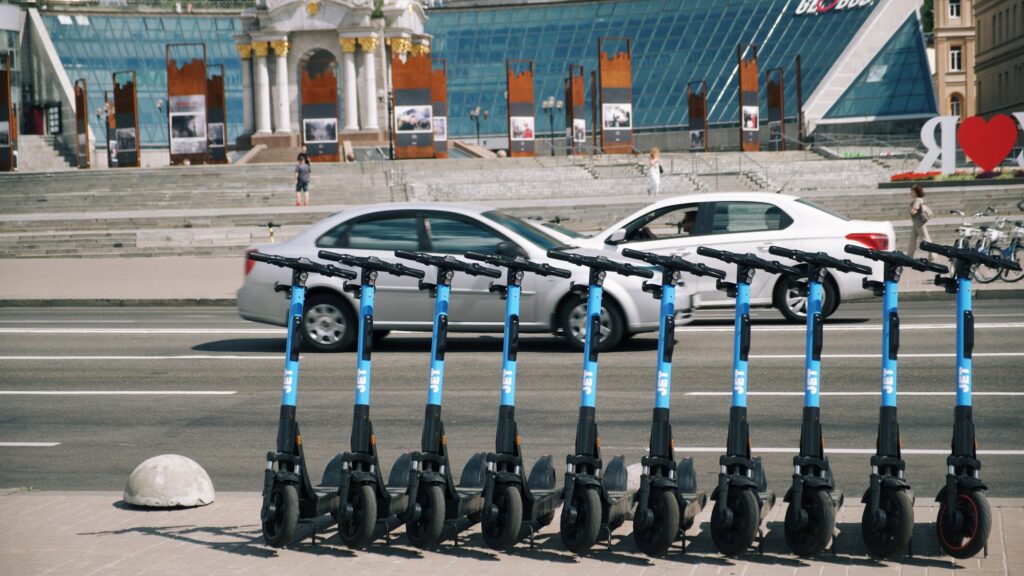
The Taldykorgan City Administration (akimat), Kazakh telecommunications company ASTEL, and French Internet of Things (IoT) solutions developer Actility have signed a memorandum of cooperation to implement a Smart City project in the town of Taldykorgan. The initiative, based on LoRaWAN technology, will establish a comprehensive urban monitoring system aimed at improving city management and residents’ quality of life. The agreement was signed in Paris during the 16th meeting of the Intergovernmental Commission on Economic Cooperation between Kazakhstan and France. The project involves deploying a LoRaWAN-based IoT network that will collect real-time data from environmental sensors across the city. This data will feed into a centralized monitoring platform, enabling municipal services to respond swiftly to environmental changes. The initiative also includes urban transport management and measures to enhance safety in schools. Taldykorgan Governor (akim) Ernat Bazil told The Times of Central Asia that the memorandum represents a key milestone in the city’s digital development strategy. According to Bazil, the project aims not only to introduce cutting-edge technologies but also to deliver tangible improvements for residents, such as better environmental oversight, more efficient public services, enhanced public transport, and safer educational institutions. Full implementation of the Smart City system is scheduled for 2026. ASTEL President Miras Kasymov said the LoRaWAN-based project in Taldykorgan will serve as a model for scalable smart city solutions across Kazakhstan, marking an important advancement in the country’s digital infrastructure. The project is supported by the French government’s FASEP program (Fonds d'Études et d'Aide au Secteur Privé) and the French Embassy in Kazakhstan. Actility, a global leader in IoT and LoRaWAN technologies, serves as the technical partner. The company’s platform is currently used in over 70 countries. Actility CEO Olivier Hersent noted that the Taldykorgan project aligns with FASEP’s goals of promoting innovation in urban safety, environmental monitoring, and sustainable development, particularly in small and mid-sized cities. French Ambassador to Kazakhstan Sylvain Guillegot said the initiative highlights France’s commitment to supporting digital transformation in Kazakhstan’s regions. He described the project as a concrete example of Franco-Kazakh collaboration in infrastructure modernization and sustainable development. The system is set to launch in 2026. If successful, it could be replicated in other cities throughout Kazakhstan. LoRaWAN (Long Range Wide Area Network) is an energy-efficient, cost-effective wireless communication protocol widely used for IoT deployments, especially in smart urban infrastructure projects.

3 days ago