• KZT/USD = 0.00226
  • TJS/USD = 0.10830
  • UZS/USD = 0.00009
  • TMT/USD = 0.29760
  • KZT/USD = 0.00226
  • TJS/USD = 0.10830
  • UZS/USD = 0.00009
  • TMT/USD = 0.29760
  • KZT/USD = 0.00226
  • TJS/USD = 0.10830
  • UZS/USD = 0.00009
  • TMT/USD = 0.29760
  • KZT/USD = 0.00226
  • TJS/USD = 0.10830
  • UZS/USD = 0.00009
  • TMT/USD = 0.29760
  • KZT/USD = 0.00226
  • TJS/USD = 0.10830
  • UZS/USD = 0.00009
  • TMT/USD = 0.29760
  • KZT/USD = 0.00226
  • TJS/USD = 0.10830
  • UZS/USD = 0.00009
  • TMT/USD = 0.29760
  • KZT/USD = 0.00226
  • TJS/USD = 0.10830
  • UZS/USD = 0.00009
  • TMT/USD = 0.29760
  • KZT/USD = 0.00226
  • TJS/USD = 0.10830
  • UZS/USD = 0.00009
  • TMT/USD = 0.29760
25 September 2026

Our People > Vladislav Pichshalin

Vladislav Pichshalin's Avatar

Journalist

Articles

Japanese Investment Tackles Uzbekistan’s Aral Sea Crisis

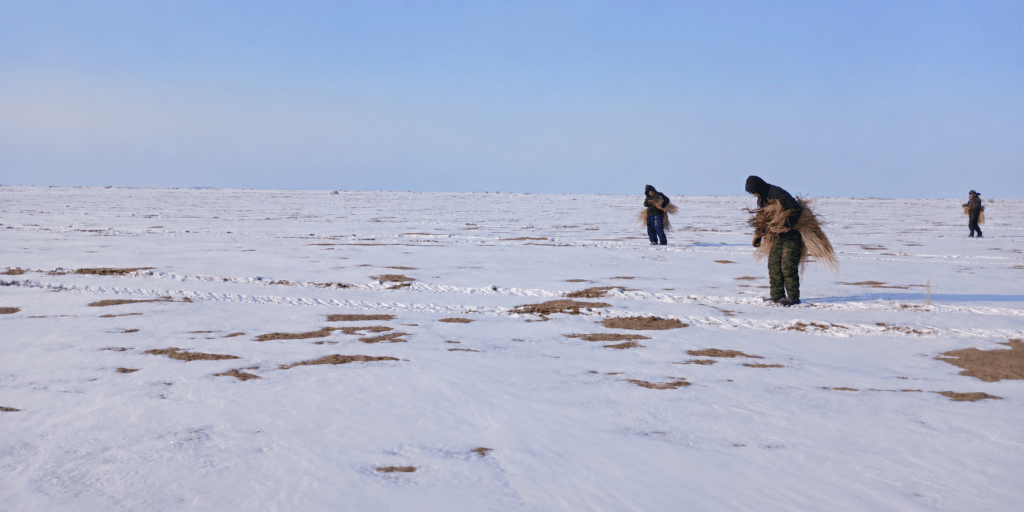
Until recently, the rehabilitation center in Akmangit, a settlement in Karakalpakstan, relied on sewage trucks to remove wastewater. Although it receives about 3,500 patients with disabilities each year, the center had no sewer system. In March 2025, a Johkasou system, a compact Japanese unit that treats wastewater biologically, was installed at the center. The treated water can now be reused for irrigation instead of being hauled away. Similar systems were installed at a kindergarten and a specialized school. In their first four months of operation, the three units treated more than 16,400 cubic meters of wastewater. Although these installations are small relative to Karakalpakstan’s water and sanitation needs, they illustrate Japan’s approach in Uzbekistan’s Aral Sea region through local pilot projects tied to longer-term development programs. During an October 2025 visit, a United Nations Development Programme (UNDP) delegation and a representative of the Embassy of Japan in Uzbekistan saw residents using the program to introduce drip irrigation and expand small businesses. A smoked-fish producer in Samanbay employed 12 people. Since 2020, Japan has funded trials of water-saving and wastewater-treatment technologies in the region, supported climate-resilient agriculture, and introduced local business-development models. These projects draw less attention than Central Asia’s uranium, critical-mineral, energy, and transport deals. In Karakalpakstan, however, Japan has pursued influence through smaller projects intended to remain in place for years. Water and Agriculture Projects In September 2023, Japan provided $2 million for a UNDP program promoting climate-resilient agriculture in four districts of Karakalpakstan. By the program’s conclusion in 2025, more than 7,700 residents had gained access to clean drinking water. The Johkasou units were among the program’s most visible elements. Developed in Japan in the late 1940s amid sanitation problems, the decentralized systems offer an alternative where centralized sewer networks are impractical. Their treated water can be reused for irrigation. The program tested another Japanese technology on the dried Aral Sea bed. In 2024, UNDP planted 1,000 saxaul seedlings using a superabsorbent polymer (SAP) that retains moisture around plant roots. Saxaul, a desert shrub or small tree, helps stabilize sand and limit the spread of salt and dust from the former seabed. The 1,000 seedlings formed part of UNDP’s Green Aral Sea initiative. Between 2020 and March 2025, the program planted 823,000 trees across 658.2 hectares. In February 2026, Japan and UNDP launched a $4.6 million project scheduled to run through 2028. Its work includes irrigation rehabilitation, digital water monitoring, wastewater reuse, and desalination powered by renewable energy. More than 1,000 farmers and households are expected to benefit. Local Business Models Japan has paired these technologies with models for local economic development. One is the One Village, One Product Movement (OVOP), which began in Japan’s Oita Prefecture in 1979. Under the model, communities develop marketable products based on local resources and skills. In Karakalpakstan, OVOP has been applied to agriculture, handicrafts, and food processing, including the small businesses visited by the delegation in October 2025. Another Japanese approach is kaizen ("continuous improvement"). It seeks to improve production and...

2 days ago

The Language Gap: Why the Korean Language Is Outpacing Japanese in Kazakhstan and Uzbekistan

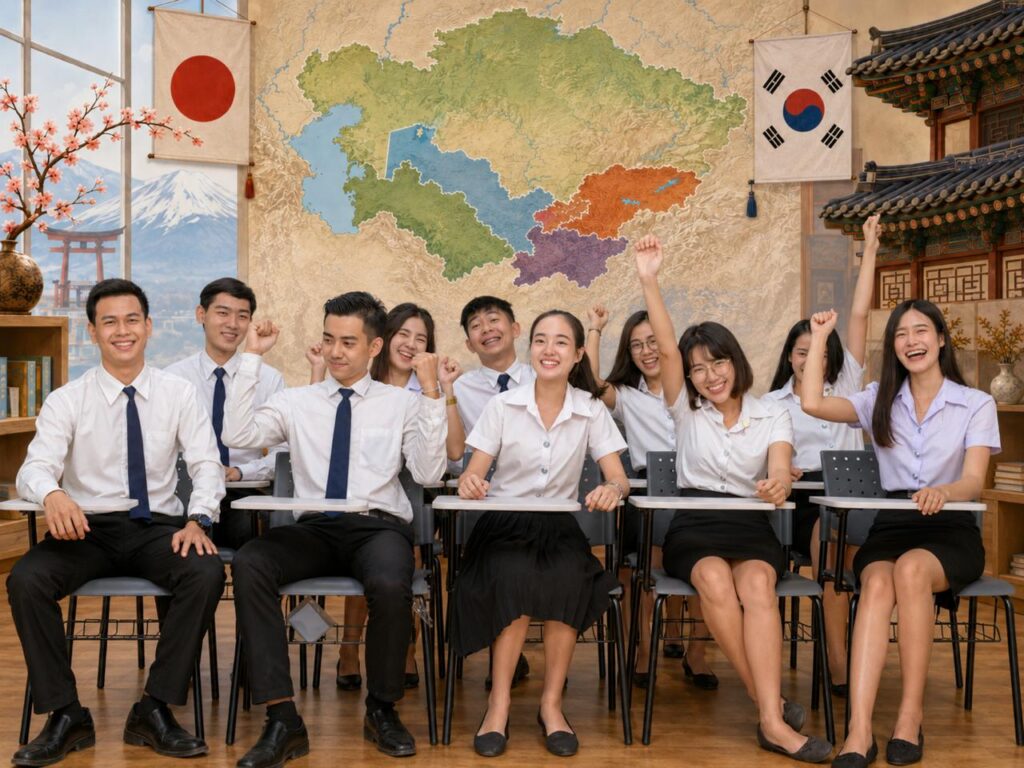
Two weeks ago, Kazakhstan officially joined South Korea’s Employment Permit System (EPS), becoming the 18th country admitted to the program. Even before the change, thousands of Kazakhstani nationals were working in South Korea, many without legal status. Kazakhstani authorities estimated the total at around 15,000 in 2025, including 11,000 without legal documentation. To work legally in South Korea under the EPS, applicants must pass the EPS-TOPIK, a standardized Korean-language test. In this context, learning Korean has become a direct route to better-paid work for many young people in Kazakhstan. Japan, however, has generated no comparable rush. A Widening Gap, By the Numbers The contrast is also evident in language-learning trends. In 2022, Jang Ho-jong, a professor at the Kazakh Ablai Khan University of International Relations and World Languages, told The Korea Times that Korean ranked alongside English and Chinese among Kazakhstan’s three most popular foreign languages and was taught at 15 to 20 universities. About 400 students were taking Korean courses at his university, compared with just three or four when the program opened 20 years earlier. South Korea has also expanded teaching and testing infrastructure. In July 2026, the King Sejong Institute at Akhmet Baitursynuly Kostanay Regional University became Kazakhstan’s first official center for the Sejong Korean Language Assessment (SKA), allowing candidates to take the exam without traveling abroad. Official enrollment data from the King Sejong Institute Foundation show that 1,320 students were enrolled at its institutes in Kazakhstan in 2025, down slightly from 1,481 in 2024. The picture is very different for Japanese. The Japan Foundation counted 581 learners across eight institutions in Kazakhstan in 2024, compared with 1,569 learners in 2006. In Uzbekistan, Korean-language education has expanded even faster. The country recorded the largest increase worldwide in 2025, adding 68 schools offering Korean classes. Sri Lanka placed second with 43. Enrollment at King Sejong institutes in Uzbekistan rose from 1,873 in 2021 to 7,931 in 2024. It eased to 6,308 in 2025, according to the same official dataset. Japanese-language study has also grown in Uzbekistan, but more slowly. The same Japan Foundation survey counted 4,201 learners across 19 institutions in 2024, up from 3,579 at 18 institutions in 2021. Although the two datasets cover different types of institutions, the nationwide Japanese total remained below enrollment in Uzbekistan’s King Sejong network that year. A More Complicated Picture Next Door Across the rest of Central Asia, however, the comparison is less clear-cut. The Japan Foundation’s 2024 regional survey recorded 1,708 Japanese-language learners at 14 institutions in Kyrgyzstan, taught by 50 teachers. That was almost three times Kazakhstan’s total, even though Kyrgyzstan’s population is roughly one-third as large. Among the learners in Kyrgyzstan, 411 were in primary or secondary education. A 2020 account by a Japan Foundation specialist described young people learning through anime and the internet, while Japan International Cooperation Agency volunteers introduced Japanese in rural schools. Some later traveled to Bishkek for more formal study. This points to demand developing from the ground up alongside institutional support. Korean-language...

2 weeks ago

Kazakh Uranium for Asia: Japan Returns for Fuel, South Korea Expands Cooperation

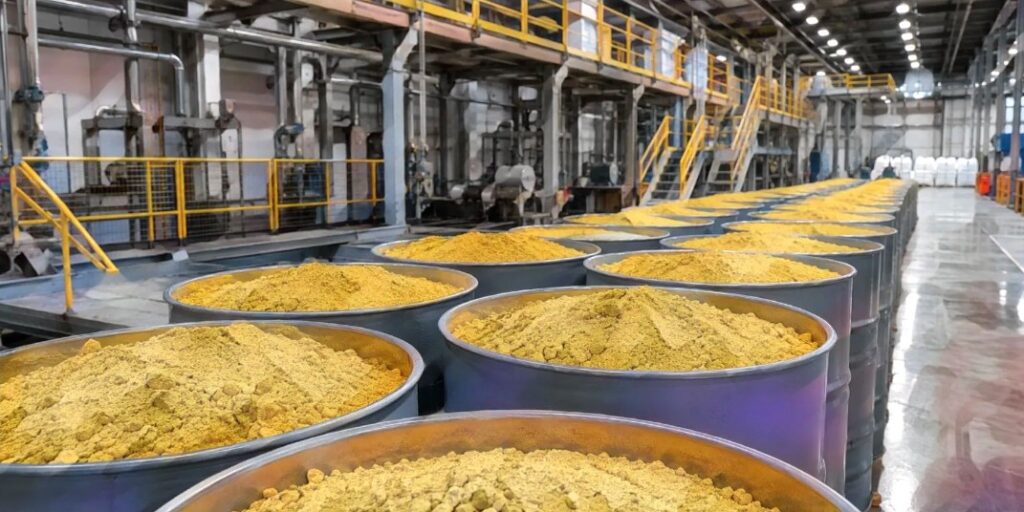
Kazakhstan accounts for around 40% of global uranium production. China already receives not only raw material from the country but also finished fuel assemblies; Japan is signing new contracts after bringing some of its reactors back online; and South Korea is expanding cooperation with Kazakhstan’s nuclear industry. Kazakhstan itself, which for decades exported almost all of its uranium, is preparing to build its own nuclear power plants. These developments are gradually changing the country’s place in Asia’s nuclear energy sector. In December 2025, Kazatomprom, the world’s largest producer of natural uranium, agreed on new supplies with Kansai Electric Power, one of Japan’s major nuclear power operators. The agreement for the supply of uranium oxide concentrate, U₃O₈, was signed during events connected with a visit by a Kazakh delegation to Japan. This is not finished reactor fuel. U₃O₈, known in the industry as yellowcake, must undergo conversion, enrichment, and fuel fabrication after mining. For Kansai, the agreement provides another source of raw material for its nuclear fleet, while for Kazakhstan it continues cooperation with the Japanese company that began almost two decades ago. Japanese demand is rising again after a prolonged decline. The Fukushima Daiichi nuclear disaster in March 2011 led to the gradual shutdown of all the country’s commercial reactors. Restarts began in 2015 after new safety requirements were introduced. In February 2025, the Japanese government approved an energy policy that envisages increasing nuclear power’s share of electricity generation to around 20% by 2040. To achieve this, Tokyo will need not only to restart existing reactors but also to secure their fuel supply. Kansai has a particularly important role in this process. The company operates seven reactors at three sites: Mihama, Takahama, and Ohi. In 2025, it also resumed work to assess the possibility of building a new reactor at the Mihama site. No final decision on construction has yet been made. Kansai’s links with Kazakhstan began long before the current revival of Japan’s nuclear energy sector. In 2006, the company and Sumitomo joined the APPAK uranium mining project in southern Kazakhstan. Kazatomprom currently owns 65% of the company, Sumitomo 25%, and Kansai 10%. APPAK develops the western section of the Mynkuduk deposit in the Turkistan region. For the Japanese company, this provides a presence directly at the source of the raw material. For Kazakhstan, the partnership became one of the first major examples of Asian energy companies participating in its uranium mining industry. China Already Receives Finished Fuel Kazakhstan has gone further with China than simply supplying uranium concentrate. Ulba-FA operates in Ust-Kamenogorsk as a joint venture between the Ulba Metallurgical Plant and China’s CGNPC-URC. The Kazakh side owns 51% and the Chinese side 49%. The plant produces fuel assemblies for Chinese nuclear power plants. Industrial production began in 2021. In December 2022, the first shipment was sent to China, containing just over 30 tonnes of low-enriched uranium in finished fuel assemblies. By the end of 2024, the plant had reached its design capacity of 200 tonnes a year....

2 months ago

Patient Capital, Fast Deals: Japan and South Korea Take Different Paths into Central Asia

Japan and South Korea have reached the same strategic conclusion: Central Asia matters to their economic security. Yet they are pursuing that goal through markedly different playbooks. In December 2025, Tokyo hosted the first leaders' summit of the "Central Asia plus Japan" Dialogue, 21 years after the format was launched. All five Central Asian presidents attended. Japan set a target of three trillion yen in business projects across the region over five years - roughly $19 billion at the time - while placing critical-mineral supply chains among the summit's priority areas. The bilateral announcements were equally significant. Uzbekistan presented a proposed project portfolio worth more than $12 billion and called for a joint investment platform to advance it. Kazakhstan and Japan announced a package of public- and private-sector agreements worth $3.7 billion. These included a long-term uranium contract and an offtake agreement under which Kazakhstan's Eurasian Resources Group would supply gallium to Mitsubishi Corporation RTM Japan. The timing was no accident. By May 2026, Chinese shipments to Japan of dysprosium and terbium remained close to zero, while exports of finished rare earth magnets to Japan fell 35% from the previous month. These materials are essential to high-performance magnets. For Tokyo, diversifying critical mineral supply is no longer a distant policy objective; it is an immediate industrial requirement. South Korea has been moving toward the same destination by a different route. During then-President Yoon Suk Yeol's state visit to Kazakhstan in 2024, the two countries signed a critical minerals memorandum allowing Korean companies to participate in the exploration and development of lithium, chromium, uranium, and rare earths. Seoul is now preparing to host the first Korea-Central Asia summit on September 16-17, 2026, elevating years of bilateral and multilateral engagement to the leaders' level. [caption id="attachment_52351" align="aligncenter" width="1280"] Image: Japan Cabinet Public Affairs Office[/caption] Why Central Asia Counts Both Japan and South Korea are resource-poor manufacturing powers whose leading industries depend on secure supplies of imported minerals. South Korea imports more than 95% of the critical minerals it consumes. Japan received its own warning in 2010, when Chinese rare earth shipments were disrupted during a territorial dispute, and the pressure has returned in a sharper form in 2026. Central Asia cannot replace China in the short term, but it offers Tokyo and Seoul a credible route toward diversification. Kazakhstan and Uzbekistan combine substantial mineral potential with governments eager to attract investment, technology, and new export markets. Kazakhstan is already a major producer of uranium and chromium, and has significant copper, titanium, and rare earth prospects. In April 2025, Kazakhstan announced the possible discovery of a rare earth deposit containing more than 20 million metric tons of resources. If further exploration confirms that estimate, the country could possess one of the world's largest rare earth resource bases. However, the distinction between a resource estimate and a usable supply chain is crucial. A discovery is not a producing mine, and a mine is not a processing industry. Exploration, environmental approvals, infrastructure, separation, refining, and...

2 months ago