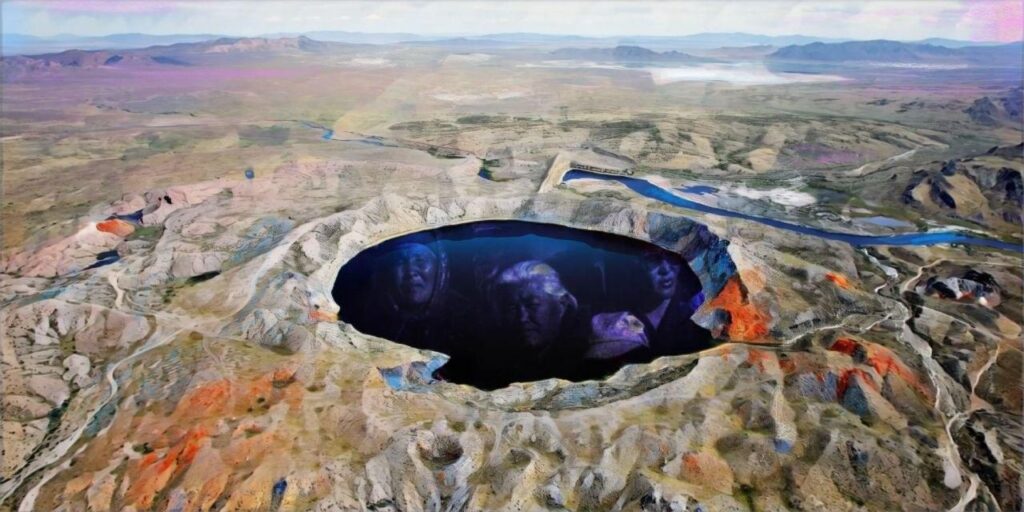
Kazakhstan accounts for around 40% of global uranium production. China already receives not only raw material from the country but also finished fuel assemblies; Japan is signing new contracts after bringing some of its reactors back online; and South Korea is expanding cooperation with Kazakhstan’s nuclear industry. Kazakhstan itself, which for decades exported almost all of its uranium, is preparing to build its own nuclear power plants. These developments are gradually changing the country’s place in Asia’s nuclear energy sector.
In December 2025, Kazatomprom, the world’s largest producer of natural uranium, agreed on new supplies with Kansai Electric Power, one of Japan’s major nuclear power operators. The agreement for the supply of uranium oxide concentrate, U₃O₈, was signed during events connected with a visit by a Kazakh delegation to Japan.
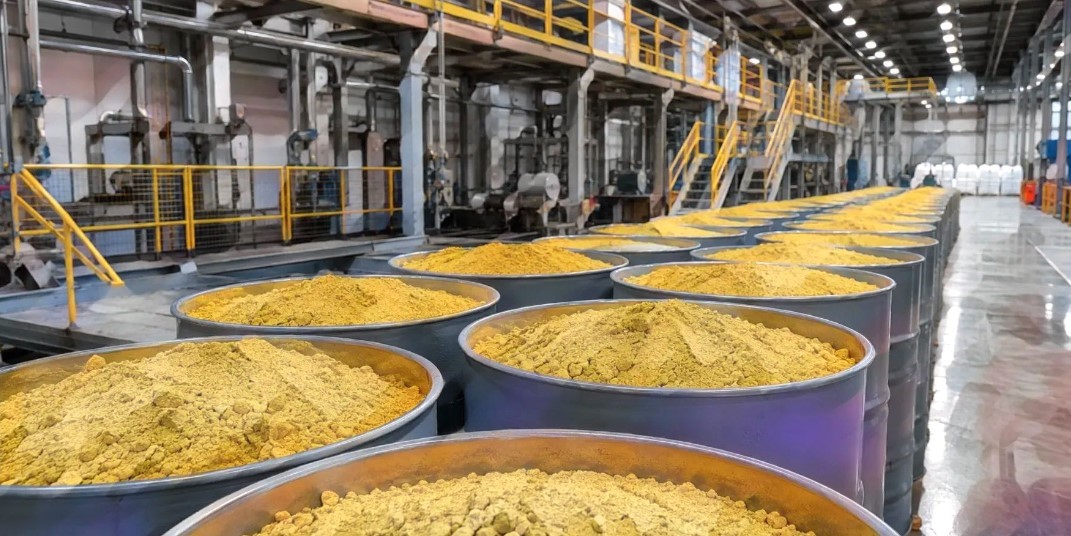
This is not finished reactor fuel. U₃O₈, known in the industry as yellowcake, must undergo conversion, enrichment, and fuel fabrication after mining. For Kansai, the agreement provides another source of raw material for its nuclear fleet, while for Kazakhstan it continues cooperation with the Japanese company that began almost two decades ago.
Japanese demand is rising again after a prolonged decline. The Fukushima Daiichi nuclear disaster in March 2011 led to the gradual shutdown of all the country’s commercial reactors. Restarts began in 2015 after new safety requirements were introduced. In February 2025, the Japanese government approved an energy policy that envisages increasing nuclear power’s share of electricity generation to around 20% by 2040. To achieve this, Tokyo will need not only to restart existing reactors but also to secure their fuel supply.
Kansai has a particularly important role in this process. The company operates seven reactors at three sites: Mihama, Takahama, and Ohi. In 2025, it also resumed work to assess the possibility of building a new reactor at the Mihama site. No final decision on construction has yet been made.
Kansai’s links with Kazakhstan began long before the current revival of Japan’s nuclear energy sector. In 2006, the company and Sumitomo joined the APPAK uranium mining project in southern Kazakhstan. Kazatomprom currently owns 65% of the company, Sumitomo 25%, and Kansai 10%. APPAK develops the western section of the Mynkuduk deposit in the Turkistan region.
For the Japanese company, this provides a presence directly at the source of the raw material. For Kazakhstan, the partnership became one of the first major examples of Asian energy companies participating in its uranium mining industry.
China Already Receives Finished Fuel
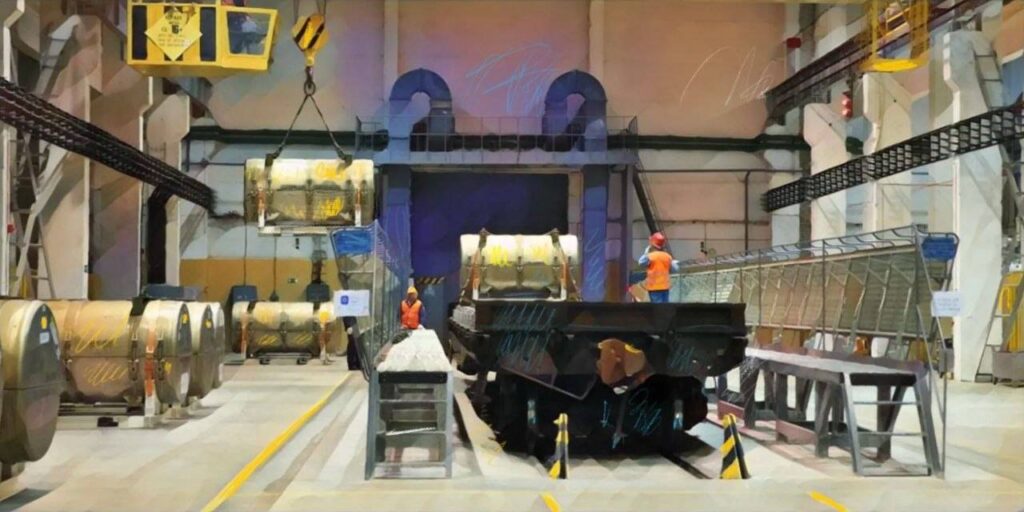
Kazakhstan has gone further with China than simply supplying uranium concentrate. Ulba-FA operates in Ust-Kamenogorsk as a joint venture between the Ulba Metallurgical Plant and China’s CGNPC-URC. The Kazakh side owns 51% and the Chinese side 49%. The plant produces fuel assemblies for Chinese nuclear power plants.
Industrial production began in 2021. In December 2022, the first shipment was sent to China, containing just over 30 tonnes of low-enriched uranium in finished fuel assemblies. By the end of 2024, the plant had reached its design capacity of 200 tonnes a year. According to Kazatomprom, this is enough for approximately six reactor reloads. All of the plant’s output is currently intended for China.
The production chain remains international. Kazakhstan mines natural uranium and produces fuel pellets and assembles finished fuel in Ust-Kamenogorsk. Enrichment takes place outside the country. The fuel assembly manufacturing technology was provided by France’s Framatome.
The Largest Producer Without an Operating Nuclear Power Plant
Kazakhstan has been the world’s largest uranium producer since 2009. It currently accounts for around two-fifths of global production, considerably more than Canada, Namibia, or Australia.
In 2025, Kazakh enterprises produced around 25,800 tonnes of uranium. Production attributable to Kazatomprom’s share in its operations and joint ventures amounted to 13,500 tonnes. Group sales reached around 18,500 tonnes, up 11% year on year.
Despite these volumes, Kazakhstan currently has no operating commercial nuclear power plant. The country’s last power reactor, the Soviet-built BN-350 in Aktau on the Caspian Sea, was shut down in 1999. It had operated since 1973, generating electricity and providing heat for seawater desalination.
This created an unusual situation in the global nuclear industry: the world’s largest uranium producer sent almost all of its output to foreign markets while having had no nuclear power generation of its own for more than a quarter of a century.
That situation is now changing. Kazakhstan is preparing to build new nuclear power plants while seeking to strengthen its position in Asian markets. Its relationship with Japan already rests on almost two decades of joint uranium mining. Cooperation with South Korea is at an earlier stage.
South Korea Expands Its Contacts
South Korea is one of the world’s major producers of nuclear electricity and has its own reactor technology, which it markets internationally. Seoul sees Kazakhstan both as a source of uranium and as a country beginning a new nuclear power construction programme.
Cooperation in uranium is not new. As early as 2010, Kazatomprom and Korea Hydro & Nuclear Power, the operator of South Korea’s nuclear power plants, agreed to explore the possibility of jointly developing uranium deposits and arranging long-term supplies of Kazakh uranium.
A new stage began in March 2025. KHNP signed memorandums of understanding with Al-Farabi Kazakh National University and the Institute of High Technologies, the research arm of Kazatomprom. The agreements focus on joint research into uranium resources in Kazakhstan’s seawater and groundwater, including the evaluation of uranium adsorbents.
South Korean companies were also interested in building Kazakhstan’s nuclear power plant. KHNP was on the shortlist of potential reactor technology suppliers alongside Russia’s Rosatom, China’s CNNC, and France’s EDF. In 2025, Kazakhstan selected Rosatom to lead the international consortium for its first plant, while CNNC was selected to lead the project for the country’s second nuclear power plant.
This did not close the Kazakh market to Seoul. Negotiations continue in other segments of the nuclear industry. Japan currently has a deeper presence: its companies have participated in uranium mining in Kazakhstan since 2006 and now have a new supply agreement. South Korean projects remain largely at the stage of agreements, research, and negotiations.
How to Export Uranium From a Landlocked Country
For Kazakhstan, reaching an agreement to sell uranium is only part of the challenge. The country has no direct access to the world’s oceans, and natural uranium must be transported to customers through several other countries.
Kazatomprom’s main export route west runs by rail through Russia to the port of St Petersburg, from where cargo is shipped by sea. Since the start of the war in Ukraine, this logistics chain has become closely exposed to sanctions-related risks. Kazatomprom itself has said that it continues to use the Russian route but is monitoring potential restrictions and maintains an alternative route across the Caspian Sea.
That alternative predates 2022. Since 2018, the company has used the Trans-Caspian International Transport Route for some shipments to Western customers. Uranium is transported across Kazakhstan to the Caspian Sea and then through Azerbaijan and Georgia. In December 2022, Kazatomprom completed its first delivery of natural uranium to Canada entirely via the Trans-Caspian route, bypassing Russian territory.
The route across the Caspian is more complex than rail transport through Russia. Cargo has to be transferred between different modes of transport, while the shipment of nuclear materials requires special permits. Kazatomprom has also pointed to quotas on the Trans-Caspian route and the need to coordinate any increase with transit countries.
For Asian customers, the logistics are different. China shares a border with Kazakhstan and receives uranium directly overland. Supplies to Japan and South Korea require access to maritime routes. Transport geography therefore remains an important factor in any long-term expansion of sales to East Asia.
Six New Exploration Areas
To maintain its current supply volumes, Kazakhstan needs to replenish its resource base. In-situ recovery allows production to be increased relatively quickly, but some operating deposits are gradually approaching peak production or later stages of their operating lives.
In 2025, Kazatomprom obtained exploration rights for six new prospective uranium areas covering more than 1,000 square kilometres in total. The company plans to invest KZT 75-85 billion, around $140-160 million, in geological exploration through 2030.
These are not six newly discovered deposits with confirmed reserves. Drilling and geological studies are intended to determine the resources of the areas and establish which of them may eventually have commercial potential.
Kazatomprom does not need the new areas for any single customer. The company sells uranium to energy companies in China, Europe, North America, and elsewhere in Asia and intends to maintain this geographic reach over the next decade. Its updated development strategy for 2025-2034 identifies replenishing the mineral resource base and diversifying sales among its priorities.
India Returns as a Long-Term Buyer
Japan and South Korea are not the only Asian markets interested in Kazakh uranium. In April 2026, Kazatomprom shareholders approved the conclusion of a long-term contract to sell natural uranium concentrate to the Directorate of Purchase & Stores of India’s Department of Atomic Energy.
This is not a new supply relationship for the two countries. Kazakhstan supplied uranium to India under agreements dating back to 2009 and 2015. The latter contract provided for the supply of 5,000 tonnes of natural uranium between 2015 and 2019.
The renewed supply relationship comes as India plans a sharp expansion of nuclear generation. New Delhi aims to increase installed nuclear capacity from around 8 GW today to 100 GW by 2047. Such growth would require new reactors and long-term fuel supplies.
For Kazakhstan, India is also attractive because of the potential size of the market. China is already a major customer and a partner in nuclear fuel production, Japan is bringing some reactors back into operation, and South Korea has one of Asia’s largest nuclear fleets, but India plans to expand its own fleet many times over during the next two decades.
Kazatomprom is not dependent on a single market. In 2025, its main sales regions remained Asia, Europe, and North America. The new Indian contract and the agreement with Kansai expand an existing portfolio rather than creating one from scratch.
Kazakhstan Will Now Need Uranium Itself
Until recently, discussion of Kazakh uranium was almost entirely about exports. However, in October 2024, a majority of those voting in a nationwide referendum supported the construction of a nuclear power plant. The first is planned near the village of Ulken on the shore of Lake Balkhash.
In April 2026, Kazakhstan approved its nuclear industry development strategy through 2050, which envisages the construction of at least three nuclear power plants. The authorities are also considering a fourth project, while small modular reactors are among the technologies being studied for future generating capacity.
This does not mean that Kazakhstan’s future nuclear power plants will soon require enough uranium to force the country to cut exports. With production of around 25,000 tonnes a year, several reactors would not in themselves create a shortage of raw material. Natural uranium is also only the beginning of the nuclear fuel cycle: future plants will depend on the reactor technologies selected, conversion and enrichment services, and the production of suitable fuel assemblies.
But after more than a quarter of a century without an operating power reactor, Kazakhstan is preparing for the first time to become a consumer of its own nuclear products. The country already has experience that goes beyond mining yellowcake.
Kazakhstan’s relationships with East Asia’s three major nuclear markets have developed differently. China participates in local uranium projects and joint fuel production. Japan’s Sumitomo and Kansai have held stakes in APPAK for almost two decades, and Kansai’s new agreement provides for supplies of Kazakh uranium products for Japanese nuclear power plants. South Korean companies became involved later and are currently focused mainly on research and new cooperation agreements.
Kazakhstan’s own position is changing as well. After the BN-350 reactor in Aktau was shut down, the country was left without an operating power reactor. During that period, it increased uranium production, became the world’s largest producer, and built an export network stretching from China to North America.