Along a short strip of the Tajik-Afghan border, there has been a lot of activity in recent months, including the most serious incidents of cross-border violence in decades. Most of this activity has involved Tajikistan’s Shamsiddin Shohin district, a sparsely inhabited area where the population ekes out a living farming and herding in the foothills of the Pamir Mountains. Why the situation changed so suddenly is not entirely clear, but it is clear that the district is now the hot spot along the Tajik-Afghan frontier.
A Dubious Post-Independence Reputation
The Shamsiddin Shohin district is in Tajikistan’s southwestern Khatlon region. The district is located near the place where Afghan territory starts to make its northern-most protrusion. The elevation across most of the district is between 1,500-2,000 meters.
The district is about 2,300 square kilometers and has a population of some 60,000. Shuroobad, population roughly 11,000, is the district capital, and the entire district was once called Shuroobad. It was renamed Shamsiddin Shohin in 2016 to honor the Tajik poet and satirist of the late 19th century, who was born in the area.
Tajikistan and Afghanistan are divided by the Pyanj River, which further downstream merges with other rivers to become the Amu Darya, known to the Greeks as the Oxus, one of Central Asia’s two great rivers.
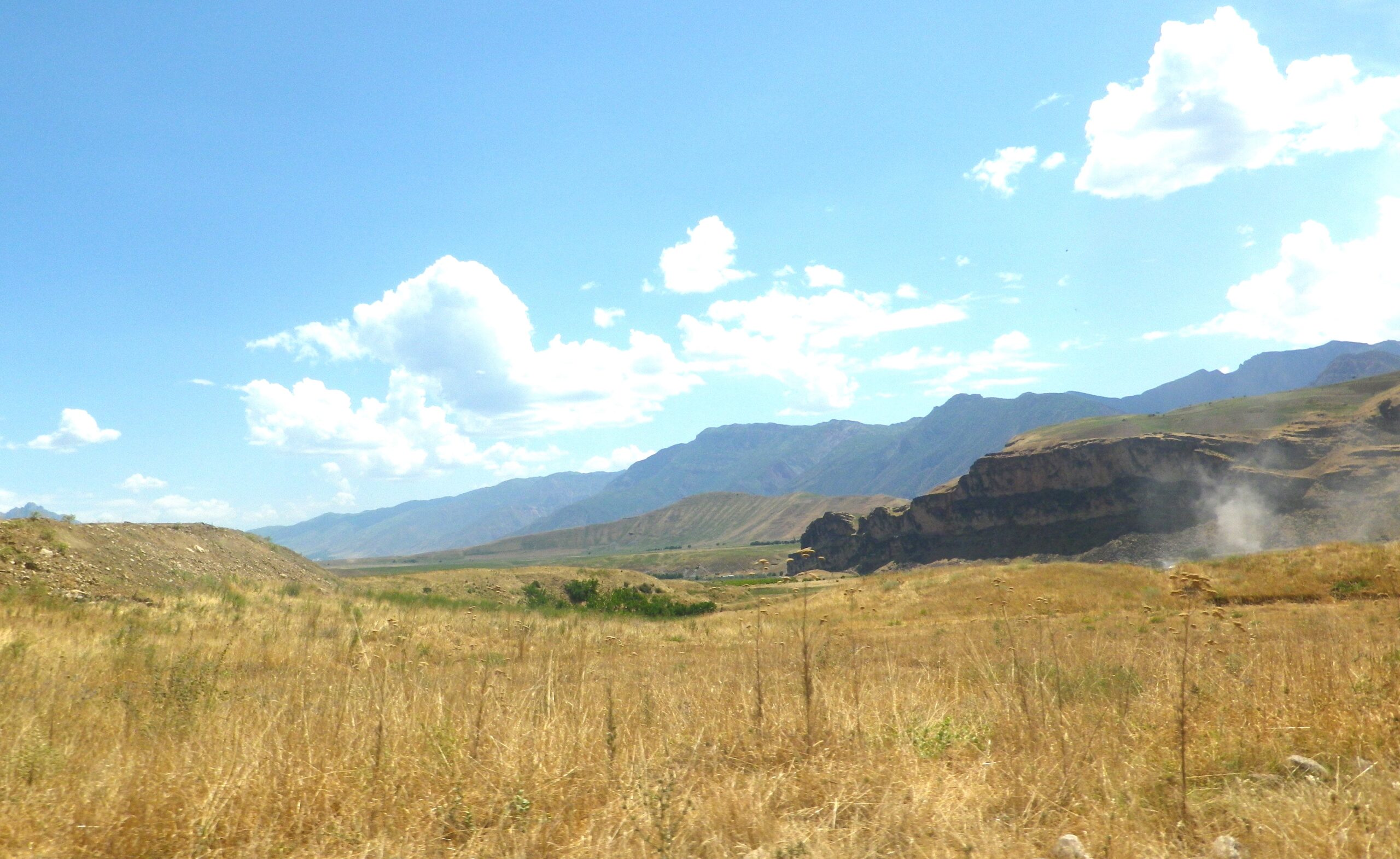
The road to Shuroobad; image: TCA, Stephen M. Bland
The Tajik-Afghan frontier is about 1,360 kilometers. Some 70 kilometers is the southern border of the Shamsiddin Shohin district, but it is the first area, traveling downstream, where the current of the Pyanj River slows significantly.
In the first years after the Bolshevik Revolution broke out, many Tajiks fled through what is now the Shamsiddin Shohin district into Afghanistan. Some seventy years later, thousands of Tajiks again fled through the district into Afghanistan when the newly independent state of Tajikistan was engulfed by civil war.
The United Tajik Opposition (UTO), the group fighting against the Tajik government during the 1992-1997 civil war, made frequent use of the Shamsiddin Shohin area to bring weapons from Afghanistan. UTO fighters had safe havens in Afghanistan, and they often made their way through this district, retreating south of the border and returning via the district once they were rested and resupplied.
There are only a few roads in the Shamsiddin Shohi district. The European Union funded the construction of the Friendship Bridge, which was completed in 2017, and connects the district to Afghanistan. It has often been closed by the Tajik authorities due to security concerns emanating from the Afghan side of the border.
Anyone crossing illegally from Afghanistan into the Shamsiddin Shohin district could easily hide in the rugged hills and abundance of caves in the area, making it ideal for smugglers and other intruders. Aside from a few small villages along the banks, there are no settlements for 20 to 30 kilometers north of the river.
Border posts were built during the time Tajikistan was a Soviet republic. Russian border guards remained in Tajikistan after the collapse of the USSR, and fortified these outposts as they increasingly came under attack from smugglers and UTO fighters crossing from Afghanistan.
Foreign governments funded the construction of new border guard posts along the Afghan frontier after the last Russian border guards departed in 2005. China, for example, financed the construction of the Gulhan border guard post in the Shamsiddin Shohin district in 2016.
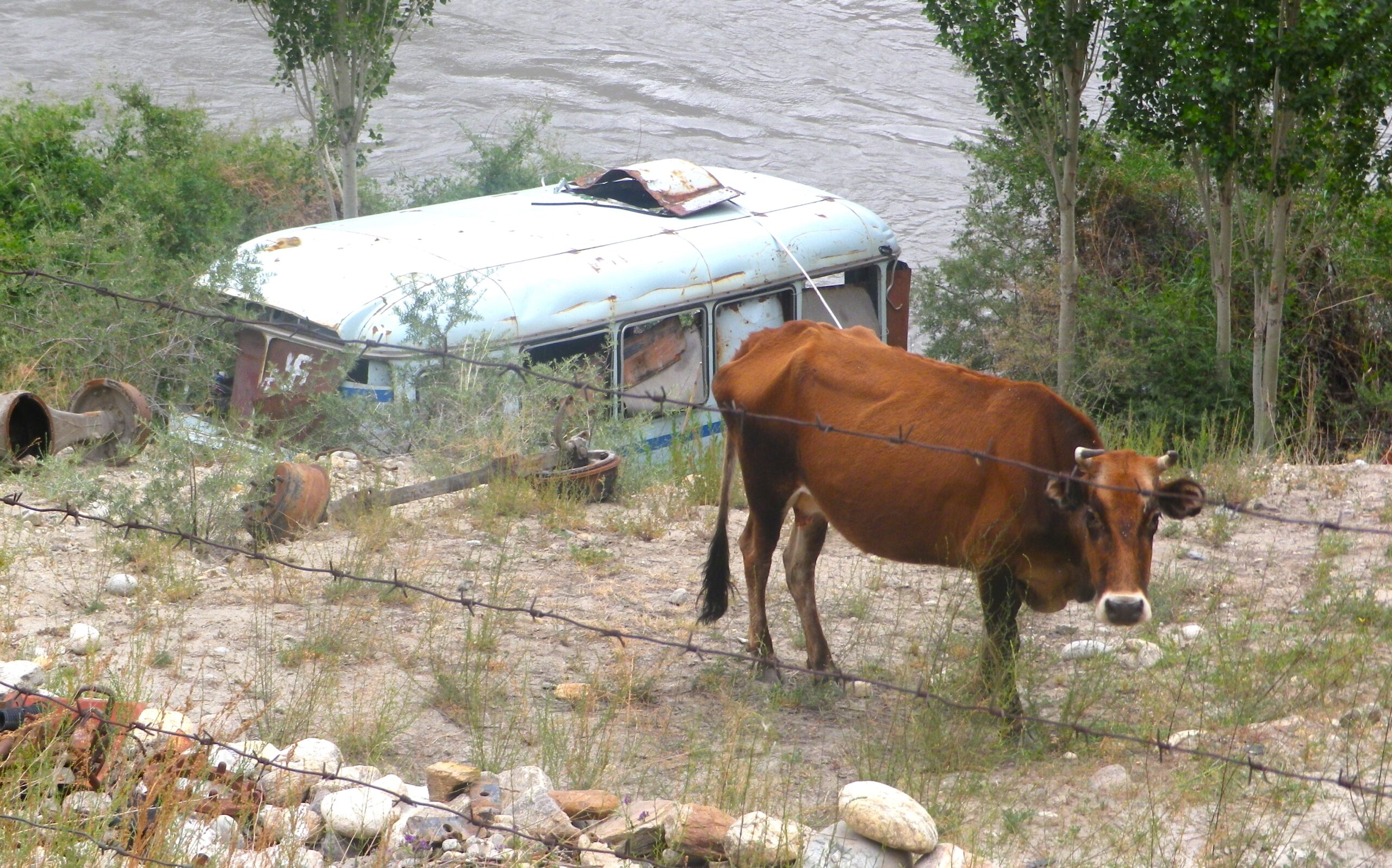
A burnt-out bus in the Pyanj River between Tajikistan and Afghanistan; image: TCA, Stephen M. Bland
New People, New Business
Illegal narcotics, weapons, precious and semi-precious stones, and a variety of contraband goods have been regularly smuggled from Afghanistan through Tajikistan since not long after Tajikistan became independent. It didn’t matter who the government in Afghanistan was. The Shamsiddin Shohin district is one of the more popular places along the Tajik-Afghan border for smugglers.
However, almost all of the recent violence along the Tajik-Afghan frontier is happening in the Shamsiddin Shohin district and Afghan territory on the other side of the river, and smuggling does not seem to be the main reason.
Not long after the Taliban returned to power in August 2021, agreements were signed with Chinese companies to develop Afghan gas and oil fields, and mineral deposits, notably gold. About three years ago, Chinese and Afghans started working at several sites in Afghanistan’s northern Badakhshan Province that borders Tajikistan.
In February 2023, the Tajik-Chinese company Zarafshan announced the discovery of new gold deposits, one of the most promising of which was in the Shamsiddin Shohin district. Zarafshan subsidiary Shohin SM started work shortly after that announcement.
In November 2024, armed men from Afghanistan crossed into Tajikistan and attacked the Shohin SM gold-mining camp, killing one Chinese worker and wounding at least four other workers, three of whom were also Chinese (the fourth was Tajik). The Tajik authorities blamed the attack on drug smugglers who wandered too close to the gold-mining camp and were seen by camp security guards.
In May 2025, the Tajik authorities apprehended a group of Chinese and Afghans who had crossed from Afghanistan on excavators into the Shamsiddin Shohin district. Tajik officials alleged the group intended to launder money, though the head of the district, Zafar Gulzoda, said the group was searching for gold scrap on the Tajik side of the Pyanj River.
Then in August 2025, Tajik border guards stationed in Shamsiddin Shohin exchanged fire with Taliban fighters on the other side of the river. The Tajik border guards did not suffer any casualties, but one Taliban fighter was killed and four others wounded. The head of the local Tajik border guards led a small detachment of troops across the border into Afghanistan for talks with local Taliban officials and the head of the local mining operation.
In late October, there were reports that Tajik border guards and the Taliban were again involved in a firefight in the same area as the shooting in August. A report from an Afghan media outlet said there were casualties on both sides, but Tajik and Taliban officials never commented on the incident.
The reason for the second exchange of fire was reportedly construction work at a Chinese-Afghan gold mining site that had altered the course of the Pyanj River and sent more water to the Tajik bank, sparking concerns about flooding in the Shamsiddin Shohin district. The Tajik authorities have complained about this several times.
Then, on November 26, three Chinese workers at the Shohin SM gold mining camp were killed and two wounded in an attack that combined gunfire and the use of a drone armed with a grenade. On the last day of November, two Chinese roadworkers were shot dead and three wounded in Tajikistan’s Darvaz district, the next district east of Shamsiddin Shohin. The shots came from the Afghan side of the river.
On December 24, Tajik border guards in Shamsiddin Shohin were again involved in a shootout, this time with an armed group that came across the river from Afghanistan. Two Tajik border guards and three of the attackers were killed in the clash. The Tajik authorities said the armed group were terrorists who attacked the Tajik border guard post in the area.
No other place along the Tajik-Afghan border has seen the sort of violence that is becoming routine in the Shamsiddin Shohin district. The alleged “smuggler” attack on the gold mining camp in November 2024, and then a series of attacks and exchanges of fire since late August 2025.
Chinese gold mining, smuggling, and terrorists are combining to make the Shamsiddin Shohin district the hot spot of Tajikistan’s border with Afghanistan.