• KZT/USD = 0.00210
  • TJS/USD = 0.10810
  • UZS/USD = 0.00008
  • TMT/USD = 0.29850
  • KZT/USD = 0.00210
  • TJS/USD = 0.10810
  • UZS/USD = 0.00008
  • TMT/USD = 0.29850
  • KZT/USD = 0.00210
  • TJS/USD = 0.10810
  • UZS/USD = 0.00008
  • TMT/USD = 0.29850
  • KZT/USD = 0.00210
  • TJS/USD = 0.10810
  • UZS/USD = 0.00008
  • TMT/USD = 0.29850
  • KZT/USD = 0.00210
  • TJS/USD = 0.10810
  • UZS/USD = 0.00008
  • TMT/USD = 0.29850
  • KZT/USD = 0.00210
  • TJS/USD = 0.10810
  • UZS/USD = 0.00008
  • TMT/USD = 0.29850
  • KZT/USD = 0.00210
  • TJS/USD = 0.10810
  • UZS/USD = 0.00008
  • TMT/USD = 0.29850
  • KZT/USD = 0.00210
  • TJS/USD = 0.10810
  • UZS/USD = 0.00008
  • TMT/USD = 0.29850

Viewing results 1 - 6 of 84

ADB Gives Grant to Support Women in Tajikistan

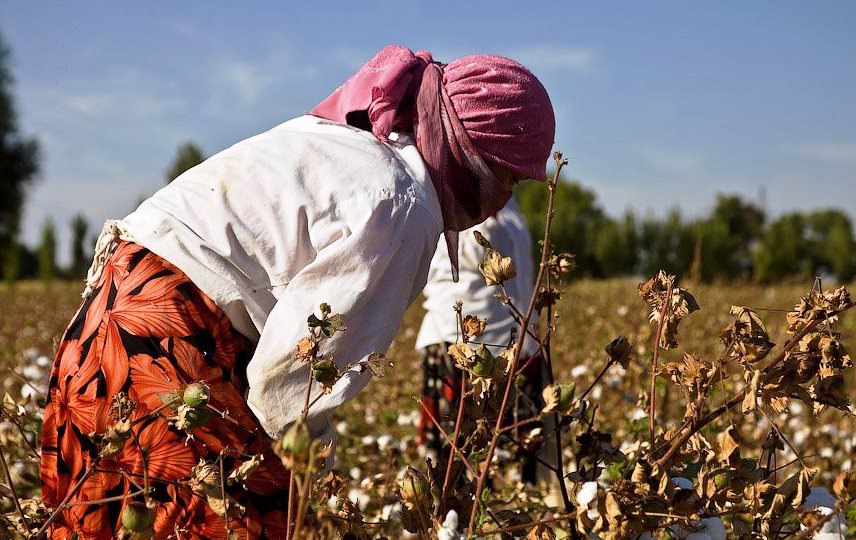
The Asian Development Bank (ADB) has approved $17.5 million in grant assistance to improve women's agricultural skills and food security in Tajikistan. The project, which aims to support women farmers, will cover six districts in Khatlon province (Bokhtar, Farkhor, Kulyab, Panj, Shahritus, and Vose), the country's largest agricultural region. ADB's Director General for Central and West Asia, Eugene Zhukov, said the bank views women as critical agents of change, and the project aims to increase their role in agriculture. The project will provide women access to modern resources, including drying plants, greenhouses, water-saving technologies, and training in financial management and production technologies. Particular emphasis is placed on climate-resilient farming practices to reduce vulnerability to climate change impacts such as drought and heat stress. The project will also establish small-scale crop processing and storage centers to increase the value of crops in the market. In addition, the project will create digital platforms for the training and trading of agricultural products. It is also expected to address social problems faced by women, such as gender-based violence. Under the guidance of the Women and Family Committee, a shelter offering counseling, a referral system, and training and entrepreneurship opportunities will be opened. ADB has supported Tajikistan for 26 years, serving as the country's largest donor. During this time, Tajikistan has received over $2.6 billion from ADB, of which more than $2 billion was provided through grants. Since 2018, the country has received the bank's financial assistance exclusively on a grant basis.
ADB Grants $71 million for Business Reforms and HPP Reconstruction in Tajikistan

As reported by the Avesta Information Agency, Minister of Finance of Tajikistan, Faiziddin Kahkhorzade, and Shani Campbell, the permanent representative of the Asian Development Bank (ADB) in the country, have signed contracts for two grants totaling $71 million. The first grant of $50 million is aimed at improving  Tajikistan's business environment, including digitization, reforms to boost exports, improved infrastructure management, and increased financial transparency. Small and medium-sized enterprises will also be supported in adapting to climate change. The second grant of $21 million will replace the fourth unit at the Head HPP located near the city of Levakant (formerly Sarband) in Tajikistan's Khatlon region, which failed in 2019. As a result of the upgrade, the installed capacity of hydropower is expected to increase from 240 megawatts in 2012 to 274 megawatts by 2026. Since Tajikistan became a member of the ADB in 1998, the bank has provided more than $2.6 billion in assistance to the country, including more than $2 billion in grants. These funds were directed to the development of transport and energy infrastructure, healthcare, education, agriculture, and other important sectors of the economy.

ADB to Provide $400 Million to Uzbekistan for Energy Reform

The Asian Development Bank (ADB) has approved two loans totaling $400 million to support the Government of Uzbekistan’s initiatives to strengthen the country's financial markets and develop a sustainable market-oriented energy sector. General Director of the ADB for Central and West Asia, Yevgeniy Zhukov emphasized that the active participation of the private sector is very important for Uzbekistan's economic growth and transformation. “Reforms supported by these programs will help shape an enabling environment for regulators and firms to play their part in boosting development by building robust domestic financial markets and addressing energy needs while tackling climate change,” Zhukov stated. A $300 million loan for subprogram 2 of the Power Sector Reform Program will provide budget support for policy actions to improve the power sector’s structure, legal and regulatory framework, and governance to encourage private sector investment and promote financial sustainability. A $100 million loan for subprogram 2 of the Financial Markets Development Program will support regulatory and institutional reforms focused on improving market facilitation to streamline financial transactions and services and increase supply and demand measures to grow Uzbekistan’s capital and money markets. The ADB had previously approved a $100 million soft loan to help Uzbekistan improve perinatal health services for pregnant women and newborns. Uzbekistan became a member of the ADB in 1995, and since then, the bank has provided the country with loans, grants, and technical assistance totaling $12.5 billion.

ADB: Central Asia’s Economic Growth and Decreasing Inflation in 2024

The Asian Development Bank has published its latest report, “Asian Development Outlook (ADO) July 2024: Steady Growth, Slowing Inflation,” in which it has increased its forecast for economic growth in Central Asia from 4.3% to 4.5% in 2024. In the first quarter (Q1) of 2024, the Kyrgyz Republic is expected to have grown at a rate of 8.8% thanks to robust service and construction industry output supported by both foreign and domestic investment. Other regional economies have also experienced solid economic activity. As a result of a notable increase in exports, which included gold sales, Tajikistan maintained its robust economic trajectory in Q1 2024, with an 8.2% growth rate. Net gas exports and government investment, meanwhile, are Turkmenistan’s primary sources of growth. The first quarter of 2024 also saw 6.2% growth in Uzbekistan, due to a spike in fixed capital investment. The growth prospects of Kazakhstan, however, the largest economy in the region, remain unchanged. With the main growth drivers being construction, manufacturing, and services, GDP expanded by 3.7% in Q1 2024. This year, manufacturing and construction will continue to be the primary forces behind economic expansion. Strong building growth will be supported by government assistance to victims and restoration of damaged infrastructure following the worst floods in thirty years. Mining is also anticipated to contribute significantly to Kazakhstan’s medium-term growth following the Tengiz oil field expansion project's completion in Q2 2025. The ADB has also lowered inflation forecasts for 2024 and 2025. In May 2024, the Kyrgyz Republic experienced a decrease in inflation from 11.3% to 4.6%, primarily due to fluctuations in the prices of essential commodities. Other regional economies are also experiencing a reduction in inflationary pressures. A steady exchange rate and relatively restrictive monetary policy decreased Kazakhstan's inflation rate to 9.0% from 18.5% from 2023 to January–May 2024. Inflation in Tajikistan for the first four months of 2024 was 3.8%. Inflation in Uzbekistan has also dropped from 11.4% in the previous year to 9.2% in the first five months of 2024.

ADB to Advise Kazakhstan’s Energy Ministry on Hydropower Development

The Asian Development Bank (ADB) has signed a transaction advisory services agreement with the Kazakh government for its Hydropower Development Program, which aims to attract the private sector to design, finance, construct, operate, and maintain the country’s hydropower projects. According to the agreement, ADB will work with Kazakhstan's Energy Ministry to conduct pre-feasibility studies, prepare auction documents and a template power purchasing agreement, and attract competitive offers to crowd investors. ADB will help the ministry prepare and auction hydropower projects with private sector participation in the southeast, with a potential cumulative capacity of around 600 megawatts across the Alakol, Balkhash, and Irtysh/Zaysan basins. The agreement was signed on July 26 in London by Kazakhstan’s minister for energy, Almasadam Satkaliyev, and ADB’s head of public–private partnerships, Cleo Kawawaki. Emphasizing that supporting Kazakhstan in developing renewable energy sources is a priority for ADB, Ms. Kawawaki commented: “ADB’s focus is to assist the country’s efforts to address the impacts of climate change, promote decarbonization, and facilitate sustainable economic growth. This will help Kazakhstan achieve its goal of increasing its renewable energy capacity, reduce carbon emissions, and enhance the country’s energy security.” Satkaliyev also proposed collaborating with ADB to attract technological support, investments, and grants to reduce methane emissions in all sectors of Kazakhstan’s economy, including the oil and gas industry.

ADB to Support Climate-Friendly Business Environment in Tajikistan

The Asian Development Bank (ADB) says it has approved a $50 million policy-based grant for a program that will help the government of Tajikistan foster a climate-responsive business environment and support small and medium-sized enterprises (SMEs) in the country. The program aims to transform Tajikistan's business environment through digitization, reforms to increase exports, improvement of infrastructure governance, fiscal transparency, and support for climate-friendly SMEs. Underscoring ADB's commitment to supporting Tajikistan in its transition to a green economy, ADB Director General for Central and West Asia Yevgeniy Zhukov commented, “By promoting climate-responsive investments and improving the overall business environment, we aim to stimulate economic growth, create green jobs, and enhance the country's resilience to climate change." The program will support reforms subsidizing climate-friendly SMEs, and prioritizing funding for female entrepreneurs. It advances digitization and e-commerce through the Agency for Innovation and Digitization and the approval of the E-Commerce program. The program will also support enhanced public investment management through assessments to recommend improvements and prioritize climate-focused projects. Fiscal transparency will improve the Ministry of Finance’s capacity to publish government finance statistics. The program will also promote international trade and investment by streamlining trade documentation processes and updating regulatory frameworks for issuing local and green bonds.