• KGS/USD = 0.01144 0%
  • KZT/USD = 0.00205 0%
  • TJS/USD = 0.10722 0%
  • UZS/USD = 0.00008 0%
  • TMT/USD = 0.28490 0%
  • KGS/USD = 0.01144 0%
  • KZT/USD = 0.00205 0%
  • TJS/USD = 0.10722 0%
  • UZS/USD = 0.00008 0%
  • TMT/USD = 0.28490 0%
  • KGS/USD = 0.01144 0%
  • KZT/USD = 0.00205 0%
  • TJS/USD = 0.10722 0%
  • UZS/USD = 0.00008 0%
  • TMT/USD = 0.28490 0%
  • KGS/USD = 0.01144 0%
  • KZT/USD = 0.00205 0%
  • TJS/USD = 0.10722 0%
  • UZS/USD = 0.00008 0%
  • TMT/USD = 0.28490 0%
  • KGS/USD = 0.01144 0%
  • KZT/USD = 0.00205 0%
  • TJS/USD = 0.10722 0%
  • UZS/USD = 0.00008 0%
  • TMT/USD = 0.28490 0%
  • KGS/USD = 0.01144 0%
  • KZT/USD = 0.00205 0%
  • TJS/USD = 0.10722 0%
  • UZS/USD = 0.00008 0%
  • TMT/USD = 0.28490 0%
  • KGS/USD = 0.01144 0%
  • KZT/USD = 0.00205 0%
  • TJS/USD = 0.10722 0%
  • UZS/USD = 0.00008 0%
  • TMT/USD = 0.28490 0%
  • KGS/USD = 0.01144 0%
  • KZT/USD = 0.00205 0%
  • TJS/USD = 0.10722 0%
  • UZS/USD = 0.00008 0%
  • TMT/USD = 0.28490 0%

Viewing results 1 - 6 of 35

Kazakhstan Boosts Air Transport Sector with New Fleet and Airport Revamps

Kazakhstan is set to double its civil aircraft fleet over the next five years, increasing the number of aircraft from 103 to 216 by 2030. According to the Ministry of Transport, in 2025 the country's fleet will add six new Airbus A320s and one Boeing 737 MAX 8. In January 2025, FlyArystan and Air Astana received new aircraft as part of this expansion. The government’s long-term plan aims to boost the number of aircraft operated by Kazakh airlines to 216 by the end of the decade. “This year, 36 new international routes have been launched, and eight foreign airlines have entered the market. There are currently 61 domestic routes with 850 flights per week,” said Deputy Minister of Transport Maksat Kaliakparov. As part of domestic connectivity efforts, 21 subsidized routes are now operating across nine regions, with approximately $12 million allocated for these services in 2025. The government’s priority is to improve air access to tourist destinations such as Usharal, Urdar, Kokshetau, and Turkestan. Airport Infrastructure Development Major investments are also being channeled into the country’s largest airports in Astana, Almaty, Shymkent, and Aktobe, all of which are being developed into multimodal transport hubs. In Astana, a $1.1 billion modernization project for Nursultan Nazarbayev International Airport began in 2025. Plans include the construction of a second runway, a third passenger and cargo terminal, and a multifunctional complex known as the Aerotropolis. The new facility will feature an industrial and logistics zone, business centers, hotels, and retail space. In Almaty, the airport is undergoing modernization in line with a General Development Plan extending to 2050. The initial phase includes reconstructing the domestic terminal, building a taxiway, upgrading the runway and fueling infrastructure, and establishing a cargo apron and maintenance hangar. Future phases envision a hotel and a multi-level parking facility. During the construction phase, more than 1,800 jobs are expected to be created, with an additional 550 jobs during operations. Shymkent opened a new 40,000 square-meter terminal in December 2024, boosting its annual passenger capacity from 800,000 to 6 million. Plans are underway to construct a new 3,500-meter runway and develop a multimodal hub connecting the airport with the Ontustik Special Economic Zone. In Aktobe, a multifunctional logistics center is being implemented at the airport. As part of this effort, the fuel filling complex is being upgraded, and storage capacity will more than double, facilitating an increase in flight operations. Authorities are also considering the construction of a second runway, which would allow the existing runway to undergo major repairs without disrupting service. “In addition, the government has decided to expand the boundaries of special economic zones at the country's largest airports. This will attract investors, develop industry and logistics, and turn Kazakhstan's air hubs into growth points for the national economy,” the government said in a statement. Foreign Investment and Regional Expansion As previously reported by The Times of Central Asia, the German company Skyhansa intends to construct a new cargo and passenger airport in Kazakhstan’s Zhetysu region. The project...


Kazakhstan Grounds Light Aircraft Following Two Fatal Crashes

Kazakhstan’s Civil Aviation Committee, working alongside the Aviation Administration, has temporarily suspended flights of TL-2000 and Aerostar R40F light aircraft following two fatal crashes near Astana in recent months. The suspensions are intended to allow for thorough investigations of both incidents. On June 22, 2025, a privately owned TL-2000 light aircraft crashed during a training flight near Zholaman Airfield, resulting in the deaths of both people on board. The accident occurred at approximately 11:30 a.m. A special investigation commission was established by the Ministry of Transport to determine the cause. On August 17, 2025, an Aerostar R40F (registration UP-LA229) crashed during a general aviation flight about 55 kilometers from Astana in the Akmola region. The crash resulted in the death of both the pilot and passenger. A commission was dispatched by the Ministry of Transport’s accident investigation department to the crash site, including representatives from the Transport Police and regional authorities. Transport Minister Nurlan Sauranbayev confirmed that each incident is being investigated independently, and that both aircraft models will remain grounded until the investigations conclude. The Civil Aviation Committee, in collaboration with the Aviation Administration, has suspended flights of both TL-2000 and Aerostar R40F aircraft models pending investigation results. The investigation into the June TL-2000 crash is ongoing, with final conclusions expected before the end of 2025.

Questions Mount After Azeri Plane Crash with Focus on Russian Air Defenses

On December 25, an Azerbaijani Embraer 190 aircraft operating a Baku-Grozny flight made a hard emergency landing near the city of Aktau, Kazakhstan. The aircraft, carrying five crew members and 62 passengers, suffered devastating consequences. Both pilots were killed, along with 36 passengers. Additionally, 29 people, including three children, were hospitalized. The aircraft disintegrated on impact, and a fire engulfed its midsection. Initial reports suggested a bird strike, but alternative theories have since emerged. Kazakhstan’s Ministry of Emergency Situations detailed the timeline: at 11:02 Astana time, the crew issued a distress signal while flying over the Caspian Sea. By 11:37, the plane made a hard landing in the steppe near Aktau. Before official rescue teams arrived, employees of a local energy company working nearby provided critical first aid and captured the first videos of the crash. They managed to pull 15 passengers from the wreckage of the tail section. Specialized rescue teams and medics, stationed at Aktau airport in anticipation of the emergency landing, arrived promptly thereafter. According to Nurdaulet Kilybay, Akim of Mangystau Region, "22 ambulance teams and six units from the Center for Disaster Medicine worked at the crash site." The regional multidisciplinary hospital had prepared “30 surgical and trauma beds, along with 10 intensive care beds” for victims. Speculations and Investigations Journalists questioned Bozumbayev during the briefing about theories which are currently circulating, including those suggesting air defense involvement. The official avoided drawing conclusions, stating: "It is impossible to establish even a preliminary cause because there are specialists for this. They will carry out work. Then it will be clear. I can't speak now. I watched what people are posting... While [the plane] fell to the ground, and turned over, a lot of things could have happened. So, I am far from reaching conclusions." Speculation on Russian Telegram channels has posited that perforations in the aircraft’s tail section resemble shelling damage. One theory links the crash to Ukrainian drone (UAV) raids over Grozny, suggesting that air defense systems mistakenly targeted the plane. The Telegram channel VChK-OGPU claimed that "Initially, the aircraft appears to have fallen victim to UAV jammers that were operating at the time because of a drone attack. As soon as the airliner started to descend for landing, its GPS stopped working and the dispatcher lost 'radar contact.' The pilot could not land the plane in such conditions and decided to fly to Baku. When he began to turn around to do so, there was an explosion nearby — all indications are that the plane was hit by air defense equipment." The report further alleges that the strike occurred over Chechnya’s Naursky District, home to military units equipped with air defense systems. Kazakh officials stressed the need for patience, as forensic and aviation experts work to analyze the wreckage and flight data, with Bozumbayev emphasizing that “An interdepartmental investigative and operational group has been set up. Both forensic experts and experts from our Aviation Administration, who investigate such air incidents, came with me. As part...

U.S. Refurbishment of Pilatus PC-12 Aircraft for Uzbekistan

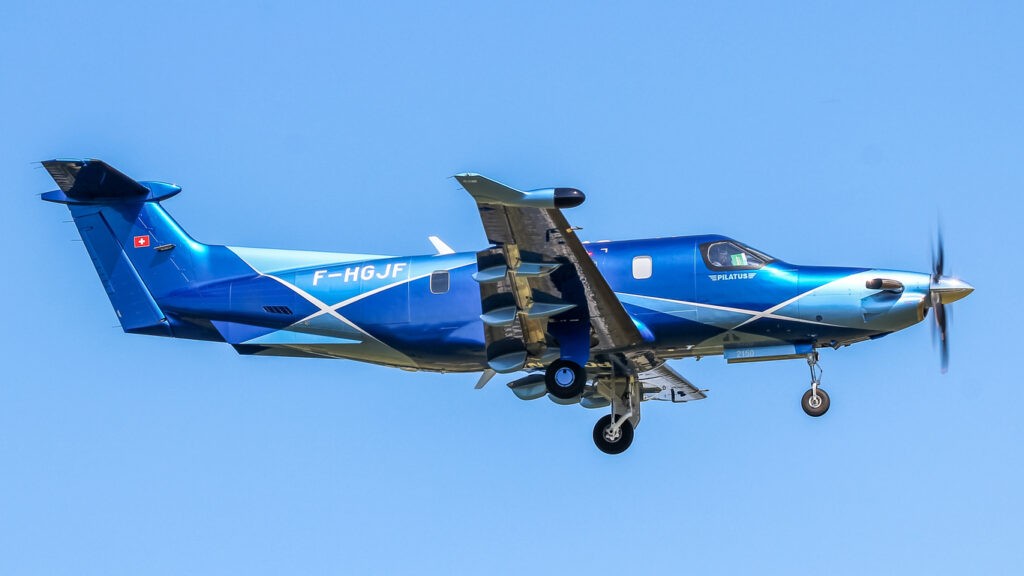
US company Sierra Nevada Corporation (SNC) has been awarded a $64.2 million contract to refurbish six Pilatus PC-12 aircraft for Uzbekistan. The work will be performed in Uzbekistan and completed by August 2027. According to the U.S. Defense Department's website, the contract which was awarded under the U.S. Department of Defense's Foreign Military Sales (FMS) program, includes not only the restoration of the aircraft but also logistical support and on-site maintenance. The Pilatus PC-12 is a single-engine turboprop aircraft widely used for various missions, including surveillance and transportation. Since the aircrafts' proven reliability lends itself to civilian and military applications, their rehabilitation will have a significant impact on the expansion of Uzbekistan's aviation capabilities, including long-range monitoring and transportation missions. It is worth noting that the Pilatus PC-12 aircraft is often used in difficult conditions due to its ability to take off and land on short runways, making it indispensable for operations in Uzbekistan's remote and hard-to-reach regions.

German Company to Manufacture Ultralight Aircraft in Kazakhstan

Germany’s Flight Design GmbH, a leading manufacturer of ultralight aircraft with over 25 years of experience, is set to produce ultralight CT series aircraft in Kazakhstan. The project was announced at the Flight Design and Kazakh Invest press conference at the 30th AERO Friedrichshafen General Aviation Exhibition in Friedrichshafen, Germany, on 19 April. According to Flight Design CEO Daniel Guenther, the aircraft will be produced with support from the Virage group of companies under a newly created joint venture, Flight Design Kazakhstan. Aircraft assembled in the free economic zone (FEZ) in Almaty, Kazakhstan, will be sold to both local and foreign markets.