• KGS/USD = 0.01144 0%
  • KZT/USD = 0.00210 0%
  • TJS/USD = 0.10559 0%
  • UZS/USD = 0.00008 0%
  • TMT/USD = 0.28530 0%
  • KGS/USD = 0.01144 0%
  • KZT/USD = 0.00210 0%
  • TJS/USD = 0.10559 0%
  • UZS/USD = 0.00008 0%
  • TMT/USD = 0.28530 0%
  • KGS/USD = 0.01144 0%
  • KZT/USD = 0.00210 0%
  • TJS/USD = 0.10559 0%
  • UZS/USD = 0.00008 0%
  • TMT/USD = 0.28530 0%
  • KGS/USD = 0.01144 0%
  • KZT/USD = 0.00210 0%
  • TJS/USD = 0.10559 0%
  • UZS/USD = 0.00008 0%
  • TMT/USD = 0.28530 0%
  • KGS/USD = 0.01144 0%
  • KZT/USD = 0.00210 0%
  • TJS/USD = 0.10559 0%
  • UZS/USD = 0.00008 0%
  • TMT/USD = 0.28530 0%
  • KGS/USD = 0.01144 0%
  • KZT/USD = 0.00210 0%
  • TJS/USD = 0.10559 0%
  • UZS/USD = 0.00008 0%
  • TMT/USD = 0.28530 0%
  • KGS/USD = 0.01144 0%
  • KZT/USD = 0.00210 0%
  • TJS/USD = 0.10559 0%
  • UZS/USD = 0.00008 0%
  • TMT/USD = 0.28530 0%
  • KGS/USD = 0.01144 0%
  • KZT/USD = 0.00210 0%
  • TJS/USD = 0.10559 0%
  • UZS/USD = 0.00008 0%
  • TMT/USD = 0.28530 0%

Viewing results 1 - 6 of 35

Kazakhstan’s SCAT Airlines Adds Two Boeing 737 MAX 8 Aircraft

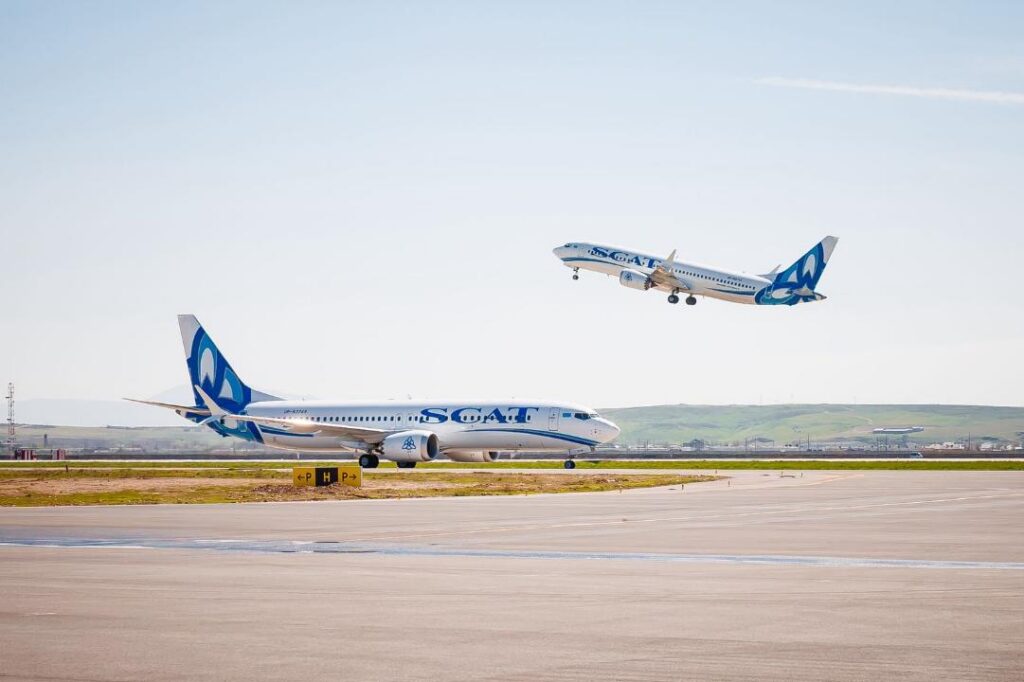
Kazakhstan-based SCAT Airlines has taken delivery of two new Boeing 737 MAX 8 aircraft. The planes were delivered directly from Boeing’s facility in Seattle, marking the first time the carrier has added two aircraft of this type to its fleet simultaneously. The fleet expansion is linked to the growth of the airline’s route network and the strengthening of existing flight programs. In 2026, SCAT launched new routes from Shymkent to Karaganda, Kostanay, Bishkek, Novosibirsk, St. Petersburg, and Tyumen, as well as a direct service from Astana to Ulaanbaatar. The new aircraft will support the development of a hub at Shymkent Airport, which is emerging as a key node in the airline’s network. “It is important for SCAT that the new aircraft will be used to develop the hub in Shymkent and expand the route network,” said company president Vladimir Denisov. The airline’s fleet currently consists of approximately 40 aircraft. In September 2025, the carrier received another Boeing 737 MAX 8, bringing the total number of aircraft of this type in its fleet to eleven. SCAT Airlines was founded in 1997. The company’s structure includes Aulie-Ata International Airport in Taraz, a 70% stake in Yuzhnoye Nebo Airlines, and a 40% stake in the Egyptian carrier Red Sea Airlines. The Times of Central Asia previously reported that SCAT Airlines, in partnership with Boeing, had begun construction of a new maintenance center in Shymkent. The facility will specialize in servicing Boeing aircraft, including the Boeing 737 (Classic, NG, and MAX), Boeing 757 and Boeing 767, as well as the wide-body Boeing 777. During a working visit to the United States, President Kassym-Jomart Tokayev met with Boeing executives. He noted that airlines including Air Astana, SCAT, and Vietjet Qazaqstan are interested in expanding joint projects that are important for the development of Kazakhstan’s aviation industry.
Kazakhstan Expands Aviation Hub with Focus on U.S. and Long-Haul Flights

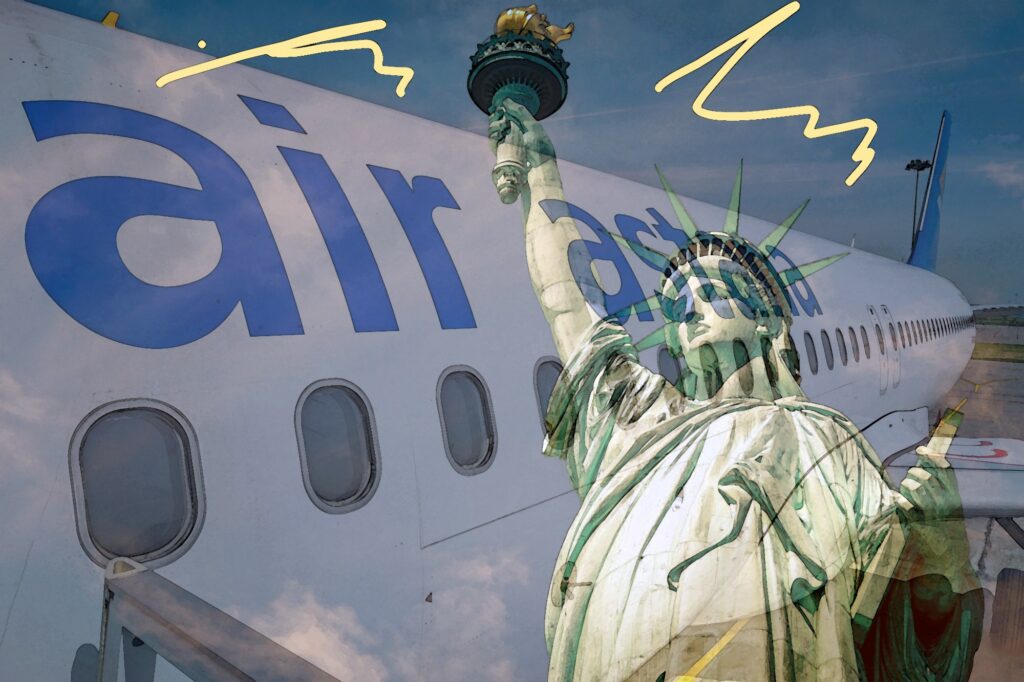
Kazakhstan is preparing for an audit by the U.S. Federal Aviation Administration (FAA) that would allow the country to launch direct flights to the United States. To achieve this, the government must demonstrate the reliability of its aviation regulatory system, the presence of an independent and effective oversight body, and transparent airline certification procedures. The country is also planning to acquire modern long-haul aircraft and has begun construction of its first maintenance center to service them. The Times of Central Asia spoke with representatives of Kazakhstan’s aviation industry about the progress of these efforts, when direct flights to North America may begin, and what challenges remain. As part of efforts to expand international routes and strengthen Kazakhstan’s position as an aviation hub between Europe and Asia, Bauyrzhan Umiraliyev, head of the Aviation Safety Department at the Civil Aviation Committee, said the national carrier Air Astana plans to purchase 15 Boeing 787 Dreamliner aircraft, with deliveries scheduled between 2026 and 2035. “This is a strategically important decision that can significantly boost civil aviation, the economy, and the country’s international standing,” an aviation authority representative told The Times of Central Asia. “Long-haul aircraft will allow airlines to launch direct flights to destinations in North America, Europe, Asia, and Australia that were previously inaccessible or required layovers.” The aircraft will also enhance Kazakhstan’s attractiveness as a transit hub and tourist destination, while enabling airlines to compete internationally through improved efficiency, pricing, and service quality. The purchase of these aircraft, previously delayed twice since 2025 due to production backlogs at Boeing, is expected to open new opportunities for Kazakhstan’s aviation sector, particularly following the anticipated attainment of Category 1 (CAT-1) safety status, confirming compliance with international aviation standards. CAT-1: The Path to the U.S. In 2024, Kazakhstan’s aviation authorities and the FAA signed an agreement to conduct a technical assessment under the International Aviation Safety Assessment (IASA) program. According to Aslan Satzhanov, Acting Executive Director of the Aviation Administration of Kazakhstan, the assessment identified areas requiring improvement in flight safety oversight. “We are currently working on amendments to regulatory acts to implement modern safety procedures and standardize processes, with technical support from FAA experts,” Satzhanov said. In parallel, experts from the U.S. Transportation Security Administration have conducted preliminary assessments of airport security under the Export Control and Border Security Program. The first visit, in October 2021, resulted in a generally positive evaluation of Kazakhstan’s aviation security framework. A follow-up visit in August 2022 focused on screening procedures for passengers, baggage, and cargo at Astana Airport. “The capital’s airport received a positive assessment, and the coordinated work of aviation security personnel was noted,” Satzhanov said. According to preliminary information, the full IASA audit may take place after long-haul aircraft enter service and relevant infrastructure is fully prepared; though, it should be noted that Kazakhstan does not control the timing of the IASA audit. Industry Awaits New Aircraft Preparations for launching new international routes, including previously announced flights to New York and Tokyo, are already underway....

Kyrgyzstan Signs Deal to Acquire Two Airbus A321 Aircraft

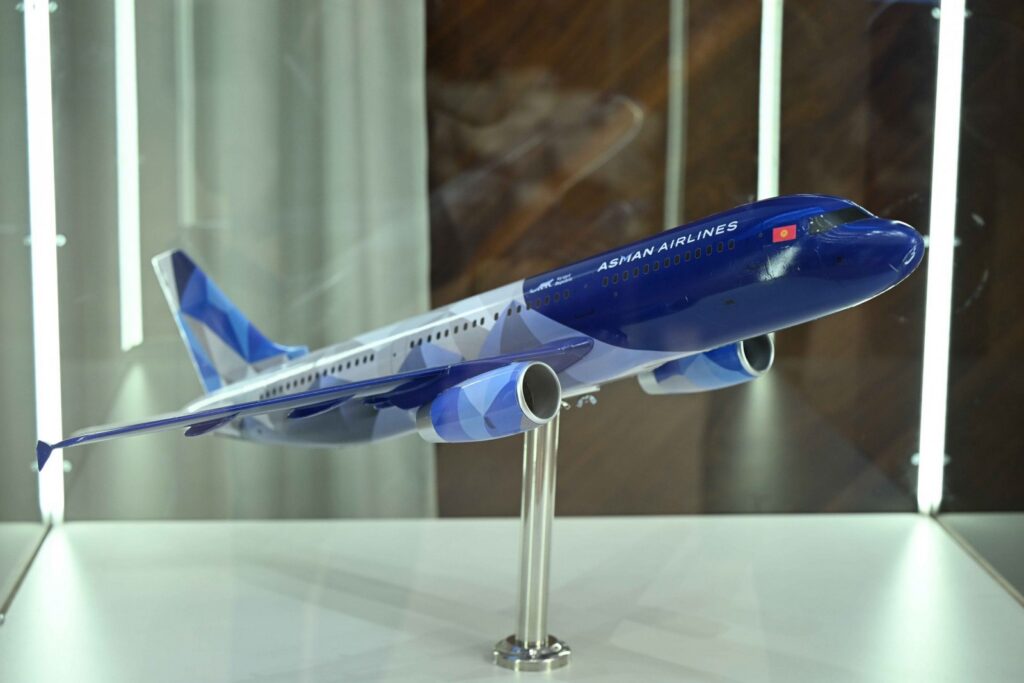
Kyrgyzstan has signed an agreement to acquire two Airbus A321ceo aircraft as part of efforts to expand the country’s civil aviation sector and launch new international routes. The signing ceremony took place on March 5 in Bishkek, where the agreement was signed by Manasbek Samidinov, chairman of the board of Airports of Kyrgyzstan OJSC, and Maurice Prendergast, senior vice president of BBAM Aircraft Leasing & Management. The event was attended by Johan Pelissier, president of Airbus Europe, and Kyrgyz Prime Minister Adylbek Kasymaliev. According to the agreement, the aircraft will be delivered to Kyrgyzstan by the end of 2026. They are intended for the state-owned carrier Asman Airlines, a subsidiary of Airports of Kyrgyzstan. The new aircraft are expected to support the launch of international flights and improve operational capacity. Asman Airlines currently operates three Dash 8 Q400 aircraft, Canadian-made short-haul turboprop planes capable of carrying up to 80 passengers over distances of up to 2,000 kilometers. These aircraft serve domestic routes across Kyrgyzstan after the airline recently restored air connections between Bishkek and several remote regional centers. Speaking at the ceremony, Kasymaliev said that the acquisition of modern and efficient aircraft would help raise Kyrgyzstan’s civil aviation sector to a new level of development. He added that between 2021 and 2025 the number of passengers served at Kyrgyzstan’s airports on domestic and international routes increased by 52%, while the number of flights rose by 53%. Kasymaliev also noted that audits conducted by the International Civil Aviation Organization (ICAO) in 2023-2024 confirmed that Kyrgyzstan’s aviation system complies with international standards. According to the latest audit, the aviation security compliance rate reached 85.76%, a significant improvement compared with previous results. “These achievements create the necessary conditions for Kyrgyzstan to be removed from the European Union’s aviation safety blacklist,” the prime minister said, adding that the final audit by the European Commission is expected in the coming days. Later the same day, President Sadyr Japarov met with Johan Pelissier and Maurice Prendergast to discuss the development of Kyrgyzstan’s aviation sector. During the meeting, Japarov highlighted the rapid modernization of airport infrastructure and the expansion of domestic air routes. While previously only four airports in the country were fully operational, all 11 airports in Kyrgyzstan are now functioning. Construction of a new international airport in Jalal-Abad is also underway. The president also confirmed that Kyrgyzstan is in the final stage of the process to be removed from the European Union’s aviation safety blacklist, with the final inspection expected later this month.

Largest Aircraft Maintenance Center in Central Asia Under Construction in Kazakhstan

Kazakhstan’s SCAT Airlines, in partnership with Boeing, has begun construction of a new maintenance, repair, and overhaul (MRO) center in Shymkent. The facility is expected to become the largest aircraft maintenance complex in Kazakhstan and across Central Asia. The capsule-laying ceremony, held on February 27, was attended by Shymkent Mayor Gabit Syzdykbekov, Deputy Transport Minister Talgat Lastayev, and Boeing Vice President of Sales and Marketing for Eurasia, India, and South Asia Paul Righi. According to the Ministry of Transport, the center will specialize in servicing Boeing aircraft, including the Boeing 737 (Classic, NG, and MAX), Boeing 757 and 767 models, as well as the Boeing 777 widebody aircraft. The facility will occupy 10 hectares, with engineering and technical infrastructure covering 45,000 square meters. The aircraft parking area alone will span more than six hectares. The project is intended to establish a modern, internationally certified repair and maintenance base capable of servicing not only domestic carriers but also foreign airlines, thereby expanding Kazakhstan’s technical expertise and aviation services export potential. Kazakhstan’s civil aviation sector continues to demonstrate steady growth. According to the Ministry of Transport, in 2025 the country’s airports handled 31.8 million passengers, compared to 29.7 million in 2024. Cargo traffic reached 173,300 tons, up from 170,900 tons the previous year. Deputy Minister Talgat Lastayev stated that the growth in traffic has been accompanied by systematic efforts to strengthen safety oversight. Kazakhstan’s compliance with international aviation safety standards reached 95.7%, significantly exceeding global and regional averages and placing the country among the world’s top 20 performers in this category. Lastayev also noted that KazMunayGas-Aero LLP, a jet fuel supply subsidiary of the national oil and gas company KazMunayGas, has been granted direct access to airport infrastructure and has begun providing direct “into-plane” refueling services. This has reduced the average cost of jet fuel at Kazakh airports. According to the ministry, direct refueling without intermediaries has lowered jet fuel prices to below $1,000 per ton, compared to $1,200-$1,300 per ton in other countries. The new refueling mechanism was introduced on the instructions of the President of Kazakhstan to support the development of international air hubs by ensuring stable supplies of competitively priced aviation fuel. Officials say it is expected to improve the reliability of fuel supply for airlines and reinforce the country’s role as a key transit hub.

Gurbanguly Berdymuhamedov’s Unannounced Visit to Florida Draws Attention

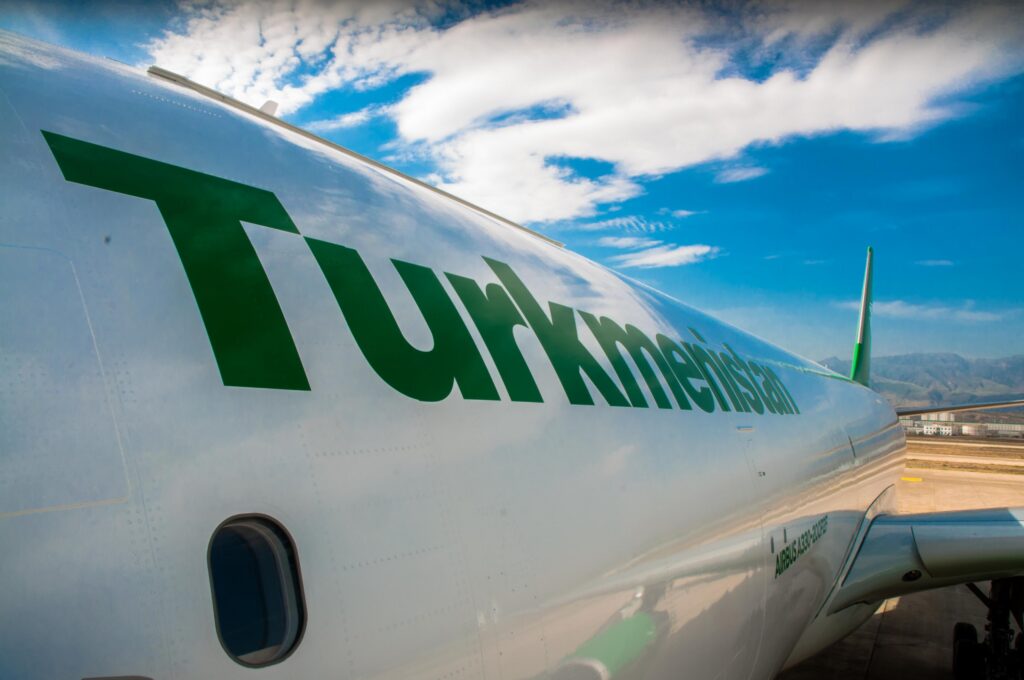
From February 16 to 18, Gurbanguly Berdymuhamedov, Turkmenistan's former president and current Chairman of the Halk Maslahaty, Turkmenistan’s highest representative body, visited the U.S. state of Florida. Turkmen state media did not disclose details of the visit’s program, limiting coverage to a brief report on the trip. Berdymuhamedov arrived at Fort Lauderdale-Hollywood International Airport aboard a government Boeing 777 (tail number EZ-A780). Local journalists and aviation observers reported possible damage to the aircraft’s horizontal stabilizer. The green-and-white liveried airliner remained parked at the airport for several days. Aaron Rosen, president of the World Affairs Council of Miami, noted that the visit coincided with renewed U.S. interest in Central Asia. According to Rosen, the region is strategically significant due to its energy resources, geopolitical location, and security considerations. He also referred to recent statements by Turkmenistan’s Foreign Ministry emphasizing the importance of dialogue with Washington to develop constructive relations. U.S. media reported that Berdymuhamedov’s trip overlapped with President Donald Trump’s weekend stay at his Mar-a-Lago residence, located approximately a 45-minute drive from Fort Lauderdale-Hollywood International Airport. Local 10 News footage showed heightened security measures and a VIP passenger boarding the Boeing 777 prior to departure. The aircraft left Florida several days later. Separately, a government Boeing 737 (tail number EZ-A700) arrived from Ashgabat, refueling in Glasgow before continuing to Florida. After a brief stop in Florida, the Boeing 737 returned to Turkmenistan, making an additional refueling stop in Munich. Turkmen authorities have not officially disclosed the purpose of Berdymuhamedov’s visit.  Turkmenistan’s current president is Serdar Berdymuhamedov, Gurbanguly Berdymuhamedov’s son.

Uzbekistan Discusses Local Production of Hungarian Magnus Aircraft

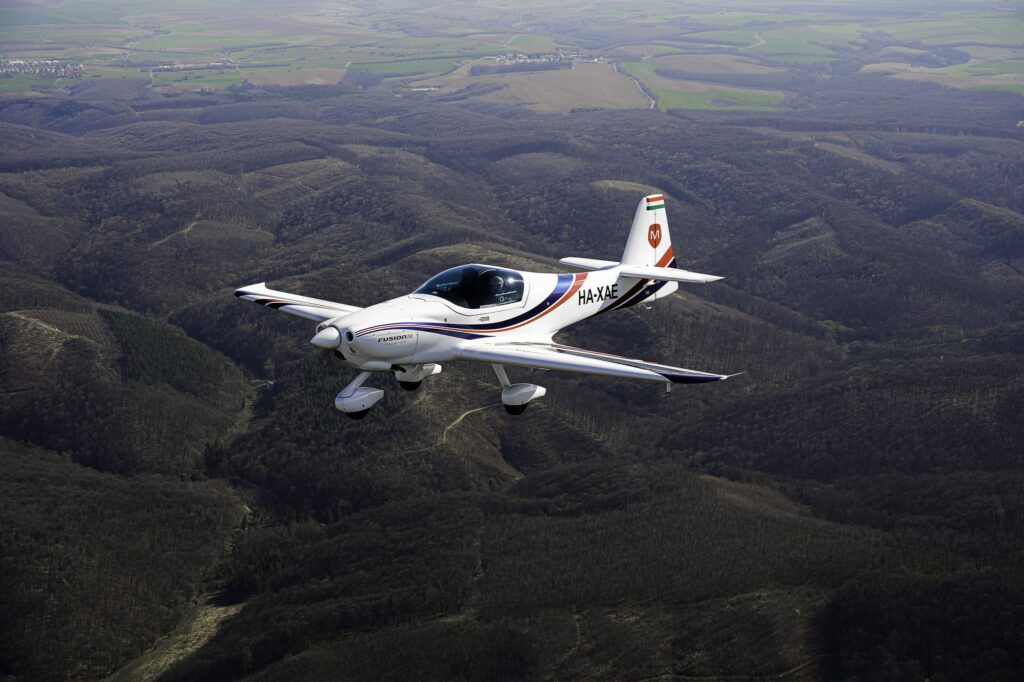
Uzbekistan is continuing efforts to expand its aviation sector, as Deputy Minister of Transport Jasurbek Choriyev held talks with Laszlo Borosh, Chief Executive Officer of the Hungarian company Magnus Aircraft Zrt., on the potential production of the Magnus Fusion 212 aircraft in the country. According to the Ministry of Transport, the meeting focused on prospects for assembling and manufacturing the lightweight composite aircraft in Uzbekistan. The Magnus Fusion 212 is produced by the Hungary-based firm, which specializes in the design, production, and sale of innovative aircraft made from composite materials. Magnus Aircraft is headquartered in Pogány, Hungary, near Pécs-Pogány International Airport, where it operates a facility covering approximately 8,000 square meters. The company is active in several international markets, including the United States, China, Kenya, Nigeria, Serbia, and countries in the Middle East. Earlier this month, Brazilian aerospace manufacturer Embraer Defense & Security announced at the Singapore Airshow that Uzbekistan is the previously undisclosed buyer of its C-390 Millennium military transport aircraft. In a statement released on February 3, the company identified Uzbekistan as the first Central Asian country to acquire and operate the aircraft. Embraer stated that the Uzbek Air Force will use the C-390 primarily for transport and humanitarian missions, strengthening national airlift and emergency response capabilities. “We officially welcome the Republic of Uzbekistan to the group of C-390 operators,” said Bosco da Costa Junior, President and CEO of Embraer Defense & Security.