• KGS/USD = 0.01144 0%
  • KZT/USD = 0.00204 0%
  • TJS/USD = 0.10786 0.56%
  • UZS/USD = 0.00008 0%
  • TMT/USD = 0.28490 0%
  • KGS/USD = 0.01144 0%
  • KZT/USD = 0.00204 0%
  • TJS/USD = 0.10786 0.56%
  • UZS/USD = 0.00008 0%
  • TMT/USD = 0.28490 0%
  • KGS/USD = 0.01144 0%
  • KZT/USD = 0.00204 0%
  • TJS/USD = 0.10786 0.56%
  • UZS/USD = 0.00008 0%
  • TMT/USD = 0.28490 0%
  • KGS/USD = 0.01144 0%
  • KZT/USD = 0.00204 0%
  • TJS/USD = 0.10786 0.56%
  • UZS/USD = 0.00008 0%
  • TMT/USD = 0.28490 0%
  • KGS/USD = 0.01144 0%
  • KZT/USD = 0.00204 0%
  • TJS/USD = 0.10786 0.56%
  • UZS/USD = 0.00008 0%
  • TMT/USD = 0.28490 0%
  • KGS/USD = 0.01144 0%
  • KZT/USD = 0.00204 0%
  • TJS/USD = 0.10786 0.56%
  • UZS/USD = 0.00008 0%
  • TMT/USD = 0.28490 0%
  • KGS/USD = 0.01144 0%
  • KZT/USD = 0.00204 0%
  • TJS/USD = 0.10786 0.56%
  • UZS/USD = 0.00008 0%
  • TMT/USD = 0.28490 0%
  • KGS/USD = 0.01144 0%
  • KZT/USD = 0.00204 0%
  • TJS/USD = 0.10786 0.56%
  • UZS/USD = 0.00008 0%
  • TMT/USD = 0.28490 0%

Viewing results 1 - 6 of 4

Amanat Adilet Merger as Kazakhstan Prepares for New Parliament

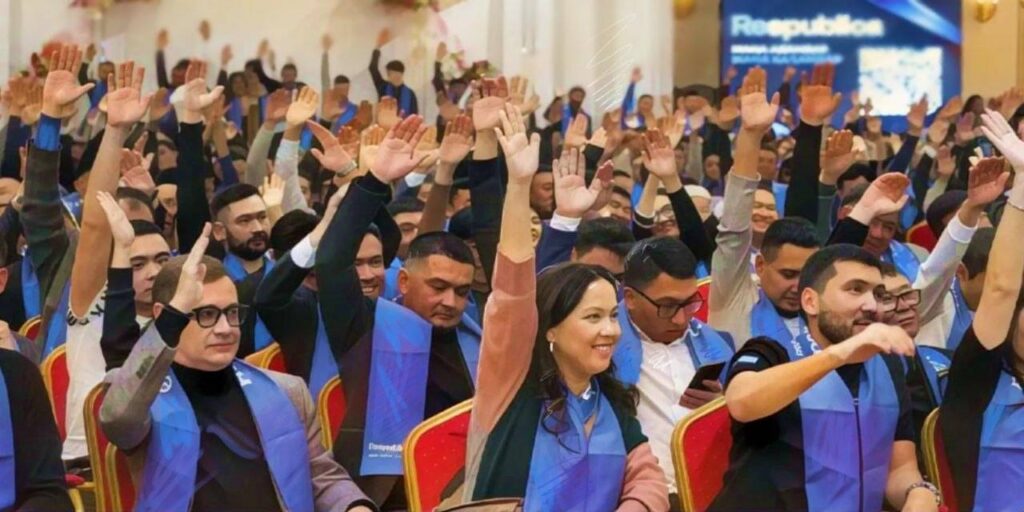
Kazakhstan’s long-dominant Amanat party has voted to merge into the newly formed pro-presidential Adilet party, transferring the machinery of the country’s ruling political force into a new vehicle more closely associated with President Kassym-Jomart Tokayev. The move gives Adilet the campaign infrastructure and nationwide network of officials and activists that it lacked as a newly registered party. For Amanat, it offers a way to move beyond a political brand still closely associated with former President Nursultan Nazarbayev. Amanat held a congress in Astana on June 12 that is likely to be remembered as the final meeting of a political organization whose history spans a quarter of a century. For most of that period, the party was known as Nur Otan, the ruling party built around Nazarbayev and chaired by him for much of its existence. The rebrand followed the chaos of January 2022, officially referred to in Kazakhstan as the January Events, when protests triggered by fuel price rises grew into the most serious political crisis in the country’s post-Soviet history. The violence weakened Nazarbayev’s remaining influence and accelerated Tokayev’s effort to distance the political system from the Nazarbayev era. It also made Nur Otan’s association with the former president a political liability. Tokayev took over Nur Otan from Nazarbayev in January 2022. Two months later, the party was renamed Amanat. Tokayev stepped down from the party leadership in April, after Kazakhstan amended its legislation to prohibit the president from being a member of any political party. Since then, Amanat has been led by Yerlan Koshanov, an experienced official and Tokayev ally. At the congress, Koshanov acknowledged that the 2022 name change had failed to remove the party’s association with the previous political era. “Let us be frank,” he said. “Certain associations and assessments related to the party’s past still remain in public consciousness.” Amanat remains politically useful: it has the organization needed to contest elections. But its connection to Nazarbayev’s era sits uneasily with Tokayev’s attempts to present his presidency as a break with the old system. Koshanov told delegates that the country needed “new points of unity” rather than new divisions, and said Amanat should combine its resources with Adilet as part of a single pro-presidential force. Delegates unanimously approved the decision to join Adilet. New Kid On The Block Adilet, meaning “justice,” is a very new party. As previously reported by The Times of Central Asia, it held its founding congress on May 7 and was officially registered by Kazakhstan’s Ministry of Justice on June 1. Its chairman is Aibek Dadebay, a former head of Tokayev’s presidential administration. The party presents itself as a pro-presidential force built around the language of responsibility and reform. On June 14, Adilet held its second congress. Party leader Aibek Dadebay, addressing participants, proposed voting in favor of Amanat joining Adilet, describing it as a decision based on national responsibility and broader state interests rather than narrow party calculations. Delegates approved the merger, confirming that Adilet is less the creation of an...

Kazakhstan’s Party Landscape Enters a Decisive Week

Kazakhstan’s party system may be approaching one of its most consequential turning points in years. With Amanat scheduled to hold a party congress on June 12 and the newly registered Adilet party planning its own gathering on June 14, speculation is growing that the country’s dominant political organization could be reshaped, merged, or rebranded ahead of elections to the new unicameral Kurultai. The immediate question is whether Amanat, the successor to the party originally created around Kazakhstan’s first president, Nursultan Nazarbayev, will remain the major pro-presidential force or whether its extensive organizational resources will be drawn into Adilet, a new party aligned with President Kassym-Jomart Tokayev’s political agenda and reform program. For now, no merger has been officially announced, but the timing of the two congresses has made the possibility central to Kazakhstan’s political debate. Adilet held its founding congress on May 7, and was officially registered by the Ministry of Justice on June 1. It is led by Aibek Dadebay, the former head of Tokayev’s administration, and presents itself as a pro-presidential force built around the language of justice, responsibility, and reform. Its emergence adds an eighth officially registered party to Kazakhstan’s system, but its political importance lies less in the number of parties than in the possibility that it could become the new vehicle for the president’s loyalist coalition. That makes Adilet’s appearance significant in a regional context. For many years, Kyrgyzstan was often regarded as Central Asia’s most advanced state in terms of party development and political pluralism. Today, however, Kazakhstan has become a more influential reference point for party-building, one that is attracting attention in Tashkent and Dushanbe, while Kyrgyzstan has largely moved away from party-centered politics. Kazakhstan has developed a multi-party model in which several major political organizations are represented in parliament. The system seeks to balance the interests of the state with those of various social groups and constituencies. Individual elements of this model can be adjusted or transformed as political demands evolve. For example, as public nostalgia for communism began to fade, the Communist People’s Party of Kazakhstan quietly dropped the word “Communist” from its public identity. Ironically, when the party was originally established, the word “People’s” had been added to distinguish it from the Communist Party of Kazakhstan, from which many of its founders had emerged. Through such splits, mergers, and rebrandings, Kazakhstan has gradually constructed a party system that encompasses organizations representing a broad spectrum of society, from state officials and business interests to rural communities. In both Uzbekistan and Tajikistan, five political parties are officially registered. Their political spectrum broadly mirrors that of Kazakhstan: a dominant ruling party, a socialist or communist party, and organizations positioning themselves as democratic, people’s, agrarian, or environmental movements. Kyrgyzstan, by contrast, has taken a markedly different path. In 2025, the country completed its transition from a party-centered political system to one in which parties play a secondary role. Elections to the Jogorku Kenesh are now conducted primarily through a majoritarian model that emphasizes individual...

Kazakhstan’s August Elections: Who Will Enter the New Parliament?

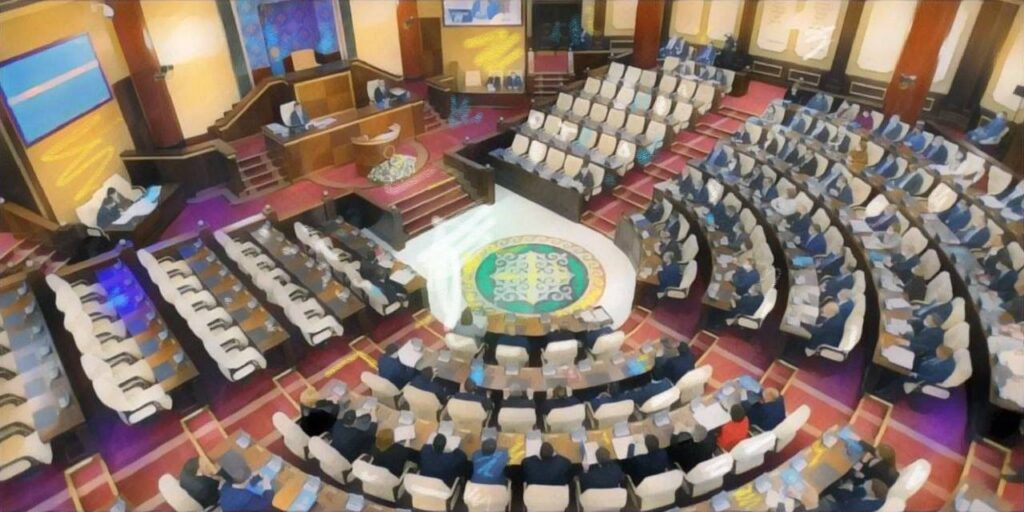
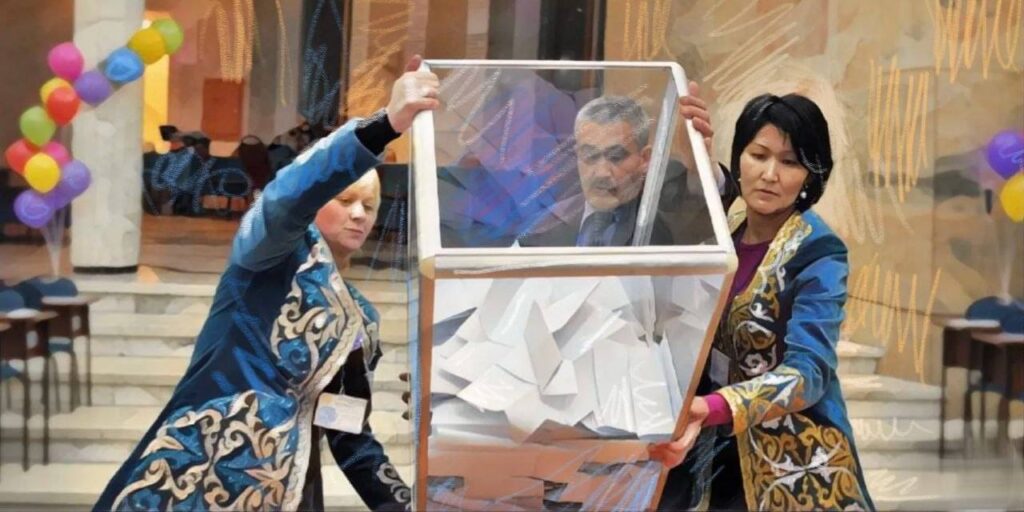
On July 1, Kazakhstan’s new Constitution will come into force, triggering the dissolution of the current bicameral parliament. According to political observers, President Kassym-Jomart Tokayev is expected to sign a decree in early July calling elections to a new unicameral legislature, to be known as the Kurultai. No date has yet been formally announced, but analysts expect the vote to take place in the second half of August, most likely on either August 16 or August 23. On June 1, Kazakhstan officially registered a new political party, Adilet, meaning “Justice,” led by Aybek Dadebay, the former head of Tokayev’s presidential administration. As a result, eight political parties are now officially registered ahead of the election campaign, six of which are currently represented in the lower house of parliament. So far, however, none of the parties has shown significant signs of gearing up for the campaign. “Kazakhstan’s political parties know perfectly well that parliamentary elections will take place in the second half of August, that they will be conducted under a proportional representation system, and that skipping the election is not advisable because it could affect party financing,” political analyst Gaziz Abishev wrote on his Telegram channel. “They could already be actively working to revive their party brands and promote the public figures who will become the faces of the campaign. Yet the passivity is obvious.” In his view, internal party, inter-party, and broader elite-level processes are currently underway, suggesting that some form of political transformation is taking place behind the scenes. The emergence of Adilet appears to have influenced the calculations of Kazakhstan’s political class. The arrival of a second openly pro-presidential party introduces a significant element of uncertainty into a system long dominated by Amanat. Amanat traces its roots to former President Nursultan Nazarbayev’s political machine. Originally known as Otan, or “Fatherland,” it became Nur Otan in 2006 before being rebranded as Amanat following the January 2022 unrest. Former presidential candidate Amirzhan Kosanov believes the creation of Adilet reflects Tokayev’s desire to create political competition within the ruling elite while presenting it internationally as evidence of political pluralism. “Given the executive branch’s influence over election commissions and the largely artificial nature of the party system, the campaign beginning in July will most likely resemble a controlled competition between two principal actors: the ruling Amanat party and the new Adilet party,” Kosanov argued. For critics of the system, the upcoming elections increasingly resemble a contest between two pro-presidential forces. Organizationally, Amanat remains a formidable political machine. It inherited from the Nur Otan era an extensive nationwide network of regional branches and primary organizations embedded in large workplaces and institutions. Adilet, meanwhile, has already secured backing from a wide range of business associations, professional groups, technology organizations, creative-industry bodies, and civic initiatives. Its political council also includes senior executives from some of Kazakhstan’s largest companies, including Qarmet, Kazakhtelecom, and Allur Auto. Despite this, few analysts believe Kazakhstan is moving toward an American-style two-party system. Amanat and Adilet share broadly similar political...

How Kazakhstan Is Preparing for Parliamentary Elections

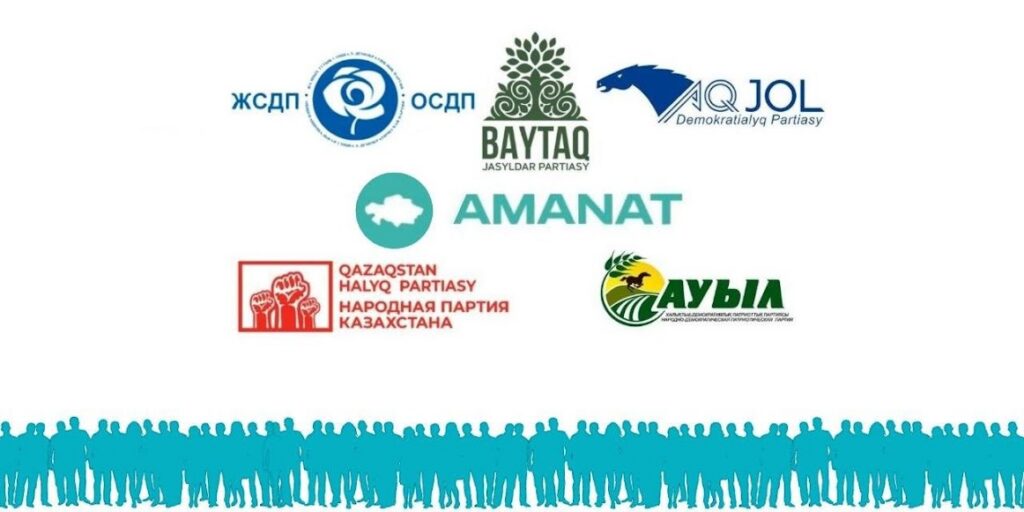
Kazakhstan is preparing for a major political reset centered on the introduction of a unicameral parliament, the Kurultai. Until now, legislative power in the country has been exercised by two chambers, the Mazhilis and the Senate. On April 10, President Kassym-Jomart Tokayev announced that elections would take place in August 2026. According to Tokayev, political parties will have a clear planning horizon and enough time to prepare for the campaign and voter outreach. A Stage Already Passed In 2023, Kazakhstan introduced significant changes to its political system. For the first time in 19 years, a mixed electoral model was used in elections to the lower chamber, the Mazhilis. Under this system, 69 deputies were elected via party lists, while 29 were chosen in single-member constituencies, allowing candidates to run independently of party affiliation. This option has now been removed, although the reasons remain unclear. These reforms were presented as part of a broader democratization effort. In the 2023 parliamentary elections, six parties passed the 5% threshold. Amanat, formerly Nur Otan, won 53.9% of the vote, followed by Auyl with 10.9%, Respublica with 8.59%, Aq Jol with 8.41%, the People’s Party of Kazakhstan with 6.8%, and the Nationwide Social Democratic Party (OSDP) with 5.2%. The Baytaq party received 2.3% and did not enter parliament. In practice, however, Amanat has remained the most active force in the Mazhilis. Some initiatives from Aq Jol, traditionally focused on business interests, have also stood out, while other parties have been less visible to voters. Amanat has advantages not available to other parties, including the presence of many senior officials in its ranks. The Auyl party was expected to represent agrarian and conservative interests, but its initiatives have not been clearly articulated. The OSDP, which has long positioned itself as an opposition party, previously claimed it was excluded from parliament. However, once represented in the Mazhilis, its initiatives have largely focused on narrow issues and have had limited impact on the broader political agenda. The People’s Party of Kazakhstan, once known for raising sharp issues, has been less active in the current parliament. Against this backdrop, Aq Jol has been comparatively stronger, showing a greater ability to shape the agenda and articulate clear positions. Baytaq has occupied an environmental niche, but despite the country’s significant ecological challenges, its voice has remained faint, making its prospects of entering the Kurultai uncertain. Respublica, a new party founded by young entrepreneurs, has also struggled to produce notable results. A potential eighth party, Adilet, may soon join the seven officially registered parties. The party has announced its launch and begun the registration process, though it has yet to name a formal leader. Some political analysts have described Adilet as a pro-government party. Political analyst Daniyar Ashimbayev noted that the concept of multiple pro-government parties is not new in Kazakhstan and suggested that some deputies could shift to Adilet by July. Systemic Criticism Political parties represented in parliament are regularly criticized by analysts for holding positions that closely align with Amanat...