• KGS/USD = 0.01143 0%
  • KZT/USD = 0.00216 0%
  • TJS/USD = 0.10684 -0.28%
  • UZS/USD = 0.00008 0%
  • TMT/USD = 0.28571 0%
  • KGS/USD = 0.01143 0%
  • KZT/USD = 0.00216 0%
  • TJS/USD = 0.10684 -0.28%
  • UZS/USD = 0.00008 0%
  • TMT/USD = 0.28571 0%
  • KGS/USD = 0.01143 0%
  • KZT/USD = 0.00216 0%
  • TJS/USD = 0.10684 -0.28%
  • UZS/USD = 0.00008 0%
  • TMT/USD = 0.28571 0%
  • KGS/USD = 0.01143 0%
  • KZT/USD = 0.00216 0%
  • TJS/USD = 0.10684 -0.28%
  • UZS/USD = 0.00008 0%
  • TMT/USD = 0.28571 0%
  • KGS/USD = 0.01143 0%
  • KZT/USD = 0.00216 0%
  • TJS/USD = 0.10684 -0.28%
  • UZS/USD = 0.00008 0%
  • TMT/USD = 0.28571 0%
  • KGS/USD = 0.01143 0%
  • KZT/USD = 0.00216 0%
  • TJS/USD = 0.10684 -0.28%
  • UZS/USD = 0.00008 0%
  • TMT/USD = 0.28571 0%
  • KGS/USD = 0.01143 0%
  • KZT/USD = 0.00216 0%
  • TJS/USD = 0.10684 -0.28%
  • UZS/USD = 0.00008 0%
  • TMT/USD = 0.28571 0%
  • KGS/USD = 0.01143 0%
  • KZT/USD = 0.00216 0%
  • TJS/USD = 0.10684 -0.28%
  • UZS/USD = 0.00008 0%
  • TMT/USD = 0.28571 0%

Viewing results 1 - 6 of 34

Planting Trees to Heal Old Wounds: Can a Desert Forest Save the Aral’s Last Residents?

In the Aralkum Desert, afforestation campaigns have multiplied since the early 2000s. They are meant to slow the sandstorms, temper a rapidly warming climate, and protect the health of those still living in the shadow of the Aral Sea. But the promised results have not appeared yet. The road from Aralsk to Aiteke Bi cuts through a palette of ochre and dust. Trucks drift forward in pale clouds, dragging the desert behind them like a long train. In these villages scattered along the former shoreline of the Aral Sea, the wind never leaves. It is abrasive, restless, and a witness to a vanished water body that once cooled the hottest corner of Kazakhstan. Respiratory diseases now run through family histories, and doctors say they can recognize lungs shaped by ecological collapse. At the polyclinic in Aiteke Bi, patients describe the same symptoms with weary precision: breath shortening too quickly, coughs that never fully recede, a fatigue that never seems to lift. Nuralay, 52, says the storms “get into the house, into the throat, into everything.” She admits she cannot remember a season without irritation in her chest. For Dr. Kuanyshqar Assilov, who has watched the pattern deepen for years, the cause is unmistakable: decades of airborne salts, pesticide residues, and industrial chemicals lifted from the dried seabed of the Aral Sea. [caption id="attachment_39897" align="aligncenter" width="1378"] In Aralsk, sand covers everything[/caption] Marat Narbaev, executive director of the International Fund to Save the Aral Sea (IFAS), recounts the disaster’s origins with a mixture of resignation and habit. He traces it back to the 1960s, when Soviet planners diverted the Amu Darya and Syr Darya to feed cotton monocultures. “The cotton was used to make clothing for soldiers and ammunition,” he says. Today, he argues, the basin faces two pressures: “climate change and demographic growth. Fifty million inhabitants… soon seventy.” In this landscape, the promise of restoring the region through afforestation has acquired symbolic weight. Saxaul trees - hardy, grey-green, capable of surviving in brackish soils - are planted by the millions on the exposed seabed. Officially, they are meant to stabilize sand, calm storms, and cool the surface. Unofficially, they carry the hope that life here might once be breathable again. Survivalist tree? On paper, the saxaul is a biological survivalist: roots plunging more than 30 feet deep, the ability to stabilize dunes, lower surface salinity, and grow dense enough within a few years to slow the wind. In Aralkum, a village east of Aralsk, residents praise the planting that lines a dozen houses. “It really worked, the storms became more bearable,” a man says. Then he shrugs: more trees should have been planted. “We asked for the other side of the village, but there’s no funding left.” Nowadays, half of the trees have died, and the rest lie buried beneath the dunes. [caption id="attachment_39896" align="aligncenter" width="1378"] In Aralkum village, half of the surviving trees barely emerge from the sand[/caption] Sometimes, past plantations have almost zero trees left. According to a 2021...

Opinion: The Integration of Afghanistan into Central Asia

Shared rivers and joint water management can shape a new regional partnership Central Asia and Afghanistan sit on the same rivers, yet often behave as if they belong to different regions. Water ties them together more firmly than any border, but the politics of the past have kept Afghanistan outside the regional system. Today, as climate pressures intensify and development accelerates on both sides of the Amu Darya, the case for integrating Afghanistan into Central Asia has never been stronger. And the path to that integration begins with water. The debate around the Qosh Tepa Canal makes this evident. Afghanistan was never part of the agreements that govern the Amu Darya River (Protocol 566 of the Soviet Union and the Almaty 1992 agreement). It did not sign allocation protocols and never joined regional basin institutions. Still, it was expected to follow rules it had no hand in shaping. Now, that old arrangement has reached its limit. The canal will bring new agriculture to the north of Afghanistan, but downstream states depend on the same river. The real question is not whether Afghanistan should develop, but how to shape that development jointly so the river can sustain all sides. Central Asia already has cooperative models that Afghanistan could join. Uzbekistan and Tajikistan have shown how two neighbors can jointly manage a transboundary river through their collaboration in hydropower on the Zarafshan. Kyrgyzstan, Uzbekistan, and Kazakhstan have signed a similar mechanism with the KambarAta-1 project, which will generate energy and regulate seasonal flows for downstream agriculture. These experiences show that once countries share responsibility for a river, trust can grow and benefits expand. Afghanistan can become part of this regional architecture. The 161-meter-high planned dam on the Kokcha River, set to generate 445 megawatts of electricity, offers a clear entry point. A jointly governed dam on this river would give Afghanistan energy, while downstream states would benefit from its flow in terms of agriculture. When operations are transparent and agreed upon, water becomes a field of cooperation rather than tension. Energy trade adds another layer of opportunity. Central Asia has a long record of exchanging electricity and gas in return for upstream releases. Uzbekistan and Kazakhstan have done this with Kyrgyzstan for many years through a joint water and energy agreement. The same model can work with Afghanistan. The country needs power, and it can offer coordinated water management in return. A structured energy for water arrangement would give Afghanistan an incentive to cooperate and offer Central Asia predictability. Agriculture is another arena where cooperation promises immediate gains. Uzbekistan’s policies on water-saving technologies offer a strong example. They subsidize drip, sprinkler systems, canal improvement, land levelling, efficient pumps, and even solar-powered irrigation. These investments reduce water losses while increasing yields only if their rebound effect, such as further expansion of agriculture, is controlled. The same approach could be applied in the northern provinces of Afghanistan, including in the area under the Qosh Tepa Canal. With similar financial support and technical guidance, Afghan...

Afghanistan’s Qosh Tepa Canal Raises Water Security Fears

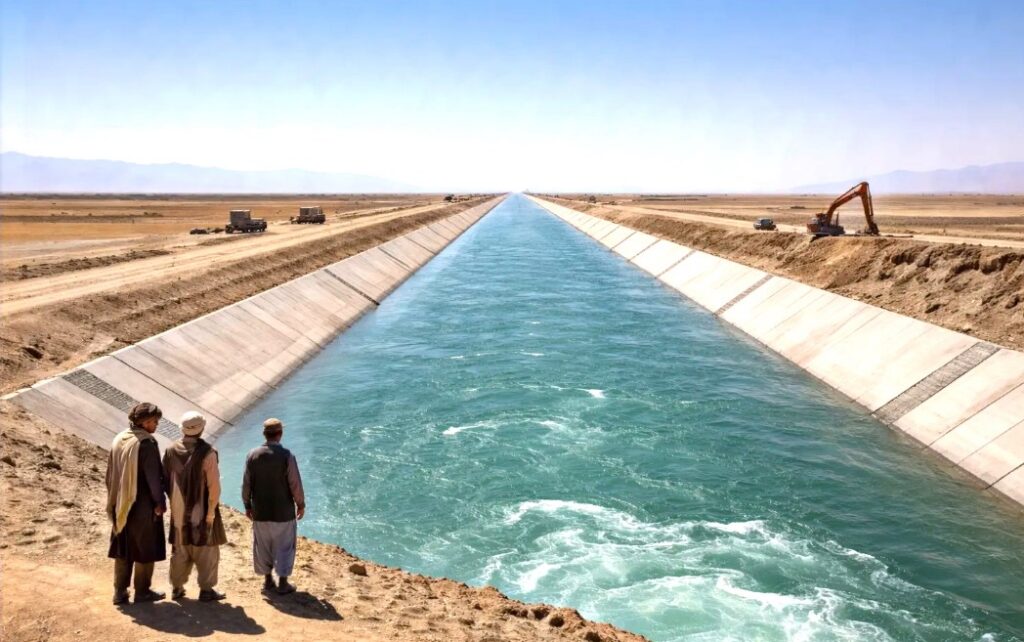
Water has long been one of Central Asia’s most contested resources, shaping agriculture, energy policy, and diplomacy across the region. Recently, Afghanistan’s Qosh Tepa Canal project has emerged as a central point in this debate. Promoted by the Taliban as a vital step toward achieving food security and economic growth, the canal also raises alarm bells among downstream neighbors who heavily depend on the Amu Darya River. Now, according to Islamic Emirate spokesman Zabihullah Mujahid, the second phase of the project is expected to be completed within five months, raising further concerns among downstream countries about its potential impact on regional water security. Progress on the Ground In August, the Afghan authorities stated that 93% of the second phase had been completed. Videos show the canal lined with concrete and stone in some sections, alongside the construction of large and medium-sized bridges to link surrounding settlements. The project spans 128 kilometers from Dawlatabad district in Balkh province to Andkhoy district in Faryab province and involves over 60 contractors, making it one of Afghanistan’s largest infrastructure projects. Origins and International Support The canal’s roots trace back to earlier international efforts. While some sources attribute its conceptual origins to Soviet or British engineers in the 1960s, significant development began in 2018 under President Ashraf Ghani. The project was supported by the U.S. Agency for International Development (USAID) and Indian engineering firms. According to the Scientific-Information Center of the Interstate Commission for Water Coordination (SIC ICWC), a $3.6 million feasibility study was launched in Kabul in December 2018, funded by USAID and conducted by AACS Consulting and BETS Consulting Services Ltd. The study was coordinated with several Afghan ministries, but has not been published. Following the Taliban’s takeover, the Islamic Emirate held an official inauguration ceremony on March 30, 2022. The full canal is designed to stretch 285 kilometers, measuring 100 meters wide and 8.5 meters deep, and is expected to divert an estimated six to ten cubic kilometers of water annually from the Amu Darya. Afghan media have quoted water management expert Najibullah Sadid, who projected the canal could generate between $470 million and $550 million in annual revenue. Regional Concerns and Environmental Risks The project has raised alarm in Uzbekistan, Turkmenistan, and Tajikistan, countries that depend heavily on the Amu Darya for irrigation. Experts at SIC ICWC point out that no environmental impact assessment was conducted for downstream states, nor were they formally notified of the construction, as required by international water conventions. In December 2022, Uzbek President Shavkat Mirziyoyev called for practical dialogue with Afghanistan and the international community to strengthen regional water security. Adroit Associates estimates that the canal could eventually divert up to 13 billion cubic meters annually, nearly one-quarter of the Amu Darya’s average flow. Environmental risks are also mounting. Analysts warn that Uzbekistan, which relies heavily on the river for agriculture, could face soil degradation and declining crop yields. Turkmenistan, where agriculture accounts for 12% of GDP, may also suffer severe disruptions. Some studies suggest Uzbekistan and...

Melting Mountains, Drying Futures: Central Asia Confronts Water Emergency

Central Asian countries are mobilizing against an emerging water crisis as a United Nations report highlights the vulnerability of mountain water systems to climate change. Identifying ranges like the Tien Shan and the Pamirs, the UN World Water Development Report 2025 – Mountains and Glaciers: Water Towers – warns that rapid glacier melt and erratic snowfall are threatening vital freshwater supplies worldwide. According to the report, mountains provide up to 60% of the world’s annual freshwater flows, with over two billion people depending directly on water from mountain sources. This risk is particularly acute in Central Asia: a UN drought outlook noted that rising temperatures and shrinking snowpack in the high mountains of Tajikistan and Kyrgyzstan are accelerating glacier retreat, posing a “long-term threat to the region’s water security.” Half of rural mountain communities in developing countries already face food insecurity, and receding glaciers could impact two-thirds of all irrigated agriculture globally – a dire scenario for Central Asia’s irrigation-dependent economies. Rivers like the Amu Darya and Syr Darya are fed by glacier runoff and support downstream agriculture, hydropower, and municipal needs in Uzbekistan, Kazakhstan, and Turkmenistan. But climate-driven glacial retreat, inefficient irrigation, and aging infrastructure have already pushed the region toward a breaking point. [caption id="attachment_33952" align="aligncenter" width="2560"] Lake Karakul in Tajikistan is expanding due to melting glaciers; image: TCA, Stephen M. Bland[/caption] Kazakhstan Steps Up Leading the regional response, Kazakhstan has launched sweeping reforms to modernize its water infrastructure and governance. The country has committed to building 42 new reservoirs, refurbishing 14,000 kilometers of irrigation canals, and investing heavily in digital water monitoring and conservation. Established in September 2023, the Ministry of Water Resources and Irrigation is coordinating the overhaul under an updated national Water Code. The government has also launched an integrated water portal, hydro.gov.kz, and pledged to digitize more than 3,500 kilometers of canals for precise flow tracking. In an address at the Astana International Forum, Deputy Prime Minister Kanat Bozumbayev framed water as a “powerful driver of cooperation, sustainable development and regional stability,” urging closer regional coordination. Kazakhstan is also leading environmental restoration efforts. As the current chair of the International Fund for Saving the Aral Sea (IFAS), it is overseeing projects to rehabilitate the North Aral Sea, including raising the Kokaral Dam to restore water levels and fisheries. In 2024 alone, local irrigation reforms in Kyzylorda saved 200 million cubic meters of water, which was redirected toward the shrinking sea. [caption id="attachment_12017" align="aligncenter" width="2560"] The Kokaral Dam in Kazakhstan; image: TCA, Stephen M. Bland[/caption] International Support and Financing Kazakhstan’s strategy has been backed by a plethora of international partners. The European Bank for Reconstruction and Development (EBRD) has financed over €255 million in water and wastewater projects in Kazakhstan, including a €96.4 million sovereign loan for a new treatment plant in Aktobe. Meanwhile, the Eurasian Development Bank (EDB) and UNDP have launched a regional partnership to expand access to modern irrigation, digitize water flows, and establish training centers. “We must act very quickly and...

Opinion – Central Asia’s Looming Water Crisis: A Ticking Time Bomb

When people think of Central Asia, they often picture vast deserts, ancient Silk Road cities, and oil pipelines stretching to distant markets. Yet the region’s most urgent and combustible resource is not buried underground — it flows above it. Water, or more precisely the lack of it, is rapidly becoming the defining fault line of Central Asia’s future. For decades, the five Central Asian republics have tiptoed around a growing water crisis. The two major rivers that sustain life in this arid region, the Amu Darya and the Syr Darya, are now so contested and depleted that what was once a technical issue has metastasized into a geopolitical threat. The region's major rivers, the Amu Darya and the Syr Darya are under immense pressure, threatening agriculture, livelihoods, and regional stability. At the heart of the crisis is a tragic irony. The upstream countries, Kyrgyzstan and Tajikistan, are rich in water but poor in energy and cash. They need to release water in winter to generate hydropower. Downstream nations, particularly Uzbekistan and Turkmenistan, want water stored until the summer to irrigate vast cotton and wheat fields. The result? Mutual distrust, occasional diplomatic spats, and an accelerating race to dam, divert, and hoard water in a region already gasping under the weight of climate change. A Region Parched Central Asia annually utilizes over 60 billion cubic meters of water for irrigation from the Amu Darya and Syr Darya basins. However, recent years have seen a decline in river flows, with the actual flow of the Syr Darya being 20–23% less than the norm. Further, the ghost of the Aral Sea — a once-thriving inland lake that has now shrunk by over 90% in its volume and 74 % in surface area — serves as a haunting reminder of the cost of mismanagement. The Soviet legacy of excessive irrigation has morphed into a post-Soviet scramble for control, where water is not just a tool of survival but a lever of power. This desiccation has transformed the region, leading to the emergence of the Aralkum Desert and causing severe ecological and health issues. Climate Change Intensifies the Crisis Climate change is exacerbating water scarcity in Central Asia. A recent study revealed that an extreme heatwave in March 2025, with temperatures soaring 5 to 10°C above pre-industrial levels, was significantly amplified by global warming. Such temperature surges accelerate glacier melt and increase evaporation rates, further reducing water availability. By some estimates, Central Asia could lose over 30% of its freshwater resources by 2050. Yet, rather than galvanize cooperation, this existential threat has sparked more competition. International efforts have largely fallen flat. The International Fund for Saving the Aral Sea (IFAS), the region’s main water cooperation body, is riddled with inefficiencies and lacks enforcement power. External actors like China and Russia have their own interests, often deepening the regional divide rather than healing it. Inefficient Water Management Inefficient agricultural practices remain one of the most profound and persistent contributors to water mismanagement across Central Asia. In...

Culture, Climate, and Clean Water: Summit Outlines New Efforts to Restore the Aral Sea Region

From April 4 to 6, the first Aral Culture Summit took place in Karakalpakstan, bringing together local and international scientists, artists, and activists. Their goal: to find creative ways to support the social and environmental recovery of the Aral Sea region. The summit is the first in a series of global cultural initiatives taking place throughout 2025 and supported by Uzbekistan Art and Culture Development Foundation. Scheduled to be held every 18 months, the summit is designed to act as a space for exchanging ideas and building new solutions. This year’s program included panels, cultural events, and a pop-up market featuring local artists and businesses. It focused on how art, design, and science can help Karakalpakstan grow in sustainable ways and attract new eco-friendly businesses. [caption id="attachment_30519" align="aligncenter" width="1280"] Summit opening in Samarkand; image: ACDF[/caption] The first day of the summit was linked with the Samarkand International Climate Forum, which was attended by over 2,000 foreign guests, including top officials from the European Union, the United Nations, and Central Asian governments. They discussed urgent climate problems in the region, including desertification, water shortages, and rising temperatures. Uzbekistan’s President Shavkat Mirziyoyev spoke about steps being taken to slow land degradation. “To reduce the area of degraded lands and mitigate the consequences of climate change, Uzbekistan has been carrying out large-scale greening in the framework of the Yashil Makon project. Additionally, over two million hectares of the deserted Aral Sea region is now covered with drought-resistant plants,” he said. Mirziyoyev also warned that water shortages will increase in the region by 2040 and stressed the need for stronger cooperation, telling those assembled, “We urge our partners to join the efforts and launch a Regional Program for Implementation of Water Saving Technologies in Central Asia.” Kazakhstan’s President Kassym-Jomart Tokayev also shared concerns about climate challenges, pointing out that the "temperature in the region is rising twice as fast as the global average.” Tokayev highlighted joint efforts with Uzbekistan to green the dried bottom of the Aral Sea. “Central Asia is profoundly affected by the global climate crisis,” Gayane Umerova, Chairperson of the Uzbekistan Art and Culture Development Foundation (ACDF) told those in attendance. “Rising temperatures, altered rainfall patterns, and intensified droughts are severely impacting agriculture, water resources, and livelihoods across our region. No example illustrates this better than the tragedy of the Aral Sea. But healing the land goes hand in hand with healing communities.” [caption id="attachment_30521" align="aligncenter" width="2560"] Desert ship, Moynaq; image: TCA, Stephen M. Bland[/caption] A striking example of the shrinking of the Aral Sea is the forgotten hamlet of Moynaq. At its peak, the town was home to 60,000 people, mostly fishermen and their extended families, with the Aral Sea producing up to 30% of the Soviet catch and saving Russia from widespread famine in the 1920s. Accessible only by air and ferry well into the 1970s, Moynaq also served as a popular beach resort for well-heeled bureaucrats, its airport hosting fifty flights a day at its peak. By the...