• KGS/USD = 0.01144 0%
  • KZT/USD = 0.00201 0%
  • TJS/USD = 0.10486 0.48%
  • UZS/USD = 0.00008 0%
  • TMT/USD = 0.28571 0%
  • KGS/USD = 0.01144 0%
  • KZT/USD = 0.00201 0%
  • TJS/USD = 0.10486 0.48%
  • UZS/USD = 0.00008 0%
  • TMT/USD = 0.28571 0%
  • KGS/USD = 0.01144 0%
  • KZT/USD = 0.00201 0%
  • TJS/USD = 0.10486 0.48%
  • UZS/USD = 0.00008 0%
  • TMT/USD = 0.28571 0%
  • KGS/USD = 0.01144 0%
  • KZT/USD = 0.00201 0%
  • TJS/USD = 0.10486 0.48%
  • UZS/USD = 0.00008 0%
  • TMT/USD = 0.28571 0%
  • KGS/USD = 0.01144 0%
  • KZT/USD = 0.00201 0%
  • TJS/USD = 0.10486 0.48%
  • UZS/USD = 0.00008 0%
  • TMT/USD = 0.28571 0%
  • KGS/USD = 0.01144 0%
  • KZT/USD = 0.00201 0%
  • TJS/USD = 0.10486 0.48%
  • UZS/USD = 0.00008 0%
  • TMT/USD = 0.28571 0%
  • KGS/USD = 0.01144 0%
  • KZT/USD = 0.00201 0%
  • TJS/USD = 0.10486 0.48%
  • UZS/USD = 0.00008 0%
  • TMT/USD = 0.28571 0%
  • KGS/USD = 0.01144 0%
  • KZT/USD = 0.00201 0%
  • TJS/USD = 0.10486 0.48%
  • UZS/USD = 0.00008 0%
  • TMT/USD = 0.28571 0%

Viewing results 1 - 6 of 75

Strained Currents: Managing the Syr Darya’s Waters

On both banks of the Syr Darya, apartments are springing up. The embankment itself is undergoing extensive renovation. Trucks crawl along, their weight pounding the freshly lain asphalt into shape. Its acrid whiff rankles in the nose for some distance. Kyzylorda’s new Akim, Nurzhan Akhatov, appointed in August 2024, is determined to make the most of his short term in office, explains Kanat Utegenov, founder of LLP ECO GUARD, an ecological laboratory. This makes the new landscaping important. “There is a lot of construction… it is visually noticeable to the population,” he told The Times of Central Asia. “Unfortunately, the economics of it have not necessarily been calculated.” Utegenov cites a new stadium on the left bank of the river as an example of one of these potential white elephant projects. Worse still, all this landscaping is dependent on one critical factor which is only partly under the control of the Akim, and only partly under the control of Kazakhstan. That issue is water. [caption id="attachment_32630" align="aligncenter" width="1600"] The low-running Syr Darya passing through Kyzylorda, Kazakhstan; image: TCA, Joe Luc Barnes[/caption] In late April, the view that a ritzy new apartment buys you is one of sad, sandy banks. Wading birds plod methodically through the mud, looking for worms. The dirty grey river does not so much flow but keeps up a ponderous momentum, inching its way northwest. Some of this water will reach the North Aral Sea, which is being propped up on life support by the Kokaral Dam. Utegenov attributes the low water level as being partly due to climatic change. “Winter has become milder and almost snowless,” he said, adding that it’s not unusual to see a low river in spring. “This is when the rice is planted; all the water goes to the irrigation canals.” Governments across the region are doubling down on rice production, says Bulat Yessekin, an expert on environmental and water policy in Central Asia. However, he points out that growing rice is incredibly inefficient in this part of the world. “If we take into account the full irrigation cycle, five tons (5,000 liters) of water are used to cultivate just one kilo of rice,” he told TCA. However, Kazakhstan’s government is keen to trumpet successes. The use of laser leveling technology in rice fields has helped save over 200 billion liters of water by distributing it more evenly. According to Kazakh state media, this has meant that the yield from each hectare of rice crop has increased by around 60-70%. This has done little to convince Yessekin, who believes this is little more than a sticking plaster. “There was no such need for technology before as there was enough water. Now, such technology has become necessary because otherwise, they will simply not be able to grow the crop. In countries with much greater precipitation, such as Thailand or India, you can grow it, but here there are no prospects for rice. Sooner or later people need to move to other crops.” Yessekin...
Uzbek Scientists Trial Salt-Tolerant Plants to Revive Aral Sea Seabed

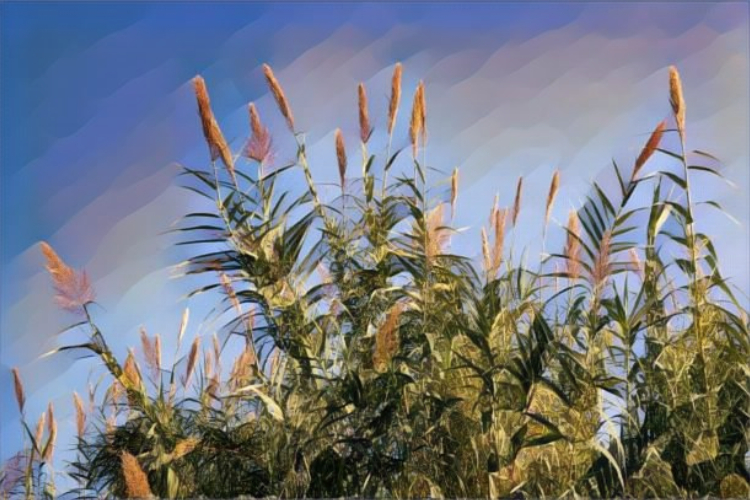
Field trials are underway on the desiccated seabed of the Aral Sea as part of a restoration initiative spearheaded by Uzbekistan’s Ministry of Ecology, Environmental Protection, and Climate Change. The goal is to identify plant species capable of surviving in saline soils and contributing to the rehabilitation of this ecologically devastated landscape. The study is led by scientists from the Research Institute of Forestry and supervised by Dr. Zinoviy Novitsky. One of the most promising candidates is Arundo donax, a species of reed grass typically found in wetter environments. Despite its usual habitat, the plant has demonstrated a remarkable tolerance for saline and arid conditions. Researchers discovered that groundwater in the test areas lies approximately two meters below the surface. Within its first year of growth, Arundo donax develops roots long enough to access this water, enabling it to survive and strengthen in the challenging environment. Dr. Novitsky noted that his team devised a specialized planting technique to improve the plant’s resilience. Root shoots were harvested from mature plants in regions with comparable soil conditions, such as Urgench and Karakalpakstan. When transplanted to the Aral Sea area, these shoots achieved a survival rate exceeding 90%. In addition to their depth, the roots of Arundo donax can spread laterally up to two meters, anchoring the soil and mitigating further land degradation. These trials, if scaled successfully, could play a pivotal role in combating dust storms and rejuvenating the Aral Sea region. Since 2021, Uzbekistan has planted more than 45 million trees across 1.9 million hectares of the dried seabed in Karakalpakstan. The country has also created six artificial lakes, replenished with water from the Amu Darya River, to foster biodiversity and support aquaculture. Moreover, dust filtration systems at major industrial sites and wastewater treatment facilities at eight plants have been modernized. Seven protected natural areas now span 3.7 million hectares in Karakalpakstan, several of which have been designated under UNESCO and the Ramsar Convention frameworks. Scientific efforts continue through the Aral Sea International Innovation Center, which is currently managing projects valued at over $630,000. By 2030, Uzbekistan aims to expand forest coverage in the region to 2.3 million hectares and restore vegetation on 80% of the dried seabed.

Kazakhstan and World Bank Launch Second Phase to Revive Northern Aral Sea

In partnership with the World Bank, the Ministry of Water Resources and Irrigation of Kazakhstan has launched the second phase of a long-term initiative to restore the Northern Aral Sea. This stage aims to revive the region’s ecosystem and enhance the quality of life for local communities. Feasibility Study Underway Key objectives of this phase include reconstructing the Kokaral Dam and raising the sea level to 44 meters, measured using the Baltic height system. Plans also call for constructing a water control facility near the village of Amanotkel, designed to regulate water distribution within the Akshatau and Kamystybas lake systems in Kyzylorda Region’s Aral District. A technical feasibility study is expected to be completed by December 2025. Once implemented, these measures are projected to expand the Northern Aral Sea’s surface area to 3,913 square kilometers, increasing its total water volume to 34 cubic kilometers. The full refill process is anticipated to take four to five years, based on hydrological data from the Syr Darya River basin covering the period 1913-2019. Strategic Decisions on Dam Reconstruction The current conservation strategy was finalized following consultations with local authorities and water management experts. Minister of Water Resources and Irrigation Nurzhan Nurzhigitov stated that the plan reflects the region’s actual hydrological conditions and was selected for its balance of timeliness and efficacy. “We evaluated multiple implementation options. Discussions with residents and industry veterans helped guide our decision. The final plan was deemed optimal after all relevant factors were considered,” Nurzhigitov said. Sameh Wahba, the World Bank’s Regional Director for Europe and Central Asia, underscored the project’s ecological and economic significance. He confirmed that the World Bank not only funded the feasibility study but remains committed to supporting the project through its next stages. According to Wahba, the initiative is expected to create jobs and stimulate sectors such as fisheries, agriculture, and tourism. Progress Achieved in the First Phase The first phase of the rescue effort has already delivered tangible benefits. Water volume in the Northern Aral Sea has risen by 42%, reaching 27 billion cubic meters, while salinity has dropped nearly fourfold. Annual fish yields have climbed to 8,000 tons. In 2024 alone, a record 2.6 billion cubic meters of water were channeled into the sea, with 1 billion cubic meters allocated for irrigation. Beyond water volume and quality, the project aims to revitalize the Syr Darya River delta, curb salt deposition, and bolster the fishing industry. Employment opportunities and improved living conditions for local populations are also key targets. Long-Term Threats to Water Security The sustainability of these efforts may be challenged by regional developments. During the international conference “Water Security and Transboundary Water Use: Challenges and Solutions” in Astana, Kazakhstan’s Deputy Minister of Water Resources and Irrigation, Aslan Abdraimov, warned of the potential impact of Afghanistan’s Kosh-Tepa Canal on Central Asian water systems. Despite the absence of a direct border between Kazakhstan and Afghanistan, Abdraimov stated that the canal could eventually reduce the flow of the Syr Darya River. “No sharp fluctuations...

Kazakhstan Plants Over 1 Billion Trees as Reforestation Drive Extends to 2027

Between 2021 and 2024, Kazakhstan planted a total of 1.15 billion tree saplings, according to the Ministry of Ecology and Natural Resources. The effort forms part of a sweeping national campaign aimed at reversing deforestation and mitigating climate impacts. Initially, President Kassym-Jomart Tokayev had set a target of planting two billion trees by 2025. However, the government has now extended the deadline to the end of 2027 and re-approved its Comprehensive Plan for Reforestation and Afforestation. As part of the initiative, one and two-year-old saplings of both deciduous and coniferous species are being planted across various ecosystems. Currently, 251 forest nurseries operate across the country on 3,178 hectares of land, producing more than 280 million saplings for future planting. Urban greening is also a key focus. Under the presidential initiative to plant 15 million trees in cities and villages nationwide, 14.3 million have already been planted between 2021 and 2024. The plan calls for more than three million trees to be planted annually through 2025. To support this effort, the government has approved detailed landscaping and green zone development plans for Kazakhstan’s regions, as well as for its three major cities, Astana, Almaty, and Shymkent. Another priority is the afforestation of the dried bed of the Aral Sea, a critical environmental concern in Central Asia. Over the past three decades, trees and shrubs have been planted on more than 600,000 hectares of the former seabed, including 413,000 hectares over the last four years alone.

Opinion – Central Asia’s Looming Water Crisis: A Ticking Time Bomb

When people think of Central Asia, they often picture vast deserts, ancient Silk Road cities, and oil pipelines stretching to distant markets. Yet the region’s most urgent and combustible resource is not buried underground — it flows above it. Water, or more precisely the lack of it, is rapidly becoming the defining fault line of Central Asia’s future. For decades, the five Central Asian republics have tiptoed around a growing water crisis. The two major rivers that sustain life in this arid region, the Amu Darya and the Syr Darya, are now so contested and depleted that what was once a technical issue has metastasized into a geopolitical threat. The region's major rivers, the Amu Darya and the Syr Darya are under immense pressure, threatening agriculture, livelihoods, and regional stability. At the heart of the crisis is a tragic irony. The upstream countries, Kyrgyzstan and Tajikistan, are rich in water but poor in energy and cash. They need to release water in winter to generate hydropower. Downstream nations, particularly Uzbekistan and Turkmenistan, want water stored until the summer to irrigate vast cotton and wheat fields. The result? Mutual distrust, occasional diplomatic spats, and an accelerating race to dam, divert, and hoard water in a region already gasping under the weight of climate change. A Region Parched Central Asia annually utilizes over 60 billion cubic meters of water for irrigation from the Amu Darya and Syr Darya basins. However, recent years have seen a decline in river flows, with the actual flow of the Syr Darya being 20–23% less than the norm. Further, the ghost of the Aral Sea — a once-thriving inland lake that has now shrunk by over 90% in its volume and 74 % in surface area — serves as a haunting reminder of the cost of mismanagement. The Soviet legacy of excessive irrigation has morphed into a post-Soviet scramble for control, where water is not just a tool of survival but a lever of power. This desiccation has transformed the region, leading to the emergence of the Aralkum Desert and causing severe ecological and health issues. Climate Change Intensifies the Crisis Climate change is exacerbating water scarcity in Central Asia. A recent study revealed that an extreme heatwave in March 2025, with temperatures soaring 5 to 10°C above pre-industrial levels, was significantly amplified by global warming. Such temperature surges accelerate glacier melt and increase evaporation rates, further reducing water availability. By some estimates, Central Asia could lose over 30% of its freshwater resources by 2050. Yet, rather than galvanize cooperation, this existential threat has sparked more competition. International efforts have largely fallen flat. The International Fund for Saving the Aral Sea (IFAS), the region’s main water cooperation body, is riddled with inefficiencies and lacks enforcement power. External actors like China and Russia have their own interests, often deepening the regional divide rather than healing it. Inefficient Water Management Inefficient agricultural practices remain one of the most profound and persistent contributors to water mismanagement across Central Asia. In...

Culture, Climate, and Clean Water: Summit Outlines New Efforts to Restore the Aral Sea Region

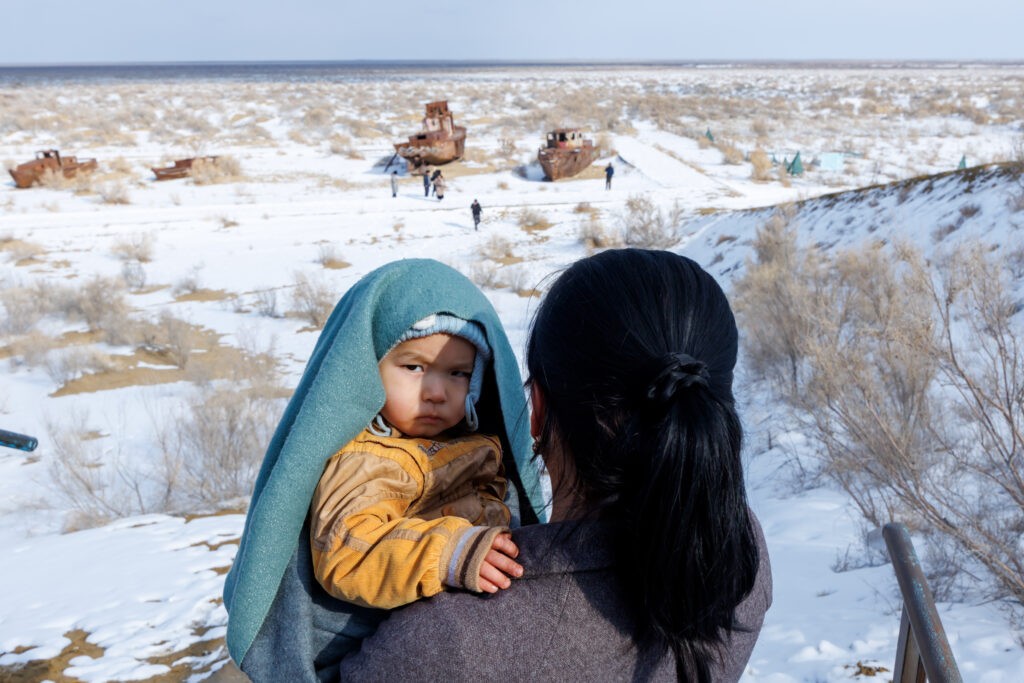
From April 4 to 6, the first Aral Culture Summit took place in Karakalpakstan, bringing together local and international scientists, artists, and activists. Their goal: to find creative ways to support the social and environmental recovery of the Aral Sea region. The summit is the first in a series of global cultural initiatives taking place throughout 2025 and supported by Uzbekistan Art and Culture Development Foundation. Scheduled to be held every 18 months, the summit is designed to act as a space for exchanging ideas and building new solutions. This year’s program included panels, cultural events, and a pop-up market featuring local artists and businesses. It focused on how art, design, and science can help Karakalpakstan grow in sustainable ways and attract new eco-friendly businesses. [caption id="attachment_30519" align="aligncenter" width="1280"] Summit opening in Samarkand; image: ACDF[/caption] The first day of the summit was linked with the Samarkand International Climate Forum, which was attended by over 2,000 foreign guests, including top officials from the European Union, the United Nations, and Central Asian governments. They discussed urgent climate problems in the region, including desertification, water shortages, and rising temperatures. Uzbekistan’s President Shavkat Mirziyoyev spoke about steps being taken to slow land degradation. “To reduce the area of degraded lands and mitigate the consequences of climate change, Uzbekistan has been carrying out large-scale greening in the framework of the Yashil Makon project. Additionally, over two million hectares of the deserted Aral Sea region is now covered with drought-resistant plants,” he said. Mirziyoyev also warned that water shortages will increase in the region by 2040 and stressed the need for stronger cooperation, telling those assembled, “We urge our partners to join the efforts and launch a Regional Program for Implementation of Water Saving Technologies in Central Asia.” Kazakhstan’s President Kassym-Jomart Tokayev also shared concerns about climate challenges, pointing out that the "temperature in the region is rising twice as fast as the global average.” Tokayev highlighted joint efforts with Uzbekistan to green the dried bottom of the Aral Sea. “Central Asia is profoundly affected by the global climate crisis,” Gayane Umerova, Chairperson of the Uzbekistan Art and Culture Development Foundation (ACDF) told those in attendance. “Rising temperatures, altered rainfall patterns, and intensified droughts are severely impacting agriculture, water resources, and livelihoods across our region. No example illustrates this better than the tragedy of the Aral Sea. But healing the land goes hand in hand with healing communities.” [caption id="attachment_30521" align="aligncenter" width="2560"] Desert ship, Moynaq; image: TCA, Stephen M. Bland[/caption] A striking example of the shrinking of the Aral Sea is the forgotten hamlet of Moynaq. At its peak, the town was home to 60,000 people, mostly fishermen and their extended families, with the Aral Sea producing up to 30% of the Soviet catch and saving Russia from widespread famine in the 1920s. Accessible only by air and ferry well into the 1970s, Moynaq also served as a popular beach resort for well-heeled bureaucrats, its airport hosting fifty flights a day at its peak. By the...