• KGS/USD = 0.01143 0%
  • KZT/USD = 0.00216 0%
  • TJS/USD = 0.10633 -0.28%
  • UZS/USD = 0.00008 0%
  • TMT/USD = 0.28571 0%
  • KGS/USD = 0.01143 0%
  • KZT/USD = 0.00216 0%
  • TJS/USD = 0.10633 -0.28%
  • UZS/USD = 0.00008 0%
  • TMT/USD = 0.28571 0%
  • KGS/USD = 0.01143 0%
  • KZT/USD = 0.00216 0%
  • TJS/USD = 0.10633 -0.28%
  • UZS/USD = 0.00008 0%
  • TMT/USD = 0.28571 0%
  • KGS/USD = 0.01143 0%
  • KZT/USD = 0.00216 0%
  • TJS/USD = 0.10633 -0.28%
  • UZS/USD = 0.00008 0%
  • TMT/USD = 0.28571 0%
  • KGS/USD = 0.01143 0%
  • KZT/USD = 0.00216 0%
  • TJS/USD = 0.10633 -0.28%
  • UZS/USD = 0.00008 0%
  • TMT/USD = 0.28571 0%
  • KGS/USD = 0.01143 0%
  • KZT/USD = 0.00216 0%
  • TJS/USD = 0.10633 -0.28%
  • UZS/USD = 0.00008 0%
  • TMT/USD = 0.28571 0%
  • KGS/USD = 0.01143 0%
  • KZT/USD = 0.00216 0%
  • TJS/USD = 0.10633 -0.28%
  • UZS/USD = 0.00008 0%
  • TMT/USD = 0.28571 0%
  • KGS/USD = 0.01143 0%
  • KZT/USD = 0.00216 0%
  • TJS/USD = 0.10633 -0.28%
  • UZS/USD = 0.00008 0%
  • TMT/USD = 0.28571 0%

Viewing results 1 - 6 of 124

Lifting Off: Kazakhstan’s Push Into Next-Gen Aviation Technologies

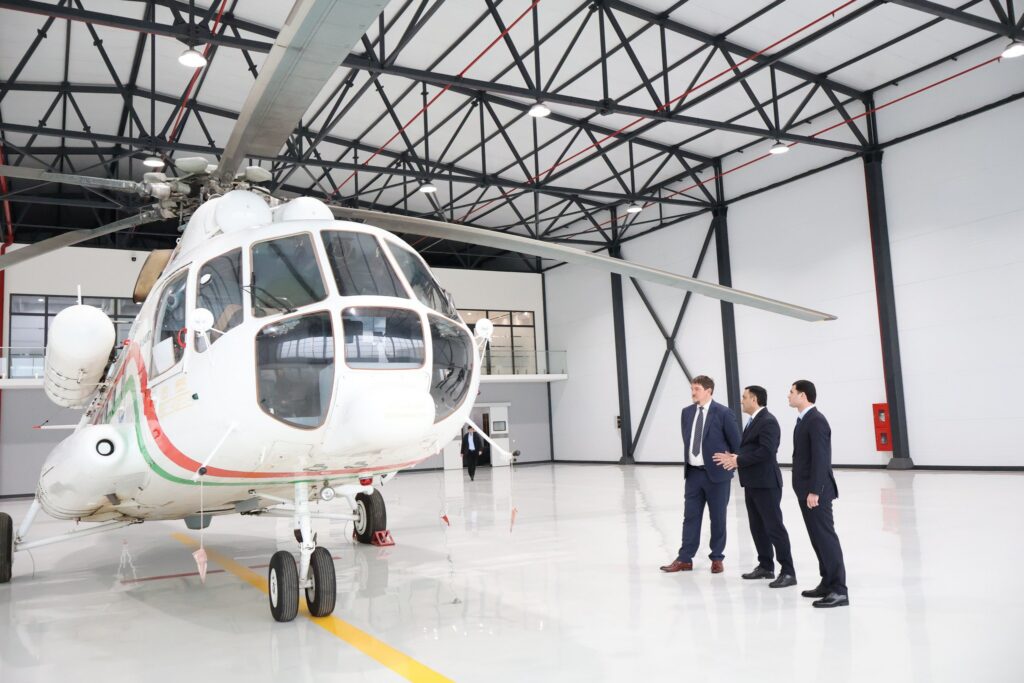
Kazakhstan’s plans to create an air taxi system based on electric eVTOLs in the city of Alatau have drawn attention to the country’s readiness to take the lead in implementing advanced unmanned technologies. The project would require large-scale changes in regulation and technological infrastructure, as well as personnel training and risk assessment. The Times of Central Asia discussed these futuristic developments with Aslan Satzhanov, acting CEO of the Aviation Administration of Kazakhstan JSC. Goals and Expected Results TCA: What is the Concept for the Development of Civil Unmanned Aviation in Kazakhstan, and what does it provide for? What are the key goals set out in the document? Satzhanov: In accordance with the government decree, the main goals for the development of civil unmanned aviation are to increase the volume of work using unmanned aerial systems (UAS), de-bureaucratize, digitize, and transform existing requirements, procedures, and processes. The principal aim is to simplify the formalities for performing UAS flights in designated airspace as much as possible. The development of the industry is based on the principles of safety, minimization of risks to people and objects, and the creation of the most favorable conditions for technological growth. Key approaches include establishing a scientific foundation, improving the training system, and expanding the scope of UAS applications. By 2031, it is planned that at least 80% of secondary and vocational education institutions will teach the basics of unmanned aviation. The share of enterprises in the agro-industrial complex (AIC), industry, and energy that use UAVs will grow by at least 30%. The localization of production of key UAS components in Kazakhstan will increase to 10%. In addition, Kazakhstani companies will be able to enter promising segments of the global market for unmanned aerial vehicles and software. Regulation and Legislative Framework TCA: How is the regulation of UAV flights and production structured today? To what extent does the regulatory framework meet modern requirements? Satzhanov: The fundamental document is the Rules for the Use of Unmanned Aircraft Systems, adopted back in 2020. Kazakhstan became the first country in the post-Soviet space to approve comprehensive rules for the use of UAS in its airspace. Later, amendments were made to the Law on the Use of Airspace. Based on these amendments, the rules for the use of airspace for UAS operations were updated in 2023. Thus, the regulatory framework has been fully established. It is in line with global trends from urban air mobility to unmanned taxis and strikes a balance between technological development and flight safety. The transition to eVTOL and urban air mobility will create a new transport ecosystem: it increases population mobility, reduces the load on ground infrastructure, improves the environmental situation, and promotes innovation. Training TCA: What measures are planned for training UAV operators and introducing unmanned technologies into educational programs? Satzhanov: The concept provides for the creation of a multi-level training and professional development system. Modules on civil unmanned aviation will be introduced into secondary and vocational education programs, covering at least 80% of educational...

Washington Shifts C5+1 From Diplomacy to Deals

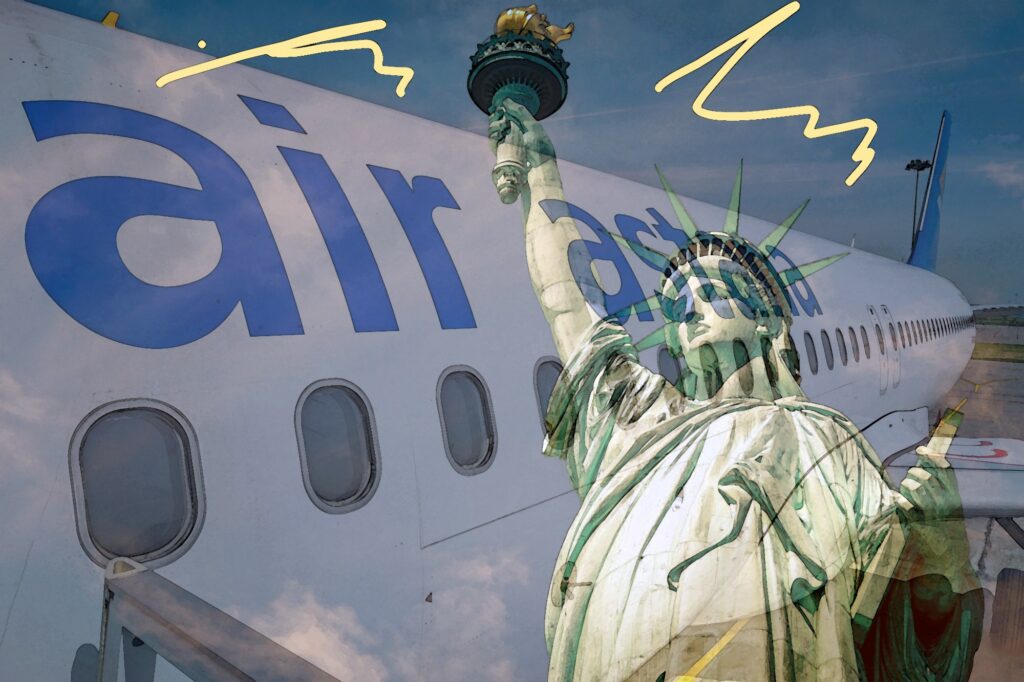
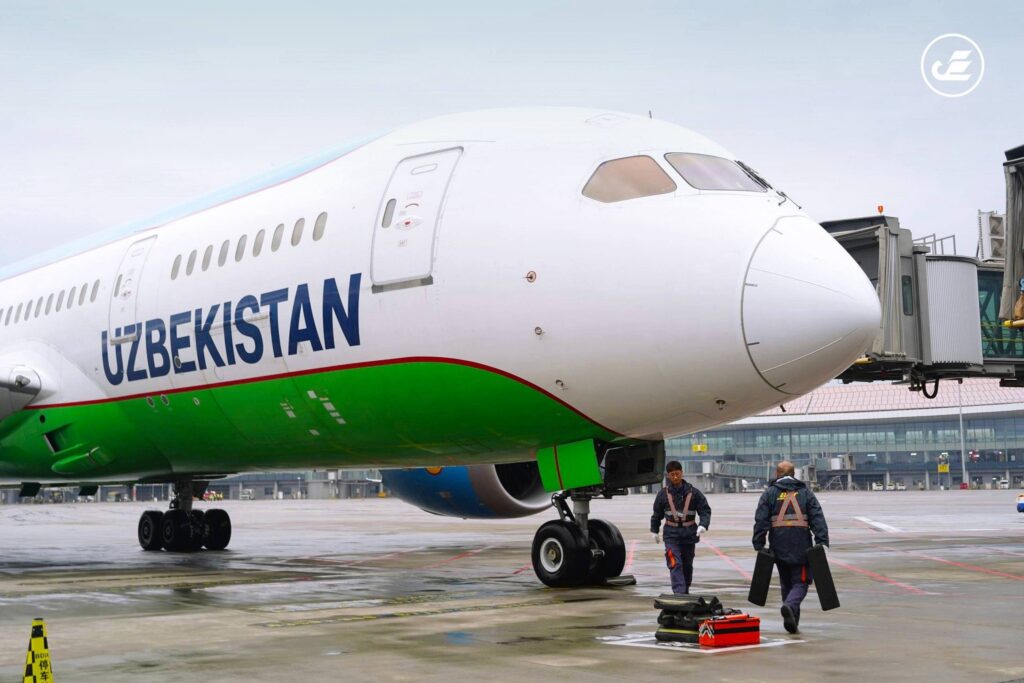
On November 6, 2025, Washington hosted the C5+1 summit, bringing U.S. President Donald Trump together with the leaders of Kazakhstan, Kyrgyzstan, Tajikistan, Turkmenistan, and Uzbekistan. The tone shifted from broad diplomacy to deliverable transactions, with officials emphasizing cooperation on critical raw materials. The timing signified a broader shift in supply chains away from China and Russia, and the discussion moved from general diplomacy to transactions that can be tracked and delivered. The private-sector track also accelerated. The B5+1 (“B” for “business”) platform is meant to carry follow-through on minerals, processing, logistics, and services. It complements state-to-state commitments by putting contract-ready work streams and policy dialogue in the same frame. Verification is simple: match U.S. and host-government readouts with company filings and ministry communiqués issued after the summit. Subsequent notices should specify instruments, values, financing, timelines, and the units responsible. What Was Signed Versus What Was Signaled The summit mixed firm orders with preliminary commitments. Uzbekistan Airways converted eight options for the Boeing 787-9 (covered by FAA Type Certificate Data Sheet T00021SE) into a firm order, bringing its total to twenty-two Dreamliners. That flows into the manufacturer’s backlog and starts financing and ground-side preparation. Tajikistan’s Somon Air announced up to four 787-9s and ten 737 MAX; that signals intent, with binding contracts and financing to follow. Engine families for the 787-9 are Rolls-Royce Trent 1000 TEN and GE Genx-1B, setting maintenance and training paths. Air Astana said it had selected up to fifteen 787-9s. Slot allocation and financing are next, along with sale-and-leaseback or operating-lease decisions. A parallel commercial package aimed to show that U.S.–Central Asia ties can move on a near-term clock, framed publicly through the Department of Commerce’s announced “C5+1 Deal Zone,” earmarked at “over $25 billion.” Rare earths and related inputs sat at the center of the talks. Aviation and other signings were presented as tangible outcomes. The substance rests with the underlying company agreements and national approvals, although the packaging usefully aggregates a single narrative for public consumption. Minerals were cast as the strategic core, even though many projects remain in the early stages. Public readouts emphasized supply-chain resilience and competition with China and Russia. For shipments into the European Union, the bottleneck remains the processing limits set by the EU Critical Raw Materials Act. Customs classification uses the Harmonized System (HS), a universal tariff code maintained by the World Customs Organization (WCO): tungsten falls under HS 8101, while rare-earth metals and their compounds are under HS 2805 and HS 2846. Bankability likewise depends on recognized industry disclosure rules for reporting mineral resources, which require standardized geology, sampling, and reserve estimates before serious financing proceeds. Wire services likewise underscored rare earths and closer cooperation along the value chain. Country Outcomes Kazakhstan. The most tangible non-aviation item was a tungsten venture at Northern Katpar and Upper Kairakty, with an indicated project scope of around $1.1 billion. A Letter of Interest (LOI) from the U.S. Export–Import Bank (EXIM) suggests a figure near $900 million on a 70/30 structure with...

Which Central Asian States Qualify as Middle Powers in 2025?

As global power shifts toward multipolarity, Central Asia’s states are emerging as active regional players. This article assesses which of the five republics—Kazakhstan, Uzbekistan, Turkmenistan, Kyrgyzstan, and Tajikistan—qualify as middle powers in 2025, based on economic strength, diplomatic reach, strategic capacity, and governance. Kazakhstan stands as the region’s only consolidated middle power, balancing fiscal stability, institutional reform, and multi-vector diplomacy. Uzbekistan is a rising aspirant, propelled by reforms but still reliant on external financing and centralized authority. The remaining states remain constrained by dependence and limited institutional depth. Together, they reflect a region increasingly capable of shaping, rather than merely absorbing, global and regional change. A comparative analysis of five Central Asian republics shows how far each has advanced toward this status. [vc_row][vc_column][vc_raw_html css=""]JTNDc3R5bGUlM0UlMEQlMEElMkYlMkElMjBCYXNlJTIwdGFibGUlMjBzdHlsaW5nJTIwJTJBJTJGJTBEJTBBLm1wLXdyYXBwZXIlMjAlN0IlMjBtYXgtd2lkdGglM0ElMjAxMDAwcHglM0IlMjBtYXJnaW4lM0ElMjAwJTIwYXV0byUzQiUyMHBhZGRpbmclM0ElMjAxNnB4JTNCJTIwY29sb3IlM0ElMjAlMjMwMDAlM0IlMjAlN0QlMEQlMEEubXAtdGFibGUlMjAlN0IlMjB3aWR0aCUzQSUyMDEwMCUyNSUzQiUyMGJvcmRlci1jb2xsYXBzZSUzQSUyMGNvbGxhcHNlJTNCJTIwJTdEJTBEJTBBLm1wLXRhYmxlJTIwdGglMkMlMjAubXAtdGFibGUlMjB0ZCUyMCU3QiUyMGJvcmRlciUzQSUyMDFweCUyMHNvbGlkJTIwJTIzMDAwJTNCJTIwcGFkZGluZyUzQSUyMDhweCUzQiUyMHRleHQtYWxpZ24lM0ElMjBsZWZ0JTNCJTIwY29sb3IlM0ElMjAlMjMwMDAlM0IlMjAlN0QlMEQlMEEubXAtdGFibGUlMjB0aGVhZCUyMHRoJTIwJTdCJTIwYmFja2dyb3VuZCUzQSUyMCUyMzAwMCUyMGNvbG9yJTNBJTIwJTIzZmZmJTNCJTIwZm9udC13ZWlnaHQlM0ElMjBib2xkJTNCJTIwcG9zaXRpb24lM0ElMjBzdGlja3klM0IlMjB0b3AlM0ElMjAwJTNCJTIwJTdEJTBEJTBBJTBEJTBBJTJGJTJBJTIwUmVzcG9uc2l2ZSUyMHN0YWNrJTIwb24lMjBzbWFsbCUyMHNjcmVlbnMlMjAlMkElMkYlMEQlMEElNDBtZWRpYSUyMCUyOG1heC13aWR0aCUzQSUyMDY0MHB4JTI5JTIwJTdCJTBEJTBBJTIwJTIwLm1wLXRhYmxlJTIwdGhlYWQlMjAlN0IlMjBkaXNwbGF5JTNBJTIwbm9uZSUzQiUyMCU3RCUwRCUwQSUyMCUyMC5tcC10YWJsZSUyQyUyMC5tcC10YWJsZSUyMHRib2R5JTJDJTIwLm1wLXRhYmxlJTIwdHIlMkMlMjAubXAtdGFibGUlMjB0ZCUyMCU3QiUyMGRpc3BsYXklM0ElMjBibG9jayUzQiUyMHdpZHRoJTNBJTIwMTAwJTI1JTNCJTIwJTdEJTBEJTBBJTIwJTIwLm1wLXRhYmxlJTIwdHIlMjAlN0IlMjBtYXJnaW4lM0ElMjAwJTIwMCUyMDEycHglMjAwJTNCJTIwYm9yZGVyJTNBJTIwMXB4JTIwc29saWQlMjAlMjMwMDAlM0IlMjAlN0QlMEQlMEElMjAlMjAubXAtdGFibGUlMjB0ZCUyMCU3QiUyMGJvcmRlciUzQSUyMG5vbmUlM0IlMjBib3JkZXItYm90dG9tJTNBJTIwMXB4JTIwc29saWQlMjAlMjMwMDAlM0IlMjBwb3NpdGlvbiUzQSUyMHJlbGF0aXZlJTNCJTIwcGFkZGluZy1sZWZ0JTNBJTIwNTAlMjUlM0IlMjBtaW4taGVpZ2h0JTNBJTIwNDJweCUzQiUyMCU3RCUwRCUwQSUyMCUyMC5tcC10YWJsZSUyMHRkJTNBJTNBYmVmb3JlJTIwJTdCJTBEJTBBJTIwJTIwJTIwJTIwY29udGVudCUzQSUyMGF0dHIlMjhkYXRhLWxhYmVsJTI5JTNCJTBEJTBBJTIwJTIwJTIwJTIwcG9zaXRpb24lM0ElMjBhYnNvbHV0ZSUzQiUwRCUwQSUyMCUyMCUyMCUyMGxlZnQlM0ElMjA4cHglM0IlMEQlMEElMjAlMjAlMjAlMjB0b3AlM0ElMjA4cHglM0IlMEQlMEElMjAlMjAlMjAlMjB3aWR0aCUzQSUyMGNhbGMlMjg1MCUyNSUyMC0lMjAxNnB4JTI5JTNCJTBEJTBBJTIwJTIwJTIwJTIwZm9udC13ZWlnaHQlM0ElMjBib2xkJTNCJTBEJTBBJTIwJTIwJTIwJTIwd2hpdGUtc3BhY2UlM0ElMjBub3JtYWwlM0IlMEQlMEElMjAlMjAlN0QlMEQlMEElMjAlMjAubXAtdGFibGUlMjB0ZCUzQWxhc3QtY2hpbGQlMjAlN0IlMjBib3JkZXItYm90dG9tJTNBJTIwMCUzQiUyMCU3RCUwRCUwQSU3RCUwRCUwQSUyRiUyQSUyMERlc2t0b3AlMjBkZWZhdWx0JTIwJTJBJTJGJTBEJTBBLm1wLXRhYmxlJTIwdGglMkMlMjAubXAtdGFibGUlMjB0ZCUyMCU3QiUyMGZvbnQtc2l6ZSUzQSUyMDEycHglM0IlMjAlN0QlMEQlMEElMEQlMEElMkYlMkElMjBCZWxvdyUyMDEwMjRweCUyMCUyQSUyRiUwRCUwQSU0MG1lZGlhJTIwJTI4bWF4LXdpZHRoJTNBJTIwMTAyNHB4JTI5JTIwJTdCJTBEJTBBJTIwJTIwLm1wLXRhYmxlJTIwdGglMkMlMjAubXAtdGFibGUlMjB0ZCUyMCU3QiUyMGZvbnQtc2l6ZSUzQSUyMDExcHglM0IlMjAlN0QlMEQlMEElN0QlMEQlMEElMEQlMEElM0MlMkZzdHlsZSUzRQ==[/vc_raw_html][vc_column_text css="" woodmart_inline="no" text_larger="no"] As global power shifts toward multipolarity, Central Asia’s states are emerging as active regional players. This article assesses which of the five republics—Kazakhstan, Uzbekistan, Turkmenistan, Kyrgyzstan, and Tajikistan—qualify as middle powers in 2025, based on economic strength, diplomatic reach, strategic capacity, and governance. Kazakhstan stands as the region’s only consolidated middle power, balancing fiscal stability, institutional reform, and multi-vector diplomacy. Uzbekistan is a rising aspirant, propelled by reforms but still reliant on external financing and centralized authority. The remaining states remain constrained by dependence and limited institutional depth. Together, they reflect a region increasingly capable of shaping, rather than merely absorbing, global and regional change. A comparative analysis of five Central Asian republics shows how far each has advanced toward this status. Economic Power Economic autonomy is a defining attribute of middle-power capability, enabling states to project influence, sustain policy independence, and finance external engagement. In Central Asia, dependence on Official Development Assistance (ODA) and remittances often reflects constrained fiscal capacity and limited domestic capital formation, while diversified, resilient economies underpin strategic autonomy. Key indicators—GDP per capita, credit ratings, debt sustainability, and export diversification—illuminate the region’s economic hierarchy. Kazakhstan stands as Central Asia’s only consolidated economic middle power. Resource-backed growth, a prudent fiscal regime, and a sovereign wealth fund (the National Fund of Kazakhstan) have anchored macroeconomic stability. With a “BBB” credit rating or equivalent from major agencies, Kazakhstan demonstrates sound debt management and policy credibility. Ongoing diversification efforts under the new economic policies—from renewables to financial modernization—aim to reduce hydrocarbon dependence and deepen integration into global supply chains. Its role as a trans-Caspian logistics hub enhances both strategic and commercial influence. Uzbekistan, by contrast, is an emerging frontier market propelled by post-2017 reforms in currency liberalization, taxation, and state-enterprise restructuring. Rapid GDP growth and expanding private-sector activity mark its trajectory toward fiscal autonomy, though continued ODA inflows averaging around $1.1 billion to 1.3 billion annually, primarily from the Asian Development Bank (ADB), the World Bank, and bilateral partners such as Japan, the United States, and the European Union, highlight its residual dependence on external concessional financing. To achieve genuine middle power status, Uzbekistan must roughly double its real economic output over the next decade, a scale of growth aligned with the shift...

What’s Holding Back Kazakhstan’s Air Transport Market?

Kazakhstan’s aviation industry has posted steady growth in recent years. Over the past four years, passenger and cargo traffic have risen by more than 36% and 23% respectively, with an actively expanding route network. The state’s aviation development strategy prioritizes infrastructure upgrades, improved safety standards, and expanded international cooperation. Yet, despite these advances, several systemic barriers continue to prevent Kazakhstan from realizing its potential as a Central Asian aviation hub. These challenges were discussed at the New Silk Way International Transport and Logistics Business Forum and the annual TransLogistica Kazakhstan 2025 exhibition. Experts agree that Kazakhstan’s air transport market ranks among the fastest-growing globally, driven in part by geopolitical shifts that have boosted the volume of Chinese and European transit flights through its airspace. Industry Trends and Infrastructure Expansion A major airport modernization effort is underway, targeting key cities such as Astana, Almaty, Aktobe, Shymkent, and Karaganda. Renovations have already been completed in Aktau, Pavlodar, and Balkhash, while new terminals have opened in Almaty, Kyzylorda, and Shymkent. New airports are under construction in Kenderli, Zaisan, Katon-Karagai, and Arkalyk. Total investment in infrastructure has exceeded $2.9 billion. According to the Civil Aviation Committee, in 2025, Kazakh airlines transported a record 15 million passengers and 171,000 tons of cargo. Transit flights accounted for 414 million aircraft-kilometers. Deputy Chairman Sarsen Zharylgasov has stated that the country now operates 56 domestic routes, up 9% year-on-year, and maintains air links with 30 countries. International Routes and Regional Competition In 2025, 33 new international routes were launched, connecting Kazakhstan to cities including Budapest, Munich, Cairo, Shanghai, Phuket, and Delhi. Currently, 140 international routes operate under the Open Skies policy, which has applied to 15 airports since 2019. Looking ahead to 2026, new routes are planned to major global hubs, such as Singapore, Tokyo, Rome, Vienna, and New York. The long-anticipated direct U.S. flight hinges on a successful completion of the FAA's CAT-1 audit, following Kazakhstan’s passage of the preliminary technical assessment in August 2024. The 2022 air transport agreement between the U.S. and Kazakhstan remains a key step toward this goal. Air Astana plans to operate the route using a Boeing 787 Dreamliner, though delivery has been delayed to Q2 2026 due to production backlogs. Meanwhile, Uzbekistan is ramping up its own ambitions. During President Shavkat Mirziyoyev’s 2025 visit to the US, Tashkent signed a deal with Boeing for 22 Dreamliners. Analysts suggest this could intensify regional competition and enhance Uzbekistan’s appeal as a transit hub. Airport Bottlenecks and Tariff Issues Despite progress in large cities, many regional airports remain hampered by chronic underinvestment and outdated tariff policies. According to Zharylgasov, tariffs at several airports have not been updated in over two decades. “We are working to completely deregulate tariffs, but the Agency for the Protection and Development of Competition does not yet support us,” he noted. Eliminating state control over airport tariffs could introduce market-based pricing, attract investors, and improve profitability, particularly for regional hubs. Digitalization Drives Efficiency Digital transformation is another key priority. Kazakhstan...

Uzbekistan Signs $5.9 Billion Deal to Build Central Asia’s First Green Aviation Fuel Plant

Allied Biofuels FE LLC Uzbekistan has signed key land and water agreements with the Khorezm regional government, marking a significant step toward building Central Asia’s first integrated biorefinery for zero-carbon aviation fuel. The announcement was made during the International Investment Forum in Khiva, where Khorezm Governor Jurabek Rakhimov met with a company delegation led by Chairman and Managing Director Alfred Benedict. The $5.9 billion project will be located in Tuproqqal’a district in the city of Khorezm, and aims to establish a climate-aligned aviation fuel supply chain in Uzbekistan. Once operational, the facility is expected to produce 382,000 tonnes of Sustainable Aviation Fuel (SAF), 152,000 tonnes of Electro-Synthetic SAF (e-SAF), and 11,000 tonnes of renewable green diesel annually. The refinery will be supported by 2 GW of PEM electrolysers, making it one of the largest initiatives of its kind in the region. Benedict described the agreements as “a landmark moment for Allied Biofuels and for Khorezm,” emphasizing that the project combines international expertise with local support to help Uzbekistan achieve its net-zero emissions target by 2030. “This facility will not only supply sustainable aviation fuel at scale but also foster economic growth in the region,” he said. Uzbekistan has committed to becoming carbon-neutral by the end of the decade, and the Khorezm biorefinery is expected to play a central role in that transition. By producing zero-carbon fuels for transport and industry, the project aims to reduce fossil fuel dependency and lower greenhouse gas emissions. Rakhimov welcomed the decision to site the project in Khorezm, highlighting its significance for regional development. He stated that the initiative will create hundreds of skilled jobs, strengthen Khorezm’s position as a hub for green energy, and boost the local economy. Rakhimov also pledged to personally oversee the allocation of land and infrastructure needed to ensure successful implementation.  

Uzbekistan Airways Refutes Near-Collision Reports in Russian Airspace

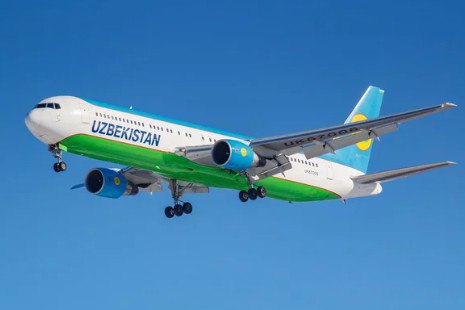
Uzbekistan Airways has denied claims that one of its aircraft was involved in a near-collision with a private jet in Russian airspace, describing the reports inaccurate and misleading. The airline issued a statement in response to tabloid coverage in Russia alleging a serious aviation incident near Moscow’s Vnukovo International Airport. As previously reported by The Times of Central Asia, the incident allegedly occurred shortly after midnight on September 29 near Serpukhov, south of Moscow. Early accounts indicated that an Uzbekistan Airways Airbus A320 en route from Samarkand and an Embraer Legacy 650 business jet flying from Bodrum came within three kilometers horizontally and 700 feet vertically of each other—below international safety thresholds—due to a miscommunication over altitude clearance. Uzbekistan Airways has firmly rejected this version of events. In a statement from its press service, the airline stressed that its crew fully complied with all instructions from Moscow air traffic control and did not breach any flight regulations. “All altitude levels were maintained in accordance with the established rules and procedures, and the required separation between aircraft was preserved,” the statement read. The airline also clarified that the flight in question occurred on September 28, not September 29 as initially reported. It added that the aircraft’s onboard safety systems did not issue any alerts, and Moscow’s air traffic controllers made no objections or complaints about the crew’s actions. Uzbekistan Airways criticized several Russian media outlets for publishing what it described as unverified information, which was later reprinted by some Uzbek outlets without proper verification. “This created a misleading impression among readers,” the airline said. Reaffirming its commitment to international aviation standards, the company stated that flight safety remains its highest priority and that all crews operate in strict compliance with air traffic control instructions.