• KZT/USD = 0.00221
  • TJS/USD = 0.10830
  • UZS/USD = 0.00008
  • TMT/USD = 0.29850
  • KZT/USD = 0.00221
  • TJS/USD = 0.10830
  • UZS/USD = 0.00008
  • TMT/USD = 0.29850
  • KZT/USD = 0.00221
  • TJS/USD = 0.10830
  • UZS/USD = 0.00008
  • TMT/USD = 0.29850
  • KZT/USD = 0.00221
  • TJS/USD = 0.10830
  • UZS/USD = 0.00008
  • TMT/USD = 0.29850
  • KZT/USD = 0.00221
  • TJS/USD = 0.10830
  • UZS/USD = 0.00008
  • TMT/USD = 0.29850
  • KZT/USD = 0.00221
  • TJS/USD = 0.10830
  • UZS/USD = 0.00008
  • TMT/USD = 0.29850
  • KZT/USD = 0.00221
  • TJS/USD = 0.10830
  • UZS/USD = 0.00008
  • TMT/USD = 0.29850
  • KZT/USD = 0.00221
  • TJS/USD = 0.10830
  • UZS/USD = 0.00008
  • TMT/USD = 0.29850
20 October 2026

Viewing results 1 - 6 of 99

‘Orange Angels’: Aviators of Eastern Kazakhstan Fly Daily Rescue Missions

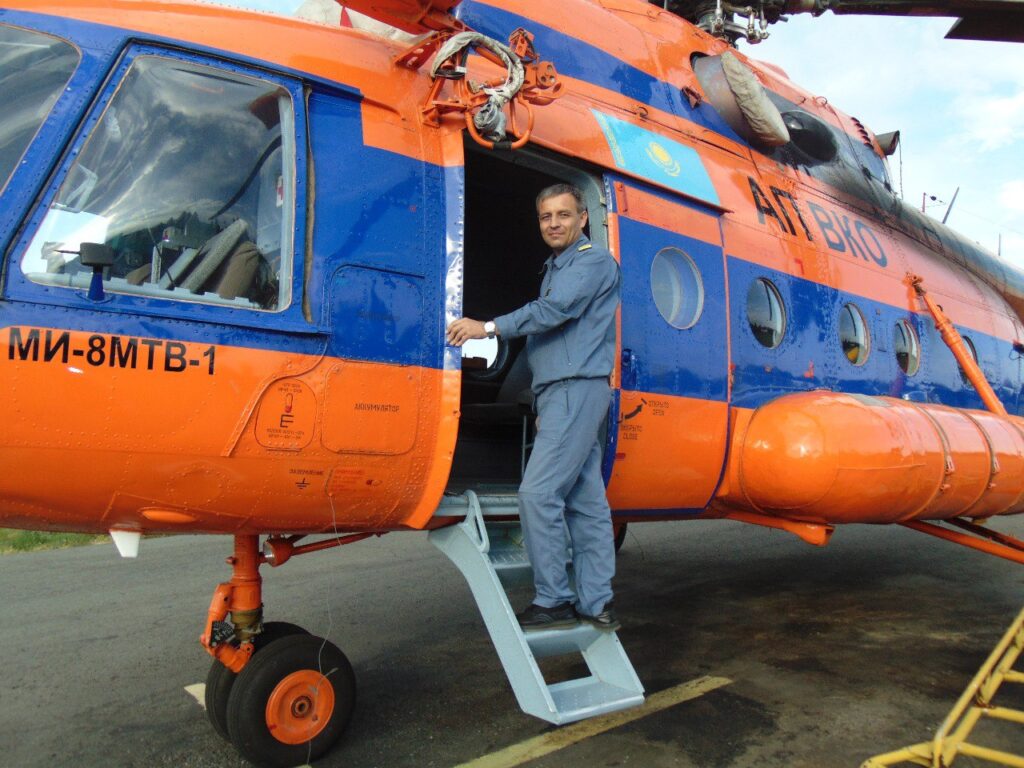
When there is no help left on the ground, they take to the skies: orange fuselages, the roar of propellers, and salvation descending from above. The Aviation Division of the East Kazakhstan Region - the 'Orange Angels' - is more than a state enterprise; it is a vital lifeline, operating when every minute counts. No Margin For Error Since its founding in 2003, the division has become an indispensable part of the region’s emergency response system. Its 114 full-time specialists conduct medical flights, firefighting operations, evacuations, and rescues. Yet staffing remains a challenge. "We are short 12-13 personnel. Ideally, we should have around 120," Kalikan Baigonusov, Director of the East Kazakhstan Aviation Division, told The Times of Central Asia. “Young people prefer big airlines, foreign skies, and big paychecks. Our salaries are decent, between $1,300 and $2,900, but the profession lacks visibility and appeal. It’s a calling, not just a job.” [caption id="attachment_35346" align="aligncenter" width="1280"] Image: TCA[/caption] Baigonusov hopes more young people will be drawn to aviation through education. His division is now organizing practical MI-2 helicopter training for students from the Civil Aviation Academy JSC. There is also close cooperation with the East Kazakhstan Multidisciplinary College, which, with support from the regional governor, launched new specialties in aviation engineering and mechanics on September 1, 2024. Therein, students undergo practical training with the air squadron, learning directly from experienced pilots and engineers. Still, Baigonusov believes Kazakhstan’s personnel training system needs urgent reform. "I’ve knocked on every door, the academy, the rector, the department head," he told TCA. "We need to train our people locally. Sending a student to Russia costs $47,000. That’s simply out of reach. We need to promote dual education here, so people can study and work at home.” Many of the division’s specialists are graduates of now-diminished Soviet-era aviation schools in Kachinsk, Omsk, Kyiv, and Riga. Each year, their ranks grow thinner. Engineering, Maintenance, and a Race Against Time Despite operating from aging facilities built in the 1970s and 1980s, the team is working to modernize and extend the lifespan of its equipment. The aircraft fleet, averaging 35 years in age, has undergone extensive inspections and upgrades. Standardization tests have been passed, and all certifications are in place. Thanks to the expertise of the engineering team, the division recently secured certification for maintaining YAK-40 and YAK-42 aircraft and Mi-8 and Mi-2 helicopters. [caption id="attachment_35348" align="aligncenter" width="1280"] Image: TCA[/caption] “Before, we relied on outside companies for repairs. Now we do everything ourselves,” says Baigonusov. “That saves time and money and makes us more self-reliant.” Deputy for the Engineering and Aviation Service (IAS) Lobanov leads a team dedicated to his work, although he, like many in the unit, is already over 55. Baigonusov is determined to attract the younger generation. “We need to show how important and beautiful this profession is. It's demanding, but it’s also deeply meaningful.” Rescuing the Stranded in Kalbatau Chief pilot Denis Grunsky recalled one of the most dramatic missions of his career to TCA....

German Firm to Build New Cargo and Passenger Airport in Kazakhstan

Kazakhstan’s Prime Minister, Olzhas Bektenov, has met with Dr. Christine Grötzbach, board member and co-founder of the German aviation company Skyhansa, to finalize the construction timeline for a new cargo and passenger airport in the Zhetysu region. The first phase of the project is expected to be completed by 2027. The facility will be built within the Khorgos - Eastern Gate special economic zone (SEZ), located on Kazakhstan’s border with China. The project envisions the creation of a multifunctional aviation hub designed to meet ICAO international standards and will be developed in phases, according to a government announcement. The initiative is being carried out under a framework agreement between Kazakhstan’s Ministry of Transport and the Kazakh-German consortium Skyhansa. On the German side, the project is led by the Hansa Consortium, an aviation infrastructure specialist, while the Kazakh side is represented by Skymax Technologies, a regional logistics and infrastructure operator active in Central Asia and the Caucasus. The total investment in the airport project is projected at $500 million. Dr. Grötzbach emphasized that the vision extends far beyond a standard airport facility. “We are creating not just an airport, but a comprehensive infrastructure: cargo and passenger terminals, a fuel and refueling complex, an aviation technical center, a business center, and hotels,” she stated. “Its strategic location near China, combined with access to rail and road transport, positions it as a key logistics node on the New Silk Road.” Bektenov echoed this sentiment, stating that the project will significantly enhance Kazakhstan’s transport and logistics capabilities. “The implementation of this project will give a powerful impetus to the development of transport infrastructure and reinforce Kazakhstan’s role as a bridge between China, Central Asia, and Europe,” he said. This announcement follows a similar initiative by Kazakhstan’s Ministry of Transport, which recently signed an investment agreement with Terminals Astana Airport Limited, a subsidiary of a UAE-based holding company. That project involves a $1.1 billion investment in the development of the Astana Aerotropolis, as reported by The Times of Central Asia.

Kyrgyzstan’s Aviation Authorities Await Removal from EU Blacklist

Kyrgyzstan’s State Civil Aviation Agency has announced that auditors from the European Union Aviation Safety Agency (EASA) will visit the country on March 9 to assess the possibility of lifting the EU’s long-standing flight ban on Kyrgyz airlines. Kyrgyz airlines have been on the EU’s aviation blacklist since 2006, with repeated but unsuccessful attempts by the country’s authorities to resolve the issue. The EU has cited multiple concerns, including shortcomings in Kyrgyzstan’s aviation legislation, inadequate inspector training, and a lack of flight crew development programs. The aging aircraft fleet has also been a key factor in maintaining the ban. Over the past two years, Kyrgyzstan has undergone two separate aviation audits, one focused on flight safety and another on aviation security. “Flight safety covers everything related to flight operations, while aviation security deals with protecting airports and aircraft from illegal interference,” explained Daniyar Bostonov, director of the State Civil Aviation Agency. According to Bostonov, Kyrgyzstan has been working since 2017 to meet all EU requirements. Hundreds of industry documents have been translated into English to demonstrate transparency and regulatory compliance. Bostonov believes the country now meets international aviation standards, and a final decision on Kyrgyzstan’s removal from the blacklist is expected in November 2025 at a meeting of the European Parliament’s Committee on Transport and Tourism (TRAN). “The question is no longer whether we will be removed from the EU blacklist - it is a certainty. We may just need to submit some additional documents to the European Parliament,” Bostonov stated. If the ban is lifted, Kyrgyzstan will be able to resume direct flights to the European Union and gain access to more favorable aircraft leasing agreements. “For example, if an Airbus aircraft is sold for $1,000, that price remains the same for non-blacklisted countries. However, if it is delivered to a blacklisted state, the price can drop to $800, which discourages investors,” Bostonov explained. Further supporting the possibility of removal from the blacklist, Manas International Airport recently became a member of ACI Europe, an organization representing over 500 airports across the continent.

Four New Foreign Low-Cost Carriers to Launch Flights from Kazakhstan

Four new low-cost airlines are set to enter Kazakhstan’s aviation market, further expanding the country’s international air connectivity, according to Vice Minister of Transport Talgat Lastayev. Lastayev highlighted that the number of international flights to and from Kazakhstan has been increasing annually. The country currently has air links with 31 countries and 58 cities, operating 119 international routes. In 2024, 12 new flights were introduced across 22 routes, including major cities such as Mumbai (India), Jeddah (Saudi Arabia), and Prague (Czech Republic). Additionally, flights on 10 previously suspended routes were resumed. In 2025, Kazakhstan plans to launch flights to 16 new destinations, including Rome, Munich, Budapest, Shanghai, Guangzhou, and Busan. The country’s low-cost flight options will also expand with the arrival of four new budget airlines: SpiceJet (India) Eastar Jet (South Korea) T’way Air (South Korea) Thai AirAsia (Thailand) The entry of these carriers is expected to make international travel more affordable for passengers. Lastayev also noted that Kazakhstan’s “open skies” policy, aimed at liberalizing the aviation sector, was expanded in 2024 to include airports in Kyzylorda, Kostanay, and Atyrau. The policy is now in effect at all of Kazakhstan’s international airports.

Kazakhstan to Establish Air Crash Investigation Center

Kazakhstan will establish a specialized center for investigating air incidents by the end of the year, Deputy Transport Minister Talgat Lastayev announced during a government meeting. The decision follows the crash of an Azerbaijani AZAL Airlines aircraft near Aktau in December last year, which prompted an inspection of domestic airlines. According to Lastayev, air accident investigation is one of the eight critical safety parameters assessed by the International Civil Aviation Organization (ICAO), and Kazakhstan currently scores 51% in this area, the lowest among all indicators. "To improve the situation, we plan to establish a specialized air accident investigation center by the end of the year, equipping it with highly qualified specialists and the necessary technical resources," Lastayev said. Kazakh aviation authorities are also preparing a report on the AZAL Embraer 190 crash near Aktau. As previously reported by The Times of Central Asia, a preliminary investigation into the incident revealed evidence of external impact on the aircraft's fuselage while it was approaching Grozny Airport before continuing to Aktau.  Experts identified multiple perforations and non-penetrating damages of various shapes and sizes in the tail section, vertical stabilizer, horizontal stabilizer, elevator, and rudder. However, the final report on the crash has yet to be released. Lastayev also noted that inspections were conducted not only on airlines but also on major airports in Aktau, Astana, Almaty, Shymkent, Pavlodar, and Ust-Kamenogorsk. Assessing the response of Aktau Airport staff during the AZAL crash, he stated that their actions were carried out "at the highest level." Additionally, Lastayev highlighted staffing challenges in Kazakhstan’s civil aviation sector. Of the 1,500 pilots working for domestic airlines, 400 are foreign, as Kazakhstan is forced to rely on foreign personnel due to the lack of an EASA PART-FCL certification at the Almaty Academy of Civil Aviation. Kazakhstan's domestic air transport network is currently served by six airlines operating 56 routes. Each year, Kazakh airlines acquire approximately 10 to 15 new aircraft, with the national fleet now totaling 104 planes.

ICAO to Develop Master Plan for Kazakhstan’s Civil Aviation

Kazakhstan’s Ministry of Transport and the International Civil Aviation Organization (ICAO) have signed an agreement to develop a strategic Master Plan for the Development of Kazakhstan’s Civil Aviation through 2050. The plan will outline a comprehensive strategy for the country’s civil aviation sector, covering the development of airports, air navigation systems, and airlines. It will also focus on improving flight safety, aviation security, accessibility, and the liberalization of air transport. Kazakhstan is the first country in Central Asia and the Commonwealth of Independent States (CIS) to establish a strategic partnership with ICAO for the sustainable development and modernization of its civil aviation sector. The initiative aligns with national objectives to enhance Kazakhstan’s role as a regional transit and transport hub. According to the Ministry of Transport, domestic airlines carried 14.3 million passengers in 2024, a 9% increase from 2023. Passenger traffic at Kazakhstan’s airports also grew by 14%, reaching 29.7 million people. Kazakhstan currently operates 582 flights per week to 31 countries, including Russia, Kyrgyzstan, Uzbekistan, Tajikistan, Georgia, Belarus, Azerbaijan, the United Arab Emirates, Saudi Arabia, Qatar, South Korea, China, India, and several European nations such as Germany, Italy, and the Netherlands. Additional destinations include countries in Southeast Asia, the Middle East, South Asia, Turkey, and the Maldives.
