When there is no help left on the ground, they take to the skies: orange fuselages, the roar of propellers, and salvation descending from above. The Aviation Division of the East Kazakhstan Region – the ‘Orange Angels’ – is more than a state enterprise; it is a vital lifeline, operating when every minute counts.
No Margin For Error
Since its founding in 2003, the division has become an indispensable part of the region’s emergency response system. Its 114 full-time specialists conduct medical flights, firefighting operations, evacuations, and rescues.
Yet staffing remains a challenge. “We are short 12-13 personnel. Ideally, we should have around 120,” Kalikan Baigonusov, Director of the East Kazakhstan Aviation Division, told The Times of Central Asia. “Young people prefer big airlines, foreign skies, and big paychecks. Our salaries are decent, between $1,300 and $2,900, but the profession lacks visibility and appeal. It’s a calling, not just a job.”
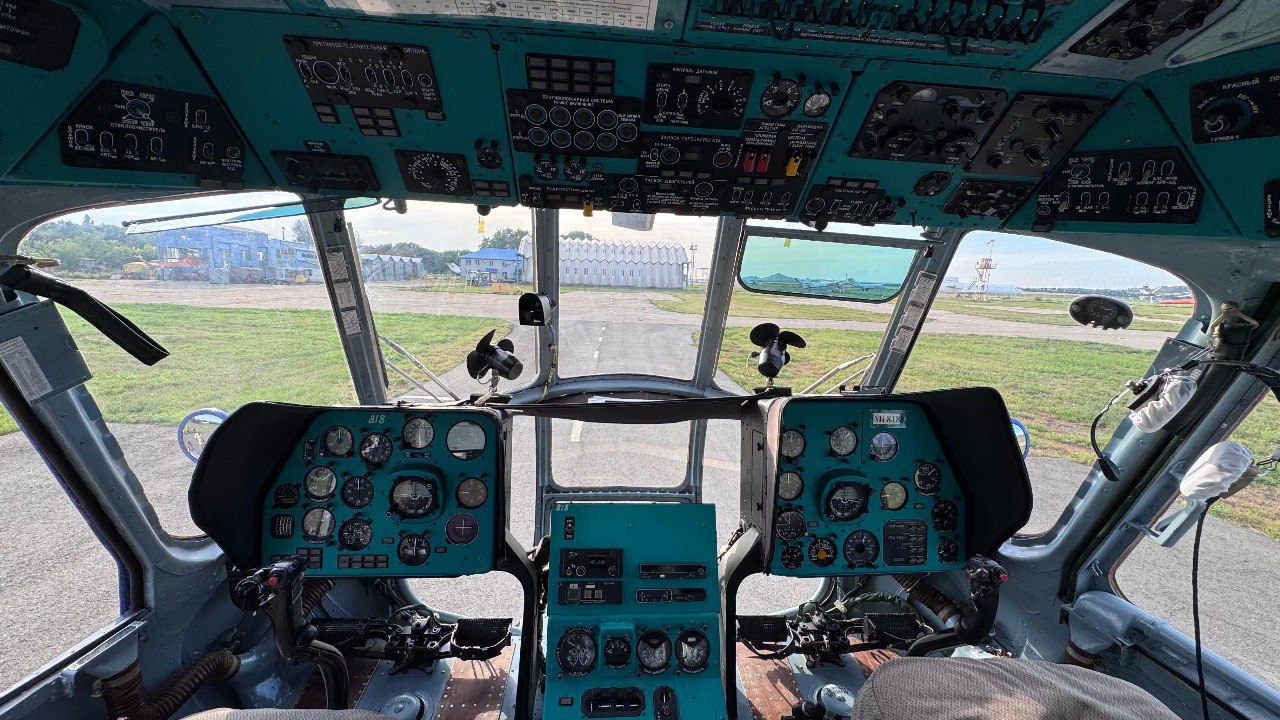
Image: TCA
Baigonusov hopes more young people will be drawn to aviation through education. His division is now organizing practical MI-2 helicopter training for students from the Civil Aviation Academy JSC. There is also close cooperation with the East Kazakhstan Multidisciplinary College, which, with support from the regional governor, launched new specialties in aviation engineering and mechanics on September 1, 2024. Therein, students undergo practical training with the air squadron, learning directly from experienced pilots and engineers.
Still, Baigonusov believes Kazakhstan’s personnel training system needs urgent reform. “I’ve knocked on every door, the academy, the rector, the department head,” he told TCA. “We need to train our people locally. Sending a student to Russia costs $47,000. That’s simply out of reach. We need to promote dual education here, so people can study and work at home.”
Many of the division’s specialists are graduates of now-diminished Soviet-era aviation schools in Kachinsk, Omsk, Kyiv, and Riga. Each year, their ranks grow thinner.
Engineering, Maintenance, and a Race Against Time
Despite operating from aging facilities built in the 1970s and 1980s, the team is working to modernize and extend the lifespan of its equipment. The aircraft fleet, averaging 35 years in age, has undergone extensive inspections and upgrades. Standardization tests have been passed, and all certifications are in place.
Thanks to the expertise of the engineering team, the division recently secured certification for maintaining YAK-40 and YAK-42 aircraft and Mi-8 and Mi-2 helicopters.

Image: TCA
“Before, we relied on outside companies for repairs. Now we do everything ourselves,” says Baigonusov. “That saves time and money and makes us more self-reliant.”
Deputy for the Engineering and Aviation Service (IAS) Lobanov leads a team dedicated to his work, although he, like many in the unit, is already over 55. Baigonusov is determined to attract the younger generation.
“We need to show how important and beautiful this profession is. It’s demanding, but it’s also deeply meaningful.”
Rescuing the Stranded in Kalbatau
Chief pilot Denis Grunsky recalled one of the most dramatic missions of his career to TCA.
“Over 100 people were stuck in a snowdrift near Kalbatau in Kokpekty district. Rescuers couldn’t get through. It was snowing hard, freezing cold… We made three Mi-8 flights to evacuate women and children. Winds were strong, fuel was running low, and the sun was setting; you can’t fly in the mountains at night. But we did it.”
For this team, days off are rare. Technically, they can’t work more than seven days in a row. But as Grunsky puts it: “If we’re not flying, it doesn’t mean we’re not working.”
They also genuinely love their equipment.
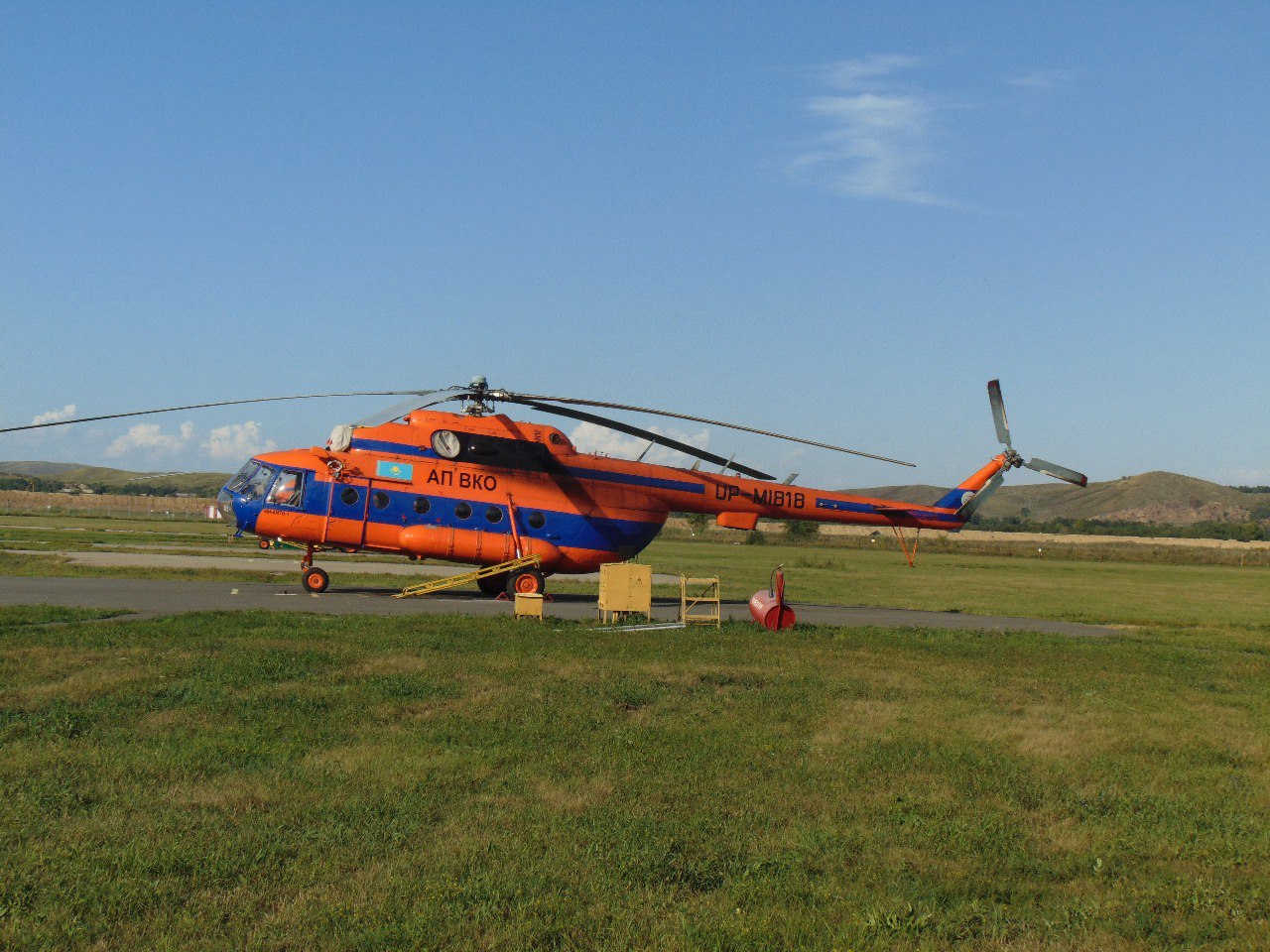
Image: TCA
“Our Machine”: The Mi-8 Helicopter
“The Mi-8 is our legendary machine – the team’s workhorse,” Grunsky told TCA. “It handles temperatures from -50°C to +50°C. You can start it even in the freezing cold with little preheating. It doesn’t need hangars and can carry 22 passengers, plus animals, if needed. It’s not just a tool, it’s our partner.”
While Western helicopters may be sleek, the Mi-8 and Mi-2 remain ideally suited for Kazakhstan’s harsh environments.
“The Mi-2 even has an anti-icing system, which many newer models lack,” Grunsky adds.
The People Behind the Missions
A typical crew includes a captain, co-pilot, and flight engineer, with the co-pilot training to become a future captain. The flight engineer acts as the captain’s eyes, managing water discharge for firefighting and checking the helicopter’s condition.
Grunsky, a father of three, acknowledges the demands of the job: “It looks romantic, but it’s intense: constant medical checks, a strict regime, and physical limits due to pressure changes. It’s not just a job, it’s a lifestyle. I won’t push my kids into this, but if one of them chooses this path, I won’t stop them.”

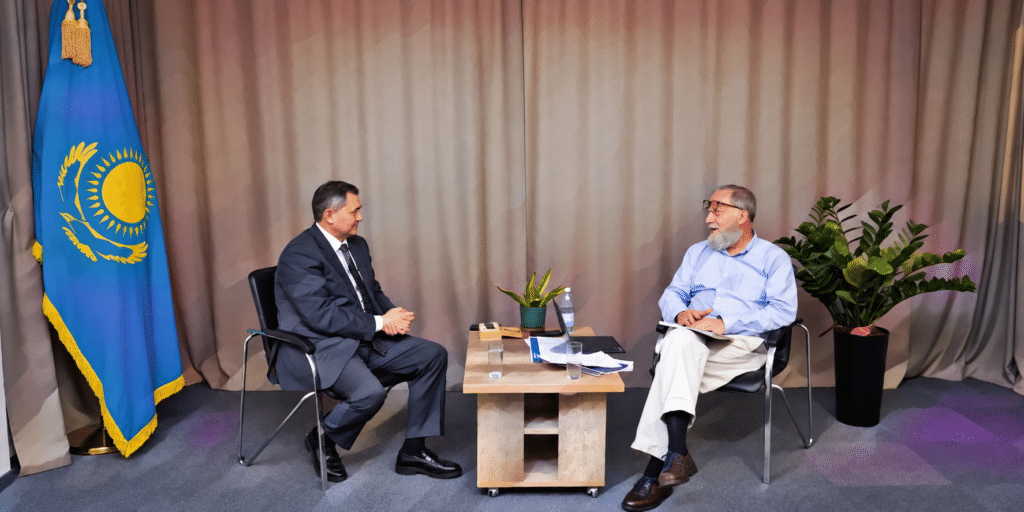
Director of the Aviation Division of the EKR Kalikan Baigonusov; image: TCA
Dispelling Rumors, Building Legacy
Despite their life-saving work, the team faces damaging rumors, such as claims that their helicopters are used by regional officials.
“It’s simply not true,” says Baigonusov. “We operate under strict regulations; every flight is documented with reports and protocols. We’re public servants, not a private airline.”
Private aviation companies with far larger budgets may covet their niche, but Baigonusov remains focused on preserving the division’s mission and legacy: “If there’s no one to pass on the knowledge, everything will be lost. Continuity is what matters most.”