• KZT/USD = 0.00220
  • TJS/USD = 0.10800
  • UZS/USD = 0.00009
  • TMT/USD = 0.29850
  • KZT/USD = 0.00220
  • TJS/USD = 0.10800
  • UZS/USD = 0.00009
  • TMT/USD = 0.29850
  • KZT/USD = 0.00220
  • TJS/USD = 0.10800
  • UZS/USD = 0.00009
  • TMT/USD = 0.29850
  • KZT/USD = 0.00220
  • TJS/USD = 0.10800
  • UZS/USD = 0.00009
  • TMT/USD = 0.29850
  • KZT/USD = 0.00220
  • TJS/USD = 0.10800
  • UZS/USD = 0.00009
  • TMT/USD = 0.29850
  • KZT/USD = 0.00220
  • TJS/USD = 0.10800
  • UZS/USD = 0.00009
  • TMT/USD = 0.29850
  • KZT/USD = 0.00220
  • TJS/USD = 0.10800
  • UZS/USD = 0.00009
  • TMT/USD = 0.29850
  • KZT/USD = 0.00220
  • TJS/USD = 0.10800
  • UZS/USD = 0.00009
  • TMT/USD = 0.29850
07 September 2026

Viewing results 1 - 6 of 98

Uzbekistan Signs $5.9 Billion Deal to Build Central Asia’s First Green Aviation Fuel Plant

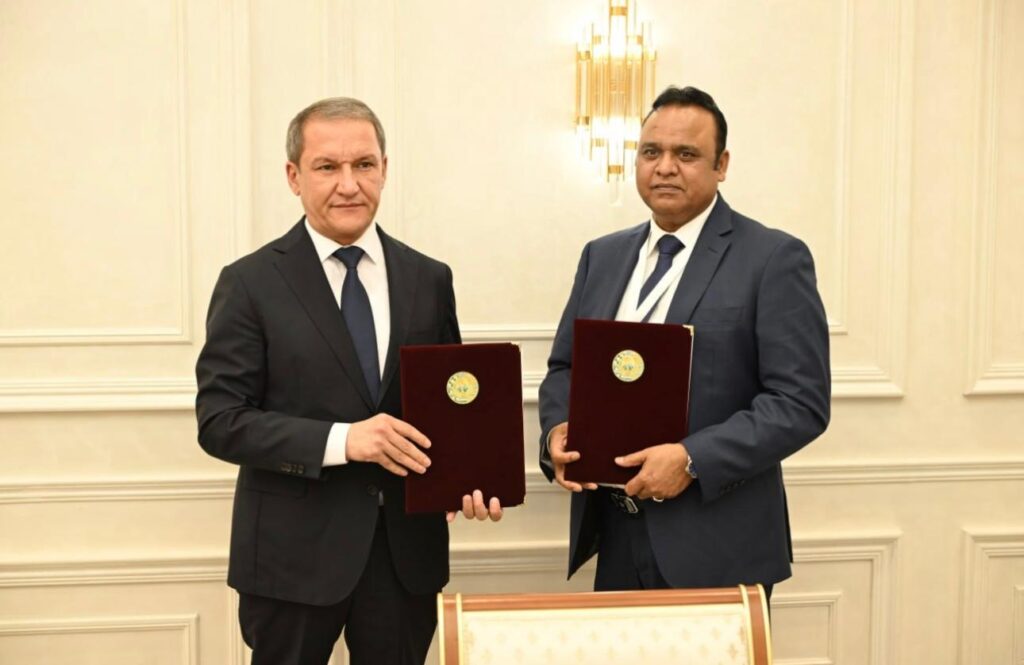
Allied Biofuels FE LLC Uzbekistan has signed key land and water agreements with the Khorezm regional government, marking a significant step toward building Central Asia’s first integrated biorefinery for zero-carbon aviation fuel. The announcement was made during the International Investment Forum in Khiva, where Khorezm Governor Jurabek Rakhimov met with a company delegation led by Chairman and Managing Director Alfred Benedict. The $5.9 billion project will be located in Tuproqqal’a district in the city of Khorezm, and aims to establish a climate-aligned aviation fuel supply chain in Uzbekistan. Once operational, the facility is expected to produce 382,000 tonnes of Sustainable Aviation Fuel (SAF), 152,000 tonnes of Electro-Synthetic SAF (e-SAF), and 11,000 tonnes of renewable green diesel annually. The refinery will be supported by 2 GW of PEM electrolysers, making it one of the largest initiatives of its kind in the region. Benedict described the agreements as “a landmark moment for Allied Biofuels and for Khorezm,” emphasizing that the project combines international expertise with local support to help Uzbekistan achieve its net-zero emissions target by 2030. “This facility will not only supply sustainable aviation fuel at scale but also foster economic growth in the region,” he said. Uzbekistan has committed to becoming carbon-neutral by the end of the decade, and the Khorezm biorefinery is expected to play a central role in that transition. By producing zero-carbon fuels for transport and industry, the project aims to reduce fossil fuel dependency and lower greenhouse gas emissions. Rakhimov welcomed the decision to site the project in Khorezm, highlighting its significance for regional development. He stated that the initiative will create hundreds of skilled jobs, strengthen Khorezm’s position as a hub for green energy, and boost the local economy. Rakhimov also pledged to personally oversee the allocation of land and infrastructure needed to ensure successful implementation.  

Uzbekistan Airways Refutes Near-Collision Reports in Russian Airspace

Uzbekistan Airways has denied claims that one of its aircraft was involved in a near-collision with a private jet in Russian airspace, describing the reports inaccurate and misleading. The airline issued a statement in response to tabloid coverage in Russia alleging a serious aviation incident near Moscow’s Vnukovo International Airport. As previously reported by The Times of Central Asia, the incident allegedly occurred shortly after midnight on September 29 near Serpukhov, south of Moscow. Early accounts indicated that an Uzbekistan Airways Airbus A320 en route from Samarkand and an Embraer Legacy 650 business jet flying from Bodrum came within three kilometers horizontally and 700 feet vertically of each other—below international safety thresholds—due to a miscommunication over altitude clearance. Uzbekistan Airways has firmly rejected this version of events. In a statement from its press service, the airline stressed that its crew fully complied with all instructions from Moscow air traffic control and did not breach any flight regulations. “All altitude levels were maintained in accordance with the established rules and procedures, and the required separation between aircraft was preserved,” the statement read. The airline also clarified that the flight in question occurred on September 28, not September 29 as initially reported. It added that the aircraft’s onboard safety systems did not issue any alerts, and Moscow’s air traffic controllers made no objections or complaints about the crew’s actions. Uzbekistan Airways criticized several Russian media outlets for publishing what it described as unverified information, which was later reprinted by some Uzbek outlets without proper verification. “This created a misleading impression among readers,” the airline said. Reaffirming its commitment to international aviation standards, the company stated that flight safety remains its highest priority and that all crews operate in strict compliance with air traffic control instructions.

Kyrgyzstan Says It’s Close to Being Removed from EU Flight Ban

A delegation from Kyrgyzstan’s Civil Aviation Agency will meet European officials in Brussels next month, marking another step in the campaign to end a two-decade ban on Kyrgyz airlines operating in the European Union because of safety concerns.   The October 7 meeting will be followed by a final European audit in December as Kyrgyzstan moves into the last stage of being removed from the EU’s so-called “blacklist” of air carriers, Kyrgyz President Sadyr Japarov said last week during the re-opening of two of the country’s airports, Naryn and Kazarman.   "Thus, we firmly believe that the European skies, which have been closed since 2006, will reopen for Kyrgyzstan,” said Japarov, who predicted that the possible removal of the ban would boost international tourism in the Central Asian country.  Kanat Tologonov, deputy director of Kyrgyzstan’s Civil Aviation Agency, said this week that European officials will decide on whether to lift the air ban on Kyrgyzstan in May 2026, according to the 24.kg news agency. Speaking to a parliamentary committee on budget and fiscal policy, Tologonov said Kyrgyzstan successfully passed 2023-2024 audits of the International Civil Aviation Organization, a U.N. agency that oversees safety and other aspects of air travel.  As Kyrgyzstan’s bid to regain access to EU skies gains momentum, civil aviation chief Daniyar Bostonov met representatives of the International Air Transport Association this week to discuss upgrading air navigation and the digitization of passenger and air cargo transportation.  The EU Air Safety List is a list of air carriers that it says do not fulfil international safety standards and it bars those airlines “from operating to, in and from the EU, including the overflight.” Sixteen carriers from Kyrgyzstan are on the list, out of a total of 169 banned airlines, according to a June update. The EU barred Kyrgyzstan because of inadequate regulation in the aviation sector and failure to comply with international safety standards.  Civil aviation has been developing in some other parts of Central Asia, including Uzbekistan and Kazakhstan. 

Uzbekistan and United States Leaders Discuss Expanding Strategic Partnership

According to the office of President Shavkat Mirziyoyev, the Uzbek and U.S. presidents held a telephone conversation on Friday, focusing on ways to deepen their countries’ strategic partnership across economic, security, and cultural fields. The details of the call were provided by the Uzbek president’s office. Strengthening Economic Ties The presidential office reported that both leaders emphasized opportunities to expand trade and investment. Bilateral trade grew by 15% in 2024, and the two sides signaled interest in building on that momentum. Prospective projects span civil aviation, mineral resources, energy, agriculture, digital technologies, finance, and education. Later this month, meetings are expected between Uzbek representatives and leading U.S. companies to explore long-term cooperation. Security and Regional Cooperation According to the statement, security issues also featured prominently in the conversation. The two presidents noted ongoing joint work against terrorism, extremism, and illegal migration. They also exchanged views on regional cooperation in Central Asia, highlighting the role of the “C5+1” dialogue format that brings together the United States and five Central Asian countries. Cultural and Humanitarian Exchanges The Uzbek president’s office noted that the discussion touched on expanding cultural and educational links. Branches of U.S. universities are operating in Tashkent, providing new opportunities for academic exchange. Looking ahead, the leaders noted with satisfaction that Uzbekistan’s national football team will participate for the first time in the 2026 World Cup, which the United States will be the main host of. A Growing Partnership Since Mirziyoyev assumed the presidency in 2016, Uzbekistan has pursued a more open foreign policy and a program of internal reforms aimed at modernizing the economy and improving governance. These changes have created new opportunities for cooperation with Washington. The United States, for its part, has supported regional initiatives through the C5+1 framework, while also seeking closer ties with Tashkent in areas such as counterterrorism, economic development, and education. American universities and companies have increased their presence in Uzbekistan, and cultural exchanges have expanded steadily in recent years. Next Steps The president’s office stated that President Mirziyoyev invited President Trump to pay an official visit to Uzbekistan. Both leaders agreed to maintain high-level contacts and continue advancing joint projects and programs. According to the Uzbek president’s office, the conversation was held in a constructive and friendly atmosphere, underscoring a shared interest in further strengthening Uzbek-American relations.

Third Canadian-Manufactured Aircraft for Asman Airlines Arrives in Kyrgyzstan

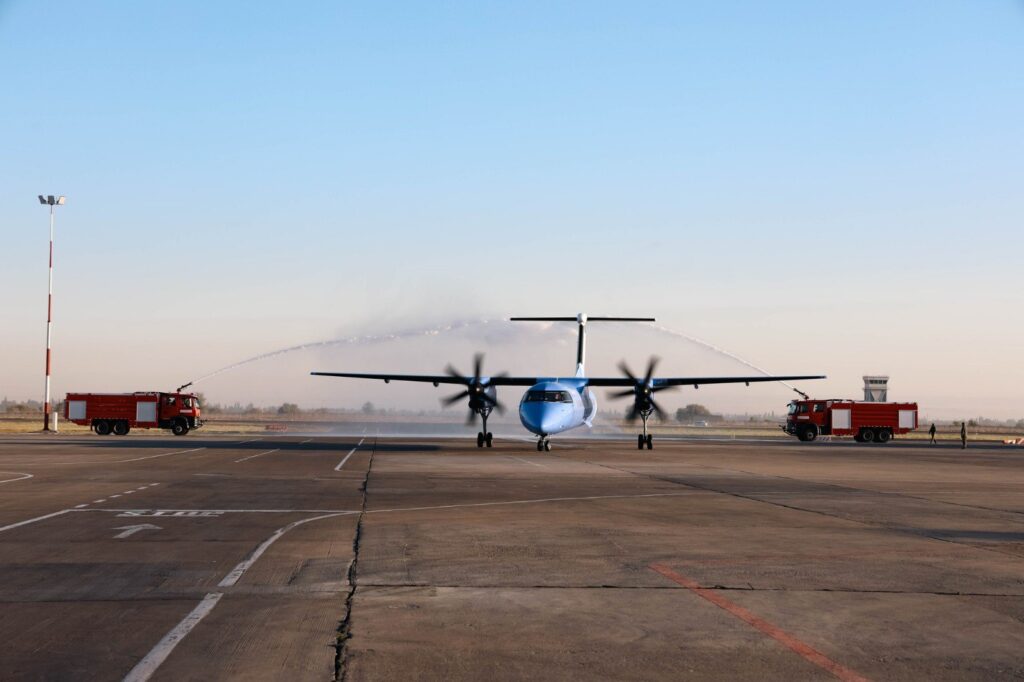
On September 2, the third Dash 8 Q400 aircraft for Kyrgyzstan’s state-owned Asman Airlines arrived at Manas International Airport in Bishkek, according to JSC Airports of Kyrgyzstan. The Dash 8 Q400, manufactured in Canada, is a short-haul turboprop aircraft designed to carry up to 80 passengers over distances of up to 2,000 kilometers. Its specifications make it well-suited for domestic flights in Kyrgyzstan, where mountainous terrain and underdeveloped road infrastructure pose challenges to ground transportation. Asman Airlines has recently restored domestic air connections between Bishkek and remote regional centers, including Talas, Karakol, Kerben, and Kazarman. The arrival of the third short-haul aircraft will allow the airline to expand its route network and improve accessibility and affordability of air travel for residents across the country. The first Dash 8 Q400 entered service in September 2024, followed by a second aircraft in November of the same year. The addition of the third aircraft further enhances Asman Airlines’ ability to meet growing demand for domestic travel. Looking ahead, the airline is considering the acquisition of larger aircraft such as the Airbus A320/A321 and Boeing 737, which would enable the launch of international flights. Kyrgyzstan is currently experiencing growth in both domestic and international passenger traffic. Speaking at the reopening ceremony of Kazarman Airport in the southern Jalal-Abad Region in August, President Sadyr Japarov noted that since 2021, passenger traffic has increased by 46%, while the number of flights has risen by 31%. The expansion of Kyrgyzstan’s air fleet is part of a broader national strategy to modernize the country’s aviation infrastructure. Construction of a new terminal complex at Osh International Airport began in February 2025, while Karakol International Airport and Talas Airport have already reopened. Renovation projects are also underway at Issyk-Kul International Airport and Naryn Airport.

‘Orange Angels’: Aviators of Eastern Kazakhstan Fly Daily Rescue Missions

When there is no help left on the ground, they take to the skies: orange fuselages, the roar of propellers, and salvation descending from above. The Aviation Division of the East Kazakhstan Region - the 'Orange Angels' - is more than a state enterprise; it is a vital lifeline, operating when every minute counts. No Margin For Error Since its founding in 2003, the division has become an indispensable part of the region’s emergency response system. Its 114 full-time specialists conduct medical flights, firefighting operations, evacuations, and rescues. Yet staffing remains a challenge. "We are short 12-13 personnel. Ideally, we should have around 120," Kalikan Baigonusov, Director of the East Kazakhstan Aviation Division, told The Times of Central Asia. “Young people prefer big airlines, foreign skies, and big paychecks. Our salaries are decent, between $1,300 and $2,900, but the profession lacks visibility and appeal. It’s a calling, not just a job.” [caption id="attachment_35346" align="aligncenter" width="1280"] Image: TCA[/caption] Baigonusov hopes more young people will be drawn to aviation through education. His division is now organizing practical MI-2 helicopter training for students from the Civil Aviation Academy JSC. There is also close cooperation with the East Kazakhstan Multidisciplinary College, which, with support from the regional governor, launched new specialties in aviation engineering and mechanics on September 1, 2024. Therein, students undergo practical training with the air squadron, learning directly from experienced pilots and engineers. Still, Baigonusov believes Kazakhstan’s personnel training system needs urgent reform. "I’ve knocked on every door, the academy, the rector, the department head," he told TCA. "We need to train our people locally. Sending a student to Russia costs $47,000. That’s simply out of reach. We need to promote dual education here, so people can study and work at home.” Many of the division’s specialists are graduates of now-diminished Soviet-era aviation schools in Kachinsk, Omsk, Kyiv, and Riga. Each year, their ranks grow thinner. Engineering, Maintenance, and a Race Against Time Despite operating from aging facilities built in the 1970s and 1980s, the team is working to modernize and extend the lifespan of its equipment. The aircraft fleet, averaging 35 years in age, has undergone extensive inspections and upgrades. Standardization tests have been passed, and all certifications are in place. Thanks to the expertise of the engineering team, the division recently secured certification for maintaining YAK-40 and YAK-42 aircraft and Mi-8 and Mi-2 helicopters. [caption id="attachment_35348" align="aligncenter" width="1280"] Image: TCA[/caption] “Before, we relied on outside companies for repairs. Now we do everything ourselves,” says Baigonusov. “That saves time and money and makes us more self-reliant.” Deputy for the Engineering and Aviation Service (IAS) Lobanov leads a team dedicated to his work, although he, like many in the unit, is already over 55. Baigonusov is determined to attract the younger generation. “We need to show how important and beautiful this profession is. It's demanding, but it’s also deeply meaningful.” Rescuing the Stranded in Kalbatau Chief pilot Denis Grunsky recalled one of the most dramatic missions of his career to TCA....