Viewing results 1 - 6 of 139
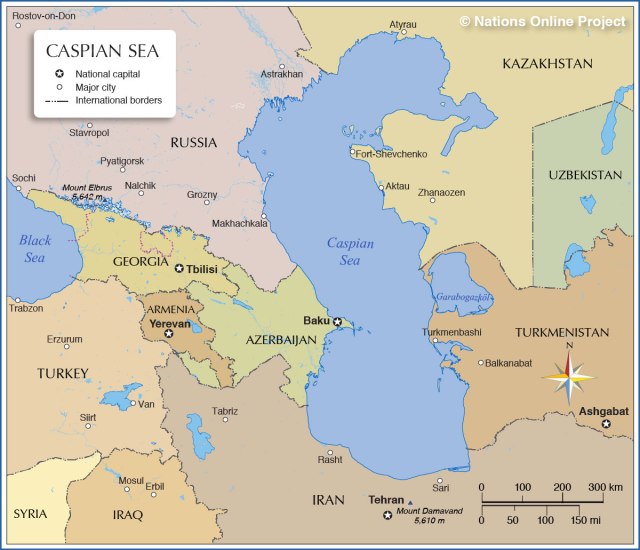
BISHKEK (TCA) — Even after the signing of the Caspian Sea’s Legal Status Convention, prospects of Turkmenistan being someday able to export its natural gas via the proposed Trans-Caspian gas pipeline remain vague and problematic. We are republishing this article on the issue, written by Ilgar Gurbanov, originally published by The Jamestown Foundation’s Eurasia Daily Monitor: Continue reading
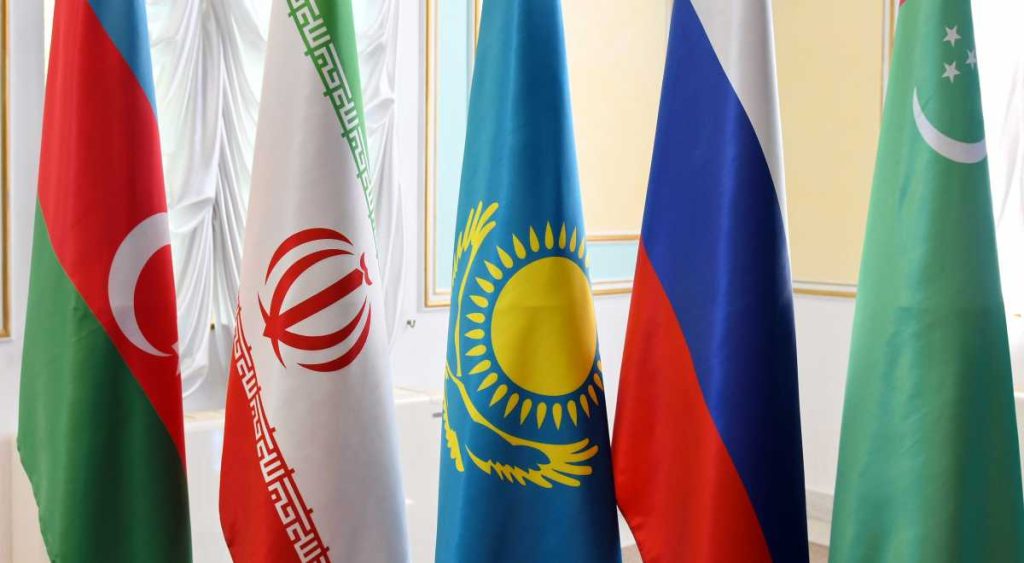
AKTAU, Kazakhstan (TCA) — At their summit in the Kazakh port city of Aktau on August 12, the presidents of Azerbaijan, Iran, Kazakhstan, Russia, and Turkmenistan signed the Convention on the legal status of the Caspian Sea, after more than two decades of discussions. Continue reading
BISHKEK (TCA) — A convention on the legal status of the Caspian Sea, expected to be signed this Sunday, would pave way to implementation of the Trans-Caspian gas pipeline — a project that will diversify gas-export routes for Turkmenistan. We are republishing this article on the issue, written by Peter Leonard, originally published by Eurasianet: Continue reading
ASTANA (TCA) — President of Azerbaijan Ilham Aliyev, President of Iran Hassan Rouhani, President of Russia Vladimir Putin, and President of Turkmenistan Gurbanguly Berdymukhamedov will, at the invitation of Kazakhstan President Nursultan Nazarbayev, take part in the fifth Caspian Summit to be held on August 12 in the Kazakh city of Aktau. Continue reading
BISHKEK (TCA) — The Convention on the legal status of the Caspian Sea is expected to be signed later this year by the five Caspian littoral states—Russia, Kazakhstan, Turkmenistan, Azerbaijan, and Iran. We are republishing this article on the issue, written by Azad Garibov, originally published by The Jamestown Foundation’s Eurasia Daily Monitor: Continue reading
BISHKEK (TCA) — Defining the legal status of the Caspian Sea by its littoral countries — Azerbaijan, Iran, Kazakhstan, Russia, and Turkmenistan — has been a pending issue since the breakup of the Soviet Union. The way the Sea will be defined is important for geostrategic and military plans of Russia and Iran, and for energy projects pursued by Azerbaijan, Turkmenistan and Kazakhstan. We are republishing this article by Stephen Blank on the issue, originally published by the Central Asia-Caucasus Institute (CACI) Analyst: Continue reading