• KGS/USD = 0.01144 0%
  • KZT/USD = 0.00209 0%
  • TJS/USD = 0.10429 0.1%
  • UZS/USD = 0.00008 0%
  • TMT/USD = 0.28530 0%
  • KGS/USD = 0.01144 0%
  • KZT/USD = 0.00209 0%
  • TJS/USD = 0.10429 0.1%
  • UZS/USD = 0.00008 0%
  • TMT/USD = 0.28530 0%
  • KGS/USD = 0.01144 0%
  • KZT/USD = 0.00209 0%
  • TJS/USD = 0.10429 0.1%
  • UZS/USD = 0.00008 0%
  • TMT/USD = 0.28530 0%
  • KGS/USD = 0.01144 0%
  • KZT/USD = 0.00209 0%
  • TJS/USD = 0.10429 0.1%
  • UZS/USD = 0.00008 0%
  • TMT/USD = 0.28530 0%
  • KGS/USD = 0.01144 0%
  • KZT/USD = 0.00209 0%
  • TJS/USD = 0.10429 0.1%
  • UZS/USD = 0.00008 0%
  • TMT/USD = 0.28530 0%
  • KGS/USD = 0.01144 0%
  • KZT/USD = 0.00209 0%
  • TJS/USD = 0.10429 0.1%
  • UZS/USD = 0.00008 0%
  • TMT/USD = 0.28530 0%
  • KGS/USD = 0.01144 0%
  • KZT/USD = 0.00209 0%
  • TJS/USD = 0.10429 0.1%
  • UZS/USD = 0.00008 0%
  • TMT/USD = 0.28530 0%
  • KGS/USD = 0.01144 0%
  • KZT/USD = 0.00209 0%
  • TJS/USD = 0.10429 0.1%
  • UZS/USD = 0.00008 0%
  • TMT/USD = 0.28530 0%

Viewing results 1 - 6 of 45

Lukashenko Turns Up Charm After Kazakhstan Kerfuffle

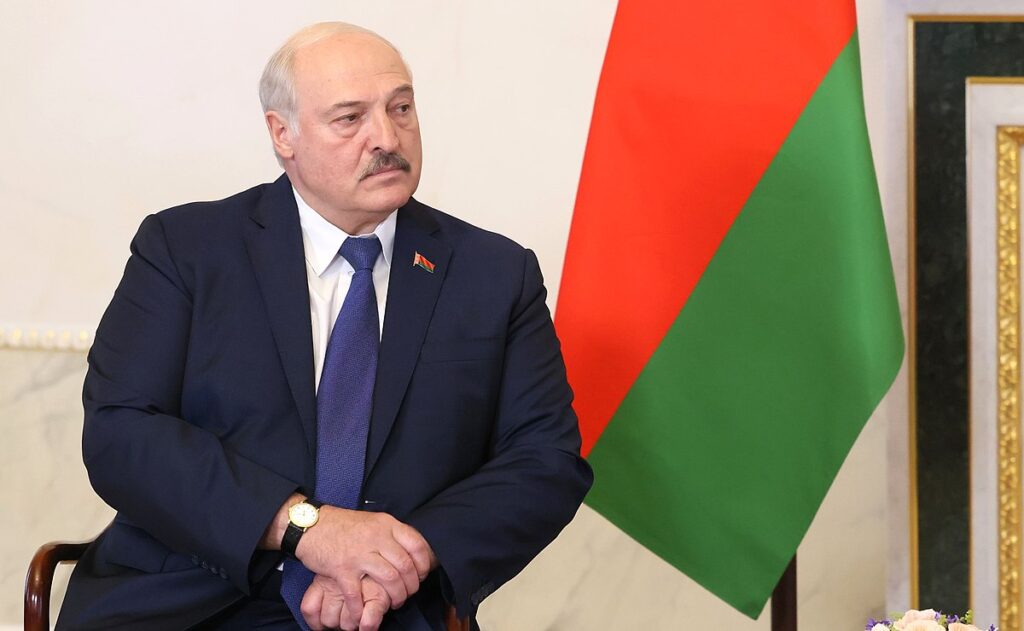
In August, Belarusian leader Aleksandr Lukashenko drew a Kazakh rebuke after he criticized Kazakhstan for what he described as its tepid support for Russia. Lukashenko was a model of diplomatic etiquette on Tuesday, effusively praising Kazakhstan as a close ally during a ceremony at which he received credentials of foreign ambassadors. “Today there are practically no areas where we do not have common interests. Annual $1 billion trade turnover and successful projects in industrial interaction testify to the high dynamics of bilateral cooperation,” the longtime Belarusian ruler said of Kazakhstan. Lukashenko´s comments were reported by Belarus Today, a state-run media group. The Belarusian president also thanked Kazakh President Kassym-Jomart Tokayev for supporting Belarus when it became a member of the Shanghai Cooperation Organization, a regional security group, earlier this year, according to Belarus Today. Kazakhstan was chair of the organization at the time. Things weren’t as convivial in August when Lukashenko, a backer of Russian President Vladimir Putin, suggested in an interview with Russian state television that Kazakhstan was exploiting Russia, now in a third year of war since its full-scale invasion of Ukraine in February 2022. “We are not starting to cheat like some post-Soviet states. They want to take something from Russia, but give nothing in return,” Lukashenko said at the time. The longtime leader of Belarus, who has crushed opposition over 30 years in power, referred to the dispatch of troops from regional countries to Kazakhstan in a show of support after protests and riots erupted there in January 2022, killing more than 200 people. Most of the troops were Russian; a small contingent came from Belarus. Kazakhstan’s Ministry of Foreign Affairs summoned the Belarusian ambassador after Lukashenko’s remarks and said, in an apparently oblique reference to the Ukraine war, that “all disagreements between states should be resolved by political and diplomatic means.” Kazakhstan’s new ambassador in Belarus is Yerlan Baizhanov, formerly the country’s top diplomat in Vietnam, Cambodia and Laos.

The Illusion of Influence: The CSTO’s Journey From Symbolic Maneuvers To Real Challenges

Accompanied by a picture of military hardware - though in reverse gear as if symbolically - today, the CSTO (Collective Security Treaty Organization) website announced that “From 26 to 30 September, formations participating in the command-staff exercise 'Unbreakable Brotherhood-2024' with the CSTO Peacekeeping Forces are regrouping in the Republic of Kazakhstan. Contingents of CSTO troops are being sent from the Republic of Belarus, the Kyrgyz Republic, the Russian Federation, and the Republic of Tajikistan to the exercise area in accordance with the plan.” In reality, the history of the CSTO is one of refusals, inaction, and sometimes unexpected successes. On August 31, Armenia announced it had frozen its participation in the CSTO. Prime Minister Nikol Pashinyan said he would not name the day when Armenia would leave the CSTO and called the decision to freeze the republic's participation in all structures of the organization correct “at this stage.” In many ways, this half-hearted decision reflects a certain amorphousness that originally characterized the CSTO.   History The history of the structure's emergence reflects this lack of crystalline form. The Collective Security Treaty (CST) was signed in Tashkent between Armenia, Kazakhstan, Kyrgyzstan, Russia, Tajikistan and Uzbekistan on May 15, 1992. Azerbaijan, Belarus and Georgia later joined in 1993. The treaty came into effect in 1994 and was set to last five years. During the 1990s and the disintegration of Soviet-era institutions, organizations such as the CSTO or the previously created Commonwealth of Independent States (CIS), whose founding protocol was signed in Almaty, were created to facilitate a smooth “divorce” between the newly independent states. The CSTO was also seen as a force capable of curbing the regional conflicts which were boiling over, such as the Mujaheddin in Afghanistan. Tashkent's bet on Russian weapons in case of conflicts with the Taliban did not work out, however. From the turn of the 1990s into the 2000s, two serious fissures across the borders of Uzbekistan and Kyrgyzstan took place; the republics fought back with their own military and weapons, in addition to Kazakhstan coming to the rescue. The Collective Security Treaty expired in 1999, with Uzbekistan, Azerbaijan, and Georgia withdrawing, whilst Armenia, Belarus, Kazakhstan, Kyrgyzstan, Russia, and Tajikistan soldiered on under a new pact. The remaining states later transformed the CST into the Collective Security Treaty Organization in 2002. Uzbekistan joined as a full member of the CSTO in 2006 but then flip-flopped and suspended its membership in 2012.   A powerless organization While the CSTO was still developing, with President Vladimir Putin coming to power in Russia, the Kremlin's foreign policy changed substantively from that of the Yeltsin era, when Moscow remained indifferent to Nursultan Nazarbayev's integration initiatives. The new direction of Russian foreign policy was expressed in the concepts of “Russia rising from its knees” and the "gathering of lands.” Over time, this evolved into joint war games and military operations with the West in the Middle East and Africa, and for a period the Kremlin seemed to lose interest in Central Asia....

Pakistan Joins Transport Corridor Between Indian Ocean and Eastern Europe

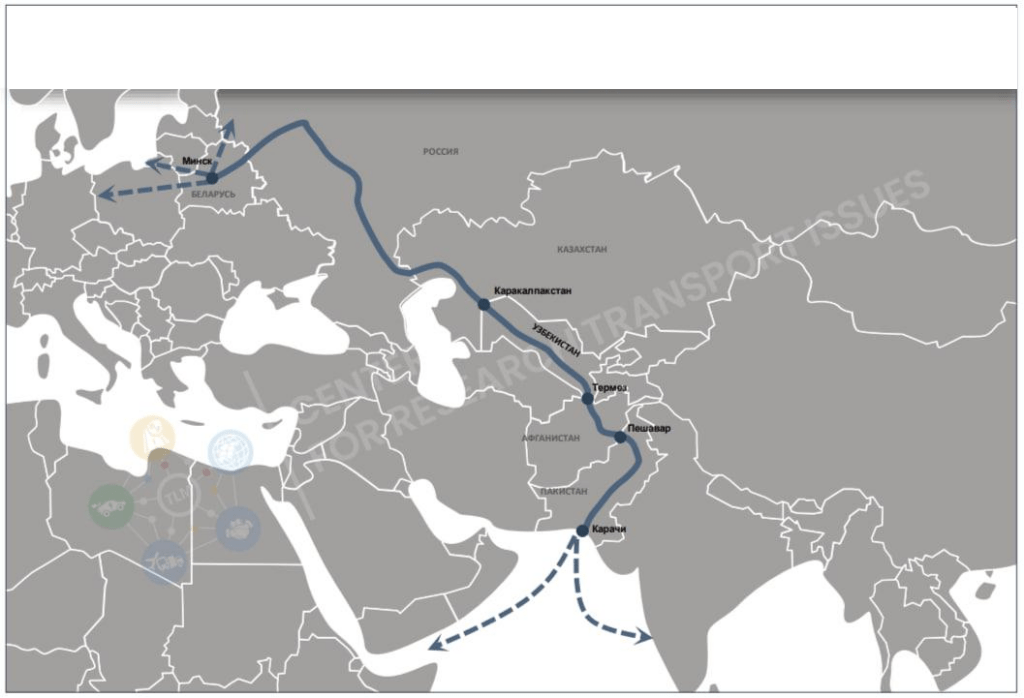
Uzbekistan’s Ministry of Transport has announced that Pakistan has officially joined the memorandum of understanding on establishing and developing the international transport corridor "Belarus–Russia–Kazakhstan–Uzbekistan–Afghanistan–Pakistan–Indian Ocean." The Pakistani Ministry of Communications signed this memorandum on September 18. The process of creating this multimodal transport corridor began in August 2022, at a meeting between the Uzbek government and the Eurasian Economic Commission – the governing body of the Russian-led Eurasian Economic Union that also includes Armenia, Belarus, Kazakhstan, and Kyrgyzstan. In November 2023, the transport ministries of Russia, Kazakhstan, and Uzbekistan signed a memorandum of understanding, launching the project's active phase of work. The group's first meeting on developing the proposed multimodal transport corridor was held in April 2024 in Termez, Uzbekistan. During that meeting, Belarus joined the memorandum, while Afghanistan and Pakistan announced the beginning of internal procedures for joining the project. At that meeting, a roadmap was signed, including specific plans for the development of cargo transportation, analysis of cargo flows, introduction of electronic digital documents, and optimization of customs procedures. The participating countries expect that the new corridor will become an important link in Eurasia's transport system, providing convenient and efficient routes for the transit of goods and strengthening economic cooperation.

Kyrgyzstan Hosts CSTO Exercises

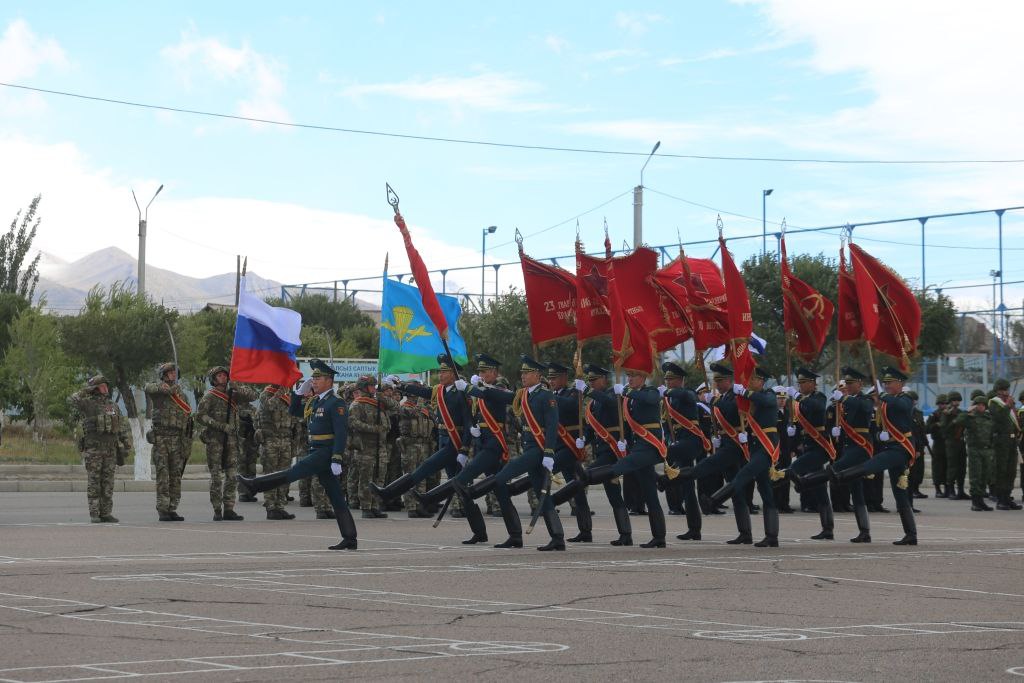
According to a statement from the Collective Security Treaty Organization (CSTO), troops from five of the organization's six member states -- Kyrgyzstan, Russia, Kazakhstan, Belarus, and Tajikistan -- have convened this week at the Edelweiss military training ground in Kyrgyzstan's Issyk-Kul region for training. The joint exercises involve over five thousand people and 900 units of military equipment, with only Armenia not represented. “The tasks of the exercise include improving mechanisms for making and implementing decisions on the use of forces and means, as well as increasing coherence between the armies of the allied countries and the interoperability of military formations in preparing and conducting joint operations,” said Andrei Serdyukov, Chief of the CSTO Joint Staff. The exercises combine various training components. The maneuvers include special exercises with intelligence forces, and logistics exercises. The Interaction-2024 command-staff exercise is aimed at preparing for a joint operation to resolve a potential armed conflict. [caption id="attachment_22933" align="aligncenter" width="300"] @TCA. A.Chipegin[/caption] The CSTO press service said that one of the exercise's priorities this year is to improve the deployment of the collective forces, including managing the transit of military contingents through allied countries. Observers from nine countries are present at the Edelweiss ground: Algeria, China, Egypt, India, Iran, Mongolia, Pakistan, Saudi Arabia, and Uzbekistan. Also observing the exercise are representatives of the UN Secretariat, the SCO Secretariat, the CIS Executive Committee, and the CIS Anti-Terrorism Center. “In our dynamically changing world, security is becoming paramount, and this requires new approaches, effective coordination, and clear solutions... Our countries have become direct participants in the beginning reshuffle of forces in the world,” Lieutenant General Baktybek Bekbolotov, Kyrgyzstan's Minister of Defense, commented at the opening of the exercise. According to Bekbolotov, the main threats to the countries of Central Asia are terrorism, separatism, and extremism, as well as the arrival of radical groups from the Middle East to the region's borders. “With a global threat, the efforts of one country are not enough. There are regional organizations for this purpose; in our case, the main one is the CSTO,” Bekbolotov stressed.

Kazakhstan Summons Belarusian Ambassador After Lukashenko’s Criticism

In a significant development, Kazakhstan's Ministry of Foreign Affairs has summoned the Belarusian Ambassador in response to critical remarks made by Belarusian President, Aleksandr Lukashenko. This incident highlights underlying tensions between Kazakhstan and Belarus - two nations with a shared historical backdrop and intricate political ties – and are emblematic of wider diplomatic rifts across the post-Soviet landscape. Kazakhstan and Belarus have long enjoyed a multifaceted relationship which dates back to their time within the Soviet Union. Both are members of several regional organizations, including the Commonwealth of Independent States (CIS) and the Eurasian Economic Union (EAEU), which aim to foster economic and political cooperation among former Soviet republics. Kazakhstan ranks second in terms of foreign trade of the Republic of Belarus within the CIS countries, with exports to Belarus totaling $153.07 million in 2023. Since gaining independence in 1991, Kazakhstan and Belarus have navigated their transition to sovereign states with varying degrees of success. After brutally crushing a series of mass demonstrations in 2020-21, Lukashenko’s Belarus has drawn ever closer to its patrons in the Kremlin. Prior to suppressing these protests following what were widely deemed to be rigged elections, Lukashenko was perhaps best known in the popular Western consciousness for his suggestion that Covid could be cured by riding a tractor and drinking vodka. In sharp contrast, in recent years, following the demise of long-standing former-President Nazarbayev and his clique, Kazakhstan has followed a very different trajectory, seeking to rein in corruption, guarantee the rule of law, and adopting a multi-vector approach to its foreign policy as its global standing rises. In this latest incident, the diplomatic strain was triggered by President Lukashenko's public criticism of Kazakhstan. During an interview with Russian state television, Lukashenko stated that: “We are not starting to cheat like some post-Soviet states. They want to take something from Russia, but give nothing in return… It won't work that way… The time is not far away when you will come to the same Russia and ask for support and help. There is no one else to ask... Something happened in Kazakhstan - who was asked? China, India and Pakistan are nearby… No. Here, ‘Putin, Lukashenko – help!’ And we [CSTO troops] were transferred there.” In a statement released following a meeting between Belarusian Ambassador Pavel Utyupin and Kazakhstan’s Deputy Minister of Foreign Affairs, Murat Nurtleu, Kazakhstan expressed concern over Lukashenko’s statement and offered up a rebuke: “Kazakhstan pursues a balanced and peaceful foreign policy in accordance with the UN Charter and the fundamental norms of international law,” the statement reads. “Our country is firmly convinced that all disagreements between states should be resolved by political and diplomatic means. In the current geopolitical conditions, the foreign policy course of the country developed by the head of state has proven its effectiveness.” The summoning of the ambassador is an oft-used diplomatic tool in addressing grievances, whilst also opening a channel for dialogue and resolution. As members of the EAEU, both countries benefit from mutual trade agreements,...

Lukashenko In Uzbekistan To Talk Trade

The president of Belarus Alexander Lukashenko arrived in Uzbekistan on February 7th for a two-day visit, holding official talks with president Shavkat Mirziyoyev in Tashkent. The two leaders discussed their countries' trade, economic and cultural ties. Mr Lukashenko's visit coincided with a meeting of the Business Council in Tashkent, which featured high-ranking officials and important businesspeople from the two countries. Last week a delegation of more than 100 Uzbek businessmen paid a working visit to Belarus, during which a trade house was opened at the Uzbek Chamber of Commerce & Industry in Minsk. Over the past seven years Belarus and Uzbekistan have increased bilateral trade by more than four times; turnover was $565m in 2023. The nations intend to increase this figure to $1bn within two years, expanding cooperation in sectors including agriculture, education, tourism, forestry and housing. At present Uzbekistan's exports to Belarus comprise industrial goods, food products, beverages and tobacco products. In monetary terms, Belarus' s investments in Uzbekistan's economy have increased threefold over the past three years and amount to $45.6m. Uzbekistan in turn buys foodstuffs, machinery and transportation equipment from Belarus.