• KZT/USD = 0.00224
  • TJS/USD = 0.10810
  • UZS/USD = 0.00009
  • TMT/USD = 0.29850
  • KZT/USD = 0.00224
  • TJS/USD = 0.10810
  • UZS/USD = 0.00009
  • TMT/USD = 0.29850
  • KZT/USD = 0.00224
  • TJS/USD = 0.10810
  • UZS/USD = 0.00009
  • TMT/USD = 0.29850
  • KZT/USD = 0.00224
  • TJS/USD = 0.10810
  • UZS/USD = 0.00009
  • TMT/USD = 0.29850
  • KZT/USD = 0.00224
  • TJS/USD = 0.10810
  • UZS/USD = 0.00009
  • TMT/USD = 0.29850
  • KZT/USD = 0.00224
  • TJS/USD = 0.10810
  • UZS/USD = 0.00009
  • TMT/USD = 0.29850
  • KZT/USD = 0.00224
  • TJS/USD = 0.10810
  • UZS/USD = 0.00009
  • TMT/USD = 0.29850
  • KZT/USD = 0.00224
  • TJS/USD = 0.10810
  • UZS/USD = 0.00009
  • TMT/USD = 0.29850
23 September 2026

Viewing results 1 - 6 of 140

Kazakhstan Takes the Initiative: Delegation Planning to Head to U.S. to Tackle Trump Tariffs

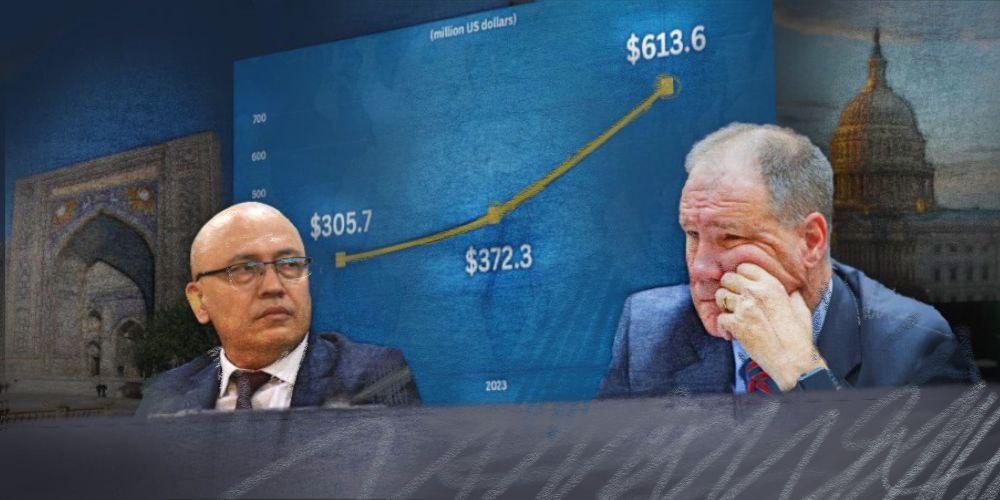
Deputy Minister of Trade and Integration Zhanel Kushukova has announced Kazakhstan's decision to send a high-level delegation to the United States for consultations on import duties, marking a proactive step to address trade challenges and strengthen economic ties. This move comes amid heightened tensions in global trade after sweeping tariffs were unveiled by U.S. President Donald Trump, including a significant 27% duty on Kazakh goods. The delegation aims to foster dialogue on reducing trade barriers, advocate for the equitable treatment of exports, and explore exceptions for certain goods. No date has been set for the visit yet. The decision demonstrates Kazakhstan's commitment to bolstering its position as a key player in international trade. The targeted discussion will focus on sensitive issues, including tariffs impacting industries such as crude oil, uranium, silver, and ferroalloys, which, as noted by the Ministry of Trade and Integration, “constitute 92% of total exports.” As previously reported by The Times of Central Asia, while these goods might qualify for exemptions under U.S. regulations, the higher tariff symbolizes a broader challenge for Kazakhstan in its response to navigating the evolving trade landscape. Context of Trump's Tariff Policy The 27% tariff imposed on Kazakhstan stands out as by far the highest targeting Central Asia, where neighboring Uzbekistan, Turkmenistan, Tajikistan, and Kyrgyzstan will face a 10% baseline duty. Billed as addressing trade imbalances and protecting U.S. industries – though the methodology behind the administration’s calculations has baffled many analysts - Trump's tariff regime has introduced a layered system targeting a raft of nations. While China has been hit hardest, with seemingly ever-increasing duties now standing at a dizzying 145%, even smaller economies such as impoverished Cambodia (49%) and Laos (48%) have been caught in the crossfire, raising concerns about disproportionate impacts on developing nations. While Trump stepped back from the brink on April 9, announcing a 90 day pause for the majority of countries before doubling down on China, companies such as Apple - the world’s most valuable publicly listed company – had already experienced a fall in market capitalization of more than $300 billion on the day after the policy was announced, its’ worst single-day drop since 2020. Amidst a slump in markets globally, meanwhile, U.S. Federal Reserve chair, Jerome Powell, has warned that Trump’s tariffs will hit the U.S. economy and lead to rising prices. Economists have noted the potential ripple effects of tariffs on global markets, with fears of supply chain disruptions and stagflation growing. For Kazakhstan, a resource-rich economy striving to diversify beyond its traditional oil and mining industries, the heightened duties could dampen its exports while complicating efforts to attract foreign investment. However, analysts such as Rasul Rysmambetov have argued that Kazakhstan’s relatively small share in global trade may shield it from significant fallout, with the tariff largely “symbolic” in nature. Opportunities Amid Challenges Despite these challenges, Kazakhstan is attempting to leverage the situation to advance its diplomatic and economic strategies, with the country’s Ministry of Trade and Integration working to secure specific exemptions...
U.S. Cancels $2.5 Million Civic Engagement Grant for Uzbekistan

The U.S. State Department has canceled a $2.5 million grant intended to support civic engagement programs in Uzbekistan. The decision comes as part of a broader review of foreign aid expenditures initiated by U.S. Senator Marco Rubio and the Department of Government Efficiency. The Uzbekistan program was one of 139 foreign aid grants, totaling $215 million, that were recently scrapped. Other canceled initiatives include $5.2 million for a media diversity project in the United Kingdom, $2 million for newsroom sustainability efforts in Moldova, and nearly $1 million for women’s organizations in Mauritania. Additional cuts affected projects focused on disinformation, media freedom, and gender equity in Europe, Brazil, and North Africa. Continued U.S.-Uzbekistan Engagement Despite the funding cut, bilateral ties between the United States and Uzbekistan continue to strengthen. A draft of Uzbekistan’s 2025 government program, currently open for public discussion, outlines plans to deepen cooperation with Washington. These include a proposed high-level visit to the U.S. and the inaugural round of the Enhanced Strategic Partnership Dialogue, scheduled to take place in Tashkent. In March 2025, Uzbekistan's Ambassador to the U.S., Furkat Sidikov, also hosted a Congressional Breakfast, which focused on trade, investment, and U.S.-Uzbekistan relations. Over 300 American companies are currently operating in Uzbekistan Uzbekistan recently hosted the first EU-Central Asia summit in Samarkand, though the prospects of a U.S.-Central Asia C5+1 summit in 2025 remain uncertain. Daniel Runde, a senior official at the Center for Strategic and International Studies, has emphasized the importance of a strong U.S.-Uzbek partnership. Runde noted that Uzbekistan plays a critical role in maintaining stability in Central Asia and in balancing the regional influence of Russia and China.

Belarus and Kazakhstan Strengthen Military Cooperation

The Defense Ministries of Belarus and Kazakhstan have made strides to deepen their military cooperation. This was confirmed during an official visit to Kazakhstan by the Chief of the General Staff of the Belarusian Armed Forces and First Deputy Defense Minister, Pavel Muraveiko. Muraveiko held negotiations with Kazakhstan's Defense Minister, Ruslan Zhaksylykov, and Lieutenant General Sultan Kamaletdinov, First Deputy Minister of Defense and Chief of the General Staff of Kazakhstan's Armed Forces. The discussions focused on the current state of military collaboration, with both sides identifying paths to increase cooperation in areas of mutual interest. Both Belarusian and Kazakhstani representatives reaffirmed their dedication to strengthening relations and noted the momentum of their defense sector cooperation. Significant emphasis was placed on exploring mutually beneficial projects and enhancing military capabilities via the exchange of knowledge. Muraveiko's visit also included a tour of key military institutions in Kazakhstan, namely the National Defense University and the Center for Military-Strategic Research. The visit follows a major diplomatic spat in August 2024, when Kazakhstan’s Ministry of Foreign Affairs summoned the Belarusian Ambassador following critical comments made by the Belarusian President. Lukashenko's remarks on Kazakhstan’s reliance on Russia for support, alongside perceived criticism of its foreign policy, sparked a rebuke from Kazakhstan, which emphasized its balanced, peaceful approach and adherence to international norms. The incident reflected broader post-Soviet frictions, with both nations historically sharing close ties through regional bodies like the EAEU and CIS. Further complicating matters, Lukashenko's comments at the time also antagonized Armenia, leading to protests at the Belarusian Embassy in Yerevan, and underscoring regional discord.

Congressman Trent Kelly and Ambassador Furkat Sidikov Drive U.S.-Uzbekistan Trade and Investment Progress

On March 26, 2025, Ambassador Furkat Sidikov hosted a Congressional Breakfast featuring Congressman Trent Kelly (R, Mississippi), Co-Chair and founding member of the U.S.-Uzbekistan Caucus. The event focused on the theme of trade, investment, and U.S.-Uzbekistan relations. Business leaders and policy experts also joined to discuss the evolving economic landscape and the future of U.S.-Uzbekistan relations. Ambassador Sidikov highlighted the presence of over 300 American companies in Uzbekistan and expressed optimism about bilateral trade soon surpassing $1 billion annually. The Ambassador emphasized the strengthening of multifaceted partnership with the U.S. over economic and security partnerships, alongside ongoing reforms in democracy and human rights. Congressman Kelly praised the strong partnership between the United States and Uzbekistan, highlighting the country’s reforms and its openness to U.S. business and trade. He expressed deep admiration for the Uzbek people and their government, emphasizing the growing ties fostered through the State Partnership Program with Mississippi. Congressman Kelly voiced strong support for removing the Jackson-Vanik Amendment (a Cold War-era provision that restricts trade with certain countries), stating that the time was right for such action. He noted ongoing collaboration with congressional and senatorial colleagues to advance this effort. Referring to Uzbekistan Day on the Hill as a growing tradition, he encouraged stronger connections between the two nations, underscoring Uzbekistan's vibrant culture, abundant resources, and welcoming spirit. [caption id="attachment_30169" align="aligncenter" width="1280"] Ambassador Furkat Sidikov, Congressman Trent Kelly (R, Mississippi), and Congresswoman Carol Miller (R, West Virginia) display the Uzbekistan Normalized Trade Act, H.R. 2329[/caption] The Uzbekistan Caucus was established in 2018 to strengthen bilateral relations between the United States and Uzbekistan by encouraging dialogue on issues such as trade, security, governance, and cultural exchange. While bilateral caucuses are often seen as ceremonial with limited tangible outcomes, the Uzbekistan Caucus has proven to be an exception by driving meaningful progress in U.S.-Uzbekistan relations. This success reflects the contributions of both officials. Ambassador Sidikov has served as Uzbekistan's ambassador to the United States since 2023, playing a key role in strengthening bilateral ties. During his tenure, he facilitated the signing of the Customs Mutual Assistance Agreement (CMAA), streamlining trade and enhancing border security, and supported Uzbekistan’s reforms to align with World Trade Organization (WTO) standards, fostering a more open and competitive economic environment. These efforts have not only expanded market access, such as enabling U.S. meat and poultry exports to Uzbekistan, but also fostered deeper economic and strategic ties between the two nations. Congressman Kelly's 36 years of military service, including his role as a brigadier general, two Bronze Star Medals, and deployments to Iraq, have been instrumental in advancing collaboration with Uzbekistan through the State Partnership Program. His efforts have supported joint training, disaster preparedness, and modernization initiatives, providing valuable U.S. expertise and strengthening defense ties between the two nations. Uzbekistan ranks 58th in the Global Firepower Index, which ranks countries by military strength.

Opinion: Are Kazakhstan and the U.S. Reaching Common Ground on Sovereignty and Mutual Engagement?

Kazakhstan’s President Kassym-Jomart Tokayev has made his position clear: his country must remain sovereign, and activities to exert foreign influence should be closely monitored. The message from Astana is that cultural impositions from abroad are not welcome. Tokayev’s longstanding view that Kazakhstan’s democracy should evolve on its own terms has gained new traction with the return of U.S. President Donald Trump to the White House. Washington's avoidance of values-based diplomacy in favor of a hard-nosed, transactional model reinforces Astana’s instincts and creates an opening for a new kind of engagement between the two. "The so-called democratic moral values," Tokayev said, "have been imposed on many countries for decades." Moreover, "under this guise, open interference in the internal affairs of states through international non-governmental organizations and foundations has become widespread. Its ultimate goal," he concluded, "is only theft, that is, pocketing billions of dollars in budgets." For decades, the U.S. policy in Central Asia was fixated on democratic governance, press freedoms, and minority rights, seeking to advance these objectives through NGO funding and media support. In principle, these directions align with Kazakhstan’s own institutional reforms. In practice, however, they became points of friction. Astana has pursued decentralization and anti-corruption measures on its own terms, so any tension with Washington did not concern governance itself. It was, rather, about Washington’s insistence on deeper cultural and political shifts. The unease was not hypothetical. It was spelled out in statements by U.S. officials visiting Kazakhstan. They "were glad to discuss key human rights issues including the freedoms of expression and peaceful assembly, and respect for the rights of disabled persons, members of the LGBTQI+ community, and political prisoners." Moreover, these issues were framed as non-negotiable pillars of engagement, without reference to the cultural context of Kazakhstan’s legal and political traditions. In some cases, the “political prisoners” were propped up by NGOs funded by the U.S. Government. From Washington’s perspective, these were essential democratic norms; from Astana’s, they were foreign expectations imposed from outside. In truth, Kazakhstan had seen this dynamic before. Its wariness of Western-backed NGOs was informed by patterns of events. In Astana’s view, some so-called civil society initiatives weren’t merely fostering grassroots activism. They were vehicles for political engineering. For instance, Mukhtar Ablyazov, who remains accused of embezzling $10 billion from Kazakhstan's BTA Bank, fled to Britain in the mid-2000s before escaping criminal charges to France, where he was granted asylum until being ordered to leave in 2023. Despite his history of corruption, he rebranded himself as a political opposition figure and human rights leader, cultivating a network of international NGOs and earning significant support within the European Union. As recently as February 2025, he and his NGO allies received backing from members of the Parliamentary Assembly of the Council of Europe. A similar strategy has been employed by public figures like Bergey Ryskaliyev, Akezhan Kazhegeldin, and Karim Massimov. These individuals, despite facing criminal allegations, have amassed significant wealth that appears to have been used to fund lobbyists, NGOs, media and other...

Kyrgyz-Tajik Border Agreement Seeks to End Years of Hostility

Kyrgyzstan and Tajikistan signed an agreement on March 13 that aims to put an end to tensions that have made their border the deadliest area in Central Asia for more than a decade. Underscoring the significance of this breakthrough was Tajikistan President Emomali Rahmon making his first state visit in nearly twelve years to the Kyrgyz capital Bishkek to sign the deal on the delimitation of the Kyrgyz-Tajik border. A Long-Standing Dispute Marking the border in the mountainous, sparsely inhabited eastern section of the two countries’ border was not difficult, and by 2011, some 520 kilometers had been demarcated. Reaching a final agreement on the western 487 kilometers, located in the Ferghana Valley and more densely populated, however, was far more complicated due to roads and canals that passed through both countries’ territories. Rahmon’s visit in May 2013 came a month after hundreds of residents of border communities clashed near the Kyrgyz village of Ak-Sai and Tajikistan’s Vorukh enclave. Such incidents were increasing, though at that time they were limited to fistfights, throwing sticks and stones, and vandalism of property, usually vehicles. In May 2013, Rahmon and then Kyrgyz President, Almazbek Atambayev, discussed measures to ease tensions along the border, but along the frontier, the meeting of the two presidents in the Kyrgyz capital made little difference. In January 2014, a Kyrgyz construction crew started work on a bypass road around the Tajikistan’s Vorukh enclave, and an argument broke out between border guards of the two countries. Insults led to an exchange of fire, during which Tajik border guards reportedly used grenade launchers and mortars. Five Kyrgyz and two Tajik border guards were wounded in the fighting. It was the first time weapons were used during border conflicts, but from that time on, disputes increasingly involved gunfire, increasing the number of casualties and sometimes resulting in deaths. Both governments sent additional troops and military equipment to the border area, adding fuel to the fire. On July 26, 2019, four days after another clash near the Vorukh enclave left one person dead and 27 injured, Rahmon met with then-Kyrgyz President Soronbai Jeenbekov in the Vorukh enclave. Again, there were promises of new steps to defuse tensions and hasten an agreement on border delimitation, but as had happened previously, it was not long before fights erupted, adding to the growing casualty list along the Kyrgyz-Tajik border. From Bad to Worse On April 28, 2021, Kyrgyz villagers spotted a group of Tajik citizens setting up a camera on a water intake station near the Kyrgyz village of Kok-Tash. An argument quickly led to large-scale clashes that spread along several sections of the Kyrgyz-Tajik border. Armed forces from the two countries used heavy machine guns, mortars, and armored vehicles. Tajikistan even sent helicopter gunships to attack one area in Kyrgyzstan. The fighting only lasted two days, but when it was over, 54 people were dead, hundreds were wounded, thousands were forced to flee the area, and there was damage to homes and other buildings....