• KGS/USD = 0.01144 0%
  • KZT/USD = 0.00205 0%
  • TJS/USD = 0.10785 0.09%
  • UZS/USD = 0.00008 0%
  • TMT/USD = 0.28571 0.28%
  • KGS/USD = 0.01144 0%
  • KZT/USD = 0.00205 0%
  • TJS/USD = 0.10785 0.09%
  • UZS/USD = 0.00008 0%
  • TMT/USD = 0.28571 0.28%
  • KGS/USD = 0.01144 0%
  • KZT/USD = 0.00205 0%
  • TJS/USD = 0.10785 0.09%
  • UZS/USD = 0.00008 0%
  • TMT/USD = 0.28571 0.28%
  • KGS/USD = 0.01144 0%
  • KZT/USD = 0.00205 0%
  • TJS/USD = 0.10785 0.09%
  • UZS/USD = 0.00008 0%
  • TMT/USD = 0.28571 0.28%
  • KGS/USD = 0.01144 0%
  • KZT/USD = 0.00205 0%
  • TJS/USD = 0.10785 0.09%
  • UZS/USD = 0.00008 0%
  • TMT/USD = 0.28571 0.28%
  • KGS/USD = 0.01144 0%
  • KZT/USD = 0.00205 0%
  • TJS/USD = 0.10785 0.09%
  • UZS/USD = 0.00008 0%
  • TMT/USD = 0.28571 0.28%
  • KGS/USD = 0.01144 0%
  • KZT/USD = 0.00205 0%
  • TJS/USD = 0.10785 0.09%
  • UZS/USD = 0.00008 0%
  • TMT/USD = 0.28571 0.28%
  • KGS/USD = 0.01144 0%
  • KZT/USD = 0.00205 0%
  • TJS/USD = 0.10785 0.09%
  • UZS/USD = 0.00008 0%
  • TMT/USD = 0.28571 0.28%

Viewing results 1 - 6 of 83

Aliyev, Tokayev Pledge Deeper Cooperation as Azerbaijan Lifts Armenia Transit Ban

Azerbaijan’s President Ilham Aliyev began a state visit to Kazakhstan on Monday with a series of high-level meetings and a significant policy shift: Baku is lifting all restrictions on the transit of goods to Armenia. The move, announced during joint talks with Kazakh President Kassym-Jomart Tokayev in Astana, is one of the most concrete regional gestures since the end of the Second Karabakh War. The visit began with an official welcoming ceremony at Akorda Presidential Palace in Astana, where Presidents Kassym-Jomart Tokayev and Ilham Aliyev reviewed an honor guard before holding bilateral talks and chairing the second meeting of the Kazakhstan–Azerbaijan Supreme Intergovernmental Council. Speaking at a joint press briefing after the meeting, Aliyev confirmed that, “All restrictions on the transit of goods from Azerbaijan to Armenia and from third countries to Armenia through Azerbaijan have been lifted.” While no formal agreement was signed on Monday, the announcement is being viewed as a confidence-building measure at a moment of cautious diplomacy in the South Caucasus. Tokayev welcomed the development and stressed the importance of expanding cooperation between Kazakhstan and Azerbaijan in key sectors such as transport and energy. Ties on a Strategic Track Aliyev’s visit comes as Kazakhstan and Azerbaijan are expanding cooperation in multiple areas, including rail, ports, digital infrastructure, and energy. Monday’s talks produced several new accords and project announcements, including commitments to expand freight flows along the Trans-Caspian International Transport Route (Middle Corridor) - a logistics network connecting China to Europe via Central Asia, the Caspian Sea, and the South Caucasus. Since Russia’s 2022 invasion of Ukraine upended established overland trade routes, the corridor’s importance has surged, with Astana and Baku positioning themselves as key actors in a reconfigured Eurasian logistics network that bypasses Russian territory. In his welcoming address, Tokayev framed Aliyev’s state visit as of “critically important significance for the further development of our strategic partnership.” Tokayev described the relationship as “allied in nature,” calling Azerbaijan “a regional power that has strengthened its authority on the international stage.” He emphasized that developing multifaceted cooperation “remains a priority” and highlighted trade, economic, and political partnership as key goals. “Azerbaijan is a special country for Kazakhstan, a fraternal state,” Tokayev stated. “We are united by common historical roots, a rich spiritual and cultural heritage, and, ultimately, a shared mentality and outlook on developments. On this unshakable foundation, we are successfully developing our multifaceted cooperation.” Aliyev, in turn, praised Kazakhstan’s ongoing political and economic reforms, saying his country “fully supports [Tokayev’s] course of modernization” and is aiming to “strengthen cooperation in all areas” In a related development, Azerbaijan’s state energy firm SOCAR and Kazakhstan’s sovereign wealth fund Samruk-Kazyna are expected to deepen their collaboration in upstream energy projects and petrochemical exports, though no new energy deals were signed on Monday. Transit Opening to Armenia: Why Now? Aliyev’s announcement on transit restrictions - made in Astana, not Baku - was notable not just for its content, but its timing and setting. Since the end of the 2020 Second Karabakh...

Uzbekistan-Turkey Trade Reaches $2.6 Billion as Customs Cooperation Deepens

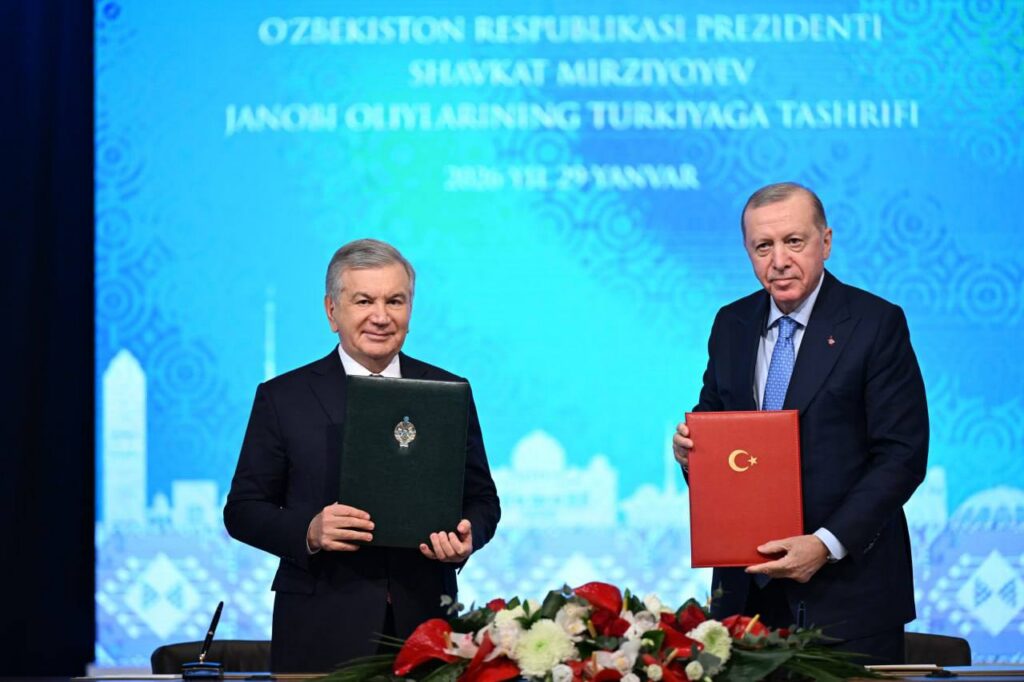
Uzbekistan and Turkey have significantly expanded their trade partnership, with bilateral trade turnover reaching $2.6 billion, according to the State Customs Committee of Uzbekistan. The milestone was announced during the fifth meeting of the Uzbekistan-Turkey Joint Customs Council, held in the historic city of Khiva. Friendly ties between the leaders of the two countries have laid the foundation for enhanced cooperation across a broad range of sectors, including politics, trade, investment, culture, and humanitarian initiatives. Since the inaugural Joint Customs Council meeting in 2018, trade turnover between the two countries has grown by 35%, rising from $1.9 billion to $2.6 billion by the end of 2024. Officials called this an impressive achievement in the context of ongoing global economic challenges and noted that there is still considerable room for further growth through deeper customs collaboration. One of the most impactful developments has been the 2022 agreement on the exchange of advance information on goods and vehicles. The agreement is currently undergoing preparations for full-scale implementation. Additionally, the two countries have improved mechanisms for foreign trade data exchange and made progress in addressing statistical discrepancies during a bilateral meeting in Samarkand in September. The next round of talks on this issue is scheduled to take place in Turkey. Another key topic at the Khiva meeting was the mutual recognition of authorized economic operators (AEOs), a proposal first introduced at the 11th meeting of customs authorities from Turkic states, held in Kazakhstan. A draft agreement on mutual recognition is currently under review by the Turkish side. Over the past five years, Uzbekistan’s trade volume managed by AEOs has more than doubled, increasing from $1.3 billion in 2020 to $2.7 billion in 2024. Council members also reviewed a joint cooperation plan for 2025-2026, which aims to further strengthen economic relations and streamline customs procedures.

Washington and Tashkent Push for More Trade and Investment

Speaking at the United Nations in New York on September 23, President Mirziyoyev of Uzbekistan made it clear that he no longer adheres to his predecessors’ post-Soviet policies of isolation and ‘go-it-alone’ economic development strategy - those days are over. Uzbekistan today - or so the evidence suggests - is more open for business than at any time in its history, with the caveat that deals must be win-win, strategic, fair, and reciprocal. Though it’s unclear what that precisely entails, both Washington and Tashkent are clearly working to accelerate capital and trade flows. “[Our] top-priority goal”, Mirziyoyev said at the United Nations, “is to fundamentally transform the lives of each and every family and citizen in our country, to enhance human dignity and wellbeing.” These are not mere words, but stand at the core of Uzbekistan’s efforts to build a new nation on the back of its - until recently - entirely archaic Soviet era socio-economic institutional structures and often ossified old ways of thinking. With this in mind, the main event of Mirziyoyev’s recent New York visit - besides his meeting with President Trump - was the high-level US-Uzbekistan investment roundtable with senior executives of major U.S. corporations and financial institutions. The roundtable was more than just symbolic. Its strong turnout underscored both the U.S. and Uzbek commitment to advancing joint initiatives in key sectors, including strategic minerals, transport infrastructure, energy, and smart agriculture.  Top executives from Boeing, Citigroup, BNY Mellon, NASDAQ, Nvidia, Mastercard, Visa, General Motors, Jefferies, Oppenheimer, Cleveland Clinic, Cargill, and other U.S. corporations descended on the meetings in force, clearly eager to court the president and his team. [caption id="attachment_37146" align="aligncenter" width="1280"] Image: president.uz[/caption] At their face-to-face meeting, President Trump personally congratulated Mirziyoyev on the landmark $8 billion Boeing-Uzbekistan Airways deal, projected to generate over 35,000 U.S. jobs – that in itself is not news. Rather, the NY business roundtable appears to have signaled that the American business community is more than just sniffing around for deals. Undoubtedly, a key force behind this growing interest is Washington’s expanding engagement with Uzbekistan. Highlighting Washington’s strategic swing towards Uzbekistan, Mirziyoyev, Sergio Gor, U.S. Special Envoy for South and Central Asian Affairs, and William Kimmitt, Under Secretary of Commerce for International Trade, attended the signing ceremony of bilateral agreements, which ranged from transport, logistics and AI to mining, healthcare, and financial services. Their presence helped move discussions from initial interest to serious dealmaking. To dispel investor uncertainty related to sovereign risk and other hidden booby traps often embedded in cross-border investment agreements, Mirziyoyev declared: “I assure you, I personally guarantee the success of U.S. companies operating in Uzbekistan. At the Ministry of Investments, a dedicated Deputy Minister for U.S. Affairs has been appointed. He will accompany you 24/7.” While this makes plain Uzbekistan’s shift from aid recipient to active economic player, it’s also an attempt to shore up “investor butterflies” who are wary of corruption and shaky legal remedies in the event of contract disputes. Moreover, recognizing that companies...

Mirziyoyev Secures Spotlight During U.S. Visit

In a significant diplomatic breakthrough, Uzbekistan emerged as a standout player during this year’s United Nations General Assembly events in New York. President Shavkat Mirziyoyev not only secured a high-profile meeting with U.S. President Donald Trump, but also signed a landmark $8 billion deal with Boeing to purchase Dreamliner jets, a move that drew praise from Trump and captured the attention of the international business community. Trump publicly endorsed the agreement on social media, calling Mirziyoyev “a man of his word” and noting the deal would create “over 35,000 jobs” in the United States. Mirziyoyev’s visit included a high-level investment roundtable with executives from leading U.S. corporations and financial institutions. According to Forbes, trade between the two countries has quadrupled under Mirziyoyev’s leadership, with more than 300 American companies now active in Uzbekistan. Strategic sectors such as rare-earth metals and critical minerals took center stage during the discussions. Among the key meetings was one with the vice president of the Colorado School of Mines, who expressed support for establishing a research center in Uzbekistan. Other topics included joint initiatives in banking, information technology, transportation, and energy infrastructure. The scale of the Boeing deal served as a symbolic anchor to broader efforts: positioning Uzbekistan as a key connector between Central Asia and the Western economy. This aligns with a larger strategic pivot that analysts have long advocated. As U.S. engagement in Central Asia expands, countries like Uzbekistan are increasingly looking to diversify away from dependence on Russia and China. Forbes noted that the Trump administration is building on foundations laid by its predecessor by promoting regional initiatives such as the Zangezur Corridor, referred to as the “Trump Corridor”, aimed at linking Central Asia to global markets without passing through Russian territory. Mirziyoyev’s face-to-face meeting with Trump, followed by the public endorsement, also plays into shifting domestic narratives. It signals growing diplomatic credibility and a willingness to operate as an equal on the global stage. The convergence of political recognition and commercial investment may mark a turning point in Uzbekistan’s foreign policy, not just as a recipient of aid, but as a proactive economic actor. With the Boeing order and growing support from U.S. business leaders, Uzbekistan is staking its future on deepening ties with the West. Coupled with ongoing domestic reforms, the country is making a strategic bet that modernization and diversified partnerships will yield long-term dividends.

Kazakhstan and Turkmenistan Finalize $555 Million Investment and Trade Agreement

Kazakhstan’s Senate on September 4 ratified a bilateral agreement with Turkmenistan aimed at bolstering mutual investment and economic cooperation, Kazinform reported. The agreement, which sets out conditions for the promotion and protection of investments, is expected to create a more transparent and predictable environment for investors from both countries. Senator Amangeldy Nugmanov emphasized that the agreement provides comprehensive legal safeguards for investment across all sectors, from state-led initiatives to private enterprise. For the first time at the interstate level, Kazakhstan and Turkmenistan have formalized clear guarantees to protect investor interests. The agreement includes provisions for dispute resolution, including access to international arbitration, and ensures fair and equal treatment for foreign investments. Energy Sector as Strategic Priority Energy cooperation figures prominently in the agreement. Kazakhstan has expressed readiness to invest in the development of Turkmenistan’s gas condensate fields and to support the expansion of pipeline infrastructure. Nugmanov highlighted a separate agreement signed between Kazakhstan’s QazaqGaz and Turkmenistan’s state concern Turkmengaz, describing it as a “golden bridge” that will enhance both nations' economic prospects and contribute to regional energy security. Trade and Transport Ties Expand Senator Sergey Ershov noted that bilateral trade reached $555.7 million in 2024. Kazakh investors injected $16.1 million into Turkmenistan’s economy, while Kazakhstan received $400,000 in direct investment from Turkmenistan. Beyond energy, cooperation now includes rail, road, and maritime transport. Turkmenistan has also shown interest in modernizing armored vehicles and supplying spare parts to Kazakhstan. During a summit held in April, the presidents of both countries agreed to target $1 billion in annual trade turnover in the near future. They also underscored the strategic importance of expanding cooperation in energy and transport. Key projects under discussion include Kazakhstan’s potential participation in Turkmenistan’s Galkynysh gas field and the development of the Turgundi-Herat-Kandahar-Spin Boldak railway. The rail line, which would pass through Afghanistan, is seen as a means of diversifying trade routes and unlocking new regional markets.

Tokayev in Bishkek: Deals, Diplomacy, and a Golden Bridge

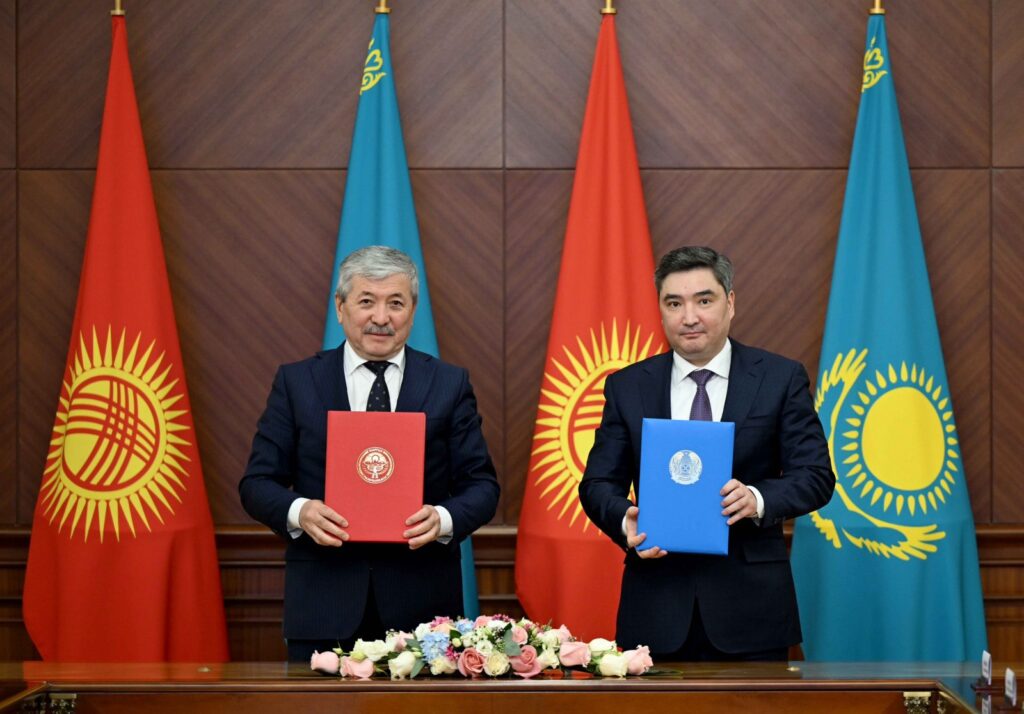
Kazakh President Kassym-Jomart Tokayev arrived in Kyrgyzstan on 21 August for an official visit that rolls into a full day of talks in Bishkek on 22 August, including a session of the Supreme Interstate Council. The Kyrgyz capital implemented rolling traffic restrictions around motorcade routes, a sign of how tightly choreographed the program is. The visit’s centerpiece is a Tokayev–Japarov meeting in both narrow and expanded formats, alongside a packed slate of bilateral events that underscore deepening political, economic, and cultural ties between the neighbors. Tokayev’s schedule blends state protocol with public-facing diplomacy. Alongside presiding over the seventh meeting of the Supreme Interstate Council, the two leaders are set to unveil the “Golden Bridge of Friendship” monument in Bishkek’s Yntymak Park - an attempt to give symbolic form to a relationship both sides have labored to institutionalize over the past two years. The program is also set to include the inauguration of the Consulate General of Kazakhstan in Osh, the launch of a branch of L.N. Gumilyov Eurasian National University in Kyrgyzstan’s south, the third Kyrgyz-Kazakh Youth Forum, and Days of Kazakhstan Cinema - events designed to anchor cooperation beyond chancelleries and boardrooms. This public show of diplomacy is being matched by concrete steps. The new Consulate General in Osh is intended to smooth consular services, support cross-border business, and expand cultural ties in a region where Kazakh–Kyrgyz trade and travel flows are accelerating. Central government, city, and regional officials joined Kazakh diplomats at the ribbon-cutting, underscoring the practical, day-to-day value for citizens who live and work across the southern corridor. Optics aside, the substance is in the talks. Astana and Bishkek have spent the last 18 months upgrading their legal architecture. In April 2024, the presidents signed a Treaty on Deepening and Expanding Allied Relations, moving the relationship beyond the basic language of partnership and into a framework that touches upon security, transport, energy, agriculture, and cultural cooperation. Kazakhstan’s Parliament later approved, and the president signed implementing legislation, putting the allied-relations commitments on a firmer legal footing domestically. This trip is widely viewed in both capitals as a chance to translate that framework into specific projects - some of which are already in motion. Trade and connectivity top the economic agenda. Bilateral trade hit roughly $1.7 billion in 2024, and both governments have repeatedly floated a target of $3 billion within the decade. The composition of flows is familiar: Kazakhstan ships metals, grain, fuels, and construction materials, while Kyrgyzstan supplies gold, coal, light-industry goods, and services. Reaching the next rung, however, will require more predictable border procedures, harmonized standards, and dedicated logistics capacity - areas where ministerial roadmaps are already in circulation. Energy and water cooperation is the other pillar. Kyrgyzstan’s Kambarata-1 hydropower project - envisioned as a 1,860 MW plant on the Naryn River - has become a regional test case for practical integration. Since mid-2024, Kyrgyzstan, Kazakhstan, and Uzbekistan have built a joint track with the World Bank and other partners to complete feasibility work, structure financing,...