• KGS/USD = 0.01144 0%
  • KZT/USD = 0.00198 -0%
  • TJS/USD = 0.10903 0.18%
  • UZS/USD = 0.00008 0%
  • TMT/USD = 0.28571 0%
  • KGS/USD = 0.01144 0%
  • KZT/USD = 0.00198 -0%
  • TJS/USD = 0.10903 0.18%
  • UZS/USD = 0.00008 0%
  • TMT/USD = 0.28571 0%
  • KGS/USD = 0.01144 0%
  • KZT/USD = 0.00198 -0%
  • TJS/USD = 0.10903 0.18%
  • UZS/USD = 0.00008 0%
  • TMT/USD = 0.28571 0%
  • KGS/USD = 0.01144 0%
  • KZT/USD = 0.00198 -0%
  • TJS/USD = 0.10903 0.18%
  • UZS/USD = 0.00008 0%
  • TMT/USD = 0.28571 0%
  • KGS/USD = 0.01144 0%
  • KZT/USD = 0.00198 -0%
  • TJS/USD = 0.10903 0.18%
  • UZS/USD = 0.00008 0%
  • TMT/USD = 0.28571 0%
  • KGS/USD = 0.01144 0%
  • KZT/USD = 0.00198 -0%
  • TJS/USD = 0.10903 0.18%
  • UZS/USD = 0.00008 0%
  • TMT/USD = 0.28571 0%
  • KGS/USD = 0.01144 0%
  • KZT/USD = 0.00198 -0%
  • TJS/USD = 0.10903 0.18%
  • UZS/USD = 0.00008 0%
  • TMT/USD = 0.28571 0%
  • KGS/USD = 0.01144 0%
  • KZT/USD = 0.00198 -0%
  • TJS/USD = 0.10903 0.18%
  • UZS/USD = 0.00008 0%
  • TMT/USD = 0.28571 0%
05 December 2025

Viewing results 1 - 6 of 80

Rise in Trade Between Kyrgyzstan and Afghanistan

In January-August 2024, trade between Afghanistan and Kyrgyzstan reached $14 million, including $6 million worth of Afghan exports to Kyrgyzstan. According to a TOLOnews report, based on data from the Afghan Ministry of Industry and Commerce, most of Afghanistan's exports to Kyrgyzstan and Uzbekistan consist of mineral water, carpets, non-alcoholic beverages, dried fruits, fruit juices, apricots, and sesame seeds. The report was issued in the wake of an announcement on September 6, in which Kyrgyzstan's Ministry of Foreign Affairs stated, "A decision has been made to remove the Taliban from the list of prohibited organizations within the territory of the Kyrgyz Republic.” The Ministry emphasized that the removal of the Taliban, the unrecognized group that effectively controls Afghanistan, from the list of banned terrorist organizations, aims to enhance regional stability and support ongoing dialogue. Confirmation was also made of Kyrgyzstan's ongoing commitment to supporting the efforts of the international community to ensure a stable and peaceful environment in both Afghanistan and the surrounding region. Reporting on the meeting between Chairman of the Cabinet of Ministers of the Kyrgyz Republic, Akylbek Japarov and the Chargé d'Affaires of Afghanistan in Kyrgyzstan, Nurullah Amin, on September 6, the Kyrgyz government’s press service outlined the parties' discussions on furthering bilateral cooperation between the two countries. On the Kyrgyz side, Japarov expressed interest in developing trade and economic relations, and transport links with Afghanistan, engaging in the joint development of  Afghan mineral deposits, and cooperating in the energy, industry, and agriculture sectors.
Uzbekistan Builds a Religious School in Afghanistan

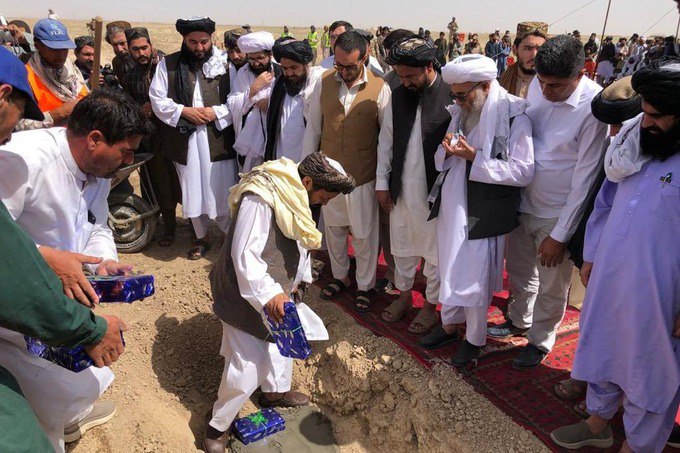
TOLOnews is reporting that Uzbekistan has agreed to finance the construction of a religious school in the Afghan city of Mazar-i-Sharif. The school, which will be built on sixty acres of land and will cost $6 million, is intended for one thousand pupils. The Consul General of Uzbekistan in Mazar-i-Sharif, Furqat Nazarov, said that the school is being built at the request of the governor of Afghanistan's Balkh province. Nazarov added: “We have allocated one year for this project, and it will be completed by then.” Balkh's Deputy Governor Nurul Hadi Abu Idris commented: “This is a sign of the coordination of the Islamic Ummah. Unity among Muslims is increasing daily.” Afghan officials consider Uzbekistan's establishment of this school to be a practical step in strengthening relations between the two countries. Abdul Jalil Shaheedkhil, the head of Balkh province's education department, said: “The establishment of this school, God willing, will further strengthen relations between Afghanistan and Uzbekistan.” Zabihullah Noorani, the head of information and culture in Balkh, said: “This will be the largest school in Afghanistan, and it will improve our education sector.” The Consul General of Uzbekistan in Mazar-i-Sharif promised to strengthen ties with Afghanistan, and added that Uzbekistan would soon resume providing education and business visas for Afghan citizens. Uzbekistan and Afghanistan are developing their trade relations. This year there are opportunities to increase the volume of mutual trade to $1 billion and, soon after, to $3 billion. Uzbekistan has also finished repairing the Naibabad railway station in Afghanistan.

Russia Remains Tajikistan’s Largest Trade Partner

Russian news agency TASS is reporting that, according to the Statistics Agency under the President of Tajikistan, trade between Tajikistan and Russia has exceeded $1.1 billion in 2024 so far. During the first seven months of 2024, the trade volume between the two countries was 12.1% more than in the same period of 2023. Russia continues to be Tajikistan’s largest trade partner, and also accounted for 26.7% of all imports entering the country during this period. In terms of bilateral trade, China remains in second place, with turnover to and from Tajikistan of almost $1 billion. Rather surprisingly, Switzerland has now became Tajikistan's leading export partner. In the first seven months of 2024, Tajikistan sent 26.6% of its products to Switzerland. In January-July of this year, the trade volume between the two countries amounted to more than $641 million, and compared to the same period in 2023, it increased almost 110 times.

Why Kyrgyzstan and China Are Reporting Different Figures on Bilateral Trade

At a press conference in Bishkek, Azamat Jumabekov, a representative of Kyrgyzstan's Chamber of Commerce and Industry, explained the significant difference in Kyrgyzstan-China trade statistics reported by Kyrgyz and Chinese authorities. According to Jumabekov, this happens because significant parts of goods that arrive in Kyrgyzstan from China are intended for further transit to other countries. Still, the owners register their goods as exports to Kyrgyzstan; hence, the Chinese statistics are incorrect. For instance, according to the National Statistical Committee of Kyrgyzstan, the volume of Chinese goods imported to Kyrgyzstan in 2023 was $5.4 billion; the Chinese Customs Administration reported the figure as $19.7 billion. Kyrgyz statistics show that in the first half of this year, Kyrgyzstan imported $3.1 billion worth of Chinese goods, a 42.5% increase compared to the same period last year. According to the Chinese Customs Administration, in the first half of 2024, China exported goods worth $9.4 billion to Kyrgyzstan and imported $95.5 million. According to Chinese statistics, China's trade turnover with Central Asian countries increased by 11.3% in the first half of 2024 compared to the same period in 2023, reaching $44.32 billion. Trade with Kazakhstan increased by 19.4%, amounting to $21.7 billion. Trade with Uzbekistan increased by 2.5%, amounting to $6.25 billion. Trade with Tajikistan decreased by 14.2%, amounting to $1.81 billion. Trade with Turkmenistan decreased by 4.9%, amounting to $5.28 billion. During the first half of 2024, China's exports to Central Asian countries increased by 14.6% to $30.21 billion. Exports from Central Asia to China increased by 4.8% to $14.11 billion. Turkmenistan was the only exception, showing a positive balance in trade with China. Exports to China amounted to $4.82 billion (mainly Turkmen natural gas), while imports from China amounted to $460.2 million.

Uzbek Afghan Business Forum

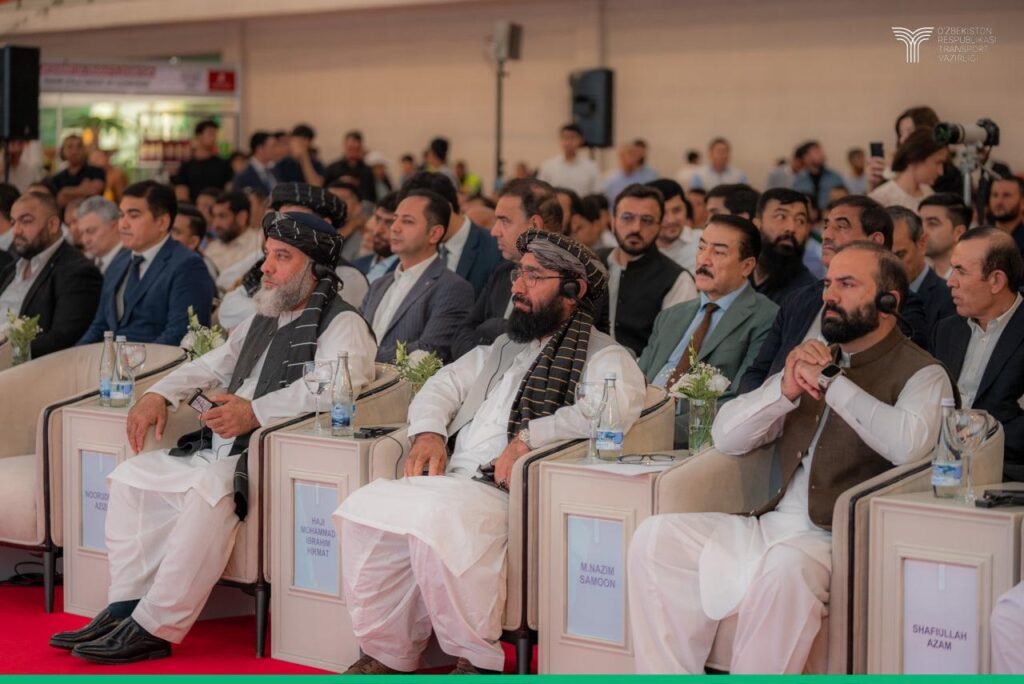
On July 3, an Uzbek-Afghan business forum was held in Tashkent to coincide with the visit  of an Afghan delegation headed by Minister of Industry and Trade Nuriddin Azizi. The major event, the forum was attended by heads of ministries and government agencies, industry, and over 1,000 business representatives from both countries. As reported by the Uzbek Ministry of Investment, Industry and Trade, Afghanistan is Uzbekistan's fifth-largest export market. In the last five years, trade between the two countries has increased almost 1.5-fold, reaching $866 million in 2023. Uzbekistan currently receives Afghan investment in 550 enterprises, 443 of which are wholly funded with Afghan capital. In his welcoming speech, Laziz Kudratov, Minister of Investment, Industry and Trade of Uzbekistan, highlighted several promising areas of cooperation, including diversifying the range of goods traded, and bolstering cooperation between producers and exporters with support of both countries’ respective departments and industry associations. The forum focused on initiatives to further develop mutual trade, such as the transition to round-the-clock border crossing operations, the establishment of trading houses, and the execution of major transport and infrastructure projects. Attention was drawn to the significant impact of more proactive engagement at the International Trade Centre in Termez on the Uzbek-Afghan border, where the creation of business-friendly conditions include a 15-day visa-free regime and tax-free zone. Nuriddin Azizi, Minister of Industry and Trade of Afghanistan, commended Uzbekistan's efforts to foster an environment conducive to bilateral trade, economic and investment cooperation. He also encouraged more proactive engagement between Afghan and Uzbek entrepreneurs by offering assurance of both sides' readiness to support new ventures and initiatives. The forum was complemented by the  exhibition "Made in Afghanistan" which showcased the produce of 75 major Afghan companies from jewellery, textiles and food to electrical engineering, mining, transportation and logistics. The event concluded with the signing of several trade agreements in the chemical and agricultural sectors, as well as an agreement to establish a logistics centre. According to the Uzbek Ministry of Transport, Afghanistan is one of the key links in ensuring regional connectivity across Central and South Asia. In recent years, cargo transportation across Afghanistan has risen significantly and in 2023, the volume carried along the multimodal transport corridor Uzbekistan – Afghanistan – Pakistan increased 1.5-fold compared to 2021.  

Kazakhstan and Singapore Join Forces to Boost Economy and Transport

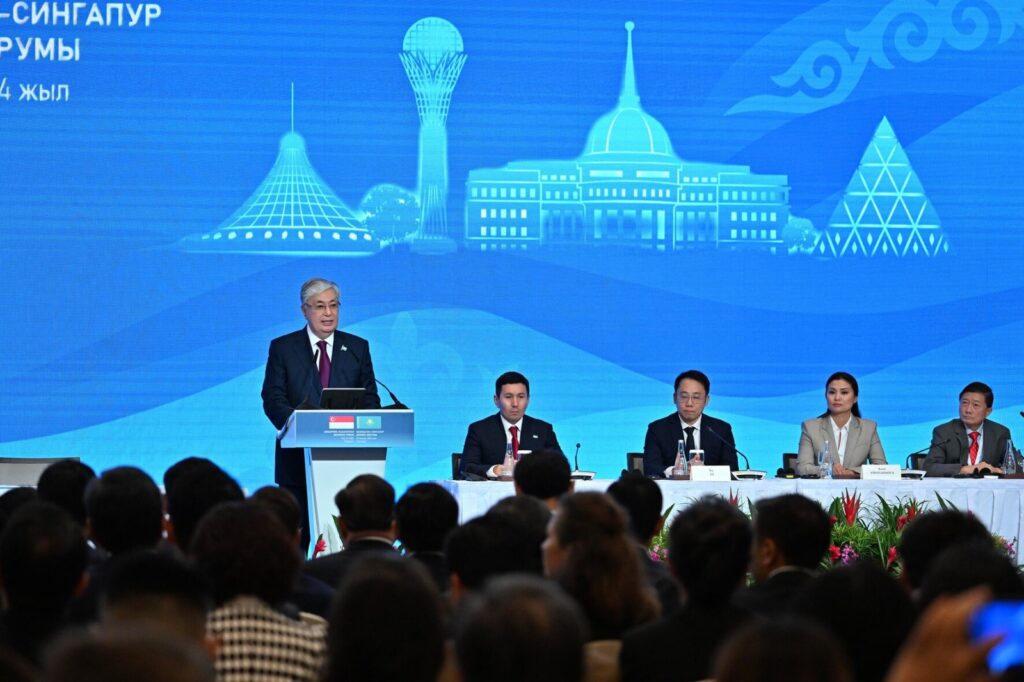
On 23 May, Kazakhstan President Kassym-Jomart Tokayev’s made his first state visit to Singapore to engage in meetings with Singaporean President Tharman Shanmugaratnam focusing on connectivity, critical raw materials, and economic cooperation. Over 140 Singaporean companies and joint ventures currently operate in Kazakhstan. The country has invested over $1.7 billion in the Kazakh economy and bilateral trade is forecast to exceed $2 billion. Tokayev hailed Singapore as a time-tested and reliable partner of Kazakhstan and in talks with Singapore Prime Minister Lawrence Wong, expressed confidence that his visit would strengthen bilateral relations. Citing the complementary nature of their countries’ economies, Lawrence Wong stated that Singapore can provide a gateway to further Kazakhstan’s interaction with ASEAN countries and in turn, Kazakhstan can facilitate Singapore's rapprochement with Central Asian countries. Regarding economic and investment cooperation, the parties reaffirmed their mutual commitment to expanding joint ventures in green energy, transport and logistics, digitalization, finance, agribusiness, connectivity, e-commerce, and mining and processing of critical minerals. President Tokayev and Prime Minister Wong welcomed the implementation of Alatau City (G4 City); a thousand-kilometer Special Economic Zone to be developed by Kazakhstan with support from Singaporean company Surbana Jurong in the region of Almaty. Tokayev expressed his gratitude to the Singaporean company for developing the comprehensive master plan for the project which he described as a catalyst for boosting both his country’s economy and that of Central Asia. Tokayev and Wong also commended the partnership between Singapore’s PSA International and Kazakhstan’s national railways company Kazakhstan Temir Zholy (KTZ) aimed at increasing the potential of the Trans-Caspian International Transport Route (TITR). A Memorandum was signed by KTZ and PSA to further develop Kazakhstan’s transport and transit potential and an agreement made to increase the volume of cargo transit through Kazakhstan by means of a synergy of their assets in China. Today, KTZ operates railway terminals in China in the dry port of Xi'an and the seaport of Lianyungang. Assets held by PSA include marine terminals in six ports and railway terminals in 13 cities in China. Speaking at the Kazakhstan-Singapore Business Forum later in the day, Tokayev emphasized that because it offers “the shortest and most sustainable route from Central and East Asia to Europe,” TITR has the potential to radically enhance Eurasian cooperation. The Kazakh president outlined promising areas of cooperation between the two countries, and announcing Kazakhstan's readiness to supply critical raw materials and natural resources to Singapore, stated: “Considering that global demand for rare metals will quadruple by 2040, Kazakhstan, which has approximately 5,000 unexplored deposits, can become a reliable partner for the joint development of this potential. We have high hopes for long-term cooperation with the Indorama company, which is interested in exploring copper and phosphate deposits in Kazakhstan.” Tokayev also called on Singaporean companies to expand partnerships in the production of clean energy and the transfer of technology and expertise.