• KGS/USD = 0.01144 0%
  • KZT/USD = 0.00216 0%
  • TJS/USD = 0.10585 -0.28%
  • UZS/USD = 0.00008 0%
  • TMT/USD = 0.28530 0%
  • KGS/USD = 0.01144 0%
  • KZT/USD = 0.00216 0%
  • TJS/USD = 0.10585 -0.28%
  • UZS/USD = 0.00008 0%
  • TMT/USD = 0.28530 0%
  • KGS/USD = 0.01144 0%
  • KZT/USD = 0.00216 0%
  • TJS/USD = 0.10585 -0.28%
  • UZS/USD = 0.00008 0%
  • TMT/USD = 0.28530 0%
  • KGS/USD = 0.01144 0%
  • KZT/USD = 0.00216 0%
  • TJS/USD = 0.10585 -0.28%
  • UZS/USD = 0.00008 0%
  • TMT/USD = 0.28530 0%
  • KGS/USD = 0.01144 0%
  • KZT/USD = 0.00216 0%
  • TJS/USD = 0.10585 -0.28%
  • UZS/USD = 0.00008 0%
  • TMT/USD = 0.28530 0%
  • KGS/USD = 0.01144 0%
  • KZT/USD = 0.00216 0%
  • TJS/USD = 0.10585 -0.28%
  • UZS/USD = 0.00008 0%
  • TMT/USD = 0.28530 0%
  • KGS/USD = 0.01144 0%
  • KZT/USD = 0.00216 0%
  • TJS/USD = 0.10585 -0.28%
  • UZS/USD = 0.00008 0%
  • TMT/USD = 0.28530 0%
  • KGS/USD = 0.01144 0%
  • KZT/USD = 0.00216 0%
  • TJS/USD = 0.10585 -0.28%
  • UZS/USD = 0.00008 0%
  • TMT/USD = 0.28530 0%

Viewing results 1 - 6 of 21

The Iran Conflict Is Stress-Testing Central Asia’s Southern Corridors

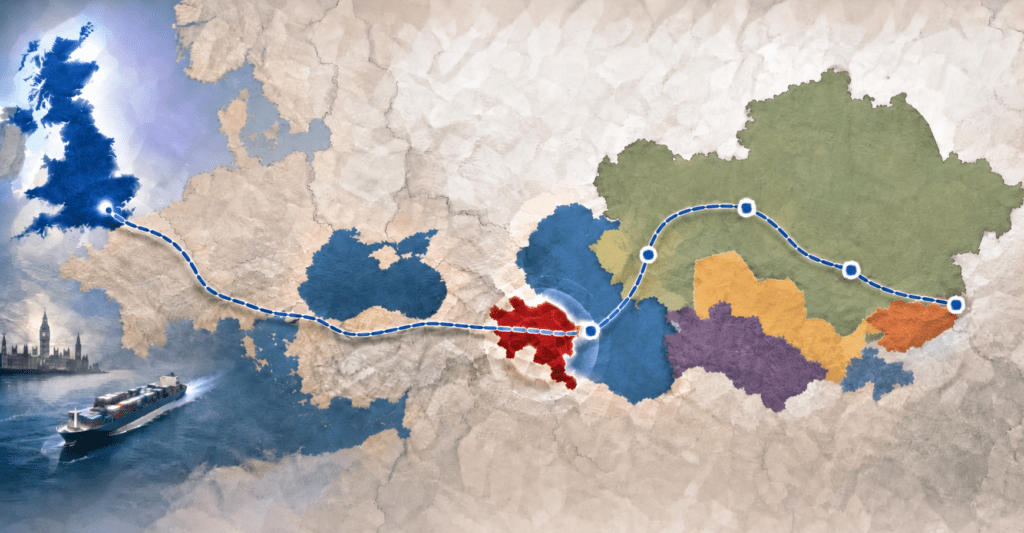
Kazakhstan President Kassym-Jomart Tokayev’s proposal of Turkestan city as a venue for Iran-war negotiations shows how directly the conflict had already begun to affect Central Asia itself. The region is no longer simply observing events in Iran. By the time Tokayev made the offer, Central Asian governments were already dealing with evacuations, route disruption, emergency diplomatic coordination, and growing concern over the war’s economic effects. The Iran war has thus become a real test of Central Asia’s southern diversification strategy. Governments across the region have, in recent years, sought to widen access to world markets through Iran, the South Caucasus, and, in some cases, Afghanistan and Pakistan. These channels reduce dependence on northern routes by opening access to Türkiye, Europe, Gulf markets, and the Indian Ocean. The present crisis subjects that strategy to wartime conditions. The strain of war makes it easier to distinguish durable links, conditional ones, and routes that remain more aspirational than real. The C6 and Crisis Coordination The first effects have been practical. Turkmenistan has opened four additional checkpoints along its frontier with Iran, supplementing the Serakhs crossing, while Azerbaijan’s overland route through Astara became another critical outlet, evacuating 312 people from 17 countries between February 28 and March 2. Turkmenistan, according to official reporting, transited more than 200 foreign citizens from 16 countries during the same period. Uzbekistan used the Turkmen route to repatriate its citizens, while Kazakhstan directed its nationals toward overland exits through Turkmenistan, Azerbaijan, Armenia, and Türkiye. The war is already affecting borders, consular work, and the regional diplomatic agenda. This immediate response gives sharper political meaning to the widening of the Central Asian C5 into a C6 with Azerbaijan. The March 2 call among the five Central Asian foreign ministers and Azerbaijan showed that the format was already there to be used under pressure. What had until now appeared mainly as a corridor framework shaped by summit diplomacy and expert work appeared instead as a working format for crisis coordination linking Central Asia to the South Caucasus. The C6 idea is becoming more practical and more overtly diplomatic. The Organization of Turkic States adds a second, broader layer. Its foreign ministers met in Istanbul on March 7 and issued a joint statement expressing concern over the escalation in the Middle East, condemning actions that endanger civilians, warning against further regional destabilization, and affirming that threats to the security and interests of member states concern the organization as a whole. The statement was cautious, and the OTS is not turning into a military instrument. Even so, the war is testing whether a Turkic political space extending from Turkey through the South Caucasus to Central Asia can do more than express concern as regional security deteriorates. The C6 is becoming a working format for immediate coordination, while the OTS remains the broader political frame within which that coordination takes on institutional meaning. Corridor Stress and Resilience The trans-Iran transit option offers Central Asia a continuous land arc from regional railheads and road networks...

Iran War Tests Emerging C5–Azerbaijan Solidarity

In an effort to coordinate responses to the Mideast conflict, the foreign ministers of the five Central Asian countries, as well as Azerbaijan, have spoken together by telephone about the widening crisis. The call marked one of the clearest signs yet that the Central Asian “C5” format is evolving beyond economic coordination into an operational diplomatic mechanism during external crises. While the group has met frequently in recent years with major partners, direct coordination over a fast-moving conflict on its periphery reflects a shift toward more structured regional crisis management. The consultation also builds on the expansion last year of the Central Asian consultative format to include Azerbaijan, sometimes referred to as the “C6,” a shift that has increasingly aligned Caspian corridor strategy with regional diplomatic coordination. “During the conversation, the ministers exchanged detailed views on the evolving military and political situation in the Middle East, noting the importance of maintaining close coordination and prompt interaction amid the crisis,” Kazakhstan’s Ministry of Foreign Affairs said on Monday. Foreign Minister Yermek Kosherbayev of Kazakhstan thanked his counterparts from Azerbaijan and Turkmenistan, which border Iran, for their help in the evacuations of people fleeing Iranian territory. U.S. and Israeli air strikes have hit targets across Iran, whose military has fired retaliatory waves of missiles and drones at Israel as well as U.S. military facilities and civilian areas in Gulf countries. Azerbaijan’s participation underscores its growing integration into Central Asia’s diplomatic orbit. As a Caspian state bordering Iran and a critical link in the Trans-Caspian International Transport Route, Baku has become an indispensable partner in both evacuation logistics and broader corridor security. The call reflects growing cohesion among Kazakhstan, Kyrgyzstan, Tajikistan, Turkmenistan, Uzbekistan, and Azerbaijan. The region is seeking more robust trade routes linking Asia and Europe, while maintaining solidarity and balancing relationships with larger powers, including China, Russia, and the United States. In addition to Kosherbayev, the foreign ministers on the call were Jeyhun Bayramov of Azerbaijan, Jeenbek Kulubaev of Kyrgyzstan, Sirojiddin Muhriddin of Tajikistan, Rashid Meredov of Turkmenistan, and Bakhtiyor Saidov of Uzbekistan. The ministers said they were committed to political and diplomatic means as a way to solve conflicts. “At the conclusion of the call, the parties expressed their readiness to continue providing the necessary support in organizing the possible evacuation of citizens, as well as to maintain close working contacts through the foreign ministries,” the statement from Kazakhstan stated. Notably, the ministers’ language avoided assigning blame or aligning with any side in the conflict, instead emphasizing diplomacy and stability. That careful wording reflects the region’s longstanding strategy of balancing relations with Washington, Moscow, Beijing, and regional powers without being drawn into geopolitical confrontation.

The Board of Peace and the Emerging C6 Regional Ecosystem

Washington is hosting the first summit of the Board of Peace, an initiative convened by U.S. President Donald Trump. Aircraft carrying leaders from several post-Soviet states have arrived at Joint Base Andrews. While Russia and Belarus have been invited - representation levels vary - the presidents of Kazakhstan, Uzbekistan, and Azerbaijan have traveled to the United States in person. Although each leader has a separate bilateral agenda, Kassym-Jomart Tokayev, Shavkat Mirziyoyev, and Ilham Aliyev share a broader objective: presenting a consolidated regional grouping, informally referred to as the C6, in which Kazakhstan is seen as playing a leading role. Tokayev, a career diplomat who previously served as a senior United Nations official, has developed a consistent approach to foreign visits, which typically includes a meeting with Kazakh citizens residing abroad, particularly students and young professionals, and the publication of an opinion piece in a leading outlet in the host country. During his current visit to the United States, he met members of the Kazakh diaspora and published an article in The National Interest outlining his vision for international stability. [caption id="attachment_44160" align="aligncenter" width="2560"] President Kassym-Jomart Tokayev meets with Kazakh citizens living and studying in the United States; image: Akorda.kz[/caption] According to Kazakh political analyst Andrei Chebotarev, the central theme of Tokayev’s article is the importance of stability amid intensifying geopolitical rivalry and growing international conflicts. Chebotarev emphasized Tokayev’s call for a pragmatic international order grounded in the rule of law, accountability, predictable commitments, and respect for national and cultural identities, arguing that ideologically driven frameworks have proven ineffective. Tokayev described the Board of Peace as “not just another forum for endless discussions,” but as a practical initiative aimed at delivering tangible outcomes, particularly in relation to the Gaza Strip and the broader Middle East. He characterized the White House’s approach as one that views peace “not as a slogan, but as a project” built around infrastructure, investment, employment, and long-term stability. “This initiative deserves respect and international attention,” Tokayev said. During his visit to the United States last November for the C5+1 summit, Tokayev held meetings with senior U.S. officials, including Commerce Secretary Howard Lutnick, as well as executives from major international corporations. A delegation led by Deputy Prime Minister and Minister of National Economy Serik Zhumangarin is also in Washington during the current visit. In addition to promoting investment and technology partnerships, the delegation engaged with members of Congress involved in efforts to repeal the Jackson-Vanik amendment, which continues to complicate trade relations between the United States and certain Central Asian countries. Mirziyoyev has pursued a similar agenda during his current visit, holding meetings with U.S. Commerce Secretary Howard Lutnick and U.S. Trade Representative Jamieson Greer. He also met representatives of American businesses and signed an agreement establishing a new investment platform. [caption id="attachment_44171" align="aligncenter" width="1280"] A set of bilateral agreements on priority areas of Uzbekistan-U.S. cooperation was signed; image: President.uz[/caption] Aliyev, for his part, met in Washington with the leadership of the American Israel Public Affairs Committee, including...

Azerbaijan Joins Central Asia to Build a C6 Corridor Core

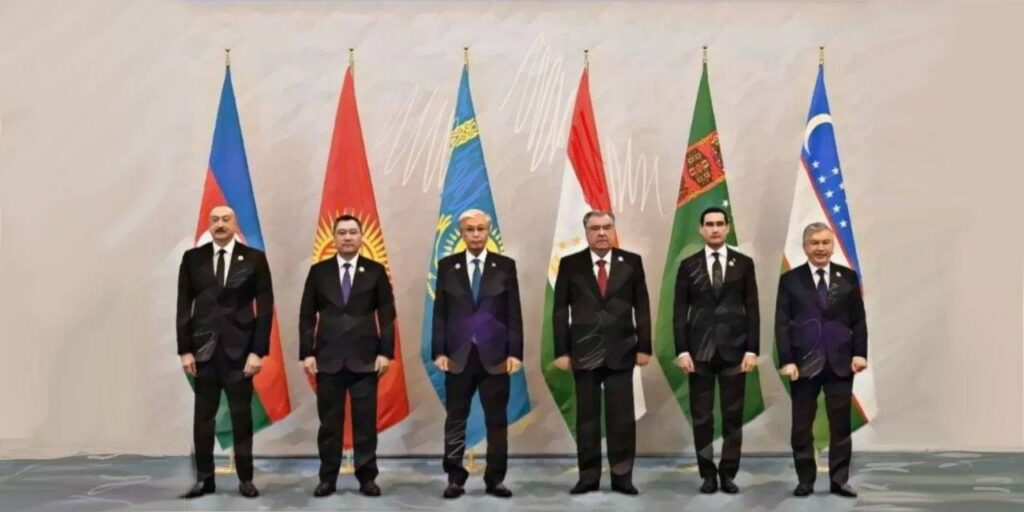
Central Asian leaders met in Tashkent on November 15–16 for the seventh Consultative Meeting of Heads of State. Azerbaijan attended as a guest with full rights, as it had done at the meetings last year and the year before. This time, the leaders agreed that Azerbaijan would sit as a full participant in future meetings, transforming the C5 into the C6. In his opening remarks, Uzbekistan’s President Shavkat Mirziyoyev proposed turning the loose consultative mechanism into a formal regional body under the working title, the “Community of Central Asia.” Mirziyoyev went further and suggested extending the mandate from economic integration to include security and environmental cooperation for the region as a whole. The Uzbek President called the decision to admit Azerbaijan “historic,” as the leaders framed the welcoming of Azerbaijan not as a courtesy to a neighbor but as part of a wider integration project that already runs across the Caspian and that is now seeking to bring a South Caucasus transit and energy hub directly into the frame. The consultative format is thus being asked to carry a heavier load than when it was created in 2018 as a careful space for political dialogue and security confidence-building. For governments and external partners, the practical question is whether this emerging “Central Asia plus Azerbaijan” geometry can evolve into a corridor community with its own regional rules, or whether it will remain largely declaratory while decisions continue to track external finance and great-power projects. Azerbaijan and Central Asia Begin to Co-Author the Agenda From the start, the consultative meetings of the Central Asian heads of state were conceived as a modest, leader-level forum to ease regional tensions and reopen direct dialogue after a decade of drift. The first gathering in Astana in March 2018 focused on borders, water management, and security issues that had festered since the 1990s, and that format’s agenda had mainly remained focused on political reconciliation and crisis management. The seventh meeting in Tashkent was different in kind. By bringing Azerbaijan formally into the room on a continuing rather than one-off basis, and by placing corridor and digital questions at the center of proceedings rather than on the margins, it reframed the forum from an inward-looking confidence-building device into a platform that aspires to shape external connectivity. Azerbaijan’s presence at earlier summits in 2023 and 2024 created a transitional phase in which Baku could test how far its own transit and energy agenda resonated with Central Asian priorities. In Tashkent, that ambiguity effectively ended. President Ilham Aliyev’s speech, delivered after the leaders had agreed that Azerbaijan would participate in future meetings as a full member, described Central Asia and Azerbaijan as forming “a single geopolitical and geo-economic region whose importance in the world is steadily growing.” He tied that claim to concrete developments along the Middle Corridor segment through Azerbaijan, the Alat port complex, upgraded customs procedures, and cross-Caspian energy and data links. For Kazakhstan, the Tashkent meeting offered a complementary opportunity. President Kassym-Jomart Tokayev used his speech...

Central Asian Leaders Welcome Azerbaijan’s Accession at Tashkent Summit

The leaders of Central Asia convened in Tashkent on November 16 for a high-level Consultative Meeting, marking a significant step toward deeper regional integration. The summit welcomed Azerbaijan as a full participant and endorsed a roadmap to formalize cooperation in trade, infrastructure, security, and water management. Hosted by Uzbekistan’s President Shavkat Mirziyoyev, the summit brought together the presidents of Kazakhstan, Kyrgyzstan, Tajikistan, Turkmenistan, and Azerbaijan, alongside a United Nations representative. Ahead of the meeting, Tashkent’s central streets were adorned with national flags and floral installations, underscoring the political and symbolic significance the Uzbek government placed on the event. Mirziyoyev hailed Azerbaijan’s accession as “a truly historic day,” as the country became a full member of the Consultative Meeting of the Heads of State of Central Asia. He proposed forming a “Community of Central Asia,” establishing a rotating Secretariat, appointing special presidential envoys for coordination, and creating a Council of Elders to promote cultural and humanitarian dialogue. [caption id="attachment_39410" align="aligncenter" width="1280"] Image: president.uz[/caption] Regional Economic and Connectivity Agenda Economic cooperation dominated the multilateral agenda. Leaders agreed to develop a Comprehensive Regional Program for Trade and Economic Cooperation through 2035 and to draft a Declaration on a Common Investment Space. “In essence, we will build a strong bridge between Central Asia and the South Caucasus and pave the way for the formation of a single space of cooperation, which will undoubtedly strengthen the strategic interconnectedness and stability of both regions,” said Mirziyoyev. Kazakhstan’s President Kassym-Jomart Tokayev also highlighted deepening bilateral ties with Uzbekistan. Trade between the two countries has reached $4 billion in 2025, with plans to increase it to $10 billion through expanded industrial cooperation and import substitution. Over 6,500 joint enterprises now operate between the two countries, with new projects worth more than $8 billion under development. Several initiatives, such as the Silkway Central Asia logistics center, new industrial facilities, and cultural programs, were launched in Tashkent during the visit. [caption id="attachment_39411" align="aligncenter" width="1280"] Image: president.uz[/caption] Tajikistan’s President Emomali Rahmon met with Mirziyoyev on the sidelines of the summit. The two leaders noted the steady growth in political dialogue and agreed to expand cooperation in energy, industry, agriculture, and innovation. Bilateral trade surpassed $440 million in the first nine months of 2025. They also discussed regional security, including collaboration against terrorism, extremism, cybercrime, and drug trafficking. Security, Water, and Cultural Cooperation To advance regional integration, Tashkent also hosted the first meeting of the Council of Ministers of Trade and Investment of Central Asian countries and Azerbaijan on November 13. Ministers discussed boosting trade, investment, and industrial cooperation, with the goal of increasing regional trade turnover to $20 billion. Plans were also made to develop joint production platforms under a “Made in Central Asia” label. Uzbekistan’s trade with Central Asian partners rose from $3.2 billion in 2017 to $6.9 billion in 2024, while trade with Azerbaijan has grown by 13% this year. Connectivity remained a focal point. Participants reaffirmed their commitment to the China-Kyrgyzstan-Uzbekistan railway and the Trans-Afghan corridor. Azerbaijan’s President...

With Shared Goals, Azerbaijan Draws Closer to Central Asia

Then there were six. The five Central Asian countries of Kazakhstan, Kyrgyzstan, Tajikistan, Turkmenistan, and Uzbekistan are widely thought of as a group, united by geography, their shared history as former Soviet republics, and growing collaboration in recent years. Now, Azerbaijan is emerging as a sixth member of the group, even though it is in the South Caucasus. At a summit on Sunday, Central Asian leaders supported Azerbaijan’s accession to the region’s Consultative Meeting format as a full participant, “forming a unified space for interaction between Central Asia and the South Caucasus,” Uzbekistan’s presidency said. The Consultative Meeting format is a vehicle for high-level collaboration among Central Asian countries, which have taken steps to resolve border disputes and other sources of tension between them over the years. The format addresses trade, security, and other issues. All five Central Asian leaders, as well as President Ilham Aliyev of Azerbaijan, attended the annual meeting in Tashkent on Sunday. In a speech, Aliyev noted that he had visited Central Asian countries 14 times in the last three years, and that Central Asian leaders had visited Azerbaijan a total of 23 times during the same period. He said Azerbaijan and Central Asia “today form a single geopolitical and geo-economic region, whose importance in the world is steadily growing.” Azerbaijan, which is also a former Soviet republic, shares the Turkic background of some of the Central Asian nations. While all the countries have distinct national identities, they covet the goal of more robust trade routes linking Asia and Europe, as well as regional solidarity in an uncertain geopolitical environment where China, Russia, and the United States are dominant powers. After Azerbaijan was admitted to the Central Asian talks format, Azerbaijani presidential adviser Hikmet Hajiyev posted on X: “From now on, Central Asia stands as 6.”