• KGS/USD = 0.01144 0%
  • KZT/USD = 0.00215 0%
  • TJS/USD = 0.10659 0%
  • UZS/USD = 0.00008 0%
  • TMT/USD = 0.28530 0%
  • KGS/USD = 0.01144 0%
  • KZT/USD = 0.00215 0%
  • TJS/USD = 0.10659 0%
  • UZS/USD = 0.00008 0%
  • TMT/USD = 0.28530 0%
  • KGS/USD = 0.01144 0%
  • KZT/USD = 0.00215 0%
  • TJS/USD = 0.10659 0%
  • UZS/USD = 0.00008 0%
  • TMT/USD = 0.28530 0%
  • KGS/USD = 0.01144 0%
  • KZT/USD = 0.00215 0%
  • TJS/USD = 0.10659 0%
  • UZS/USD = 0.00008 0%
  • TMT/USD = 0.28530 0%
  • KGS/USD = 0.01144 0%
  • KZT/USD = 0.00215 0%
  • TJS/USD = 0.10659 0%
  • UZS/USD = 0.00008 0%
  • TMT/USD = 0.28530 0%
  • KGS/USD = 0.01144 0%
  • KZT/USD = 0.00215 0%
  • TJS/USD = 0.10659 0%
  • UZS/USD = 0.00008 0%
  • TMT/USD = 0.28530 0%
  • KGS/USD = 0.01144 0%
  • KZT/USD = 0.00215 0%
  • TJS/USD = 0.10659 0%
  • UZS/USD = 0.00008 0%
  • TMT/USD = 0.28530 0%
  • KGS/USD = 0.01144 0%
  • KZT/USD = 0.00215 0%
  • TJS/USD = 0.10659 0%
  • UZS/USD = 0.00008 0%
  • TMT/USD = 0.28530 0%

Viewing results 1 - 6 of 143

Opinion: Trump Has Golden Opportunity to Launch C6+1 on Sidelines of UN

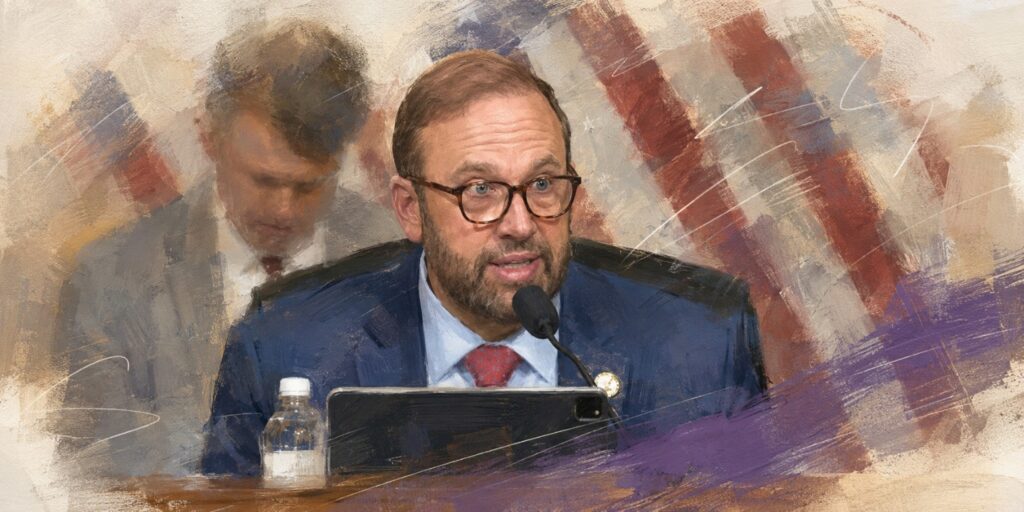
Representatives of the five Central Asian states — Kazakhstan, Uzbekistan, Kyrgyzstan, Tajikistan, and Turkmenistan — along with Azerbaijan, are expected in New York for the United Nations General Assembly in September. Historically, meetings between the Central Asian states and the United States – the C5+1 – have taken place on the sidelines of the United Nations. It is the most natural and logistically efficient venue for President Donald Trump to re-engage with the C5 partners he hosted at the White House last November. As of now, only foreign ministers are expected to attend the UNGA. But this could change if Trump extends an invitation to the leaders, according to a Central Asian diplomatic source. This time, however, he has the opportunity to add Azerbaijan, transforming the format into a C6+1. Baku has already been invited to participate as a full member in Central Asian gatherings, and Washington should build on that momentum. Azerbaijan is uniquely positioned: close to both Israel and Turkey – two of America’s most important regional partners – it sits astride one of the most important connectivity corridors linking Europe and Asia. Its inclusion would turn the C5+1 into a genuinely trans‑Caspian framework that reflects the emerging realities of Eurasian integration. The move would also link two major diplomatic achievements of Trump’s second term: the launch of the Trump Route for International Peace and Prosperity (TRIPP), a 43-km strategic transit corridor connecting mainland Azerbaijan to its Nakhchivan exclave through Armenia, and Trump’s elevation of the C5+1 to a White House-level summit. While TRIPP was discussed at the C5+1 meeting in November, bringing Azerbaijan into the next gathering would allow the administration to present itself as the architect of a new Eurasian trade and energy map. Strategically, a C6+1 format carries significant implications for great-power competition with China. This is because Central Asia is so crucial to Beijing’s grand strategy. In its recently adopted 15th five-year plan, neighborhood diplomacy is listed as the top priority — ahead of relations with major powers or developing countries. Beijing seeks to build a “community with a shared future” with 17 neighboring states, including all five in Central Asia, to “create a favorable external environment” for national rejuvenation, as Foreign Minister Wang Yi has stated. For China, Central Asia is a vital “hinterland” for energy and resource security, and a buffer against maritime disruptions. The United States does not need to dominate the Eurasian Heartland or force Central Asian states to choose between Washington and Beijing. It simply needs to ensure that any Chinese westward access runs through a vast landmass of countries that maintain constructive relations with the United States. A C6+1 format helps shape that environment without confrontation. A stable Middle Corridor – the energy and trade route running through Central Asia, across the Caspian Sea and through Azerbaijan to Turkey and the Mediterranean – also benefits America's energy-hungry allies in Asia, such as Japan and South Korea. Both increasingly look to Kazakhstan as an alternative oil supplier as they...

How Kazakhstan Is Seeking to Attract Global Capital to Critical Mineral Extraction

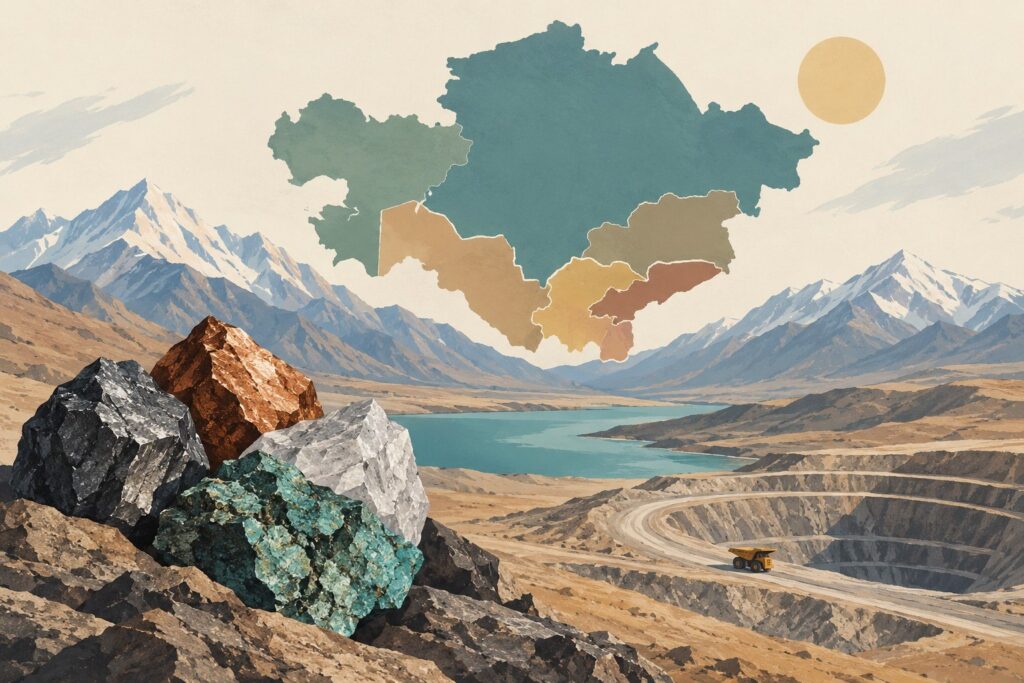
In March 2026, Kazakhstan moved into the spotlight of the global mining industry. Against the backdrop of an accelerating energy transition and a growing shortage of critical minerals, the government has launched a large-scale geological exploration program. Its strategic objective is to position the country as a key supplier of copper and rare earth elements (REEs) to global markets. For Western investors, this represents an important signal. A significant, relatively underexplored resource base is emerging, supported by regulatory reforms designed to facilitate access. The state assumes early-stage risks The new investment cycle was officially presented at PDAC 2026, one of the world’s largest mining conventions held in Toronto. Unlike previous initiatives that were largely declarative, Kazakhstan has backed its strategy with direct funding: approximately $81 million has been allocated from the state budget for geological exploration. The funds are intended to support a comprehensive assessment of mineral resources in 11 regions of the country. The central rationale is to lower entry barriers for private capital. The government is financing early-stage geological work, including mapping, airborne geophysical surveys, and preliminary resource evaluations. Investors are expected to receive access to “pre-qualified” sites with confirmed potential, an approach commonly used in established mining jurisdictions. This is particularly important because early exploration has historically been the riskiest and most capital-intensive phase of mining projects. The energy transition reshapes demand Growing interest from Western investors is driven by both domestic reforms and global market dynamics. Forecasts by the International Energy Agency indicate that demand for key minerals such as copper, lithium, and cobalt is likely to rise substantially by 2040. Existing mining and processing capacities may prove insufficient to meet projected needs. At the same time, geopolitical tensions are increasing. Processing of rare earth elements remains concentrated in a limited number of countries, making global supply chains vulnerable to disruption. In response, the United States and the European Union have introduced policies aimed at diversifying sources of critical raw materials. The EU’s Critical Raw Materials Act seeks to encourage investment in alternative supply chains. Against this backdrop, Kazakhstan, whose mineral exploration has historically focused on oil and uranium, is emerging as a potential contributor to global diversification efforts. Focus on junior mining companies and regulatory transparency One of the government’s key tools for attracting investment is the development of an ecosystem of junior mining companies specializing in early-stage exploration. Unlike large corporations, junior firms are often willing to assume the risks associated with drilling and initial geological assessments. If commercially viable deposits are identified, these companies typically sell their assets to strategic investors, helping to create a venture-capital-style market within the extractive sector. To support this model, Kazakhstan has reformed its Subsoil Code, introducing a “first come, first served” licensing principle. Digital platforms are now used to allocate exploration rights, reducing processing times and limiting opportunities for corruption. In effect, the country is adopting regulatory practices similar to those used in Australia, widely regarded as one of the world’s most investor-friendly mining jurisdictions. $1.1 billion project signals...

Central Asia and Britain Launch CA5+UK Ministerial Track

On February 26, 2026, the foreign ministers of Kazakhstan, Kyrgyzstan, Tajikistan, Turkmenistan, and Uzbekistan met in London with United Kingdom Foreign Secretary Yvette Cooper at Lancaster House for the inaugural “Central Asia–UK” (CA5+UK) ministerial. Official statements described it as the first time since independence that all five Central Asian foreign ministers have met jointly with a UK foreign secretary in a single forum. They also presented the meeting as the start of a structured ministerial channel, intended to convene regularly, that can carry regional priorities while leaving bilateral agendas in place. The United Kingdom is framing the new CA5+UK channel as a replacement for scattered bilateral visits: a single ministerial venue can set shared priorities and route them into investment and services work. For the five Central Asian states, it adds another external track, widening options without forcing institutional choices. Public statements point to a practical agenda focused on trade and investment, transport connectivity, energy transition, and critical minerals, with security present chiefly as background context. The enabling layer of finance, standards, education, and professional services is also included. How the London Program Unrolled On February 25, meetings took place at the British Parliament as part of the London schedule. The five ministers met with House of Commons Speaker Sir Lindsay Hoyle and held a session with the All-Party Parliamentary Group for Central Asia, chaired by Pam Cox.  The meetings in Parliament complemented the ministerial session at Lancaster House by widening contact beyond foreign ministries. The discussion emphasized committee-to-committee contacts, visits, and exchange of legislative practice as a complement to intergovernmental diplomacy. Parliamentary relationships and staff channels can carry attention between ministerial sessions, assisting with follow-up after cooperative contacts have been publicly established. They represent a second continuity layer: implementation often turns on routine access and working familiarity rather than on formal statements alone. Between the parliamentary program and the ministerial delegations, they also met with the United Kingdom business community at a reception in London. This was a practical companion to the new format, aiming at the conversion of diplomatic intent into projects that can be financed and executed. Kazakhstan’s Foreign Minister Yermek Kosherbayev cogently highlighted the Astana International Financial Centre (AIFC), which operates under English common law with an independent court and arbitration system and British judges in the AIFC Court. Beyond the plenary session, a ministerial working lunch provided a venue to follow up on such initiatives. Early deliverables were not multilateral but bilateral. Kazakhstan and the United Kingdom signed a strategic roadmap on critical minerals through 2027 and paired it with education moves, including a licensed Coventry University campus in Almaty and plans involving British secondary and higher education institutions. Uzbekistan reported a Memorandum of Understanding on healthcare services that it presented as a platform for building pharmaceutical manufacturing capacity, alongside separate discussions with investment and finance counterparts in London. Turkmenistan cited a 2026–2027 cooperation program between foreign ministries, and Tajikistan continued to emphasize investment and cooperation in science and education. CA5+UK Launches with Bilateral Packages...

Dushanbe and London Agree on Cooperation on Critical Minerals

The Tajik government has approved a draft memorandum of understanding with the United Kingdom on cooperation in the field of critical minerals. The agreement is expected to be concluded between Tajikistan’s Ministry of Industry and New Technologies and the UK government. The draft memorandum emphasizes the strategic importance of critical minerals for the global economy. These resources are essential for industrial development, advanced technologies, and the transition to low-carbon energy systems. The document notes that sustainable and transparent supply chains for such minerals are crucial for economic security. The market for these resources remains vulnerable due to the high concentration of production in a limited number of countries and the risk of supply disruptions. Cooperation between Tajikistan and the UK aims to diversify supply sources and promote the development of more sustainable international supply chains for the extraction and processing of raw materials. The parties also intend to implement high sustainable development standards throughout project lifecycles, including environmental, social, and governance (ESG) principles. The memorandum also includes the possibility of export credit and project insurance, subject to certain conditions. In addition to business cooperation, the agreement provides for the development of scientific and educational initiatives. In particular, the following measures are planned: the creation of academic partnerships; the exchange of experience between research institutes; strengthening the institutional capacity of the mining sector. A joint working group on critical minerals will be established to coordinate cooperation, with meetings planned twice a year. The memorandum will be valid for five years, with the possibility of automatic renewal. Tajikistan has significant reserves of several strategic resources. According to geologists, there are indications of lithium deposits in the country, a key metal used in the production of electric vehicle batteries and electronics. Rare earth elements have also been identified, including potential deposits of cerium and praseodymium, which are used in electronics and renewable energy technologies. In addition, the country has reserves of niobium and tantalum.

UK Expands Strategic Engagement in Central Asia Amid Growing Global Competition

The world’s largest economies have recently increased their focus on Central Asia. The United Kingdom, alongside the U.S., the European Union, and China, is seeking to strengthen partnerships in a region that was previously not among its top foreign policy priorities. Britain Replicates an Established Format Throughout the years of independence, Kazakhstan and its regional neighbors were often perceived as operating within Russia’s sphere of influence. The war in Ukraine and broader geopolitical shifts have altered international attitudes toward Central Asia. Major powers are now intensifying dialogue with the region, with particular emphasis on economic cooperation. At the end of February, foreign ministers met in London under the Central Asia-UK (CA5+1) format. Although this was the first meeting of its kind in the British capital, the format mirrors similar mechanisms already used by the U.S., the European Union, Russia, China, and Japan. Participants noted that the CA5+1 format has proven to be an effective mechanism for structured and substantive engagement with external partners. The regional agenda is addressed comprehensively, reflecting Central Asian priorities while creating additional opportunities to advance economic initiatives and implement joint projects. Particular attention has been paid to trade diversification, industrial cooperation, sustainable infrastructure development, and unlocking Central Asia’s potential in critical minerals and renewable energy. The meeting also covered economic growth prospects, key challenges facing Central Asian economies, and the expansion of trade and investment. Logistics was a central topic, including the development of the Trans-Caspian International Transport Route, widely known as the Middle Corridor. British Foreign Secretary Yvette Cooper emphasized the strategic importance of Central Asia as a dynamically developing region characterized by sustained economic growth, expanding regional cooperation, and a growing role in international affairs. According to the British participants, the region’s countries are pursuing a pragmatic approach, strengthening connectivity and expanding their participation in shaping a modern architecture of economic and political cooperation. Education and Finance Interest in British education continues to grow across all five Central Asian countries. Four branches of British universities are operating in Kazakhstan, and nearly 6,000 students have earned British degrees through the Bolashak international scholarship program. Uzbekistan and Kyrgyzstan have announced plans to establish international financial centers modeled on the Astana International Financial Centre in Kazakhstan. British Ambassador to Uzbekistan Timothy Smart said that work is underway to create an international financial center in Tashkent based on international arbitration standards. Like the Astana model, the new center will operate under English common law. British Ambassador to Kyrgyzstan Nicholas Bowler highlighted London’s role in assisting with legislation for the International Dispute Resolution Center, which will operate under English law and be located in the Issyk-Kul region. Greater participation by Central Asian companies on the London Stock Exchange is also anticipated. Logistics and Resources British diplomats have placed particular emphasis on cooperation in critical minerals, a priority within the United Kingdom’s global strategy. Projects are underway across the region, accompanied by new agreements and industrial partnerships. Agreements have reportedly been reached between the Kazakh producer Zhezkazganredmet and the British...

Uzbekistan’s Ambassador to Kazakhstan on Regional Integration and a Shifting Global Order

Amid shifting regional dynamics and an evolving global order, Uzbekistan has emerged as one of Central Asia’s most proactive diplomatic and economic actors. Since 2016, Tashkent has pursued an ambitious reform agenda at home while expanding cooperation with its neighbors and major global powers. In a wide-ranging interview with TCA, His Excellency Bakhtiyor Ibragimov, Ambassador Extraordinary and Plenipotentiary of the Republic of Uzbekistan to Kazakhstan, discusses regional integration, strategic partnerships, Afghanistan, China, and the future of economic diplomacy in Central Asia. TCA: Mr. Ambassador, Uzbekistan has demonstrated significant economic progress in recent years. What do you see as the key drivers behind this success? Ambassador Ibragimov: First of all, welcome to the Embassy of the Republic of Uzbekistan in Astana. We are familiar with your publication. We read it often, follow it, and analyze it. I would start with President Shavkat Mirziyoyev taking office at the end of 2016. It is no secret that until 2016, the Republic of Uzbekistan, despite its potential, was a fairly closed country. Our president always asks us, his representatives abroad, to speak openly about this. You cannot rewrite history or hide it. Relations with our neighbors were, frankly, at a very low level, and with some, there were no relations at all. The end of 2016 was a turning point, when reforms were not only declared but implemented and are now yielding results. One of President Mirziyoyev’s first foreign-policy priorities was normalization, and I want to emphasize this: normalization and then improving relations with neighbors. There is a saying in Uzbekistan: "If your neighbor is doing well, then you will also do well." Today, nearly a decade later, we can see that this policy is yielding results. Please note: this is not my personal assessment, but the assessment of international experts who recognize that the President has managed to achieve what once seemed impossible. I am speaking about regional integration with our neighbors. For example, a key issue for Central Asia is water. Many analysts warn that competition for water resources could, in the future, become a potential source of conflict. Two main rivers feed the region. Unfortunately, due to climate change, water volumes are not increasing year by year, while consumption is rising. We have managed to resolve almost all issues to date. In particular, based on the level of accumulation in the autumn-winter period in the upper reaches of the Amu Darya and Syr Darya rivers, and taking into account irrigation needs during the growing season, our water specialists jointly agree on and ensure the necessary water discharge within an agreed time frame. Uzbekistan, as you know, is located in the very center of Central Asia, bordering all Central Asian states, as well as Afghanistan. Today, border issues have largely been resolved. The final chord was struck on March 31, 2025, when the leaders of Uzbekistan, Tajikistan, and Kyrgyzstan signed an agreement on the border junction point, confirming the point of convergence of the three countries’ state borders. It should also be...