• KGS/USD = 0.01144 0%
  • KZT/USD = 0.00216 0%
  • TJS/USD = 0.10659 0%
  • UZS/USD = 0.00008 0%
  • TMT/USD = 0.28530 0%
  • KGS/USD = 0.01144 0%
  • KZT/USD = 0.00216 0%
  • TJS/USD = 0.10659 0%
  • UZS/USD = 0.00008 0%
  • TMT/USD = 0.28530 0%
  • KGS/USD = 0.01144 0%
  • KZT/USD = 0.00216 0%
  • TJS/USD = 0.10659 0%
  • UZS/USD = 0.00008 0%
  • TMT/USD = 0.28530 0%
  • KGS/USD = 0.01144 0%
  • KZT/USD = 0.00216 0%
  • TJS/USD = 0.10659 0%
  • UZS/USD = 0.00008 0%
  • TMT/USD = 0.28530 0%
  • KGS/USD = 0.01144 0%
  • KZT/USD = 0.00216 0%
  • TJS/USD = 0.10659 0%
  • UZS/USD = 0.00008 0%
  • TMT/USD = 0.28530 0%
  • KGS/USD = 0.01144 0%
  • KZT/USD = 0.00216 0%
  • TJS/USD = 0.10659 0%
  • UZS/USD = 0.00008 0%
  • TMT/USD = 0.28530 0%
  • KGS/USD = 0.01144 0%
  • KZT/USD = 0.00216 0%
  • TJS/USD = 0.10659 0%
  • UZS/USD = 0.00008 0%
  • TMT/USD = 0.28530 0%
  • KGS/USD = 0.01144 0%
  • KZT/USD = 0.00216 0%
  • TJS/USD = 0.10659 0%
  • UZS/USD = 0.00008 0%
  • TMT/USD = 0.28530 0%

Viewing results 1 - 6 of 143

Uzbekistan Eyes UKEF Backing and Market Access at C5–UK Talks

London is hosting the first formal meeting of Central Asian foreign ministers with the United Kingdom on February 26, opening a new “Central Asia–UK” ministerial track after a broader parliamentary program in London earlier in the week. Foreign ministers from Kazakhstan, Kyrgyzstan, Tajikistan, Turkmenistan, and Uzbekistan are attending. Kyrgyzstan’s Foreign Minister Jeenbek Kulubayev is expected to hold bilateral talks with UK Foreign Secretary Yvette Cooper, while Kazakhstan’s Foreign Minister Yermek Kosherbayev has also been holding meetings in London focused on trade, investment, and critical minerals cooperation. With delegations from all five Central Asian countries present, the format provides scope for further bilateral engagements on the margins. On the eve of the ministerial meeting, Central Asian foreign ministers, led by Kazakhstan’s Yermek Kosherbayev, held a session with the UK’s All-Party Parliamentary Group on Cooperation with Central Asia, with British MPs emphasizing political dialogue, legislative exchange, and deeper interparliamentary ties as foundations for advancing economic and regional cooperation. For Tashkent, the London meeting comes after a burst of bilateral engagement that has put finance and infrastructure at the center of the relationship. On February 17, President Shavkat Mirziyoyev received the UK Prime Minister’s Trade Envoy to Central Asia and Azerbaijan, Lord John Alderdice, and highlighted how heavily Uzbekistan has leaned on London’s markets: Uzbek sovereign and corporate bonds worth more than $15 billion have been placed on the London Stock Exchange, while trade turnover has doubled over the past five years, according to the presidential press service. Mirziyoyev also flagged potential projects spanning energy, finance, geology, and transport, and the sides agreed to prepare a joint roadmap. That roadmap is already acquiring project language. Uzbekistan’s Deputy Prime Minister and Minister of Economy and Finance, Jamshid Kuchkarov, met Alderdice in Tashkent with representatives of the London Stock Exchange Group, Arup, and UK Export Finance (UKEF), as well as the UK ambassador, Timothy Smart. According to the Uzbek government, talks focused on transport and logistics infrastructure—rail and road projects, airport modernization—alongside green energy and public–private partnerships. The same meeting produced a memorandum of understanding between Arup and the Ministry of Economy and Finance aimed at engineering and transport infrastructure planning and capacity-building for regions. Alderdice has also put a number on the UK’s offer. Speaking at a UK–Uzbekistan infrastructure conference, he said the UK has “about £4 billion available for export guarantees in Uzbekistan specifically,” linking the figure to potential backing for projects ranging from rail and airports to urban development. He pointed to London as a venue for Uzbek IPOs and bond issuance and said he was exploring potential collaboration with Uzbekistan’s mining sector, noting that the city also hosts the London Metal Exchange. The data suggests why Uzbekistan is pushing: the UK reported total trade in goods and services with Uzbekistan of £2.2 billion in the four quarters to the end of Q3 2025, including £545 million in UK exports and £1.6 billion in imports. Uzbek borrowers have already treated London as more than a diplomatic stop. In 2024, Uzbekistan’s National Bank...

Modernization Without Dependence: Why Uzbekistan Is Deepening Ties with Washington

The recent rise in Uzbekistan-U.S. engagement is often framed as a sudden diplomatic turn, and much of the commentary has focused on what Washington hopes to gain from deeper involvement in Central Asia. Far less attention, however, has been given to what Tashkent is seeking from this relationship. From Uzbekistan’s perspective, this engagement is part of a broader national strategy to expand the country’s foreign policy options at a time when all of the major powers are competing for influence in Central Asia. In November 2025, President Shavkat Mirziyoyev joined the other C5 leaders in Washington for a White House summit focused on economic cooperation, critical minerals, energy, and trade. By February 2026, the relationship had moved beyond talks and into financing and project design, with new agreements involving the U.S. International Development Finance Corporation and EXIM, alongside a new critical minerals framework. From Uzbekistan’s side, the core objective is straightforward. Tashkent wants to modernize rapidly without risking becoming overdependent on any single external investor. That means using U.S. interest as leverage and in tandem with, not as a replacement for ties with Russia or China. Washington is courting the region because it wants access to minerals and supply chains that reduce reliance on China and limit exposure to sanctioned or geopolitically sensitive suppliers. Uzbekistan is well aware of this and is using that demand to strengthen its bargaining position for financing, technology, and industrial upgrading. In other words, Uzbekistan is positioning itself as a strategic production and transit partner. The direction of cooperation is revealing. The February 2026 U.S.-Uzbekistan critical minerals pact prioritizes the full-value chain from exploration and extraction to processing, and even proposes a joint investment holding company. This signals that Tashkent is aiming beyond raw-material exports. It wants to break from the post-Soviet pattern of shipping resources while others capture refining, technology, and margins. If it can secure processing capacity, infrastructure, and long-term financing, the deal becomes an instrument of industrial policy. The second objective is finance and implementation capacity. President Mirziyoyev also held separate bilateral meetings with the U.S. Secretary of Commerce, Howard Lutnick, and other senior U.S. trade officials. The meetings focused on an investment platform, business council coordination, and support for large industrial and infrastructure projects. EXIM also publicly described the new framework as a way to convert earlier commitments into financing solutions for energy, aviation, critical minerals, and advanced technologies. The third objective is trade normalization and market access. A bipartisan Senate effort has introduced legislation to repeal Jackson-Vanik restrictions for Central Asian states, and President Mirziyoyev raised U.S. support for Uzbekistan’s WTO accession and stronger cooperation under the U.S.–Central Asia Trade and Investment Framework Agreement (TIFA). These measures shape the legal and trade environment that ultimately determines investor confidence. Uzbekistan is trying to make the relationship durable by embedding it in institutions. The move also serves a domestic political economy logic. President Mirziyoyev’s government has spent years presenting itself as reformist, investment-friendly, and open for business. Deeper engagement with the United...

Uzbekistan Joins a U.S. Critical Minerals Implementation Track

On February 4, 2026, in Washington, D.C., Uzbekistan’s Foreign Minister Bakhtiyor Saidov and U.S. Deputy Secretary of State Christopher Landau signed an intergovernmental Memorandum of Understanding (MoU) on securing supply chains for critical minerals and rare earth elements, spanning both mining and processing. A further agreement signed on February 19 brought implementation and financing to the foreground. The U.S. International Development Finance Corporation (DFC) signed “heads of terms” (i.e., commercial principles and essential terms of a proposed future agreement) for a Joint Investment Framework and outlined a proposed joint holding company. An agreement to establish an “investment platform” was exchanged in the presence of Uzbekistan’s President Shavkat Mirziyoyev. These agreements are not a single mining deal. They combine a political instrument with a financing-and-structuring track that is intended to yield a small set of projects that can be financed and built, and they treat processing capacity and supporting infrastructure not as optional add-ons but as core deliverables. They also provide a path for early projects to full review and financing while connecting them to longer-term offtake structures that match Washington’s newer supply-shock tools, including “Project Vault.” What the MoU Changes The MoU’s immediate purpose is to align government priorities for critical minerals across the value chain while setting expectations that will later shape which financing and partners are feasible. The press agency of Uzbekistan’s foreign ministry emphasized “responsible partnership” and “long-term development” as part of the public framing, placing governance and reputational risk on the same plane as the geological givens. The MoU also leaves several items deliberately unresolved in public form. These include project annexes, deposit designations, and operational timelines. That document design-choice pushes the next phase of bilateral cooperation into working-level scoping and sequencing, where only a small number of candidate projects can be advanced into full review. At the ministerial-level meeting, Washington clarified why it was framed as supply-chain security rather than commodity trade. Secretary of State Marco Rubio noted that critical minerals are inputs for infrastructure, industry, and defense, while Vice President J.D. Vance stressed the expansion of production across partner networks. As previously reported by The Times of Central Asia, this framing is part of a broader repositioning of U.S. engagement in Central Asia, where diplomatic formats are increasingly paired with mechanisms intended to generate trackable transactions and private-sector follow-through. For Uzbekistan, what is attractive about this cooperation is the potential to convert resource endowment into a lever for industrial development, rather than treating extraction as the endpoint. President Shavkat Mirziyoyev has publicly valued the country’s underground wealth at roughly $3 trillion. He has linked rising global demand for technological minerals to the case for higher value-added activity around strategic reserves, including lithium and tungsten. The same logic supports a commercially open posture. For Tashkent’s other investors, buyers, and processing partners, Uzbekistan’s diversification toward U.S.-linked capital signals non-exclusivity. Turning the MoU Into Projects The next phase is practical. A candidate project will advance only if investors and public lenders can transparently evaluate its licensing and...

TRIPP and the Middle Corridor After Vance

U.S. Vice President J.D. Vance’s Armenia and Azerbaijan tour is being sold as a “peace dividend” for the South Caucasus, but for Central Asia, the significance is the infrastructure potential of the Trump Route for International Peace and Prosperity (TRIPP). Vance’s trip is another move in positioning the new Caucasus transit route for the Middle Corridor. His visit necessarily focuses on the Armenia–Azerbaijan fix, but recent diplomatic context makes clear that it is at least equally a Central Asia to Europe proposition. Current constraints on Trans-Caspian connectivity have been the shortage of dependable shipping capacity across the Caspian, port access, and border processing times. As the European Commission pointed out last week, traffic has surged since 2022, but the next jump depends on targeted investment and practical fixes along the route. The Middle Corridor’s Central Asian Axis through Kazakhstan and Uzbekistan Kazakhstan’s recent moves treat the bottlenecks as practical engineering and scheduling problems. The dredging project at Kuryk aims to deepen the port approach channel to five meters to support year-round navigation. Work is scheduled for early 2026 and backed by ERSAI Caspian Contractor LLC, a joint venture between Saipem and the Kazakhstan-based business group ERC Holdings. ERSAI is a major industrial port and fabrication yard operator specializing in offshore construction, logistics, and port services in the Caspian Sea. The dredging project is tied to broader terminal and shipyard expansion designed to create a key industrial hub. Shipping capacity is the other half of that story. A plan reported late last year envisages six ferries on the Kuryk–Alat line, with the first two entering service in the first half of 2026 and additional vessels added through 2028. Even if timelines slip, the point is to create a predictable schedule. Uzbekistan’s connectivity push has been running on two tracks at once: east to west via the Caspian, and southward toward ports beyond Central Asia. In Washington, a delegation from Tashkent, led by Foreign Minister Bakhtiyor Saidov, a week ago signed a memorandum with the United States on critical minerals and rare earths. This move treats extraction and processing as a supply-chain partnership rather than a one-off investment pitch. At the same time, Uzbekistan has been pushing rule-making with corridor partners, not waiting for outsiders to do it. On February 10, Azerbaijan, Turkmenistan, Uzbekistan, and Georgia signed a protocol covering digitalization and freight development along the Middle Corridor, including shared methods for tracking delays and pinch points. This is in line with the necessary streamlining of paperwork. TRIPP as the South Caucasus Link for Central Asia TRIPP is meant to make the Caucasus segment less fragile by adding a second path, other than the recently renovated and expanded Baku–Tbilisi–Kars railway route. The U.S-backing and institutional presence are meant to create confidence and reliability. Armenia’s own published implementation framework describes a TRIPP Development Company with an initial 49-year development term and a proposed 74% U.S. share, while stating that Armenian sovereignty, law enforcement, customs, and taxation authority remain intact. This satisfies domestic Armenian...

Breaking into Project Vault: A U.S. Role for Central Asia’s Strategic Minerals

The Trump Administration has decided to go head-to-head with Beijing to secure an independent supply chain for critical minerals and insulate U.S. industries from supply shocks. Among many initiatives, the United States launched Project Vault on February 2 to establish a U.S. Strategic Critical Minerals Reserve. The public-private stockpile is expected to secure essential minerals and metals for U.S. national security purposes and high-technology industries. The effort formalizes the U.S. strategy to diversify critical mineral supply chains away from rival China and, in the process, harness broader global capacity. As part of this effort, mineral-rich Central Asia is already factoring heavily in U.S. foreign and economic policy thinking. Participating in the front row of the 2026 Critical Minerals Summit, Kazakhstan and Uzbekistan were invited to engage in Washington’s global effort to build resilient global supply chains. But Project Vault is a critical and separate component of the administration’s focus. Formally approved by the Export-Import Bank of the United States (EXIM) on February 2, Project Vault will be backed with up to $10 billion in long-term financing and an additional $2 billion in private sector participation. In sites across the country, the initiative will establish stores of critical minerals and rare earth elements essential for aerospace, defense, semiconductors, advanced manufacturing, renewables, and electric vehicles. The stockpile’s structure will be operated as a public-private partnership that enables manufacturers, trading firms, and private capital providers to jointly participate. Rare earths, copper, lithium, titanium, scandium, gallium, and germanium are all key minerals highlighted by the U.S. Department of the Interior that underpin modern technologies and demonstrate U.S. vulnerability to supply chain disruptions. Why a Strategic Mineral Reserve? The initiative is a direct response to perceived risks posed by China’s relative control of global critical mineral supply chains and markets, as well as Beijing’s use of trade restrictions, protectionism, and the weaponization of access to certain critical minerals. China controls a commanding share of the mining, refining, and processing of rare earths and related materials. Due to years of strategic planning and investment, Beijing has leveraged state subsidies and pricing controls to develop and secure between 80%-100% of rare earth processing capacities that have dominated international markets and disincentivized competitors for decades. Past export controls and export-license restrictions imposed by Beijing have underscored how critical mineral supply can become a tool of geopolitical leverage. China has at times restricted rare earth exports to Japan, Sweden and the United States in what is defined by many as supply-chain protectionism. Such actions can disrupt U.S. production for industries that rely on stable supplies to manufacture semiconductors, defense systems, and clean energy technologies. Project Vault is, therefore, conceived not merely as a reserve but as a mechanism to stabilize U.S. markets, to reduce reliance on China, and to signal a long-term commitment to diversified supply chains. Much like the U.S. Strategic Petroleum Reserve acts to cushion energy price shocks, the mineral reserve is expected to serve as a similar buffer. Operational and Financial Dimensions Project Vault’s financing model expects a...

Rubio Hosts Critical Minerals Meeting; Central Asia Is Key to U.S. Vision

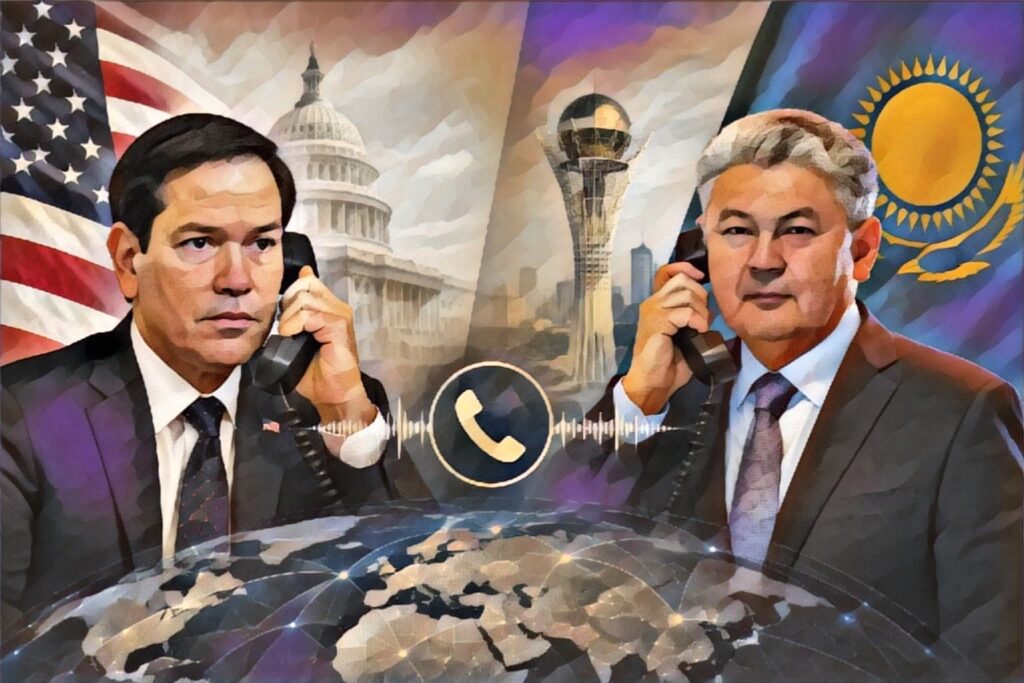
The United States welcomed delegations from dozens of countries to a meeting in Washington, D.C. on Wednesday that was aimed at strengthening and diversifying supply chains for critical minerals. With large reserves of these minerals, Central Asia is emerging as a key player in U.S. plans to secure components deemed necessary for advances in technology, economic development, and national security. "I don’t need to explain to anybody here that critical minerals are vital to the devices that we use every single day,” U.S. Secretary of State Marco Rubio said in his opening remarks at the minister-level conference. “They power our infrastructure, our industry, and our national defense… Our goal is to have a global market that's secure, a global supply that's enduring and is available to everyone, every nation, at an affordable price.” U.S. Vice President JD Vance also spoke at the event, saying the United States wants to form a trading bloc among allies and partners that expands production of critical minerals in an environment of stable prices and supply chains immune from disruption. “By regulating imports to preserve free and fair competition within the preferential trading zone, we will elevate our nation’s miners and refiners, our investors and producers alike,” Vance said. “We are all on the same team, and we need to create the economic incentives that reward people for investing and building in our countries.” The United States is seeking to counter China’s dominance of the critical minerals market. China is a key trading partner for Central Asia, whose countries aim to diversify their relationships among the major powers. Foreign Minister Yermek Kosherbayev of Kazakhstan was among those slated to attend the critical minerals conference in the United States. The visit follows intensifying discussions involving the United States and Central Asian countries on how to develop trade and investment. On Wednesday, business leaders and government officials from Central Asia and the United States gathered in Kyrgyzstan’s capital, Bishkek, for the start of the second B5+1 Business Forum.