• KGS/USD = 0.01144 0%
  • KZT/USD = 0.00210 0%
  • TJS/USD = 0.10438 0.19%
  • UZS/USD = 0.00008 0%
  • TMT/USD = 0.28571 0%
  • KGS/USD = 0.01144 0%
  • KZT/USD = 0.00210 0%
  • TJS/USD = 0.10438 0.19%
  • UZS/USD = 0.00008 0%
  • TMT/USD = 0.28571 0%
  • KGS/USD = 0.01144 0%
  • KZT/USD = 0.00210 0%
  • TJS/USD = 0.10438 0.19%
  • UZS/USD = 0.00008 0%
  • TMT/USD = 0.28571 0%
  • KGS/USD = 0.01144 0%
  • KZT/USD = 0.00210 0%
  • TJS/USD = 0.10438 0.19%
  • UZS/USD = 0.00008 0%
  • TMT/USD = 0.28571 0%
  • KGS/USD = 0.01144 0%
  • KZT/USD = 0.00210 0%
  • TJS/USD = 0.10438 0.19%
  • UZS/USD = 0.00008 0%
  • TMT/USD = 0.28571 0%
  • KGS/USD = 0.01144 0%
  • KZT/USD = 0.00210 0%
  • TJS/USD = 0.10438 0.19%
  • UZS/USD = 0.00008 0%
  • TMT/USD = 0.28571 0%
  • KGS/USD = 0.01144 0%
  • KZT/USD = 0.00210 0%
  • TJS/USD = 0.10438 0.19%
  • UZS/USD = 0.00008 0%
  • TMT/USD = 0.28571 0%
  • KGS/USD = 0.01144 0%
  • KZT/USD = 0.00210 0%
  • TJS/USD = 0.10438 0.19%
  • UZS/USD = 0.00008 0%
  • TMT/USD = 0.28571 0%

Viewing results 1 - 6 of 122

Deals, Not Declarations: U.S.–Central Asia Cooperation at Summit Crossroads

A landmark summit between the United States and the five Central Asian republics is scheduled for November 6 in Washington, D.C., bringing together the presidents of Kazakhstan, Kyrgyzstan, Tajikistan, Turkmenistan, and Uzbekistan. It will be the second leaders-level C5+1 meeting with a U.S. president—the first took place on the sidelines of the UN General Assembly in 2023—and the first time the format is hosted in the U.S. capital. The gathering also marks the 10th anniversary of the C5+1 diplomatic platform that connects Central Asia with Washington. The summit comes at a pivotal moment geopolitically; Russia remains consumed by its war in Ukraine, whilst China continues to expand its Belt and Road footprint across Eurasia. As the region’s strategic importance grows, both the United States and the Central Asian states see an opportunity to recalibrate their relationships, each approaching the meeting with distinct priorities and expectations. Washington’s Agenda: Critical Minerals and Connectivity For the United States, this summit is about converting diplomatic engagement into tangible deliverables. Officials want to see results in three main areas: critical minerals, regional connectivity, and security coordination. Congress and the administration view the region’s reserves of antimony, tungsten, uranium, and rare earth elements as essential to securing U.S. supply chains. During his October 2025 visit to Kazakhstan and Uzbekistan, Deputy Secretary of State Christopher Landau emphasized expanding cooperation on critical minerals and trade diversification. The Trump administration has prioritized these resources as part of a broader effort to reduce dependence on China. Trade routes are also in focus. The U.S. supports the Middle Corridor, a trans-Caspian route that links Central Asia with the South Caucasus and Europe. Infrastructure investments that bypass Russia are strategically important, and Washington wants to help harmonize customs and logistics to make that corridor more viable. These priorities form part of a wider push to anchor the region in transparent, market-based supply chains that connect Central Asia more directly with Western markets. Kazakhstan: Trade Normalization and Resource Investment Central Asia’s largest economy, Kazakhstan is expected to push for permanent normal trade relations with the U.S. The country still faces Cold War-era restrictions under the Jackson-Vanik amendment – as do Tajikistan, Turkmenistan, and Uzbekistan - with Astana long having viewed its repeal as a key milestone. That push has taken on new importance after Washington imposed a 25% tariff on Kazakh imports in mid-2025 - though Kazakh exports were exempted shortly thereafter - a move viewed by officials in Astana as inconsistent with efforts to expand economic cooperation. Kazakhstan is also looking to the U.S. for support in developing its mineral wealth. President Kassym-Jomart Tokayev’s government is actively mapping new rare earth deposits, and Washington has recently backed a private American bid to reopen Kazakhstan’s long-idle tungsten mine at Upper Kairakty, underscoring growing U.S. interest in Central Asia’s critical minerals sector. The two sides are also expanding industrial ties: in September 2025, Astana signed a $4.2 billion deal with U.S. rail manufacturer Wabtec to modernize Kazakhstan’s locomotive fleet and develop regional transport corridors...

Kazakhstan Courts Global Investment with Critical Minerals and Green Energy Push

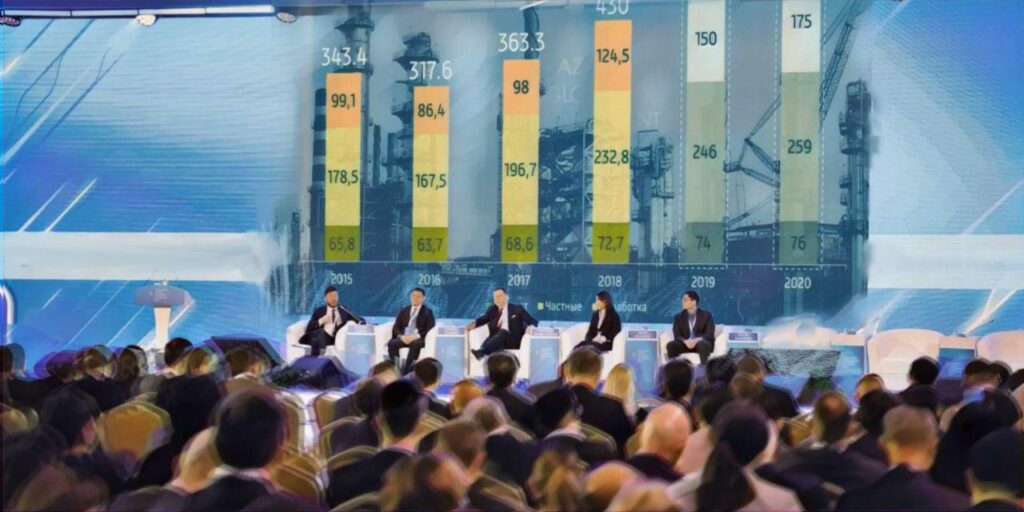
Since gaining independence, Kazakhstan has established itself as a reliable global supplier of raw materials. Today, the country's economic structure is evolving as it positions itself as a high-added-value hub for industrial production. These developments are closely tied to Kazakhstan’s transition to a green economy and its role in global supply chains for critical minerals. Creating a Favorable Investment Climate Kazakhstan has taken significant steps to create a transparent, predictable investment environment and enhance its business competitiveness. Among these measures is the introduction of investment agreements that guarantee legislative stability for up to 25 years for large projects exceeding $60 million. The legal framework has also undergone reforms, procurement procedures have been modernized, and judicial reforms have created separate cassation courts and redefined the Supreme Court’s role. These reforms have drawn the attention of international investors and rating agencies. In 2024, Moody’s upgraded Kazakhstan’s long-term credit rating to the highest level in the country's history, citing macroeconomic stability and policy predictability. In the first nine months of 2025, GDP grew by 6.3%, while investment in fixed capital rose by 13.5% to reach $26 billion. Moody’s analysts also highlighted Kazakhstan’s stronger economic outlook compared to other hydrocarbon-exporting nations, attributing this to ongoing reforms that enhance the country’s competitiveness. One key driver is the rapid development of the transport and logistics sector, particularly through the Trans-Caspian International Trade Route, also known as the Middle Corridor. This corridor is attracting foreign investors across a range of non-oil sectors, including automotive, pharmaceuticals, food production, and construction materials. Kazakhstan is also home to the Astana International Financial Centre (AIFC), a platform that operates under English common law. The AIFC offers tax exemptions, simplified labor regulations, and digital arbitration. It currently ranks first in Eastern Europe and Central Asia in the Global Financial Centres Index. More than 4,200 companies from 80 countries, including over 60 American firms, are registered with the AIFC. Strategic Projects Take Shape Kazakhstan’s diversification strategy and focus on critical minerals were prominently showcased during the 8th Kazakhstan Global Investment Roundtable (KGIR-2025), held in Astana in October. The event attracted over 1,000 participants from 55 countries, resulting in the signing of 49 agreements worth $7.5 billion. A key session focused on critical minerals and the energy transition, signaling the country’s long-term growth trajectory. Among the highlights was a meeting between the government and Mohammad Vahid Sheikhzadeh Najjar, CEO of FakoorSanat Tehran Engineering Co., to explore cooperation in mining and metallurgy, including new technologies for processing mineral raw materials. Sheikhzadeh Najjar noted that the global market for critical minerals, currently valued at $328 billion, is expected to double by 2032. He emphasized that Kazakhstan is well-positioned to lead this growth. Environmental initiatives, such as a project to process 55 billion tons of mining waste, offer additional economic potential. Meanwhile, Chinese investor Zhang Jintao, founder of Chengdu Sepmem Energy, proposed a long-term plan to develop an LNG cluster in Kazakhstan. The project envisions a nationwide network of LNG plants and supporting infrastructure to reduce emissions...

Opinion: A Trump Visit to Central Asia Would Deliver Results and Anchor a Corridor Strategy

On November 6, Washington will host the C5+1 leaders’ summit, marking the format’s 10th anniversary and signaling a rare alignment of political attention and regional appetite for concrete outcomes. The date is confirmed by regional and U.S.-focused reporting, with Kazakhstan’s presidency and multiple outlets noting heads-of-state attendance in the U.S. capital. This timing is decisive. Russia’s bandwidth is constrained by the war in Ukraine, China’s trade weight in Central Asia has grown, and European demand for secure inputs and routes has intensified. All these developments together create a window where a visible United States presence can meaningfully alter the deal flow. A visit sequenced off the November C5+1 will attach U.S. political attention to minerals, corridors, and standards that regional governments already prioritize, confirming the conversion of the summit's symbolism into leverage. Washington already has the instruments but has lacked a synchronized presence. Development finance, export credit, and C5+1 working groups exist, yet announcements have too often outpaced commissioning. A targeted tour could unveil named offtakes, corridor slot guarantees, and training compacts. This would move from the dialogue to bankable packages if paired with financing envelopes, posted schedules, and third-party verification. Deals, dates, and delivery would make operational signals clear to partners and competitors alike. Strategic Rationale and Operating Concept The United States has three clear goals. These are to diversify critical minerals away from single-point dependency on China, de-risk trans-Eurasian routes that connect Asian manufacturing to European demand, and reinforce the sovereignty of the states in the region without pressuring them to choose sides in great-power competition over other issues. These imperatives already guide the national-security strategies of Central Asian governments, which implement them according to multi-vector doctrines. A presidential visit that treats minerals, corridors, and standards as a single package would show that Washington is prepared to move forward on the same problem set that the region has defined for itself. The ways to do that are through finance-first diplomacy and an end-to-end corridor approach, including the Caspian crossing. Finance-first diplomacy pairs every political announcement with insurance, offtake letters, and term sheets (short non-binding summaries of key commercial and legal terms for a proposed deal). These signal the intention to convert declarations into commissioning. An end-to-end corridor approach accepts the physical reality that Central Asian outputs move west through Central Asia, across the Caspian Sea, and across the South Caucasus, with Azerbaijan functioning as the hinge that makes Europe reachable at scale. Each element of the “minerals–corridors–standards” triad reinforces the others when the whole is pursued as a single program. Reliable customs and traceability raise corridor credibility, which raises project bankability, which in turn attracts the private capital required for mineral processing. The instrumentalities for this already exist. The C5+1 framework can be tasked to track deliverables; the Development Finance Corporation (DFC) and the Export-Import Bank (EXIM) can cover risk and long-term debt; aid and technical programs of the Department of State and Commerce can align standards, procurement integrity, and traceable supply chains; U.S. universities and labs can...

Trump–Xi Meeting Reshapes Stakes Ahead of C5+1 Summit

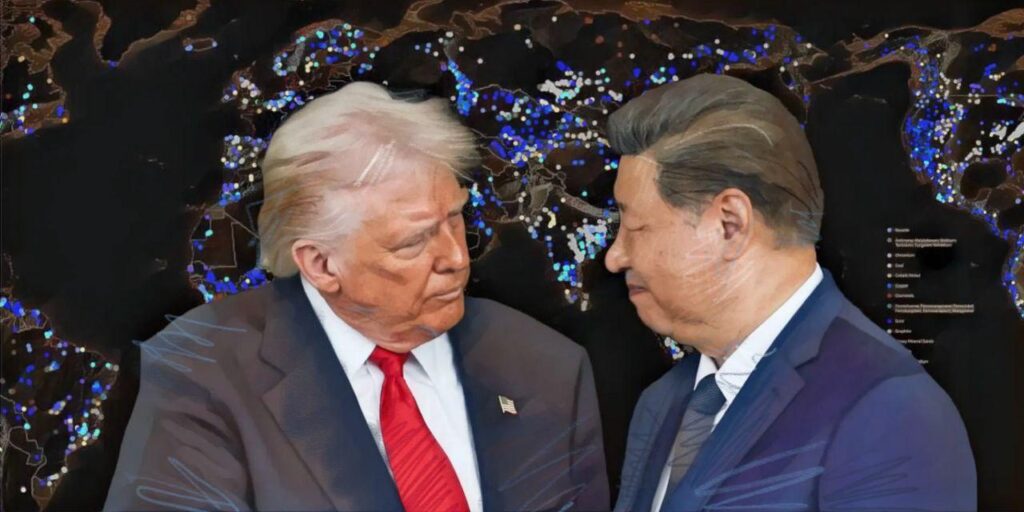
The October 30, 2025, meeting between U.S. President Donald Trump and Chinese President Xi Jinping in Busan, South Korea, marked their first in-person contact since 2019. While framed as a limited reset or tactical pause, the talks carry deeper strategic implications. They occurred just days before the forthcoming C5+1 Leaders’ Summit in Washington on November 6, a gathering with direct consequences for Central Asia’s role in the future of critical mineral supply chains. South Korea Talks: Reset or Recalibration? At the meeting in Busan, Trump and Xi discussed supply chains, tariffs, rare earth trade, and broader trade issues. The U.S. announced that China had agreed to pause certain rare-earth export curbs for a year, with Trump describing the talks as “amazing.” China currently processes roughly 90% of the world’s rare-earth elements and mines around 70%, which are indispensable in the production of electric vehicles, wind turbines, defense technologies, and high-tech manufacturing. Analysts characterized the Busan accord not as a strategic realignment but as a “tactical pause” or a “temporary lull to escalation” between the U.S. and China. For emerging potential U.S. partners in Central Asia, however, the optics matter, as any perceived U.S.–China trade thaw could diminish the urgency behind diversifying rare earth supply chains. Central Asia’s Rare Earth Opportunity As previously reported by The Times of Central Asia, the upcoming C5+1 summit is likely to focus on critical minerals, energy logistics, and investment infrastructure as the U.S. seeks to reduce its reliance on China. Kazakhstan has emerged as a major player in rare earths, with geological surveys in 2024 and 2025 identifying 38 promising solid mineral deposits, including the Kuyrektykol site in the Karaganda region, which contains substantial reserves. Uzbekistan, meanwhile, signed a memorandum of understanding with the U.S. on critical minerals cooperation in September 2024, which represented a major step toward deepening bilateral cooperation on this front. The U.S. International Development Finance Corporation (DFC) has signaled its interest in co-financing midstream mining and processing infrastructure in Central Asia, though projects remain at formative stages. Logistics routes such as the Middle Corridor via Central Asia and the Caspian remain strategically attractive to Western-aligned supply chains seeking to bypass Russia. Trump–Xi Reset Could Blur U.S. Commitments, But the Case for Diversification Remains Strong Should the Trump-Xi meeting diminish the immediate urgency of supply chain diversification, this will be of concern to countries looking to balance their economies with geopolitical neutrality. Kazakhstan has long positioned itself as a multi-vector neutral broker between major powers, meaning fluctuating U.S. policy signals could cause complications. Despite the reset, however, most analysts contend that little has fundamentally changed, with the Busan meeting seen as a temporary rather than a genuine strategic pivot. While structural competition between Washington and Beijing endures, diversification of critical mineral supply chains remains as essential as ever. For Central Asia, this dynamic reinforces the need to continue developing regional value chains and its mid-stream processing capacity. What to Expect in Washington The November 6 C5+1 Leaders’ Summit in Washington will test whether the...

C5+1 at 10: Washington Seeks Concrete Outcomes With Central Asia

A leaders’ summit between Central Asia and the United States is scheduled for 6 November in Washington, D.C. Kazakhstan’s presidency has said the meeting will take place on that date, and President Kassym-Jomart Tokayev has confirmed his attendance. Others have confirmed as well. The meeting would bring the heads of state of Kazakhstan, the Kyrgyz Republic, Tajikistan, Turkmenistan, and Uzbekistan to Washington for only the second leaders’ level C5+1 meeting, after the first took place on the margins of the UN General Assembly in September 2023. The timing is notable as 2025 marks the C5+1’s tenth year. Since 2015, the C5+1 format, linking the five Central Asian states with the United States, has steadily become Washington’s primary channel for strategic diplomacy in the region. With Russia constrained by the war in Ukraine and China expanding Belt and Road finance and logistics, the U.S. is building a durable presence through programmatic work, published procedures, and predictable commitments. Public calls in the United States to mark the tenth year with a Washington meeting have focused on concrete results. Stakeholders such as U.S. and Central Asian ministries, regulators, banks, carriers, and investors now expect clear schedules for practical work on corridor performance, compliance guidance under evolving sanctions, critical minerals cooperation, grid reliability, aviation access, and investment risk-sharing. The success of the summit depends on more than words that have characterized prior summits. One metric of success could be the consummation of a final joint communiqué including 90-day and 180-day check-backs with a designated lead and co-lead for each item - identified by name, title, and agency - and a requirement to publish brief progress notes. The summit was preceded by a visit of U.S. officials to the region: on October 25, U.S. Special Representative for South and Central Asia Sergio Gor and Deputy Secretary of State Christopher Landau arrived in Tashkent, met senior officials and U.S. companies, continued to Samarkand, and then to Almaty. The trip was not publicly scheduled; initial confirmation came via embassy Telegram posts. Discussions reportedly covered rare-earth processing and other sensitive cooperation areas, signaling agenda-setting ahead of November 6. How Washington Can Regularize Intensified C5+1 Coordination This meeting would normalize leaders’ level C5+1 engagement after the first such gathering in September 2023. That shift matters. Since 2015, the format has moved from occasional ministerials to a steadier dialogue built around defined themes, even when leaders have met on the sidelines of larger events. With Washington now hosting, observers will compare outcomes to the 2023 joint-statement themes - security, economic resilience, sustainable development, climate, and sovereignty - and to readouts that set a precedent for presidential-level participation. In this sense, the Washington summit represents not only a procedural step but a test of whether the United States can institutionalize its Eurasia policy with a more proactive diplomacy. An annual leaders’ cycle, spring ministerials, and quarterly sherpa meetings pre-scheduled through Q4 2026 would signal a commitment to deepen the process. In Washington, there is bipartisan pressure to show continuity and delivery...

Kazakhstan’s Emerging Role in Global Rare-Earth Supply Chains

October 10 was one of the most consequential days for global trade policy and one of the most volatile for world markets since the U.S.–China tariff conflict first reignited. After China announced tighter export controls on rare earths, U.S. President Donald J. Trump first posted on Truth Social that “there seems to be no reason” anymore for him to meet with the Chinese leader Xi Jinping at the APEC summit in two weeks' time. Several hours later, the official White House account on X posted a message from Trump that he had learned that "effective November 1st, 2025, [China will] impose large-scale Export Controls [sic] on virtually every product they make, and some not even made by them." He then followed with the declaration that the U.S. will impose a 100% tariff on Chinese imports starting November 1, "or sooner," and launch export controls on critical software. As Washington and Beijing escalate their economic confrontation, the scramble for stable rare-earth supply chains has broadened beyond East Asia. Attention is shifting to Central Asia, where mineral potential and trade corridors align with the broader effort to reduce dependence on China. Kazakhstan has drawn particular attention, not as a single solution, but as a state seeking to leverage its Soviet-era industrial base and access to the Caspian to help meet emerging supply chain needs. Although Kazakhstan has made the most progress in translating its mineral reserves into a functioning mining industry, it remains part of a broader regional effort to diversify away from a single external partner, most notably China. Other Central Asian states are testing their own capabilities to meet global supply chain demands, though most remain constrained by infrastructure, financing, or lack of processing capability. Kazakhstan’s Position in the Emerging Supply Realignment On reserves, Kazakhstan’s rare-earth potential is rooted as much in continuity as it is in discovery. Decades of geological mapping under Soviet administration established its mineral profile, and recent joint surveys by Kazgeology and private firms have both confirmed and expanded those earlier findings. New delineated deposits in the east and center of the country, including the Zhana Kazakhstan site in Karagandy, have reinforced its status as a prospective non-Chinese source of critical materials, with verified concentrations of neodymium, praseodymium, dysprosium, terbium, and samarium. If current resource estimates are validated, the Zhana Kazakhstan deposit could rank among the largest rare-earth reserves in the world. These elements are essential inputs for high-efficiency magnets used in electric vehicles, wind turbines, and advanced defense systems. The U.S. Department of Defense classifies these rare earths as “critical defense materials,” a designation that underscores their strategic relevance rather than any immediate shift in supply. Both the Pentagon and the Defense Logistics Agency have begun increasing stockpiles and exploring alternative processing sources, but for now, the question in Kazakhstan is not geological endowment, which is established, but the terms under which that endowment can be brought to market. On processing capacity, Kazakhstan’s experience in large-scale mining of uranium, copper, and other critical minerals has...