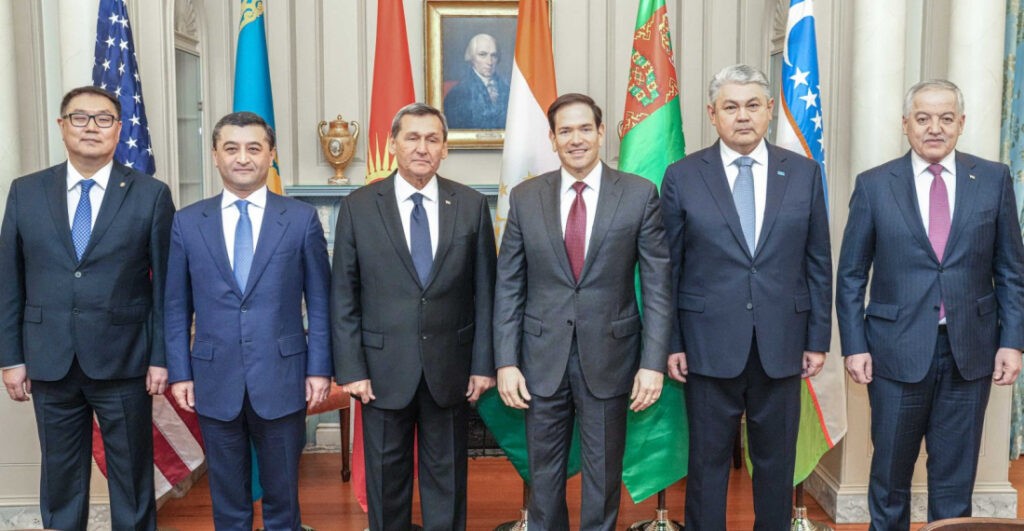
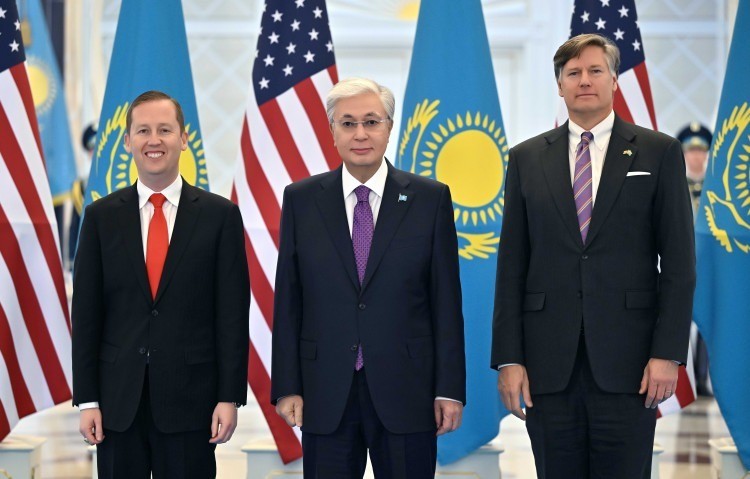
A leaders’ summit between Central Asia and the United States is scheduled for 6 November in Washington, D.C. Kazakhstan’s presidency has said the meeting will take place on that date, and President Kassym-Jomart Tokayev has confirmed his attendance. Others have confirmed as well. The meeting would bring the heads of state of Kazakhstan, the Kyrgyz Republic, Tajikistan, Turkmenistan, and Uzbekistan to Washington for only the second leaders’ level C5+1 meeting, after the first took place on the margins of the UN General Assembly in September 2023. The timing is notable as 2025 marks the C5+1’s tenth year.
Since 2015, the C5+1 format, linking the five Central Asian states with the United States, has steadily become Washington’s primary channel for strategic diplomacy in the region. With Russia constrained by the war in Ukraine and China expanding Belt and Road finance and logistics, the U.S. is building a durable presence through programmatic work, published procedures, and predictable commitments.
Public calls in the United States to mark the tenth year with a Washington meeting have focused on concrete results. Stakeholders such as U.S. and Central Asian ministries, regulators, banks, carriers, and investors now expect clear schedules for practical work on corridor performance, compliance guidance under evolving sanctions, critical minerals cooperation, grid reliability, aviation access, and investment risk-sharing. The success of the summit depends on more than words that have characterized prior summits. One metric of success could be the consummation of a final joint communiqué including 90-day and 180-day check-backs with a designated lead and co-lead for each item – identified by name, title, and agency – and a requirement to publish brief progress notes.
The summit was preceded by a visit of U.S. officials to the region: on October 25, U.S. Special Representative for South and Central Asia Sergio Gor and Deputy Secretary of State Christopher Landau arrived in Tashkent, met senior officials and U.S. companies, continued to Samarkand, and then to Almaty. The trip was not publicly scheduled; initial confirmation came via embassy Telegram posts. Discussions reportedly covered rare-earth processing and other sensitive cooperation areas, signaling agenda-setting ahead of November 6.
How Washington Can Regularize Intensified C5+1 Coordination
This meeting would normalize leaders’ level C5+1 engagement after the first such gathering in September 2023. That shift matters. Since 2015, the format has moved from occasional ministerials to a steadier dialogue built around defined themes, even when leaders have met on the sidelines of larger events. With Washington now hosting, observers will compare outcomes to the 2023 joint-statement themes – security, economic resilience, sustainable development, climate, and sovereignty – and to readouts that set a precedent for presidential-level participation. In this sense, the Washington summit represents not only a procedural step but a test of whether the United States can institutionalize its Eurasia policy with a more proactive diplomacy. An annual leaders’ cycle, spring ministerials, and quarterly sherpa meetings pre-scheduled through Q4 2026 would signal a commitment to deepen the process.
In Washington, there is bipartisan pressure to show continuity and delivery in this anniversary year. The executive branch needs to translate prior promises into named tasks with fixed dates. Tools exist via the Development Finance Corporation (DFC) for risk-sharing, technical assistance, and joint guidance on export controls and financial-crime compliance; however, these will matter only if agencies name co-chairs, locations, and calendars, and then meet them.
Central Asia Seeks Practical Results
Regional priorities are practical: trade, finance, and security. Governments are seeking to widen their options while avoiding new dependencies and addressing immediate needs. These needs include Middle Corridor customs harmonization and digital documentation, new civil-aviation routes to add capacity, grid reliability to support industry and exports, banking channels that manage sanctions exposure without over-correction, and clear coordination on border management and Afghanistan-adjacent risks. These priorities reflect a broader trend across the region since 2022: a turn toward pragmatic economic sovereignty and diversified partnerships, as Central Asian states hedge between Moscow, Beijing, Brussels, and Washington. Leaders will be judged by whether they instruct technical bodies to deliver time-bound outputs that reduce friction for firms and financiers. Benchmarking corridor procedures against recent diagnostic work underscores why process reforms, not just hard infrastructure, determine throughput.
The likely pillars of the agenda are connectivity and trade corridors, energy and critical minerals, and sanctions compliance and security. Capacity matters for connectivity and trade corridors, but results are often decided by the procedures used. Pilot projects could be launched at named crossings – for example, Ak-Jol/Korday (Kyrgyzstan–Kazakhstan), Zhibek Zholy–G‘ishtkuprik (Kazakhstan–Uzbekistan), and Panjakent–Jartepa (Tajikistan–Uzbekistan) – with responsible agencies named and a schedule for public reporting. Such specificity would distinguish the C5+1 from the region’s more declaratory forums, such as the SCO or CSTO, which often produce communiqués without measurable follow-up.
In aviation, a plan for route development could pair regulators and carriers around specific feasibility studies, such as Almaty–Frankfurt for freighter uplift, and Tashkent–New York for long-haul passenger service. Dates and projects will impress more than general expressions of support. On energy and critical minerals, U.S. support can help where DFC and export-credit tools share midstream and processing risk, where grid-efficiency projects cut technical losses in measured steps, and where uranium and other inputs move under transparent, long-dated contracts. That approach would position Washington as a facilitator of private-sector investment rather than a counterweight to Chinese or Russian state capital, an important distinction in the region’s eyes.
From Sequencing Work to Measurable Outcomes
Leaders can set direction, but ministries must then sequence the work: pre-feasibility and permitting, then finance, then construction. The results of the C5+1 leaders’ summit in 2023 provide a policy base for proceeding in this manner, but they did not pre-commit to numbers. A minerals working group that publishes by the end of Q1 2026 a shortlist of three processing projects with estimated capex ranges and indicative purchase commitments would be a material step. Such visible benchmarks would reassure both investors and skeptical regional publics that the C5+1 is not merely another talking shop.
On sanctions compliance, trade continues to be shaped by secondary-sanctions exposure, export-control observance, and risks assumed by correspondent banks. A useful outcome of the summit would be a standing technical forum co-chaired by U.S. and C5 authorities that shares guidance notes and anonymized cases with banks and exporters. On security, emphasis will likely remain on border management, counter-terrorism cooperation, and information exchange. Any communiqué would do well to schedule a first compliance-forum meeting within 60 days, with a commitment to a quarterly digest of guidance and case studies thereafter. This would help local banks and traders navigate Western compliance regimes without freezing legitimate commerce, a key regional grievance since 2022.
Outcomes from the summit that would matter include: corridor targets or customs-harmonization pilot projects with dates and named border points; a minerals-supply-chain working group with designated U.S. and C5 co-chairs and a first meeting on the calendar; a sanctions-compliance forum that commits to publish guidance and case digests; and an aviation track that pairs regulators with carriers for route-development facilitation. Over-programming beyond interagency capacity must be avoided, but credibility will rest on milestones, clear instruments, and prompt ministerial follow-through. This balance between ambition and deliverability will determine whether Washington’s renewed attention translates into durable influence.
Measurable Progress
Chinese finance in Central Asia moves quickly and at scale; Russian links persist through energy, logistics, and labor migration. The United States adds value where it lowers transaction costs: customs and data interoperability at border crossings, bankable structures for minerals and grid projects, and route development linking Central Asian airports to global hubs.
Progress on corridor governance, minerals chains, and aviation markets over the next 12–24 months will indicate whether this summit strengthens regional agency. A practical indicator is a 10–20% reduction in average clearance times at the named border crossings, and the publication of at least one long-haul aviation feasibility study by mid-2026.
The broader takeaway for Central Asia is incremental but real. A durable leaders’ track that produces verifiable, time-bound outputs would shift standards and procedures toward predictability across trade, energy, finance, and aviation. Such an approach would support cooperation under competitive geoeconomic conditions and increase the region’s ability to turn multi-vector intent into operational autonomy. If Washington follows through, the C5+1 could evolve from a symbolic dialogue into a practical architecture for regional resilience, something neither Moscow nor Beijing currently offers.
If by a year from now two pilot border crossings have institutionalized new procedures and one minerals-processing project has agreed on a term sheet (a non-binding summary of the key commercial and legal terms the parties use to draft final binding contracts), the region will have taken a measurable step toward autonomous operating capacity. For both Washington and Central Asia, that would mark not only policy progress but the emergence of a new standard for results-based regional diplomacy.
Follow our interactive critical minerals timeline tracing the partnerships, investments, and policies reshaping U.S. engagement with Central Asia.