• KZT/USD = 0.00210
  • TJS/USD = 0.10820
  • UZS/USD = 0.00008
  • TMT/USD = 0.29850
  • KZT/USD = 0.00210
  • TJS/USD = 0.10820
  • UZS/USD = 0.00008
  • TMT/USD = 0.29850
  • KZT/USD = 0.00210
  • TJS/USD = 0.10820
  • UZS/USD = 0.00008
  • TMT/USD = 0.29850
  • KZT/USD = 0.00210
  • TJS/USD = 0.10820
  • UZS/USD = 0.00008
  • TMT/USD = 0.29850
  • KZT/USD = 0.00210
  • TJS/USD = 0.10820
  • UZS/USD = 0.00008
  • TMT/USD = 0.29850
  • KZT/USD = 0.00210
  • TJS/USD = 0.10820
  • UZS/USD = 0.00008
  • TMT/USD = 0.29850
  • KZT/USD = 0.00210
  • TJS/USD = 0.10820
  • UZS/USD = 0.00008
  • TMT/USD = 0.29850
  • KZT/USD = 0.00210
  • TJS/USD = 0.10820
  • UZS/USD = 0.00008
  • TMT/USD = 0.29850

Viewing results 1 - 6 of 111

Tokayev and U.S. DFC Chief Discuss Critical Minerals, AI, and Possible Kazakhstan Office

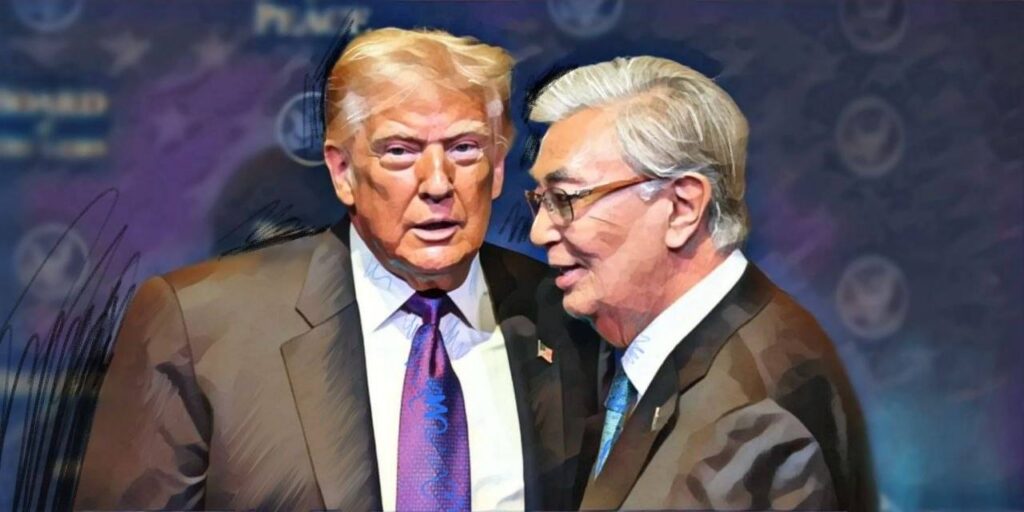
Kazakh President Kassym-Jomart Tokayev met on June 15 with Ben Black, chief executive officer of the U.S. International Development Finance Corporation (DFC), as Astana seeks to expand economic cooperation with Washington and attract more strategic investment. The DFC, the U.S. government's international investment arm, mobilizes private capital in support of foreign-policy and economic-development priorities. A permanent DFC presence in Kazakhstan would give U.S. investors and Kazakh authorities a more direct channel for structuring and financing projects in priority sectors. Welcoming Black, Tokayev described the visit as a continuation of agreements reached during talks in Washington in November 2025, and an important step toward deepening Kazakhstan's multifaceted partnership with the United States. Tokayev said relations between Astana and Washington had intensified since President Donald Trump returned to office. "We fully support the bold vision and pragmatic diplomatic approach of the U.S. President. Kazakhstan plays an active role in advancing key American initiatives, including the Abraham Accords, the Board of Peace, the TRIPP initiative, and other projects. Together, these efforts have given new momentum to our enhanced strategic partnership, which is stronger today than ever before," Tokayev said. The Trump Route for International Peace and Prosperity (TRIPP) has become important to Kazakhstan's transport agenda because a southern Caucasus route could broaden options for the Middle Corridor rather than replace existing Azerbaijan-Georgia links. Tokayev added that Kazakhstan's political and economic reforms are aimed at shifting the country from a resource-dependent model to a diversified, knowledge-based economy, and noted that the DFC's investment priorities align closely with Kazakhstan's development agenda. Black thanked Tokayev for the reception and described his meetings with Kazakhstan's business community in Almaty as productive and substantive. Tokayev emphasized the importance of translating political agreements into practical results and reaffirmed Kazakhstan's readiness to implement joint investment projects. The two sides discussed prospects for cooperation in critical minerals, transport connectivity, agriculture, digitalization, and artificial intelligence. They also reviewed the possibility of opening a permanent DFC office in Kazakhstan. The meeting followed several days of U.S.-Kazakhstan critical minerals diplomacy in Astana. The Times of Central Asia reported that the United States convened a C5+1 Critical Minerals Dialogue on June 10, where U.S. Special Envoy Sergio Gor said Washington saw Central Asia as a partner in diversifying access to strategic materials and highlighted the DFC's potential role in critical minerals, telecommunications, and Trans-Caspian infrastructure. David Fogel, Assistant Secretary of Commerce and Director General of the United States and Foreign Commercial Service, told delegates at the Astana Mining & Metallurgy Congress on June 11-12 that Washington was moving "from dialogue to strategic execution" in the region's critical minerals industry. Fogel noted that the United States had brought an unusually large delegation to Kazakhstan, including representatives of more than 20 U.S. companies and senior officials, underscoring growing American interest in the country's mining, metallurgy, and industrial sectors. Those discussions fit Kazakhstan's attempt to move beyond extraction. Astana is seeking to position its mining sector around processing, technology transfer, and higher-value manufacturing, while linking critical minerals to...

The 43 Kilometers That Could Rewire Eurasia

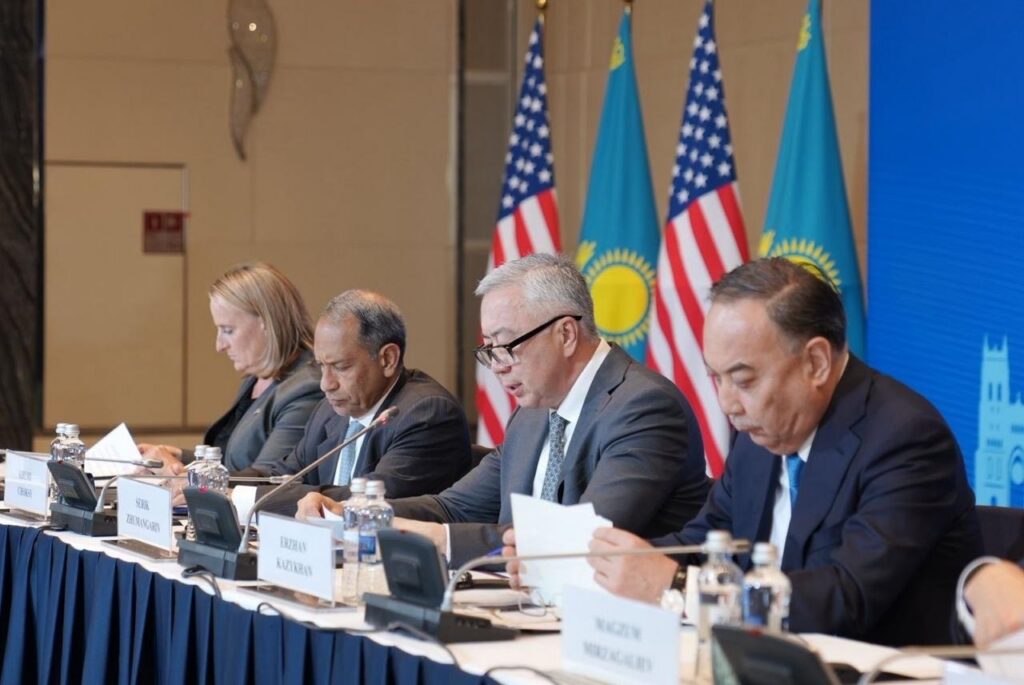
The Caspian Policy Center’s Trans-Caspian Forum 2026 convened U.S. and regional officials at the National Press Club in Washington on June 10 for a discussion of peace, economic security, and durable partnerships. The forum framed a short Armenia-based link as part of a wider effort to turn the Middle Corridor into a working route for cargo, energy, data, and capital. The strategic dialogue was chaired by Dr. Eric Rudenshiold, CPC research director and senior fellow. Speakers included Aryeh Lightstone, Senior Advisor to the Board of Peace and to Ambassador Steve Witkoff; Hikmet Hajiyev, Assistant to Azerbaijan’s president and foreign-policy department head; Yerzhan Kazykhan, Kazakhstan’s presidential representative for U.S. negotiations; Javlon Vakhabov, deputy adviser to Uzbekistan’s president on foreign policy; and Edil Baisalov, Kyrgyzstan’s ambassador to the United States and presidential special envoy. The meeting came as Washington tries to turn the Armenia-Azerbaijan thaw, the C5+1 critical minerals agenda, and private-sector interest into routes that can move cargo, energy, data, and capital across the Caspian. The discussion cast the Middle Corridor as the main strategic alternative linking Central Asian production to western markets. The Trump Route for International Peace and Prosperity (TRIPP) refers to a planned 43-kilometer link through southern Armenia’s Syunik province, near Meghri and the Arax River, that would connect Azerbaijan with its Nakhchivan exclave. With rail, road, energy, and digital infrastructure, TRIPP is intended to plug into the wider Trans-Caspian route from Central Asia through Azerbaijan and Türkiye to Europe. Aryeh Lightstone opened by placing connectivity inside the Trump administration’s peace and economic-security agenda. His remarks tied Armenia-Azerbaijan diplomacy, the Board of Peace, and the Abraham Accords to the claim that commerce can reinforce peace where standard diplomacy stalled. Lightstone shifted the subject from maps to execution. Customs, regulatory harmonization, digital trade platforms, border procedures, and bankable investment vehicles will decide whether the Middle Corridor becomes a reliable system, he said. His reference to a TRIPP Plus Enterprise Fund pointed to U.S. structures that can move from declarations to projects. Hikmet Hajiyev presented Azerbaijan as the hinge of that system. The Caspian, he argued, does not separate Azerbaijan from Central Asia, but unites them. His line that C5+1 was mathematics while the C6 was chemistry captured Baku’s framing. Azerbaijan is positioning itself as a logistical and strategic extension of Central Asia, connected through Turkic institutions, energy routes, rail, ports, aviation, and digital links. Hajiyev described the Middle Corridor as moving from a supplementary transit route into a strategic geoeconomic system, linking Baku-Tbilisi-Kars rail capacity, Baku port, Nakhchivan, TRIPP, and the planned Trans-Caspian fiber-optic cable with Kazakhstan. Ambassador Kazykhan presented Kazakhstan’s strategic value as something built over time and backed by material capacity, not diplomatic positioning alone. Kazakhstan is by far the region’s largest economy, with the IMF projecting 2026 GDP of about $360 billion. Kazykhan said more than 600 American companies operate in Kazakhstan and cumulative U.S. investment has surpassed $100 billion. Kazakhstan also supplies about 24% of U.S. uranium imports and has reserves or production capacity linked...

U.S. Investors Show Growing Interest in Kazakhstan’s Mining Sector

U.S. investors are showing growing interest in Kazakhstan’s critical minerals sector, with attention increasingly focused not only on extraction but also on processing, metallurgy and broader supply-chain development, according to Nicole Rodgers, president of the U.S.-based Alliance for Mineral Security, an industry group representing companies involved in mining, processing and the use of strategic minerals. Rodgers spoke during the panel session “Investment Climate in Mining and Metallurgy” at the Astana Mining & Metallurgy Congress, AMM 2026, where she emphasized that predictability and regulatory consistency are among the most important conditions for attracting global capital. “In our view, Kazakhstan is moving in the right direction, including by harmonizing regulations with international standards, developing early-stage geological exploration, building industrial clusters and moving toward more sophisticated investment structures,” Rodgers said. “At the same time, American investors are interested not only in extraction, but in participating across the entire value chain.” She pointed to an agreement between U.S.-based Cove Capital and Kazakhstan’s national mining company Tau-Ken Samruk on the joint development of the Severny Katpar and Verkhne Kairakty tungsten deposits in the Karaganda region of central Kazakhstan. Under the deal, the investment package includes plans to build two processing plants and a metallurgical facility, with a total projected value of $1.1 billion. Interest from Washington has also been reinforced at the political level. Speaking at the C5+1 Critical Minerals Dialogue in June, U.S. Special Envoy for South and Central Asia Sergio Gor said Washington intended to play an active role in developing Central Asia’s mining sectors. “Interest in Kazakhstan from American investors is high, but for that interest to materialize in practice, infrastructure, energy capacity and skilled personnel are critical,” Rodgers added. While foreign interest is rising, industry representatives said Kazakhstan’s ability to convert that interest into long-term investment will depend on the consistency of its legal and regulatory framework. Nikolai Radostovets, executive director of the Republican Association of Mining and Metallurgical Enterprises, said amendments to Kazakhstan’s Subsoil Code, adopted in 2018, should now be aligned with changes in environmental, water and land legislation introduced in recent years. Ruslan Baimishev, president of the Kazakhstan Mining Chamber, also highlighted the importance of legislative stability, particularly in tax policy, saying investors require consistency in government decisions. World Bank Senior Mining Specialist Remy Pelon said many countries are reforming their mining sectors to meet growing demand for minerals needed for the global energy transition. At the same time, Pelon warned against overcorrection. “Governments must create conditions for the efficient use of mineral resources in the interests of national development, but it is equally important to preserve a balance between industrial policy, openness to new market players and competitiveness,” he said. “That balance is especially important for countries aiming not only to extract raw materials, but also to develop processing, local manufacturing and technological expertise.” Kazakh officials used the forum to underscore recent legal measures designed to improve investor protections. Arman Khassenov, deputy chairman of the Committee for the Protection of Investors’ Rights under the Prosecutor General’s Office,...

Ambassador Kazykhan Calls for U.S.–Kazakhstan Critical Minerals Projects at AMM Congress

ASTANA — Ambassador Yerzhan Kazykhan, Kazakhstan’s presidential representative for negotiations with the United States, delivered the opening remarks at the U.S.–Kazakhstan Country Roundtable during the Astana Mining & Metallurgy Congress on June 11, calling for expanding bilateral ties to be turned into practical critical minerals projects. The roundtable brought together U.S. officials, American businesses, and Kazakh counterparts to discuss practical measures for advancing projects in the critical minerals sector. His remarks focused on turning the U.S.–Kazakhstan minerals agenda into projects, investment, offtake agreements, processing capacity, and more resilient supply chains. Kazykhan placed the discussion within President Kassym-Jomart Tokayev’s broader effort to deepen the U.S.–Kazakhstan relationship around energy, supply-chain security, investment, and critical minerals. According to the transcript of his remarks, he referred to the November 6 meeting between Tokayev and U.S. President Donald J. Trump, saying the two leaders had met “to unlock the substantial potential” of what the U.S. State Department had called “A New Era” in bilateral relations. “The strategic understanding reached by our leaders was fully aligned with the national interests of both countries,” Kazykhan said. He said that understanding included support for energy security, supply-chain resilience, and a “shared commitment to strengthening cooperation in energy, rare earths, and other critical minerals.” He argued that the agenda had already moved beyond diplomacy. “You can see these priorities are not abstract,” Kazykhan said. “They are being advanced through concrete partnerships that strengthen industrial capacity, accelerate technological development, and support emerging fields such as artificial intelligence.” Kazykhan presented Kazakhstan as a strategic partner for Washington at a time when the United States and its allies are seeking alternatives to concentrated supply chains for minerals used in defense, energy, advanced manufacturing, and emerging technologies. “Kazakhstan is uniquely positioned to serve as a strategic partner for the United States, one that can offer increased resilience and enhanced competitiveness,” Kazykhan said. He described Kazakhstan as “a reliable and substantial supplier” and “a Middle Power with regional influence, a diversified industrial base, and one of the world’s top 50 economies.” He also pointed to Kazakhstan’s mineral base, saying the country holds top-ten reserves of tungsten, molybdenum, tantalum, nickel, cobalt, and lithium, along with deposits of other critical elements. Kazakhstan is also the world’s largest uranium producer, accounting for about 40% of global output and more than 20% of U.S. natural uranium imports, he said. But Kazykhan’s central argument was that Kazakhstan should not be viewed only as a source of raw materials. He said durable supply-chain security requires processing, refining, and integration into higher-value industrial stages. “Mining alone is not enough,” he said. “True supply-chain security requires processing, refining, and downstream integration.” He added that Kazakhstan “is not a greenfield jurisdiction,” citing its industrial workforce, established producers, export record, and institutional capacity for long-duration resource projects. Kazykhan also linked the minerals agenda to transport and logistics. He said Kazakhstan has been strengthening access to the Caspian Sea and expanding connectivity through the Trans-Caspian and broader East-West corridors, giving it routes to deliver materials...

Kazakhstan Seeks More Than Extraction as U.S. Minerals Interest Grows

Kazakhstan is using renewed U.S. interest in critical minerals to push a larger industrial goal: moving beyond raw-material exports and into processing, technology transfer, and higher-value manufacturing. That ambition was on display in Astana this week across two closely linked but distinct events. The C5+1 Critical Minerals Dialogue, held on June 10, brought together representatives of the five Central Asian states and the United States for a diplomatic discussion on supply-chain cooperation. The following day, the 16th International Mining and Metallurgy Congress and Exhibition, Astana Mining & Metallurgy (AMM) 2026 opened as an industry forum for mining companies, investors, technology providers, and government officials. The proximity was deliberate; the purposes were different. For Kazakhstan, the issue is not only foreign demand. It wants critical minerals to support a wider industrial strategy, including domestic processing, engineering capacity, and new manufacturing clusters. June 10: The C5+1 Diplomatic Track The C5+1 dialogue brought together representatives of Kazakhstan, Kyrgyzstan, Tajikistan, Turkmenistan, Uzbekistan, and the United States. Its agenda covered geological exploration, surveying and mapping, mining and processing, logistics, and global value and supply chains. Kazakhstan’s Minister of Industry and Construction, Yersayin Nagaspayev, used the dialogue to present critical minerals as part of the country’s industrial policy rather than simply as an export opportunity. U.S. Special Envoy for South and Central Asian Affairs Sergio Gor represented Washington at the meeting. “Kazakhstan is interested not only in exporting raw materials, but also in developing joint production facilities, technology transfer, workforce training, and scientific cooperation,” Nagaspayev said. That point is central to Astana’s pitch. Kazakhstan has long been a major mining state, but the government is increasingly presenting critical minerals as a way to change the structure of the economy. Nagaspayev said the country has more than 9,500 mineral deposits, including more than 100 that contain rare and rare-earth metals. Kazakhstan holds significant deposits of tungsten and molybdenum and has the potential to establish a domestic raw-material base for tantalum and niobium production. It also has reserves of lithium and beryllium, which are important for advanced manufacturing, electronics, aerospace, energy storage, and defense-related industries. Kazakhstan has proven reserves or active production of roughly half of the 54 minerals identified as critical by the United States, according to Al-Farabi Ydyryshev, director general of the National Center for Technological Forecasting under the Industrial Committee. Ydyryshev said Kazakhstan already has extraction and processing capacity for materials used in aerospace, electronics, energy, and defense industries, including beryllium, tantalum, niobium, titanium, and rhenium. The question is whether those capabilities can be expanded into higher-value production. Washington’s interest in Central Asia has grown as critical minerals have become a larger part of economic security policy. China remains dominant in the production and processing of many minerals needed for batteries, semiconductors, renewable energy, digital infrastructure, and advanced defense systems. Speaking at the June 10 meeting, Gor linked the minerals agenda to the need for diversification. “Our economic security depends on our ability to diversify our access to critical minerals,” Gor said. “Ensuring reliable access...

U.S. Moves from Dialogue to Action on Critical Minerals in Kazakhstan

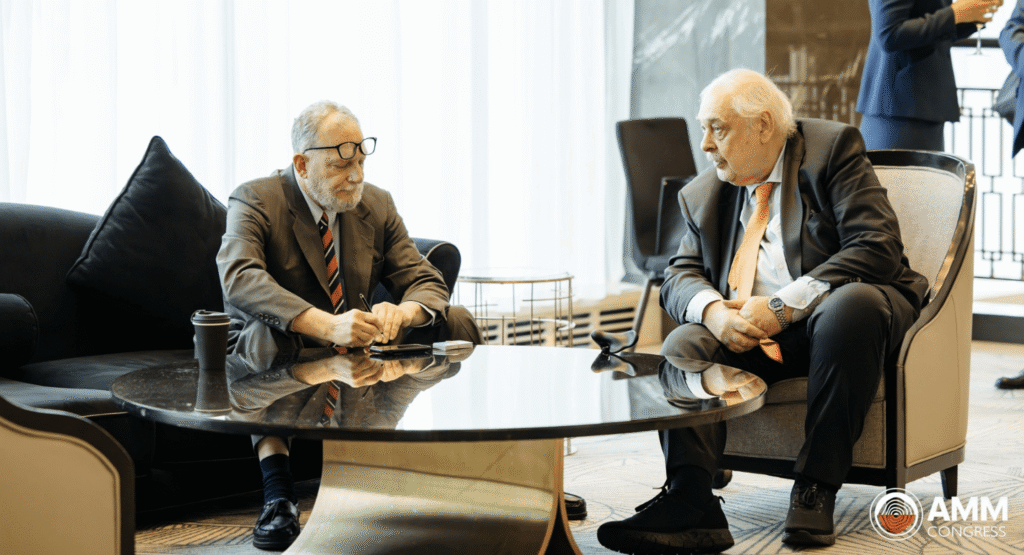
ASTANA — David L. Fogel, Assistant Secretary of Commerce and Director General of the United States and Foreign Commercial Service, told delegates at the 16th International Astana Mining & Metallurgy (AMM) Congress in Astana on June 11-12 that the United States is moving from discussion to strategic execution in Central Asia’s critical minerals sector. Fogel’s responsibilities at Commerce include leading the International Trade Administration’s Global Markets unit, which focuses on commercial diplomacy, export promotion, advocacy for U.S. companies, and foreign investment. Speaking in Astana, where the AMM Congress gathered top-level mining, metallurgy, technology, finance, and government leaders, Fogel said the United States had brought a historically large delegation to Kazakhstan, including more than 20 U.S. companies and representatives from across the U.S. government. The AMM Congress is one of the region’s major mining and metallurgy platforms. Fogel framed the visit as part of a broader U.S. strategic push to strengthen supply-chain resilience at a time of heightened global competition over minerals essential to energy, infrastructure, advanced manufacturing, and emerging technologies. Critical minerals, he said, are now among the top priorities for the United States, not only in terms of sourcing, but also processing. That emphasis is consistent with the Trump administration’s wider policy focus on processed critical minerals and derivative products as issues tied to economic security, national security, and America’s industrial base. Fogel placed the visit within the Trump administration’s broader effort to give Central Asia greater strategic attention, particularly as critical minerals, connectivity, and supply-chain resilience move higher on Washington’s agenda. He said the current push reflects sustained engagement from senior U.S. officials, including Ambassador Sergio Gor, U.S. Special Envoy for South and Central Asian Affairs, and is being carried forward in country by the U.S. team in Kazakhstan under U.S. Ambassador Julie Stufft. Fogel emphasized execution, saying talks related to the C5+1 Critical Minerals Dialogue the day before focused on turning a shared vision for cooperation into practical outcomes. “How do we take this vision of cooperation and put it into actionable projects?” he asked. According to Fogel, the objective is to turn plans into tangible ventures that can attract capital, technology, and long-term business participation. Fogel’s point was that the United States is looking for projects that strengthen critical minerals supply chains while building strategic relationships, rather than organizing endless rounds of declarations that lead nowhere. He presented the process as a disciplined commercial and strategic effort of identifying the right opportunities, minimizing risk for companies weighing where to direct their resources, applying consistent international standards, and creating conditions in which American companies can compete. [caption id="attachment_50309" align="aligncenter" width="1774"] Image: TCA[/caption] The practical implication of Fogel’s remarks was that enthusiasm for mineral resources alone is not enough to draw major long-term investment. Companies need reliable mapping, credible surveys, and consistent international standards that allow projects to be assessed and financed. In that sense, geological data and standards are not technical details, but the bridge between mineral potential and bankable projects backed up by solid in-country partners....