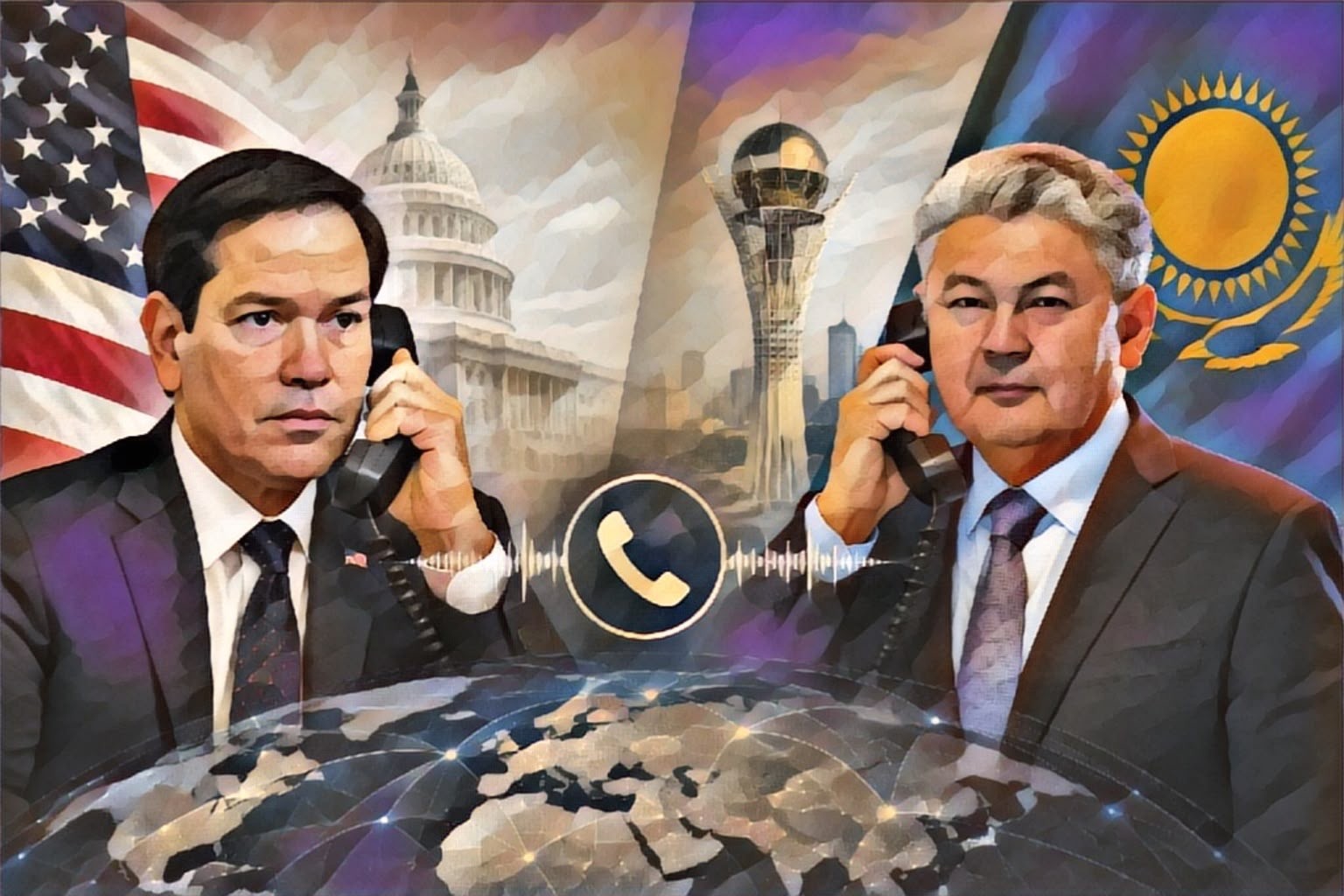
U.S. Secretary of State Marco Rubio held a telephone conversation with Kazakhstan’s Foreign Minister Yermek Kosherbayev on 29 July. The discussion focused on the situation surrounding the Caspian Pipeline Consortium, energy cooperation, critical minerals, trade and investment ties, and current international issues.
According to the U.S. Department of State, Rubio and Kosherbayev discussed the importance of energy security, including the “reliable and uninterrupted” export of Kazakhstan-origin oil through the CPC system. Rubio also thanked Kazakhstan for supporting President Donald Trump’s peace initiatives and expressed interest in deepening bilateral economic cooperation.
Kazakhstan’s Ministry of Foreign Affairs said the two ministers discussed in detail the situation surrounding the Caspian Pipeline Consortium, cooperation in the energy, transport and logistics sectors, supplies of critical minerals, efforts to attract U.S. investment, and coordination in international organisations. The ministry said the conversation also covered preparations for President Kassym-Jomart Tokayev’s forthcoming visit to the United States for the G20 summit.
The telephone call took place shortly after Kazakhstan resumed crude oil exports through the CPC system. The pipeline carries the vast majority of crude exports from the Tengiz oilfield, whose largest shareholders include the U.S. companies Chevron and ExxonMobil.
Kazakhstan’s Foreign Ministry said the two ministers reaffirmed their commitment to maintaining regular political dialogue. The conversation followed President Kassym-Jomart Tokayev’s meeting with U.S. Senator Steve Daines on 8 July, when the two sides discussed expanding trade and economic cooperation, attracting investment and strengthening cooperation in the energy sector.
On 28 July, The Times of Central Asia reported that Kazakhstan had resumed oil exports through the CPC system after a week-long disruption at the consortium’s Black Sea marine terminal near Novorossiysk. The interruption more than halved oil production at Tengiz and again highlighted Kazakhstan’s dependence on its principal oil export route.