• KGS/USD = 0.01144 0%
  • KZT/USD = 0.00215 0%
  • TJS/USD = 0.10637 0%
  • UZS/USD = 0.00008 0%
  • TMT/USD = 0.28530 0%
  • KGS/USD = 0.01144 0%
  • KZT/USD = 0.00215 0%
  • TJS/USD = 0.10637 0%
  • UZS/USD = 0.00008 0%
  • TMT/USD = 0.28530 0%
  • KGS/USD = 0.01144 0%
  • KZT/USD = 0.00215 0%
  • TJS/USD = 0.10637 0%
  • UZS/USD = 0.00008 0%
  • TMT/USD = 0.28530 0%
  • KGS/USD = 0.01144 0%
  • KZT/USD = 0.00215 0%
  • TJS/USD = 0.10637 0%
  • UZS/USD = 0.00008 0%
  • TMT/USD = 0.28530 0%
  • KGS/USD = 0.01144 0%
  • KZT/USD = 0.00215 0%
  • TJS/USD = 0.10637 0%
  • UZS/USD = 0.00008 0%
  • TMT/USD = 0.28530 0%
  • KGS/USD = 0.01144 0%
  • KZT/USD = 0.00215 0%
  • TJS/USD = 0.10637 0%
  • UZS/USD = 0.00008 0%
  • TMT/USD = 0.28530 0%
  • KGS/USD = 0.01144 0%
  • KZT/USD = 0.00215 0%
  • TJS/USD = 0.10637 0%
  • UZS/USD = 0.00008 0%
  • TMT/USD = 0.28530 0%
  • KGS/USD = 0.01144 0%
  • KZT/USD = 0.00215 0%
  • TJS/USD = 0.10637 0%
  • UZS/USD = 0.00008 0%
  • TMT/USD = 0.28530 0%

Viewing results 1 - 6 of 132

Seventeenth-Century Gilded Vessel Joins Permanent Exhibition at Uzbekistan’s Islamic Civilization Center

A rare gilded decorative vessel dating to the seventeenth century has been added to the permanent exhibition of the Islamic Civilization Center in Uzbekistan, the Center announced. Acquired from the British auction house Christie’s at the initiative of the president, the artifact is being presented to the public for the first time in Tashkent. According to the Islamic Civilization Center, the vessel is notable for its refined form, gold-leaf ornamentation, and exceptional craftsmanship, offering insight into the aesthetic sensibilities of its time. Experts describe it as a rare luxury object intended for elite or courtly use, rather than for everyday function. Rustam Jabborov, Scientific Secretary of the Center, said the vessel is approximately 400 years old and features a carefully balanced design. “The object has a spherical body with cylindrical workmanship. The lower section is adorned with a braided floral ornamental band, while five blooming yellow lotus flowers are arranged above it in a circular pattern to create compositional unity,” Jabborov explained. He noted that the surface of the vessel was polished and gilded, with gold-leaf decorations that have retained their artistic appeal over centuries. “The gilding enhances both the sense of splendor and the impression of antiquity. The yellow lotus flower, used as the central decorative motif, adds both symbolic and aesthetic meaning to the overall composition,” he said. According to Jabborov, the manufacturing technique, ornamental style, and state of preservation all attest to the object’s historical significance. The Islamic Civilization Center stated that the inclusion of the vessel in its exhibition reinforces its status as a rare cultural artifact recognized at the international level. In February last year, the Center announced plans to host an international exhibition in Tashkent featuring Uzbek cultural masterpieces housed in Italian museums and private collections. The event is scheduled to coincide with the opening of the Center for Islamic Civilization. As part of those preparations, a delegation led by the Center’s director, Firdavs Abdukhalikov, visited Italy, where they held talks with museum representatives and private collectors who expressed support for the project. Elmira Gul, scientific coordinator of the Cultural Heritage of Uzbekistan in the Collections of the World project, noted that collections of Uzbek artifacts in Italian museums have already been documented in published volumes, reflecting the global reach of Uzbekistan’s cultural legacy.

Chinese Uzbek Archaeologists Uncover Ancient City Walls at Kuva Silk Road Site

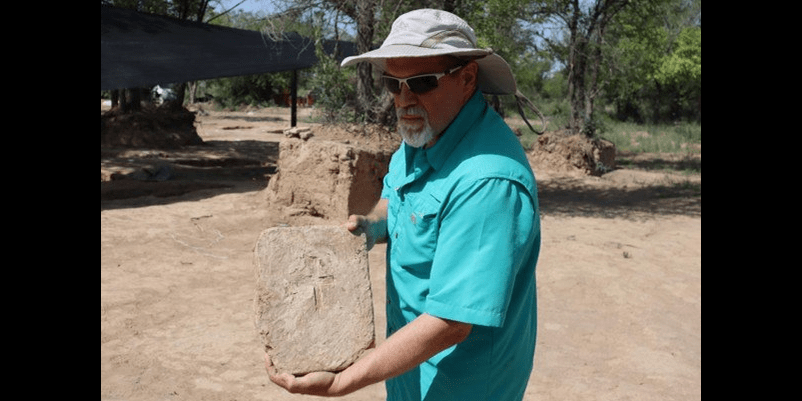
A team of Chinese and Uzbek archaeologists has uncovered a well-preserved section of city walls at the ancient settlement of Kuva in eastern Uzbekistan, dating from the 3rd century BCE to the 10th century CE, according to a report published by Xinhua. The discovery was made by the joint Luoyang-Ferghana archaeological expedition. Researchers say the find offers critical physical evidence for understanding the historical development of a Silk Road city and the enduring cultural exchange between East and West. The team also hailed the excavation as a key achievement of international cooperation under the Belt and Road Initiative. Located in the Ferghana Valley, a historic hub along the ancient Silk Road, the ruins of Kuva cover an area of approximately 110,000 square meters. Xinhua noted that the valley has maintained close ties with China for over 2,000 years. Preliminary findings indicate that the city’s fortifications were rebuilt multiple times and remained in use across several historical eras from the Parthian Kingdom and the states of Dayuan and Sogdiana to the Samanid dynasty. Liu Bin, head of the Chinese delegation to the joint expedition, said the evolving construction techniques used in the walls provide valuable insights into the architectural practices, building materials, and cultural influences of different periods. He added that such features help trace the diffusion of cultural traditions along major trade routes. The Luoyang-Ferghana team was established in 2023 as a collaboration between the Luoyang Archaeological Institute in China’s Henan Province and Ferghana State University in Uzbekistan. Since then, archaeologists have identified palaces, city gates, fortifications, residential structures, streets, and craft workshops at the site. Liu Bin noted that systematic excavations of the palace areas are planned for next year, which will further clarify the city’s layout and functional zones. As previously reported by The Times of Central Asia, similar Chinese-Uzbek archaeological partnerships are underway in Surkhandarya, Samarkand, Ferghana, and Khorezm. These projects have led to discoveries of ancient settlements, urban infrastructure, and even an Iron Age city-state, underscoring the growing scope of bilateral archaeological cooperation in Uzbekistan.

Kazakhstan’s Tazy: The Ancient Hunting Dog of the Steppe

For centuries, nomadic tribes across the steppe that now forms modern Kazakhstan absorbed outside influences and adapted them to local conditions, creating something uniquely Kazakh. This adaptability is evident in many aspects of steppe life, including the development of the Tazy, the Kazakh greyhound. Bred over generations to protect what nomads valued most, their livestock, the Tazy is now considered one of the seven national treasures of Kazakhstan. “If we look at history, we can say that the progenitor of the Kazakh breed, the Tazy, was the Arabian greyhound saluki,” said breeder Abzal Dosyman in an interview with The Times of Central Asia. “Arab missionaries brought it to our lands. The Tazy and the saluki are similar, but over time, given the needs of the nomads and the harsh climate of the steppe, the breed adapted and transformed. Here, their descendants were trained to guard livestock and protect people from wolves.” Dosyman described the unique methods traditionally used to raise Tazys for such a role. As soon as puppies were born, wolf skin was placed nearby so they would learn the predator’s scent. At four or five months, the young dogs were taken on hunts, but only after a brief starvation period. They were then fed wolf meat, which, after the fast, was considered a delicacy. “Some may see this as cruel,” he acknowledged. “But this is how hunters were raised who dared to face wolves on the steppe. For centuries, Tazys helped Kazakhs protect their herds, which were their livelihood.” Though known for their gentle nature, Tazys transform during a hunt, becoming fast, fearless, and relentless. “They are friendly toward people and non-aggressive with other animals, but they are implacable toward the grey predator,” Dosyman said. He noted that many countries have their own hunting greyhounds. Russia has the Borzoi, Kyrgyzstan the Taigan, meaning “graceful,” and Spain the Galgo. All descend, like the Tazy, from the ancient Arabian saluki. But it was in Kazakhstan that the Tazy acquired its distinct characteristics, shaped by the local way of life. In 2024, the General Committee of the Fédération Cynologique Internationale granted provisional recognition to the Kazakh Tazy as an official breed, confirming Kazakhstan as the holder of its breed standard. The FCI currently recognizes 350 breeds worldwide. Tazy Diplomacy Following independence, Kazakh enthusiasts began reviving the Tazy and promoting national traditions. In 2019, Dosyman presented a Tazy puppy to President Kassym-Jomart Tokayev, who named it Ronnie. He later received Nancy, and another dog named Nauryz was gifted by breeder Anna Zakharova. These steps helped draw state-level support for efforts to preserve and expand the Tazy population. A photograph of the grown Tazys at a reception hosted by the French president for the King of Denmark even appeared in international media, symbolizing what Dosyman calls “Tazy diplomacy.” “This is the moment the Kazakh greyhound becomes a national brand,” he said. “The French have the rooster, the Chinese the panda. Remember when China gifted a panda to another country and it later died...

From the Central Asian Steppe to Manhattan: A Turkmen Bard in New York

A halal Chinese Muslim restaurant in New York City is an unlikely setting for a concert by a highly acclaimed bard of the Turkmen tradition. Yet on a Saturday afternoon in Manhattan’s Kips Bay neighborhood, before an audience of attentive listeners and curious onlookers peering through the window, the multi-award-winning Mohammad Geldi Geldi Nejad filled Beef Up Noodle with sustained melodic phrases and guttural embellishments. At times, his dexterous strumming of the dutar, a two-stringed long-necked lute, deliberately mimicked the rhythm of galloping horse hooves central to the Turkmen bardic style. Mohammad was raised in the Turkmen community of Gonbad-e Kavus in northeastern Iran. At age ten, he became only the second musician ever to receive the honorary title Oghlan Bakhshi, meaning Child Bard. His musical education in Turkmen bardic traditions began in early childhood, before more formal training in Turkmenistan’s capital, Ashgabat. Turkmen culture, shaped by a nomadic heritage, extends across Turkmenistan, Iran, Afghanistan, Uzbekistan, and Kazakhstan, with smaller populations in Turkey, Iraq, and the North Caucasus. It draws on nomadic traditions where performance serves as a primary vehicle of cultural expression. Central Asian music and culture, carried by diasporic communities from these regions, has found a growing audience in the United States. Turkmen traditions, however, given the minuscule size of the Turkmen population in the U.S., remain largely unfamiliar to most audiences. [video width="848" height="478" mp4="https://timesca.com/wp-content/uploads/2025/12/WhatsApp-Video-2025-12-17-at-18.16.28.mp4"][/video] Even so, Mohammad has brought his music to audiences beyond Turkmenistan and Iran, performing in parts of Europe and the U.S., including recent concerts at the Lowell Folk Festival in Massachusetts and at Roulette in Brooklyn. At the latter, he offered Western listeners rare access to a musical lineage sustained within a family across generations. Performing under his honorific alias Oghlan Bakhshi, he appeared alongside his father, the gyjak, or spike fiddle, master Abdolghaffar Geldinejad, and his wife and regular musical collaborator, Zyyada Jumayeva, a dutar player who represents the female bardic tradition of Turkmenistan. His album Journey Across the Steppes is the first international release of Turkmen folk music in 30 years. His work has also been documented in a book series, The Music of Central Asia. At Beef Up Noodle, Mohammad’s performance, titled Songs of the Bakhshi: Turkmen Bardic Heritage, formed part of a broader curatorial landscape shaped by ethnomusicologist Mu Qian, whose work spans scholarship, publishing, and community-based music making. From Zayton to New York is the concert series he curates, exploring how music travels through histories of migration and exchange. Mohammad’s appearance opened a Central Asian trilogy within the series, to be followed by programs devoted to Kyrgyz and Kazakh musical traditions in early 2026. This trilogy represents one strand of Mu Qian’s wider mission, developed through the See & Sea Cultural Foundation, to support minority musicians and bring underrepresented musical cultures from across Asia into conversation with audiences beyond their places of origin. [caption id="attachment_41154" align="aligncenter" width="1283"] Mu Qian with Mohammad Geldi Geldi Nejad; image: Paul Adams[/caption] British expat Margaret Murray, an audience member whose chance meeting...

Kobyz Musical Instrument and Karakalpak Yurt Added to UNESCO Heritage List

At the 20th session of the UNESCO Intergovernmental Committee for the Safeguarding of the Intangible Cultural Heritage, held in New Delhi from December 8-13, Uzbekistan’s nominations for the kobyz musical instrument and the Karakalpak yurt were officially approved for inclusion in the UNESCO Intangible Cultural Heritage List. As part of the application process, researchers documented the historical and cultural significance of the zhyrau (oral storytellers), whose performances are traditionally accompanied by the kobyz. A documentary film was also produced in Karakalpakstan, an autonomous republic within Uzbekistan, highlighting the craftsmanship involved in making the kobyz. The nomination emphasized the urgent need for preservation, citing a steady decline in the number of artisans who know the tradition. The kobyz is an ancient, bowed string instrument originating among Turkic peoples, with historical roots dating back to the 5th-8th centuries. Its haunting sound traditionally accompanies zhyrau performances and remains prevalent in both Karakalpakstan and Kazakhstan.

Medieval Wall Paintings Discovered at Ancient Kanka Site in Uzbekistan

Archaeologists in Uzbekistan have uncovered rare wall paintings dating back to the 10th-11th centuries at the ancient site of Kanka in the Tashkent region, according to a report by UzA. The excavation is being led by researchers from the Institute of History at the Academy of Sciences of Uzbekistan, with support from the Tashkent regional administration. Dilnoza Jamolova, the institute’s deputy director, stated that the mural fragments were discovered within the remains of a large caravanserai located in the shahristan (inner city) of ancient Kanka. The structure, situated approximately 60 meters south of the city’s southern gate, measures around 100 by 70 meters and is noted for its significant architectural features. Inside one of the caravanserai’s rooms, archaeologists found fragments of wall paintings that had fallen from the walls. The pieces, ranging from 15×20 to 30×35 centimeters, confirm that the building’s interior was once adorned with mural artwork. Experts say the discovery is notable evidence that wall painting, a tradition believed to have declined following the Arab conquest, experienced a revival in the Tashkent region during the 10th and 11th centuries. Similar wall paintings have been identified at other prominent Central Asian archaeological sites, including Samarkand and Ahsikent. The ongoing study, which involves restorers from the Samarkand Archaeological Institute under the Cultural Heritage Agency, also suggests the existence of a distinct mural art tradition in medieval Tashkent. In earlier excavations at Kanka in 2023, researchers discovered murals dating back to the 5th-7th centuries. The latest findings are expected to offer new insights into the cultural and artistic life of the region and to deepen scholarly understanding of Tashkent’s medieval heritage. Previously, The Times of Central Asia reported on another major archaeological discovery in southern Uzbekistan, where scientists found evidence that hunter-gatherer communities were harvesting wild barley as early as 9,200 years ago, challenging long-standing theories about the origins of agriculture in the ancient world.