• KGS/USD = 0.01143 0%
  • KZT/USD = 0.00205 0%
  • TJS/USD = 0.10724 0.09%
  • UZS/USD = 0.00008 0%
  • TMT/USD = 0.28571 0%
  • KGS/USD = 0.01143 0%
  • KZT/USD = 0.00205 0%
  • TJS/USD = 0.10724 0.09%
  • UZS/USD = 0.00008 0%
  • TMT/USD = 0.28571 0%
  • KGS/USD = 0.01143 0%
  • KZT/USD = 0.00205 0%
  • TJS/USD = 0.10724 0.09%
  • UZS/USD = 0.00008 0%
  • TMT/USD = 0.28571 0%
  • KGS/USD = 0.01143 0%
  • KZT/USD = 0.00205 0%
  • TJS/USD = 0.10724 0.09%
  • UZS/USD = 0.00008 0%
  • TMT/USD = 0.28571 0%
  • KGS/USD = 0.01143 0%
  • KZT/USD = 0.00205 0%
  • TJS/USD = 0.10724 0.09%
  • UZS/USD = 0.00008 0%
  • TMT/USD = 0.28571 0%
  • KGS/USD = 0.01143 0%
  • KZT/USD = 0.00205 0%
  • TJS/USD = 0.10724 0.09%
  • UZS/USD = 0.00008 0%
  • TMT/USD = 0.28571 0%
  • KGS/USD = 0.01143 0%
  • KZT/USD = 0.00205 0%
  • TJS/USD = 0.10724 0.09%
  • UZS/USD = 0.00008 0%
  • TMT/USD = 0.28571 0%
  • KGS/USD = 0.01143 0%
  • KZT/USD = 0.00205 0%
  • TJS/USD = 0.10724 0.09%
  • UZS/USD = 0.00008 0%
  • TMT/USD = 0.28571 0%

Viewing results 1 - 6 of 103

Shopping Center May Be Built Beneath Bishkek’s Ala-Too Square

Bishkek authorities are moving forward with plans to reconstruct the Manas monument and the underground space beneath it in Ala-Too Square, the capital’s central public space. According to the Bishkek Mayor’s Office, the 1,500-square-meter area beneath the monument is currently unused. According to tender documents published on the government procurement website, the basement beneath Ala-Too Square is set to be redeveloped into retail space. The estimated cost of the reconstruction project is KGS 1.8 million ($20,600). “We want to renovate the basement area - it has been in a dilapidated state since 1983 due to lack of maintenance. As for the future, we are considering various possibilities for the space. However, it is important to clarify that the Manas monument will not be removed,” Bishkek Mayor’s Office spokeswoman Nazgul Zhamgyrchieva told reporters. Despite this reassurance, some Bishkek residents remain concerned, particularly since the Manas monument has already been removed from its pedestal as part of the reconstruction. Many fear it may not be returned to its original place. The monument to Manas, a symbol of Kyrgyzstan’s national heritage, has stood in Ala-Too Square since 2011. Alongside the White House, the National Historical Museum, and the national flag, it forms part of Bishkek’s so-called "marble center", a key landmark in the capital.

Museum Showcasing Traditional Rishtan Ceramics to Be Established in Uzbekistan

A museum dedicated to the history of traditional ceramics will be established in the Uzbek town of Rishtan. The institution, organized as a non-governmental entity, aims to serve as a center for preserving and promoting the region’s unique pottery heritage. The museum’s key objectives include collecting and preserving exhibits, conducting cultural and educational programs, and training young artisans in pottery through the traditional mentoring system. Additionally, it will foster international cooperation by collaborating with foreign museums to organize exhibitions and exchange expertise. To implement the project, a working group has been formed to develop the museum’s concept and oversee its activities. The building designated for the museum is expected to be fully adapted to its needs by April 1, 2025. Notably, in September 2023, London’s King’s Foundation School of Traditional Arts hosted a master class led by Uzbek ceramist Shokhrukh Rakhimov. The event, supported by Uzbekistan’s Foundation for the Development of Culture and Arts, introduced master's and doctoral students to the traditions of Uzbek ceramics. Rakhimov inspired participants to explore new artistic forms using ancient craft techniques, highlighting the importance of cultural exchange and the preservation of national heritage within the global academic community.

Kazakhstan to Reconstruct Medeu, the World’s Largest High-Altitude Skating Rink

Kazakhstan plans to reconstruct Medeu, the world’s largest high-altitude skating rink, in 2025, expanding its capabilities and modernizing its facilities. Prime Minister Olzhas Bektenov announced the initiative in response to a request from senators. Medeu is a high-mountain sports complex located outside Almaty in the Medeu gorge, at an altitude of 1,691 meters above sea level. According to Bektenov, the planned modernization will enhance the rink’s technical specifications, bringing it in line with International Skating Union (ISU) standards for hosting speed skating and figure skating competitions. Additionally, the Almaty City Council (Akimat) aims to expand Medeu’s functionality to accommodate ball hockey (bandy) tournaments, world championships in ice speedway racing, and various ice shows and mass sporting events. Calls for Renovation In late December, Kazakh senators urged the prime minister to take action, noting that Medeu is now 52 years old. “Opened in 1972, it quickly became one of the best ice rinks in the world. In its first year alone, 249 of a possible 375 world records were set on its ice. The clean mountain air, rarefied atmosphere, and glacial meltwater used for ice resurfacing contributed to outstanding athletic performances. For two decades, Medeu led the world in speed skating. However, after the ISU introduced rules requiring competitions to be held in indoor arenas, outdoor rinks lost their prominence. Should we simply accept that a rink built for records is losing its significance? Medeu remains the world’s largest outdoor artificial ice rink, spanning 10,500 square meters and accommodating up to 8,100 spectators,” the senators wrote in their appeal. Proposed Measures To restore Medeu’s global sporting relevance, the senators proposed the following initiatives: Grant Medeu a special ISU status. Establish a high-altitude training center for athletes. Develop facilities for ball hockey (bandy) competitions. Utilize the arena for ice shows and performances by world-class figure skaters. Host stages of the world ice speedway championship. With its historical significance and unique natural conditions, Medeu remains a symbol of Kazakhstan’s sporting legacy. The upcoming renovation aims to ensure it remains a world-class venue for both competitive and recreational ice sports.

CNN Report on Ibn Sina Sparks Central Asian Nationality Debate

A recent CNN report referring to the scholar Ibn Sina as an Uzbek scientist has ignited controversy in Central Asia, particularly in Tajikistan. Tajikistan’s Minister of Culture, Matlubakhon Sattoriyon, strongly criticized the report, calling it a “distortion of reality.” Ibn Sina, known as Avicenna in the West, was a polymath who made groundbreaking contributions to medicine, logic, physics, mathematics, and other sciences. Born in 980 in the village of Afshona near Bukhara, an area now part of Uzbekistan, he died in 1037. Over his lifetime, he authored more than 450 works, with about 240 surviving to this day. His most renowned book, The Canon of Medicine (Tib qonunlari), served as a standard medical text in Europe and the Islamic world for centuries. While the Ibn Sina segment was actually created not by CNN itself but by the Center of Islamic Civilization in Uzbekistan, Sattoriyon accused CNN of disregarding historical facts and described the report as another example of what she called the “appropriation” of Tajik's scientific and literary heritage. “This is an insult not only to the Tajik people but also to the history and culture of Persian literature worldwide,” she said. The minister urged Tajik scientists and intellectuals to counter such claims with evidence, though she also dismissed CNN’s report as “just a TV channel’s material with no historical basis,” pointing out that it does not reflect Uzbekistan’s official stance. In Uzbekistan, reactions to the controversy varied. Sherzodkhon Kudratkhuja, Rector of the University of Journalism and Mass Communications, acknowledged the shared history of Uzbekistan and Tajikistan and called for moderation. “At a time when Central Asia is strengthening its unity, we must all approach such issues carefully,” Kudratkhuja said. He emphasized that Ibn Sina is commonly described as a scholar born in Bukhara, a region now within Uzbekistan’s borders, but suggested that he should be seen as a figure representing the entire Central Asian region. Bobur Bekmurodov, Chairman of Uzbekistan’s “Yuksalish” movement, expressed disappointment with Tajikistan’s criticism. “The legacy of figures like Ibn Sina belongs to the entire region and the world,” Bekmurodov said. He urged Central Asian nations to focus on shared challenges such as climate change, economic growth, and security rather than divisive historical disputes. Azamat Ziyo, Director of the Institute of History at Uzbekistan’s Academy of Sciences, echoed calls for regional unity. “There is no written evidence about the nationality of many historical figures in Central Asia, including Ibn Sina. What matters is their contribution to science and humanity, not their nationality,” he stated. Ziyo also appealed to politicians to avoid interfering in historical scholarship. “The science of history is the business of historians. We should rely on objective, source-based research rather than political interpretations,” he said. He emphasized the importance of collaboration among historians from Uzbekistan, Tajikistan, Kazakhstan, Kyrgyzstan, and Turkmenistan to address shared historical legacies. Drawing on his 40 years of research into the history of Central Asian statehood, Ziyo explained the complexity of national identities in the region. “During the reign of the...

Tajikistan Nominates National Game and Stories for UNESCO Heritage List

Tajikistan is advancing efforts to preserve its cultural heritage by proposing several national traditions for inclusion on UNESCO’s Intangible Heritage of Humanity list, according to Culture Minister Matlubakhon Sattoriyon. The National Commission for UNESCO is currently reviewing these nominations. One notable nomination is the traditional game nardbozi, similar to backgammon, which has been submitted jointly with Iran. Tajikistan is also seeking recognition for the folklore tales of One Thousand and One Nights and the Toki tradition, both of which reflect the rich oral storytelling heritage of the Tajik people. Aminzoda Abdufatto, director of the Research Institute of Culture and Information at the Tajik Ministry of Culture, emphasized that these proposals are part of a broader strategy to preserve Tajikistan’s cultural traditions while promoting them on the global stage. In 2024, Tajikistan successfully inscribed several cultural elements on the UNESCO Intangible Heritage List, including the Meҳrgon festival, a celebration of harvest and gratitude, and the art of playing the rubob, a stringed instrument central to the musical traditions of Tajikistan and neighboring countries such as Afghanistan, Iran, and Uzbekistan. These recent initiatives underscore Tajikistan’s commitment to cultural diplomacy and its collaboration with neighboring countries in safeguarding shared traditions. UNESCO’s Representative List of the Intangible Cultural Heritage of Humanity recognizes cultural practices, knowledge, skills, and expressions that communities identify as part of their heritage. This recognition helps raise awareness of cultural diversity and encourages the protection and preservation of these traditions.

Amre Kashaubaev and the Mystery of an Old Photograph

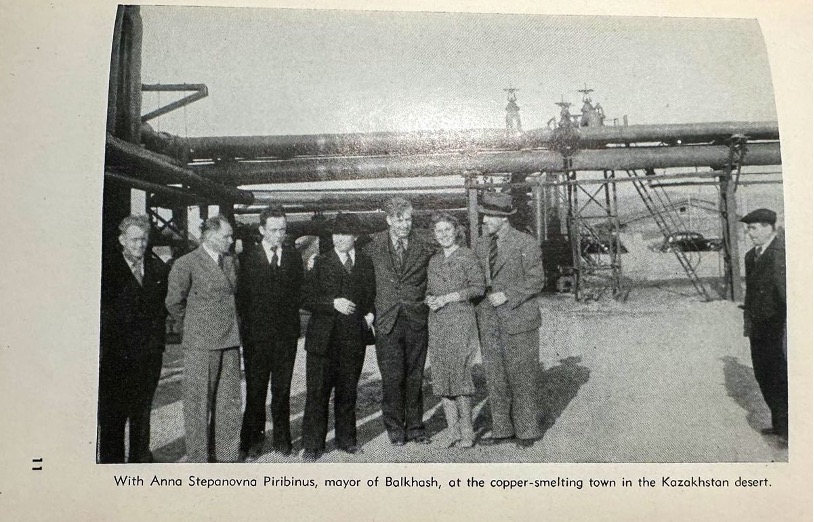
In Kazakhstan, the musical talent of Amre Kashaubaev is well known. Thanks to him, European audiences were introduced to the live melodies of Kazakh music when Kashaubaev performed Kazakh songs at the International Exhibition of Modern Decorative and Industrial Arts of 1925 in Paris. As previously reported by The Times of Central Asia, the first recordings of Kazakh music were made between 1903 and 1909 during the travels of the German explorer Richard Karutz in Turkestan. His book, Among the Kirghiz and Turkmens in Mangyshlak, published in 1911 in Russia, was edited by Vasily Radlov, a renowned ethnographer, archaeologist, and educator of German origin, who was also a pioneer in Turkology. However, it was only in 1925, thanks to Kashaubaev’s talent, that Europeans could hear Kazakh folk songs performed live. The fate of this man is very similar to the destinies of thousands of talented individuals in the early years of the Soviet Union, whose creative works could not fit into the "Procrustean bed" of communist ideology. [caption id="attachment_27972" align="aligncenter" width="1279"] Amre Kashaubaev and his wife Orazke, Kzyl-Orda, 1926.[/caption] Amre Kashaubaev was born in 1888 in the Abraly district of the Semipalatinsk region. His first professional attempt to become a singer was a public performance at a fair near the village of Koyandy, not far from the modern city of Petropavlovsk, at a festival of Kazakh oral art. Through his songs, Kashaubaev’s art became famous throughout Kazakhstan. Anatoly Lunacharsky, then the People’s Commissar for Education, personally invited him to participate in concerts at the International Exhibition in Paris. Kashaubaev also actively participated in the creation of the first Kazakh professional theater. In April 1927, he gave a concert in Moscow, followed by a performance in Frankfurt. He frequently performed on the radio, singing Kazakh folk songs and enchanting listeners with the beauty and depth of his voice. His theatrical performances also garnered great interest. Today, archival institutions and museums in Kazakhstan hold only a few photographs and documents depicting Kashaubaev. This is because many documents were destroyed by his colleagues and relatives due to his political persecution by the Bolsheviks. His trip to Paris proved to be fatal for the singer since it drew the attention of the Soviet state security agencies. During the Paris exhibition, the talented singer met Kazakh political dissident Mustafa Shokay, who in 1917 had been the Chairman of the Kokand Autonomy — a state entity that lasted for six months in the Turkestan region of the Russian Empire. Moreover, Shokay was an active member of the Alash Party, which the Soviets deemed bourgeois and whose members were subjected to repression. Although Kashaubaev was not imprisoned for his ties with political opponents of the Bolsheviks, he faced significant pressure from the authorities. On December 6, 1934, he was found dead on the streets of Alma-Ata. The cause of his death remains unknown. Within the archival fonds of The Central State Archive of Film, Photo Documents, and Sound Recordings of the Republic of Kazakhstan, we believe there...