• KZT/USD = 0.00220
  • TJS/USD = 0.10820
  • UZS/USD = 0.00008
  • TMT/USD = 0.29850
  • KZT/USD = 0.00220
  • TJS/USD = 0.10820
  • UZS/USD = 0.00008
  • TMT/USD = 0.29850
  • KZT/USD = 0.00220
  • TJS/USD = 0.10820
  • UZS/USD = 0.00008
  • TMT/USD = 0.29850
  • KZT/USD = 0.00220
  • TJS/USD = 0.10820
  • UZS/USD = 0.00008
  • TMT/USD = 0.29850
  • KZT/USD = 0.00220
  • TJS/USD = 0.10820
  • UZS/USD = 0.00008
  • TMT/USD = 0.29850
  • KZT/USD = 0.00220
  • TJS/USD = 0.10820
  • UZS/USD = 0.00008
  • TMT/USD = 0.29850
  • KZT/USD = 0.00220
  • TJS/USD = 0.10820
  • UZS/USD = 0.00008
  • TMT/USD = 0.29850
  • KZT/USD = 0.00220
  • TJS/USD = 0.10820
  • UZS/USD = 0.00008
  • TMT/USD = 0.29850
09 October 2026

Viewing results 1 - 6 of 8

Ukrainian Woman Detained in Astana at Russia’s Request

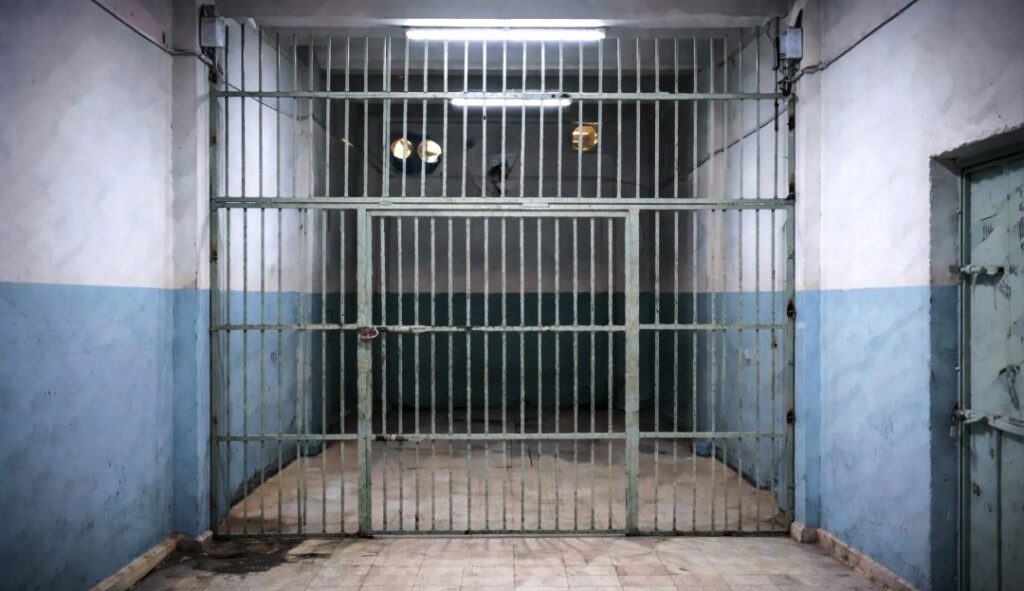
Ukrainian citizen Lyubov Rozhanska has been detained at Astana airport at Russia’s request in connection with a criminal case over an alleged attempt to abduct a child, Deutsche Welle (DW) reported. She had flown from Istanbul to collect her grandson. Ukraine has called for her release and opposed her possible transfer to Russia. Rozhanska was detained on October 1 while passing through border control. She is currently being held in a pretrial detention facility in Astana, her Kazakhstan-based lawyer Riza Nurbayeva told DW. A court is expected to consider whether she should remain in custody. According to Nurbayeva and Russian lawyer Alexei Pryanishnikov, the criminal case against Rozhanska concerns her grandson, who was born in 2018. Ukraine’s ambassador to Kazakhstan, Viktor Maiko, described the actions of the Russian security services as an “outright provocation.” “The embassy is already working with our Kazakh colleagues to secure Ms. Rozhanska’s release as quickly as possible. We categorically oppose the unfounded demands of the Federal Security Service to deport her to Russia, where there is a real threat to her health and life,” Maiko said in a statement issued by the Ukrainian Embassy in Kazakhstan on October 2. The Russian authorities have not publicly responded to the ambassador’s statement. The case stems from a dispute over where the child should live. In 2021, his mother, Alla Andreeva, traveled with him from Odesa to Russia’s Kaliningrad region. In 2022, they obtained Russian citizenship. In March 2025, Ukraine’s Supreme Court ruled that the boy should live with his father in Odesa. In the summer of 2026, according to the defense, relatives of the mother’s second husband offered to hand the child over to his father and grandmother. A meeting was arranged in Astana, where Rozhanska traveled from Turkey. By then, Russia’s Federal Security Service, or FSB, was already investigating a criminal case against her, opened in 2023, according to Nurbayeva. By August 27, the Central District Court of Kaliningrad had authorized Rozhanska’s detention. Nurbayeva said Rozhanska was unaware of the criminal proceedings and had never previously traveled to Russia. The defense believes the circumstances surrounding the trip to Kazakhstan were deliberately arranged to facilitate Rozhanska’s detention. There has been no confirmation of this account from the authorities in Kazakhstan or Russia. Maiko linked the case to the transfer of Ukrainian children to Russia and Russian-occupied territories of Ukraine. In March 2023, the International Criminal Court issued arrest warrants for Vladimir Putin and Maria Lvova-Belova over the alleged unlawful deportation and transfer of Ukrainian children. This case concerns a child whose mother took him to Russia in 2021, before the full-scale invasion. Moscow denies abducting children and says they were moved from combat zones for their safety.

Uzbekistan Strikes Down Ten-Day Border Detention Without Court Approval

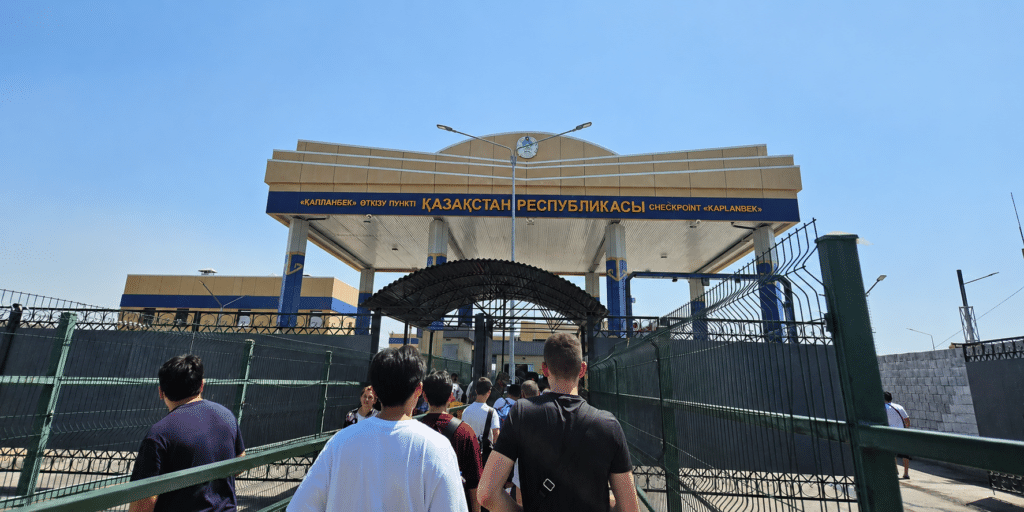
Uzbekistan’s Constitutional Court has struck down provisions allowing people accused of breaking border rules to be held for up to ten days without a judge’s approval. The decision followed complaints about detention beyond the constitution’s 48-hour limit. The court adopted its ruling on September 22. It took effect on September 25, removing the legal basis for extended detention periods. The case reached the court through parliamentary ombudsman Feruza Eshmatova. Her office received six complaints in 2025–2026 concerning alleged unlawful administrative detention lasting more than 48 hours, according to the court’s account of the case. The challenged provisions were part of Article 288 of the Code of Administrative Responsibility. They covered violations of border regulations and rules at state border checkpoints. Officials could hold a person for up to three hours to prepare a report. If they needed to establish the person’s identity or clarify the circumstances, they could extend detention to three days, though they had to notify a prosecutor in writing within 24 hours. For someone without identity documents, a prosecutor could authorize detention for up to ten days. Neither extension required officials to seek a court order. The ombudsman challenged those powers under Article 27 of the Constitution, which bars detention beyond 48 hours without a judicial decision. The court agreed that the longer periods breached that guarantee. It also identified a gap in the code: the provisions contained no mechanism for obtaining judicial approval when officials wanted to hold someone longer. Notification or authorization by a prosecutor “must not replace a court decision,” the court said in its published account of the ruling. The decision concerns how long the authorities can hold someone without judicial oversight. It does not abolish border offenses or prevent detention beyond 48 hours when a court authorizes it. According to Gazeta, the ruling is final and cannot be appealed. The body responsible for the legislation has one month to bring it into line with the constitution. The court did not prescribe the replacement wording. The ombudsman’s office has also reported unlawful detention elsewhere this month. In a separate case in Nukus district, monitors found three people held without sufficient grounds at a medical facility for intoxicated people. None of the three was intoxicated. Police inspectors had taken them there while awaiting a court decision on placement in a special reception facility. Following the ombudsman’s intervention, one inspector received a disciplinary sanction. The cases of two others were referred for disciplinary consideration, and the materials were sent to the district prosecutor for a preliminary inquiry.

Over 5,700 ISIS Detainees Transferred from Syria to Iraq, Including Central Asians

A total of 5,704 ISIS detainees have been transferred from prisons in northeastern Syria to Iraq, including dozens of citizens from Central Asian countries, according to data from Iraq’s Ministry of Justice shared by journalist and Iraqi Observatory for Human Rights founder Mustafa Saadoun on X. The figures, issued by the Iraqi Correctional Service under the Ministry of Justice, detail the number of inmates held at Al-Karkh Central Prison by nationality. Among them are 36 citizens of Uzbekistan, 63 of Tajikistan, 42 of Kyrgyzstan, and four of Kazakhstan. The list also includes 165 individuals identified as “Turkestan,” 130 from Russia, and 3,544 Syrians, who make up the largest group. Saadoun told Shafaq News that the transfer of ISIS detainees from camps and detention centers in northeastern Syria could place “extreme pressure” on Iraq’s already overcrowded prison system. He warned that overcrowding levels could exceed 300% if facilities are not properly equipped to absorb the influx. “The success of the transfer depends primarily on the prisons’ ability to absorb detainees through modern isolation and classification mechanisms,” Saadoun said. He urged authorities to develop rehabilitation and reform programs that uphold the rule of law and prevent ideological spillover caused by the improper mixing of prisoners. He also described deteriorating infrastructure inside detention facilities. “Inmates are often forced to sleep in shifts in narrow, poorly ventilated corridors without sunlight,” he said, adding that such conditions create breeding grounds for contagious diseases, including scabies and tuberculosis. Last month, United States Central Command announced it had begun a “safe and systematic” transfer of around 7,000 ISIS detainees from northeastern Syria to what it described as secure facilities in Iraq, in coordination with Iraqi authorities. However, Reuters later reported that fewer than 500 detainees had been transferred in the initial phase after Baghdad requested a slowdown to negotiate with foreign governments over the repatriation of their nationals and to prepare additional detention capacity. Iraqi officials have cautioned that accepting the full number of detainees could overwhelm the judicial system, particularly as many foreign fighters may face the death penalty under Iraqi law. Central Asian governments have previously faced challenges repatriating their citizens from conflict zones in Syria and Iraq, conducting special operations in recent years to return women and children, while cases involving male detainees have remained more complex.

Shooting in Tajikistan’s Detention Center: Prosecutor General’s Office Reveals Details of January Incident for the First Time

Tajik authorities have for the first time officially commented on the incident on January 31 at a detention facility in the city of Khujand. Tajikistan’s Prosecutor General, Khabibullo Vokhidzoda, disclosed details during a press conference in Dushanbe that was reported by Asia-Plus. Vokhidzoda confirmed that an armed confrontation took place at the Khujand pre-trial detention center. According to him, three prisoners attacked facility staff while in the exercise yard. The prosecutor general stated that the inmates used “various objects” to inflict bodily harm on staff members and assaulted another prisoner who was present. He said they ignored repeated demands to cease their actions and resisted, posing what he described as a serious threat to employees’ lives. As a result, the three prisoners were “neutralized” by security personnel. “While in the Khujand pre-trial detention center, in the exercise yard, they attacked the facility’s staff using various objects, causing them bodily harm and even beating another prisoner who was there. They ignored the staff’s demands to stop their actions and resisted, posing a serious threat to the lives of the facility’s employees. In this situation, they were neutralized by staff members responsible for the security of the correctional facility,” Vokhidzoda said. He emphasized that no staff members were killed, although they sustained injuries. He did not specify the number of injured employees. According to the prosecutor general, the three inmates had previously been sentenced to 12 to 14 years’ imprisonment for terrorist and extremist offenses. He added that they had repeatedly violated prison regulations, leading a court to impose stricter detention conditions. At the time of the incident, the prisoners were being temporarily held in the Khujand facility pending transfer. A criminal case has been opened under Articles 332 and 365 of Tajikistan’s Criminal Code. “How it happened, why it happened, who did it, all these questions will be clarified during the investigation,” Vokhidzoda said. This marks the first official confirmation of the incident. Earlier, Radio Ozodi reported on the events, citing sources who claimed casualties among both guards and inmates. At the time, journalists’ attempts to obtain official comment were unsuccessful. The Minister of Justice, whose ministry oversees correctional institutions, declined to comment. The January 31 incident is not the first serious episode of violence in Tajikistan’s penitentiary system, including in Khujand. In November 2018, a large-scale riot erupted at maximum-security prison 3/3 in Khujand. According to official data, 21 prisoners were killed during efforts to restore order. Two prison staff members were also killed and five guards were seriously injured. On February 3, 2025, unrest broke out at correctional facility No. 3/2 in the town of Vahdat, commonly known as “Kirpichny.” Official reports stated that three prisoners and three employees, including the prison director, were killed. On May 19, 2019, another riot occurred at the same Vahdat facility. According to official information, 30 inmates armed with knives and other sharp objects seized three employees and killed them. Five prisoners were also killed. During the subsequent suppression of the riot, 29...

Chinese Man Jailed in Tashkent for Pouring Boiling Water on Cat

A Chinese citizen in Tashkent has been sentenced to five days in detention after being found guilty of torturing a cat by repeatedly pouring boiling water on it, according to the animal protection organization “Mehr va Oqibat” (Kindness and Compassion). The incident occurred during the night of September 16-17, when a local resident contacted the group’s hotline after hearing the sound of a cat crying. Looking outside, the witness saw her neighbor, identified as Y.Z., a Chinese national, pouring boiling water onto the animal, which he had confined in a container to prevent it from escaping. Mehr va Oqibat promptly reported the case to the Ministry of Internal Affairs, the Ministry of Foreign Affairs, and the Chinese Embassy in Uzbekistan, urging legal action under Uzbek law and calling for the offender’s deportation. On September 18, the Yakkasaroy District Criminal Court sentenced Y.Z. to five days of administrative detention. His legal team appealed the decision, requesting a reduced penalty in the form of a fine. However, on September 20, the Tashkent City Criminal Court rejected the appeal and upheld the original sentence. In a statement, Mehr va Oqibat thanked its attorney, Dilshodbek Asadullayev, for representing the case in court, and expressed appreciation for the witness who reported the abuse. The organization reiterated its intention to pursue Y.Z.’s deportation. Founded in 2010, Mehr va Oqibat has been at the forefront of promoting humane treatment of animals in Uzbekistan. In 2019, the group launched the “Mushukkent” initiative, which established cat shelters in Tashkent police stations. In 2023, with the support of local residents, it built a three-story cat shelter in the Uchtepa district to provide refuge for stray animals during the winter. The project, supported by the Tashkent city administration and the National Guard, also serves as an educational tool to encourage compassion among children. The organization emphasized that preventing animal cruelty and fostering kindness are essential not only for animal welfare, but also for nurturing a more humane and just society.

Tajik Influencer Abduroziq Egamov Reportedly Detained in Dubai on Theft Allegations

Tajik singer and social media personality Abduroziq Egamov was reportedly detained by authorities at Dubai International Airport on July 12, according to the UAE-based Khaleej Times. The 21-year-old influencer's production team confirmed his arrest to the newspaper, though official details remain scarce. Khaleej Times reported that Abduroziq was taken into custody around 5 a.m., shortly after arriving in Dubai from Montenegro. Dubai officials have not disclosed the nature of the charges. “All we can say is that he was detained on suspicion of theft,” a spokesperson for Abduroziq told the publication. However, conflicting accounts have emerged. Speaking to Asia-Plus, Abduroziq’s uncle, Muboraksho Egamov, categorically denied the detention. “All of this is fiction with no basis in reality,” he said. Abduroziq, who holds a UAE golden visa, has lived in Dubai for several years. He rose to fame with a mix of musical performances, viral online videos, and appearances on shows such as Bigg Boss 16. In 2024, he expanded his public profile by launching his restaurant brand, Habibi, in the United Kingdom. Prior Security Concerns and Alleged Financial Theft In June 2025, Abduroziq publicly stated that his social media accounts, Instagram, YouTube, and TikTok, had been hacked. He also reported that all the money in his bank accounts had been withdrawn. The loss was estimated at over $1 million. A police complaint was filed in Dubai. By late June, he managed to regain access to his Instagram account with legal assistance, but the stolen funds had not been recovered.