• KZT/USD = 0.00222
  • TJS/USD = 0.10810
  • UZS/USD = 0.00009
  • TMT/USD = 0.29850
  • KZT/USD = 0.00222
  • TJS/USD = 0.10810
  • UZS/USD = 0.00009
  • TMT/USD = 0.29850
  • KZT/USD = 0.00222
  • TJS/USD = 0.10810
  • UZS/USD = 0.00009
  • TMT/USD = 0.29850
  • KZT/USD = 0.00222
  • TJS/USD = 0.10810
  • UZS/USD = 0.00009
  • TMT/USD = 0.29850
  • KZT/USD = 0.00222
  • TJS/USD = 0.10810
  • UZS/USD = 0.00009
  • TMT/USD = 0.29850
  • KZT/USD = 0.00222
  • TJS/USD = 0.10810
  • UZS/USD = 0.00009
  • TMT/USD = 0.29850
  • KZT/USD = 0.00222
  • TJS/USD = 0.10810
  • UZS/USD = 0.00009
  • TMT/USD = 0.29850
  • KZT/USD = 0.00222
  • TJS/USD = 0.10810
  • UZS/USD = 0.00009
  • TMT/USD = 0.29850
15 September 2026

Viewing results 1 - 6 of 93

Uzbekistan Plans $30 Billion Mining Investment Drive Backed by AI and Digital Geology

Uzbekistan is planning a major digital transformation of its mining and geology sector, with artificial intelligence set to play a central role in mineral exploration, resource management, and industrial production. According to the presidential press service, President Shavkat Mirziyoyev reviewed a presentation on June 9 on plans to expand the use of digital technologies and AI across the industry, one of the country’s key economic sectors. Officials said mining and geology enterprises accounted for 20% of Uzbekistan’s industrial output in 2025 and generated 118.5 trillion soums in budget revenues. The government sees technological modernization as a priority for improving efficiency, attracting investment, and expanding the country’s long-term resource base. The presentation pointed to progress already made in digitalization. Major mining enterprises cut operating expenses by 7.3 trillion soums in 2025, while production costs fell by 9.1%. Authorities have also launched the Geomonitoring information system and digitized data on more than 2,000 mineral deposits. Over the next five years, Uzbekistan aims to increase its proven reserves by 879 tons of gold, 510 tons of silver, and 676,000 tons of copper. Officials said AI technologies will be introduced throughout the geological exploration process to speed up the analysis of geological data, improve reserve assessments, forecast promising mineral deposits, and make drilling more efficient. Mirziyoyev instructed officials to take the sector’s technological transformation to a new stage by creating systems capable of managing and analyzing production processes with AI. The industry generates large volumes of information, from geological surveys and drilling results to maps, laboratory analyses, and production data. Integrating these resources into a unified electronic database and applying 3D modeling tools could improve exploration outcomes. According to the presentation, the proposed measures could reduce production costs by 10%, cut the time needed to identify new deposits by half, and increase the number of investment proposals several times over. A key element of the strategy is the creation of a National Geological Database. Authorities plan to digitize more than 36,000 geological reports and primary data records and establish a Center for Technological Transformation. Officials estimate that this will double the speed and quality of geological data processing and accelerate reserve estimation and deposit modeling. The presentation also outlined plans to attract $30 billion in investment to the geology and mining sector by 2030. To support that target, the government plans to implement 32 digital and AI-focused projects from 2026 to 2030 at six major enterprises: Navoi Mining and Metallurgical Company, Almalyk Mining and Metallurgical Complex, Navoiyuran, Uzmetkombinat, Uzbekcoal, and the Uzbekistan Technological Metals Complex. The projects will cover production automation, corporate governance, AI, labor and industrial safety, and geological exploration. Officials said the measures could increase operational efficiency by 7%, improve the reliability of machinery and equipment by 20%, raise energy efficiency by 8%, and reduce human-factor-related errors and risks by 15%. As previously reported by The Times of Central Asia, Uzbekistan and the United States signed agreements earlier this year aimed at securing supply chains for critical minerals and rare earth elements,...

How Digital Public Services Are Changing Daily Life in Central Asia

Kazakhstan, Uzbekistan, and Kyrgyzstan have moved from queues at public service centers to passports in mobile apps in just a few years, compressing a transition that took many countries decades. Behind the impressive figures, however, are questions the region is still trying to answer. Not so long ago, obtaining a certificate in Central Asia meant a trip to a government office, a queue, and a stack of papers. Today, a resident of Almaty can renew a driver’s license by phone, an entrepreneur in Tashkent can register a company without leaving the office, and a doctor in Bishkek can issue an electronic sick leave certificate. The digitalization of public services has moved beyond strategic documents and become part of everyday life for tens of millions of people. The scale of change is reflected in international assessments. In the United Nations E-Government Development Index (EGDI) for 2024, Asia showed the fastest growth of any region. Kazakhstan, Uzbekistan, and Kyrgyzstan all improved their positions, each at its own pace, and each with its own model. Kazakhstan: From eGov to a Platform State Kazakhstan remains one of the region’s leaders in digital governance. In the 2024 EGDI ranking, the country rose to 24th place globally, ahead of a number of developed economies. Today, around 90% of more than 1,300 public services are available online, while the eGov.kz portal and eGov Mobile app offer access to a growing range of services. The figures speak for themselves. According to Kazakhstan’s e-government portal, citizens received more than 25.7 million services through eGov.kz in 2025, while the eGov Mobile audience exceeded 11.7 million users. The “Digital Documents” section is especially popular: the app provides access to 39 types of documents, from identity cards to driver’s licenses and student IDs. The expansion has continued. In 2025, Kazakhstan launched eGovBusiness, a single-window service for entrepreneurs that allows them to register companies, apply for subsidies, and check risks. The authorities have also moved to consolidate fragmented government apps into the unified eGov and Aitu platforms. The next frontier is artificial intelligence. In 2025, Kazakhstan established the Ministry of Artificial Intelligence and Digital Development. Through the National AI Platform, the country is developing sovereign infrastructure intended to support the use of generative AI in government and keep citizens’ data within national systems. Uzbekistan: The Fastest Leap Forward If Kazakhstan sets the regional benchmark, Uzbekistan has shown some of the fastest momentum. Over six years, the country climbed 24 positions in the EGDI ranking, from 87th place in 2018 to 63rd in 2024, and entered the category of countries with a “very high” level of e-government development for the first time. At the center of this transformation is the unified portal my.gov.uz, through which citizens and businesses access public services. More than 760 services are available on the platform, while the mobile app offers more than 540. In the first half of 2025 alone, more than 16 million services were provided through the system. The direction is set by the Digital Uzbekistan 2030...

Kazakhstan and Russia Digitalize Rail Freight Transportation

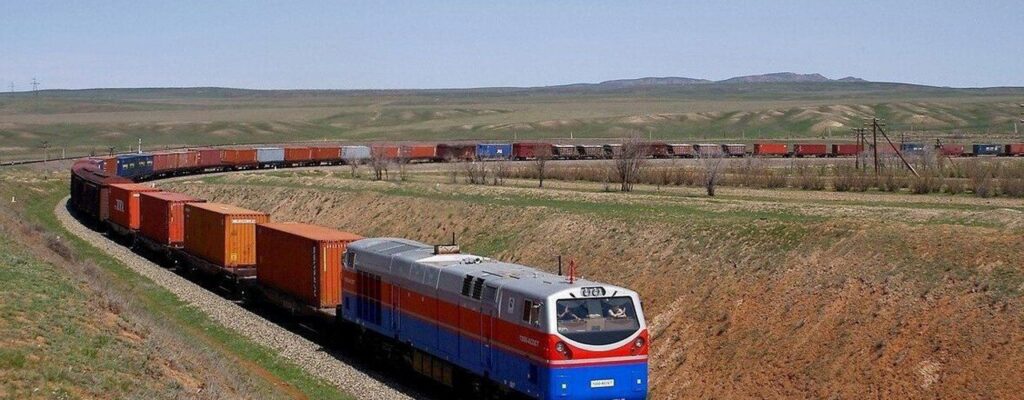
Kazakhstan’s national railway operator, Kazakhstan Temir Zholy (KTZ), and Russian Railways have signed a joint action plan to develop the digitalization of bilateral rail freight transportation. The document was signed on May 28 during Russian President Vladimir Putin’s state visit to Kazakhstan. According to KTZ, the plan aims to create a unified digital space between the railways of Kazakhstan and Russia. The company said the move would improve the efficiency of transportation processes, speed up cargo handling, and introduce modern digital solutions on international routes. Implementation of the plan is expected to support seamless transit, remove digital barriers, expand electronic document exchange, and develop paperless technologies in freight transportation. The parties also agreed to gradually increase the number of trains passing through nine interstate railway crossings on the Kazakhstan-Russia border. KTZ described the signing as an important step in developing transport and logistics cooperation between Kazakhstan and Russia, saying it would also strengthen Kazakhstan’s role as a key economic bridge between Russia and the countries of Central Asia. According to KTZ, rail freight between Kazakhstan and Russia totaled 92.1 million tons in 2025, up 3.5% from 2024. The growth was driven primarily by transit operations. Russian cargo exports through Kazakhstan increased by 16.1% to 17.3 million tons, while cargo exports from Kazakhstan transiting through Russia rose by 20.4% to 21.5 million tons. The growth trend has continued this year. In the first four months of 2026, exports from Kazakhstan, including coal, ferrous metals, and fertilizers, transiting by rail through Russia increased by 70,000 tons to 7 million tons. Russian cargo transported to and through Kazakhstan, including oil products, ferrous metals, grain and food products, exceeded 12 million tons, an increase of about 20%.

Turkic States Focus on AI and Trade at Kazakhstan Summit

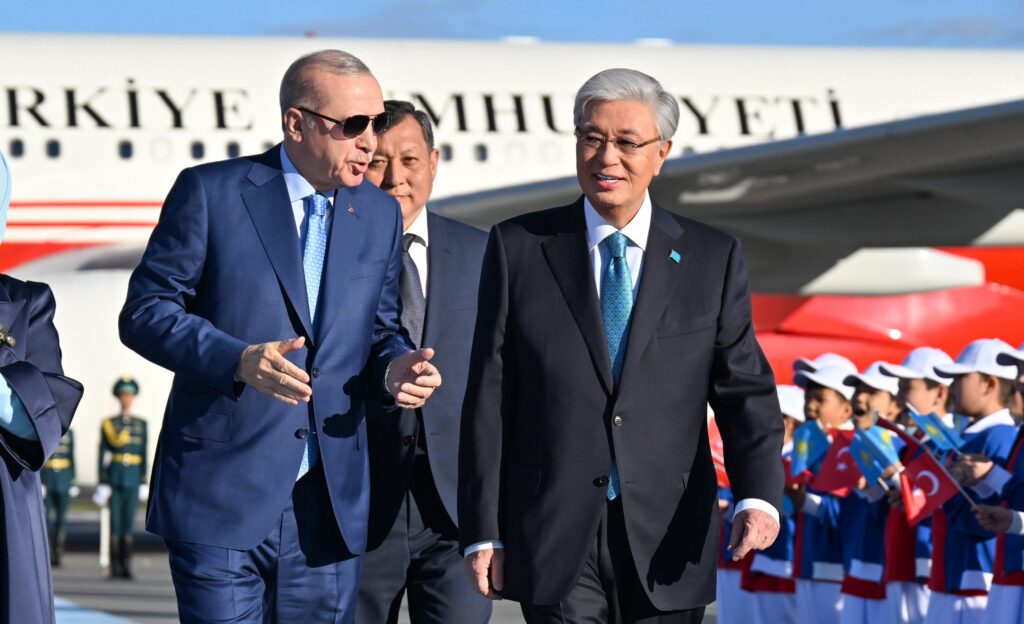
Leaders of the Organization of Turkic States (OTS) are holding an informal summit in the city of Turkistan, focused on artificial intelligence, digitalization, and economic integration, as Central Asia gains importance as an alternative trade corridor between Europe and China. The meeting brings together the leaders of Kazakhstan, Turkey, Azerbaijan, Uzbekistan, and Kyrgyzstan, along with representatives of observer states. Discussions are centered on digital platforms, joint AI projects, transport corridors, and industrial cooperation. The summit comes amid rapid growth of the Trans-Caspian International Transport Route, also known as the Middle Corridor, which links China and Europe through Central Asia and the Caucasus while bypassing Russia. According to analysts in Kazakhstan, cargo volumes along the route reached 3.3 million tons in 2024, almost six times the 2021 level. Turkish President Recep Tayyip Erdoğan arrived in Astana on a state visit ahead of the summit and held talks with Kazakh President Kassym-Jomart Tokayev. “Kazakhstan and Turkey are connected by enduring friendship, brotherhood, and eternal partnership,” Tokayev said following the meeting. Erdoğan thanked Kazakhstan for the reception and highlighted the escort provided by Kazakh military fighter jets after his aircraft entered the country’s airspace. According to participants at the OTS business forum, the combined GDP of member states exceeds $2.1 trillion, while their total population stands at 178 million people. Despite increasing political coordination, trade between OTS countries still accounts for only around 7% of their total foreign trade turnover, leaving considerable room for deeper economic integration, analysts say. OTS member states are increasingly seeking to expand cooperation beyond cultural and political ties by focusing on logistics, the digital economy, and joint investment projects. Kazakhstan views the organization as one of the instruments for diversifying its foreign economic relations and expanding its role as a transit hub between Asia and Europe.

Turkic States to Focus on Artificial Intelligence at Kazakhstan Summit

Kazakhstan will host an informal summit of the Council of Heads of State of the Organization of Turkic States (OTS) in the city of Turkistan on May 15, where participating leaders are expected to focus on artificial intelligence, digitalization, and expanding economic cooperation. Held under the theme “Artificial Intelligence and Digital Development,” the summit is expected to become one of the largest regional gatherings of Turkic states in 2026. Heads of state and government from member and observer countries, along with the OTS secretary-general, are expected to attend. According to the organization, participants will discuss the use of AI and digital innovation to stimulate economic growth, modernize public services, and improve regional connectivity. The agenda also includes joint initiatives involving Turkic digital platforms. Ahead of the summit, President Recep Tayyip Erdoğan of Turkey will make a state visit to Astana at the invitation of President Kassym-Jomart Tokayev. The leaders of Kazakhstan and Turkey are scheduled to hold the sixth meeting of the High-Level Strategic Cooperation Council and discuss the development of bilateral relations. In recent years, the OTS has gradually expanded cooperation beyond its traditional political and cultural agenda to include transport corridors, energy, and the digital economy. The summit in Turkistan is expected to represent an effort to shape a common regional agenda in the field of artificial intelligence. The OTS said holding the meeting in Turkistan, described by the organization as the “spiritual capital of the Turkic world”, symbolizes an attempt to combine shared historical heritage with technological modernization across the region. The organization’s members include Kazakhstan, Turkey, Azerbaijan, Uzbekistan, and Kyrgyzstan. Observer status is held by Turkmenistan, Hungary, and the Turkish Republic of Northern Cyprus. The economic dimension of the summit also remains central. According to Turkish sources, annual trade turnover between Turkey and OTS member states has approached $17 billion. Turkish exports to Kazakhstan, Azerbaijan, Kyrgyzstan, and Uzbekistan increased from $6.2 billion in 2021 to $10 billion in 2024. During the same period, imports rose from $4.2 billion to $6.5 billion. In 2025, Turkish exports to OTS countries totaled $9.6 billion, while imports reached $7.3 billion. Kazakhstan remains Turkey’s largest export destination among OTS member states, with Turkish exports to the country reaching $3.2 billion. During the first three months of 2026 alone, Turkish exports to Kazakhstan amounted to approximately $700 million. A Turkish-Kazakh business forum is also expected to take place during Erdoğan’s visit to Astana, with participation from business representatives from both countries and Turkey's Trade Minister Ömer Bolat. The forum is expected to focus on expanding trade and investment ties. As preparations for the summit intensify, Kazakhstan has increased security measures. Additional police forces from neighboring regions have reportedly been deployed to Turkistan, while military aviation training flights began in Astana on May 10 ahead of an aerial demonstration scheduled for May 15. Kazakhstan’s Defense Ministry said the flights would be conducted at safe altitudes and should not significantly affect daily life in the capital.

Kazakhstan to Improve Investor Protections and Accelerate Digital Reforms

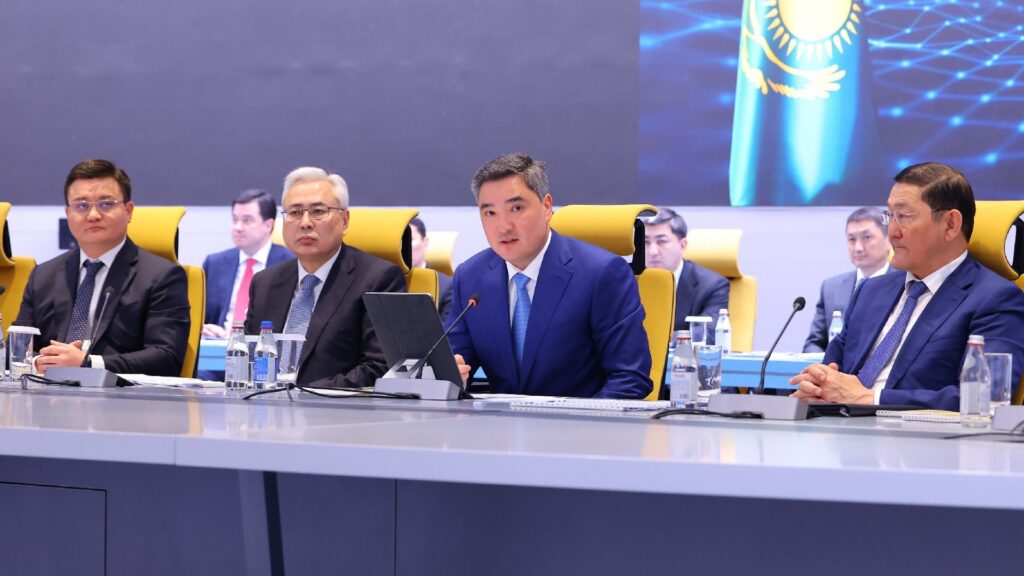
Kazakhstan Prime Minister Olzhas Bektenov has instructed government agencies to accelerate the removal of administrative barriers for investors and expand the digitalization of investment procedures amid intensifying global competition for capital. Speaking at a meeting on investor rights protection attended by government officials, prosecutors, business representatives, and the Atameken National Chamber of Entrepreneurs, Bektenov said improving the investment climate remains a government priority. “Just last week, a presidential decree was signed on improving migration policy, aimed at creating a better environment for attracting investors, entrepreneurs, and highly qualified specialists,” Bektenov said. According to the government, Kazakhstan’s Investment Headquarters reviewed 44 projects worth approximately $25.5 billion during the first quarter of 2026. Prosecutor General Berik Asylov said the number of criminal cases against businesses has fallen fourfold over the past three years. “We are overseeing more than 3,000 investment projects. We maintain direct communication and continuous monitoring with investors and the business community,” he said. According to the Foreign Ministry, investors submitted 273 appeals during the first quarter of the year, with around half resolved positively. The main concerns related to tax administration, customs procedures, and land issues. Baurzhan Yeraly, chairman of the Committee for the Protection of Investors’ Rights under the General Prosecutor’s Office, said the rights of around 600 investors had already been protected this year, with complaints handled directly rather than transferred between agencies. Officials cited several successful cases, including the connection of a major energy project in the Atyrau region to engineering infrastructure and the inclusion of a paper products manufacturer in the national registry of domestic producers. Bektenov criticized what he described as a formalistic approach by some state bodies in dealing with businesses. “Every request from an investor is a signal behind which stand decisions on capital allocation, the launch of new production facilities, and the creation of jobs,” he said. The prime minister warned that officials and managers in the quasi-state sector responsible for bureaucratic delays would face “the strictest measures.” He also pointed to systemic problems, including weak coordination between agencies, delays in public service delivery, and insufficient oversight at the regional level. Particular attention was given to the role of local administrations, which were instructed to supervise key investment projects directly and accelerate the allocation of land, infrastructure, and permits. The government also plans to speed up development of the National Digital Investment Platform. More than 3,000 projects worth around $200 billion have already been integrated into the system, though more than 400 projects have yet to be uploaded. “In the context of global competition for investment, we must ensure a stable and favorable investment climate,” Bektenov said. Asset Irgaliyev, chairman of the Agency for Strategic Planning and Reforms, said the agency is developing a “regulatory intelligence” platform using artificial intelligence to identify excessive requirements and administrative barriers. Authorities also plan to expand the overseas network of Kazakh Invest. According to company head Sultangali Kinzhakulov, representative offices in the United States, Germany, China, Russia, Turkey, Malaysia, and Qatar will operate as “one-stop...