• KZT/USD = 0.00223
  • TJS/USD = 0.10810
  • UZS/USD = 0.00009
  • TMT/USD = 0.29850
  • KZT/USD = 0.00223
  • TJS/USD = 0.10810
  • UZS/USD = 0.00009
  • TMT/USD = 0.29850
  • KZT/USD = 0.00223
  • TJS/USD = 0.10810
  • UZS/USD = 0.00009
  • TMT/USD = 0.29850
  • KZT/USD = 0.00223
  • TJS/USD = 0.10810
  • UZS/USD = 0.00009
  • TMT/USD = 0.29850
  • KZT/USD = 0.00223
  • TJS/USD = 0.10810
  • UZS/USD = 0.00009
  • TMT/USD = 0.29850
  • KZT/USD = 0.00223
  • TJS/USD = 0.10810
  • UZS/USD = 0.00009
  • TMT/USD = 0.29850
  • KZT/USD = 0.00223
  • TJS/USD = 0.10810
  • UZS/USD = 0.00009
  • TMT/USD = 0.29850
  • KZT/USD = 0.00223
  • TJS/USD = 0.10810
  • UZS/USD = 0.00009
  • TMT/USD = 0.29850
22 September 2026

Viewing results 1 - 6 of 137

Turkmenistan and Qatar Build Closer Ties at Doha Summit

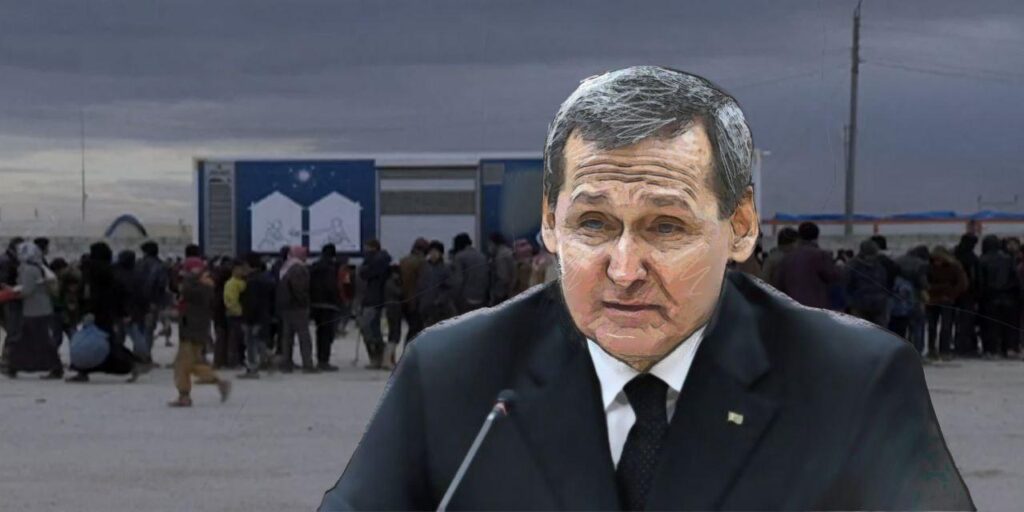
As Doha readies an emergency Arab-Islamic Summit, Turkmenistan and Qatar have moved to underscore a steadily warming relationship. On Sunday, Turkmenistan’s Deputy Prime Minister and Foreign Minister Rashid Meredov met Qatar’s Prime Minister and Foreign Minister Sheikh Mohammed bin Abdulrahman Al-Thani on the sidelines of the summit, a show of solidarity with Qatar after this month’s attack attributed to Israel. Qatar’s Foreign Ministry also reported a separate meeting between Meredov and Minister of State for International Cooperation Maryam Al-Misnad during the ministerial preparations, where both sides discussed ways to deepen ties. Indeed, Ashgabat’s presence in Doha on the eve of the summit offers political cover for expanded cooperation, and adds a Central Asian voice to backing Qatar’s mediation role in the war in the Middle East. The relationship is not new. Doha and Ashgabat established diplomatic ties in 1996, opened a Qatari embassy in Ashgabat in 2014, and upgraded political contact with a state visit by President Serdar Berdimuhamedov to Qatar in March 2023. Turkmenistan also inaugurated its embassy in Doha. The Qatari side later highlighted that 17 agreements and memorandums of understanding were signed across economic, cultural and sporting fields. Momentum has built through 2025. On March 16, Meredov met Sheikh Mohammed bin Abdulrahman Al-Thani in Doha to prioritise energy, investment and transport, and to brief on the Serhetabat–Herat section of the TAPI gas pipeline inside Afghanistan. Turkmen statements said Qatar “highly appraised” cooperation on the project, while the Turkmen Foreign Ministry framed the visit as a step forward. Qatar’s visibility in Turkmenistan also rose in August when Doha sent a delegation to the UN’s Third Conference on Landlocked Developing Countries, hosted in the Awaza coastal zone -- the Turkmen government's marquee venue for foreign investors. That forum dovetails with Turkmenistan’s pitch that logistics, energy and tourism can be built out with Gulf capital and know-how. For Turkmenistan, cooperation with Qatar matters for three reasons. The first is energy strategy. Turkmenistan sits on the world’s fourth-largest proven gas reserves, yet remains constrained by export routes and customer concentration. The World Bank and regional energy think tanks have long flagged Ashgabat’s reliance on pipeline gas to China, and the need to diversify destinations and modalities. Pairing with Qatar -- currently the world’s third-largest LNG exporter -- offers access to market expertise, contract structuring and investment models that could help Turkmenistan de-risk projects like TAPI and swaps via Iran. The second reason is capital. The Qatar Investment Authority (QIA) has been signalling a more aggressive deployment cycle, buoyed by anticipated LNG windfalls and new programmes to crowd in venture funds and international managers to Doha. While no Turkmen-specific commitments have been announced, Ashgabat’s priority sectors -- transport links to Afghanistan and the Caspian, petrochemicals, and hospitality at Awaza -- fit the kind of long-dated infrastructure and real-asset plays that Gulf sovereigns favor. Third is private-sector linkage. Since 2023, business councils and chambers have stepped up exchanges, including a March 2025 Qatar Chamber event for a Turkmen trade delegation and the creation of...
Opinion: Victory Day Parade Puts China’s Military Might and Alliances on Full Display

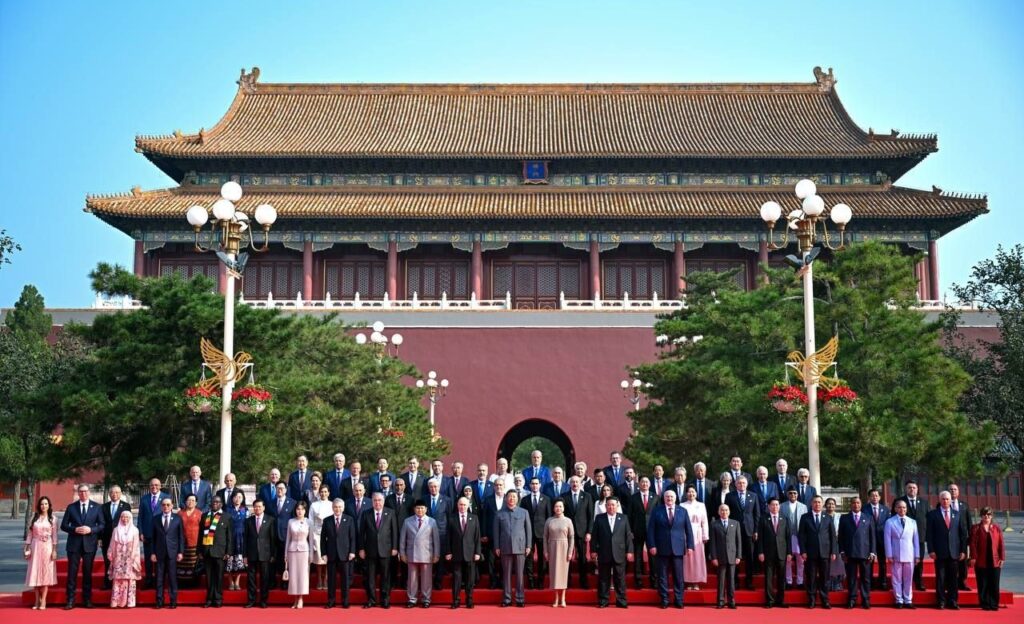
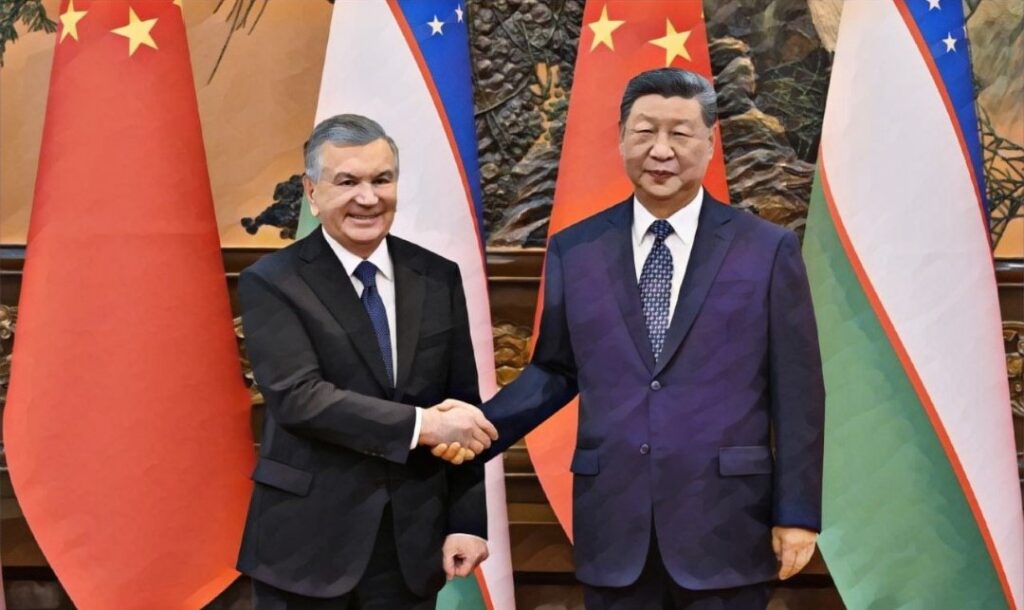
The Shanghai Cooperation Organization summit coincided with China’s lavish commemorations of the "80th anniversary of victory in the War of Resistance Against Japanese Aggression and the broader World Anti-Fascist War." The culminating moment, a grand military parade, was followed by a formal reception hosted by President Xi Jinping for visiting foreign dignitaries. All five Central Asian heads of state attended the parade. As the summit concluded, Xi seized the opportunity to issue a pointed warning to the West, particularly the United States and President Donald Trump, who had made it clear that he was closely following events in Tianjin and Beijing. In a post on Truth Social, Trump wrote, "Please give my warmest regards to Vladimir Putin and Kim Jong Un as you conspire against the United States of America." Kim Jong Un’s high-profile visit to Beijing, including a prolonged meeting with Putin, signaled the emergence of a visible military alignment between North Korea and Russia. This visit served as a strategic complement to China's Victory Day display of military might. [caption id="attachment_35739" align="aligncenter" width="1280"] Image: president.uz[/caption] For the first time, China publicly exhibited components of its strategic nuclear triad: the air-launched Jinglei1 missile, submarine-launched Julang3, and land-based ICBMs such as the Dongfeng61 and Dongfeng31 (and reportedly the DF5C). Analysts saw this as a deliberate signal to the U.S., regional powers like India and Russia, and potential international arms buyers, positioning China as a formidable strategic actor. Also on display were China’s anti-drone “triad”, missile-gun systems, high-energy lasers, and high-power microwave weapons, highlighting advances in counter-drone technology. Additionally, the parade showcased hypersonic and cruise missiles, unmanned aerial and underwater systems, and even robotic dog units, demonstrating China’s futuristic military capabilities. While noting the parade's impressive visuals, analysts cautioned that the true readiness of many showcased systems, for example, torpedo drones or laser weapons, remains uncertain. [caption id="attachment_35741" align="aligncenter" width="1280"] Image: president.uz[/caption] Diplomatically, the summit also reinforced Sino-Russian ties. Putin, who described relations with China as “unprecedentedly” close, and Xi signed over 20 bilateral agreements, including a major energy deal, Power of Siberia 2, a gas pipeline delivering 50 billion cubic metres annually to China via Mongolia. Meanwhile, China announced a trial visa-free entry policy for ordinary Russian passport holders, effective from September 15, 2025, to September 14, 2026, allowing visits up to 30 days for tourism, business, or family purposes. Together, the military spectacle and deepening diplomatic and people-to-people ties affirm Xi’s confidence as he prepares for crucial negotiations with President Trump, an unmistakable projection of strength and strategic resolve.

Mirziyoyev Bets on the SCO to Boost Uzbekistan’s Security and Economy

Tianjin, China - The recent Shanghai Cooperation Organization (SCO) summit drew wide attention as leaders from across Eurasia convened to emphasize the Organization’s growing importance. For smaller members, the meeting was a chance to show commitment to regional cooperation and alignment with the bloc’s major powers. Uzbekistan, under President Shavkat Mirziyoyev, stood out by using the platform to outline his intention to strengthen engagement within the SCO to advance both economic development and security. Mirziyoyev’s speech stressed solidarity in the face of global uncertainty, institutional renewal to improve effectiveness, and deeper cooperation in areas such as security and nuclear policy. He also endorsed expanding membership, particularly from the Global South, while presenting proposals to boost trade, logistics, and investment. These priorities are consistent with Uzbekistan’s ongoing strategy of aligning its national agenda with the SCO’s broader evolution into a forum with Eurasian and global relevance. Reinforcing Multilateral Solidarity Uzbekistan’s solidarity with the SCO has been in the making for years, as Tashkent aligns parts of its security and economic strategy with the Organization’s framework. In his latest address, Mirziyoyev emphasized the role of solidarity amid rising instability: “A systemic crisis of trust, the escalation of conflicts, the weakening of multilateral institutions, and the fragmentation of the global trading system are undermining the foundations of the international architecture of security and stability. In these circumstances, mutual understanding and solidarity among the SCO member-states are not only a valuable asset, but also the key to preserving peace in our vast region.” While Russia emphasizes the SCO’s role in fostering multipolarity and China focuses on resilient supply chains, Uzbekistan is leveraging the principle of solidarity to safeguard its national interests - reducing dependence on any single power. Uzbekistan is positioning itself within the SCO to align its domestic priorities with broader SCO agendas shaped by Russia’s focus on security and China’s emphasis on economic initiatives. Expanding Membership and External Engagement Mirziyoyev underscored the SCO’s “openness,” identifying expansion as central to its continued development. He welcomed greater engagement with new members and partners, though he did not specify particular regions. Uzbekistan’s growing cooperation with countries such as Iran and Saudi Arabia demonstrates how this vision of openness is taking shape in practice. Tashkent has actively supported Iran’s accession to the SCO and recently signed agreements on transport corridors that connect Central Asia to Iranian ports on the Persian Gulf, facilitating greater trade with Iran. In parallel, deepening ties with Saudi Arabia - particularly through ACWA Power’s renewable energy projects, now among Uzbekistan’s largest foreign-funded ventures - illustrate Uzbekistan’s broader engagement with the Global South in the areas of connectivity and investment. These moves parallel Russia’s and China’s efforts to expand the SCO’s influence beyond its founding region. For Uzbekistan, expansion offers new avenues for trade, energy cooperation, and investment partnerships, while reinforcing its image as a bridge-builder. By publicly supporting this process, Mirziyoyev signaled that Uzbekistan expects wider membership to enhance both the Organization’s and its own standing. Institutional Alignment with the SCO A...

Opinion: China’s Diplomatic Power Play Unfolds in Tianjin

On August 31, the next SCO Plus summit will begin in the Chinese city of Tianjin and run through to September 1. Judging by the list of participants, China, under Chairman Xi Jinping, is positioning itself to challenge the United States for influence over the global geopolitical agenda. As part of the Shanghai Cooperation Organization (SCO) summit, Xi will host a formal banquet for the attending heads of state, according to the Chinese Foreign Ministry. Xi is also scheduled to chair the 25th meeting of the SCO Council of Heads of State and lead the expanded SCO Plus session - the largest since the establishment of the organization - where he will deliver a keynote address. Clues to the themes of Xi’s speech can be found in the diverse array of leaders expected to attend. Chinese Deputy Foreign Minister Liu Bin confirmed at a Beijing press conference that among the SCO member states, participants will include Russian President Vladimir Putin, Indian Prime Minister Narendra Modi, Pakistani Prime Minister Shahbaz Sharif, Iranian President Masoud Pezeshkian, Belarusian President Alexander Lukashenko, Kazakh President Kassym-Jomart Tokayev, Kyrgyz President Sadyr Japarov, Tajik President Emomali Rahmon, and Uzbek President Shavkat Mirziyoyev. Several leaders from non-member states will also join, including Turkish President Recep Tayyip Erdoğan; Mongolian President Ukhnaagiin Khurelsukh; Azerbaijani President Ilham Aliyev; Indonesian President Prabowo Subianto; and Turkmen President Serdar Berdimuhamedov, whose participation suggests Ashgabat’s cautious but growing interest in regional dialogue. Also in attendance will be the prime ministers of Armenia (Nikol Pashinyan), Cambodia (Hun Manet), Nepal (Khadga Prasad Sharma Oli), Egypt (Mostafa Madbouly), Malaysia (Anwar Ibrahim), and Vietnam (Pham Minh Chinh). The summit will also host key international institutional leaders, including UN Secretary-General António Guterres; SCO Secretary-General Nurlan Yermekbayev; CIS Secretary-General Sergey Lebedev; ASEAN Secretary-General Kao Kim Hourn; CSTO Secretary-General Imangali Tasmagambetov; EAEU Chairman Bakytzhan Sagintayev; and AIIB President Zhou Ji. Kazakhstan will be prominently represented. In addition to President Tokayev, three high-profile Kazakhs mentioned above - Yermekbayev, Tasmagambetov, and Sagintayev - will attend in their capacities as heads of international organizations. Their presence signals Astana’s growing diplomatic weight and reflects the strategic outreach led by Tokayev, himself a former UN Deputy Secretary-General. This background likely contributes to the rapport between Kazakhstan and Guterres. The summit will also inevitably draw attention due to the presence of the Armenian and Azerbaijani leaders, figures central to the ongoing realignment in the South Caucasus. Both Baku and Yerevan have increasingly distanced themselves from Moscow, favoring closer ties with Turkey and the United States. The recent peace agreement between Aliyev and Pashinyan, signed in the presence of President Trump, underscored the growing American role in the region and the diminishing influence of Russia. While Moscow appears willing to tolerate this shift, Tehran views it with deep concern, especially after its recent 12-day conflict with Israel. Russia, for its part, seems to be signaling disengagement from the region. Its silence in response to Baku and Yerevan’s Western overtures suggests strategic apathy, if not withdrawal. Beijing, of course, is...

Astana’s Delicate Role in Ukraine Peace Efforts

Despite its close economic, historical, and cultural ties with Russia, Kazakhstan has maintained constructive relations with Ukraine since Russia’s full-scale invasion in 2022. That diplomatic balance was on display again on August 10, when President Volodymyr Zelenskyy called President Kassym-Jomart Tokayev to discuss prospects for a peace agreement. According to official sources, Ukraine initiated the call, and Tokayev reaffirmed Kazakhstan’s “unconditional interest in establishing a lasting peace in Ukraine based on the principles of international law.” Astana supports a “joint search for a peaceful solution on a fair basis” and consistently advocates compliance with the UN Charter, the inviolability of borders, and the territorial integrity of sovereign states. Kazakh political analyst Marat Shibutov has suggested that Zelenskyy is seeking support ahead of a potential shift in the confrontation with Russia. “On the eve of the meeting between Donald Trump and Vladimir Putin in Alaska, Zelenskyy is calling the leaders of other countries. He is seeking not only to secure better conditions for Ukraine, but also to understand what his personal political future holds. Yesterday, he spoke with Macron, Meloni, Tusk, Stubb, von der Leyen, Sánchez, and Starmer. Today, he spoke with Swedish Prime Minister Kristersson, Ilham Aliyev, and President Tokayev,” Shibutov wrote. According to Shibutov, Zelenskyy emphasized European support for Ukraine’s participation in negotiations. However, Tokayev, an experienced diplomat, may have cautioned that the outcome of the U.S.-Russia talks is unpredictable. “They depend on domestic politics,” Shibutov noted. “In the U.S., Trump’s electorate wants an end to the war and military aid to Ukraine halted, while many in Russia want Ukraine’s complete defeat and elimination as a state. In such conditions, Ukraine will have to make concessions. Territorial integrity is good, but not at the cost of the state’s very existence.” The official statement from Tokayev’s office cited the old proverb: “A bad peace is better than a good war.” Support During the War On March 6, 2022, shortly after Russia’s full-scale invasion, an anti-war rally was held in Almaty. Participants carried Ukrainian flags, blue-and-yellow balloons, and anti-war posters. That same month, Kazakhstan sent humanitarian aid worth more than $2 million, including 25 types of medical supplies weighing 82 tons. Volunteers also collected food, hygiene products, medicines, and animal feed worth 150 million tenge. Kazakh entrepreneurs delivered aid and generators to Ukrainian hospitals. In the summer of 2023, a Kazakh company helped repair a medical facility in Mykolaiv damaged by Russian shelling. The installation of “yurts of indestructibility” in war-affected Ukrainian cities also gained wide recognition. In Kyiv alone, more than 100,000 people visited such a yurt to charge phones, warm up, and enjoy free Kazakh national dishes. Only According to the UN Charter Kazakhstan’s deep economic ties with Russia include oil and gas transit, gasoline supplies, and imports of food and medicine. The two countries share the world’s second-longest land border, spanning 4,750 miles. Cooperation on transboundary rivers is also critical. In contrast, Kazakhstan’s links with Ukraine are modest, consisting largely of historical ties and family connections. Pre-war trade...

Kazakhstan Showcases Middle Power Role in Washington D.C.: Kazakh Ambassador Ashikbayev Spreads the Message

Like it or not, the world is moving away from unipolar dominance and entering an era of multipolarity where national interests increasingly counter the globalist ambitions of some major powers. In this evolving landscape, as the major powers adjust to new geopolitical realities, an increasing number of states are becoming more comfortable operating autonomously as sovereign nations. Against this backdrop, Kazakhstan is emerging as a middle power, conscious all the same of the risks associated with remaining neutral in the oft-times bitter rivalries between major powers. Over the past twenty years, Kazakhstan has consistently signaled that it will not be drawn into the strategic maneuverings of foreign powers, instead pursuing its own national interests in a measured fashion – rather like the other Central Asian states – so as not to undermine regional stability.  Accordingly, Astana offers good offices to foster dialogue and reconciliation among countries and blocs affected by conflict and/or heightened strategic competition. Murat Nurtleu, Kazakhstan’s Foreign Minister, underscores just that point: “In this era of geopolitical competition, Kazakhstan’s role as a bridge between East and West is more vital than ever.” These words not only highlight Kazakhstan’s confidence and expanding role as a rising middle power but aim to mitigate the potential consequences of great power overreach, whether in Central Asia or elsewhere. In a recent interview in Washington DC with this writer, Ambassador Yerzhan Ashikbayev of Kazakhstan to the United States elaborated: “Kazakhstan is a middle power, which means, broadly speaking, a country that holds an influential position in the international system, especially in Eurasia. Maintaining peaceful relations with our neighbors – major, middle, and minor powers – is a top priority for us. We work to shape outcomes beyond our own borders, keeping in mind our national interests, always fostering friendly and mutually beneficial ties – a modus vivendi – with our neighbors.” It is well-known that Astana’s global diplomatic strategy prioritizes fair trade and aims to strengthen inter-regional economic ties – especially in transport, logistics, finance, and communications. It views economic development – with an emphasis on building an economically stable middle class across ethnicities – as key to national unity and regional stability. It is less known that Kazakhstan, in its diplomatic pragmatism, winces at unequal power relations, preferring to focus on long-term equity outcomes over short-term efficiency in matters of economic development. Ambassador Ashikbayev emphasizes that “Kazakhstan’s foreign policy opens space where dialogue can flourish. Guided by pragmatism, we will concentrate on practical matters like communication, quality investment flows, fair commerce, energy, and critical minerals.” He insists that “for the international system to flourish, it should function well for all, promoting peace and the common good for the majority. That is what we export - peace.” U.S. Secretary of State Marcio Rubio also emphasizes the need to keep peace front and center: “President [Trump] wants to end wars.  He’s not a fan of wars.  He thinks wars are a waste of time and a waste of lives.  And we’re going to continue to do everything we can and engage...