• KZT/USD = 0.00223
  • TJS/USD = 0.10810
  • UZS/USD = 0.00009
  • TMT/USD = 0.29850
  • KZT/USD = 0.00223
  • TJS/USD = 0.10810
  • UZS/USD = 0.00009
  • TMT/USD = 0.29850
  • KZT/USD = 0.00223
  • TJS/USD = 0.10810
  • UZS/USD = 0.00009
  • TMT/USD = 0.29850
  • KZT/USD = 0.00223
  • TJS/USD = 0.10810
  • UZS/USD = 0.00009
  • TMT/USD = 0.29850
  • KZT/USD = 0.00223
  • TJS/USD = 0.10810
  • UZS/USD = 0.00009
  • TMT/USD = 0.29850
  • KZT/USD = 0.00223
  • TJS/USD = 0.10810
  • UZS/USD = 0.00009
  • TMT/USD = 0.29850
  • KZT/USD = 0.00223
  • TJS/USD = 0.10810
  • UZS/USD = 0.00009
  • TMT/USD = 0.29850
  • KZT/USD = 0.00223
  • TJS/USD = 0.10810
  • UZS/USD = 0.00009
  • TMT/USD = 0.29850
22 September 2026

Viewing results 1 - 6 of 137

Dushanbe Hosts Central Asia-Russia Summit and CIS Heads of State Meeting

Dushanbe has become the center of Eurasian diplomacy this week as it hosts the “Central Asia-Russia” summit alongside the meeting of the Council of CIS Heads of State. Over two days, leaders from across the region are set to discuss security, economic ties, transport infrastructure, energy cooperation, and new models of regional integration. The inaugural "Central Asia-Russia” meeting took place in Astana in October 2022, focusing on counterterrorism, support for small and medium-sized enterprises, and initiatives in energy, industry, and digitalization. Analysts note that the current summit does not duplicate the functions of existing integration frameworks such as the Eurasian Economic Union (EAEU) or the Collective Security Treaty Organization (CSTO). Instead, it complements them by offering a more flexible and pragmatic platform for dialogue. “The Central Asia-Russia format has the potential to become not just a venue for political signaling, but an instrument for the rapid implementation of infrastructure and regulatory solutions,” said Alibek Tazhibaev, Director of the Center for Eurasian Monitoring. He noted that the region has become a natural zone of industrial cooperation and logistics for Russia, with mutual economic interdependence deepening under the pressure of sanctions. Among the key priorities being discussed are the development of North-South and East-West transport corridors, Russian gas transit through Kazakhstan, and the construction of new energy facilities. In 2024, trade turnover between Central Asian countries and Russia totaled $44.7 billion, an increase of 11.3% from the previous year. Tazhibaev also argued that Central Asia could emerge as an independent “Eurasian hub” if it transitions from a simple transport corridor to a region that integrates added value. “Central Asia can offer a ‘door-to-door’ logistics service if it builds digital gateways, assembly warehouses, and unified logistics standards. This would help retain profit margins and manage standards within the region,” Tazhibaev said. CIS: Pragmatism and New Initiatives The second major component of Dushanbe’s diplomatic agenda is the summit of the Commonwealth of Independent States (CIS). Despite persistent criticism, the CIS continues to serve as a relevant platform for cooperation. Taisiya Marmontova, Associate Professor at Astana International University and Director of the Institute for Regional Integration Studies, noted that the CIS has “preserved a space for dialogue and joint projects after the collapse of the USSR.” According to the CIS Executive Committee, the combined GDP of member states is growing at an average annual rate of 4.5%, while internal trade has risen by 40% over the past five years. Kazakhstan remains a key player, with trade turnover with CIS countries reaching $37.3 billion in 2024, including $4.3 billion in services. During the summit, leaders are expected to consider several initiatives proposed by Kazakh President Kassym-Jomart Tokayev, including the creation of a “CIS+” dialogue format and the launch of the “Commonwealth Fair” intergovernmental program. The first such fair is scheduled to take place in Taraz in 2026. Member states have also agreed on the Strategy for Transport Corridor Digitalization, the Strategy for Scientific and Technological Development until 2035, and a new Concept for Construction Pricing. “Integration...
S. Paul Kapur Confirmed as U.S. Assistant Secretary for South and Central Asian Affairs

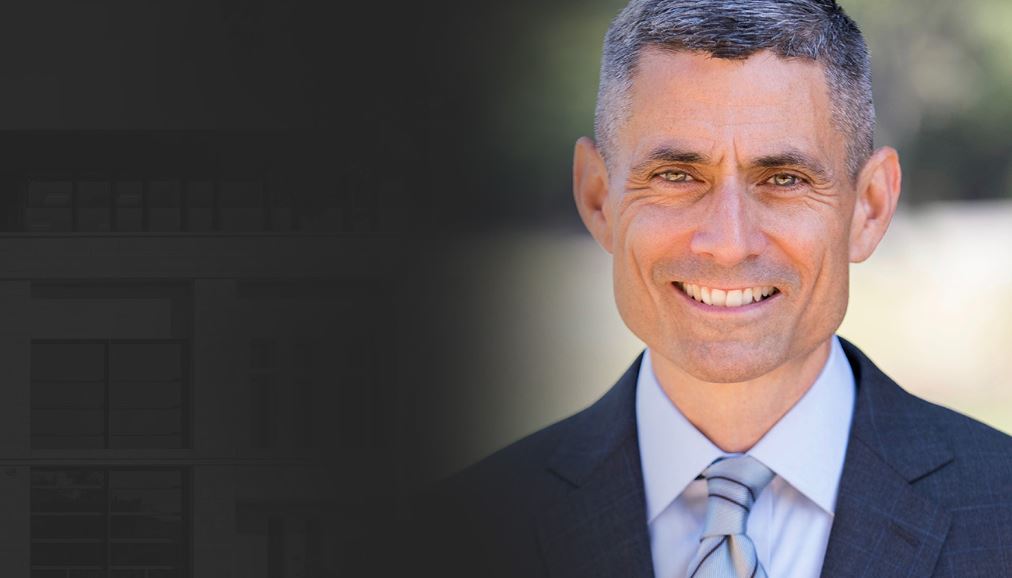
The U.S. Senate has confirmed political scientist S. Paul Kapur as Assistant Secretary of State for South and Central Asian Affairs to lead the State Department bureau that oversees relations with Afghanistan, Pakistan, India, Sri Lanka, Bangladesh, Nepal, Maldives, Bhutan, and the five Central Asian republics. The position carries responsibility for guiding U.S. diplomacy across the region, coordinating security and development strategy, and advising on policy toward regional powers such as China and Russia. Kapur, 56, is an Indian American scholar known for his work on nuclear deterrence and South Asian security. He was born in New Delhi to an Indian father and an American mother, but grew up in the United States. After studying the region in graduate school, he pursued an academic career, earning a doctorate in political science from the University of Chicago and a bachelor’s degree from Amherst College. Kapur taught at Claremont McKenna College and Stanford University before joining the U.S. Naval Postgraduate School, where he is a professor of national security affairs and runs U.S.–India strategic dialogues for the Department of Defense. Paul Kapur, a seasoned academic and security specialist, now takes a post that places him at the center of Washington’s engagement with Kazakhstan, Kyrgyzstan, Tajikistan, Turkmenistan, and Uzbekistan. His confirmation fills a key regional portfolio in the Trump administration, which may shape how the United States approaches Central Asia within its broader regional strategy. Kapur’s portfolio covers both South and Central Asia, but his confirmation has been closely watched in the five republics that straddle the heart of Eurasia. Central Asian governments and business leaders are eager to see whether the new Assistant Secretary will continue Washington’s traditional emphasis on security partnerships or shift toward deeper economic and investment ties. Kapur brings a distinguished scholarly pedigree and deep expertise in international security. He has written extensively on nuclear deterrence, South Asian security, and great-power competition. While much of his work focuses on India, Pakistan, and U.S. grand strategy, he has also examined how India manages its relationships with larger powers such as the United States and China - an enduring middle-power dynamic. That perspective is particularly relevant to Kazakhstan, an emerging middle power, and to Central Asia acting collectively, which is seeking to balance Russian and Chinese influence. During his confirmation hearing, Kapur emphasized that U.S. engagement in Central Asia will focus on advancing the sovereignty and territorial integrity of the regional states. He noted that, if confirmed, he would leverage the C5+1 framework and bilateral partnerships to pursue cooperation in areas such as energy, critical minerals, counterterrorism, combating transnational crime, and developing physical and digital infrastructure. His remarks reflected a commitment to strengthening regional independence and stability while deepening practical cooperation with the United States. For Central Asian governments, Kapur’s arrival comes at a time of shifting geopolitics. Russia’s war in Ukraine has unsettled long-standing assumptions, while China’s Belt and Road Initiative continues to expand Beijing’s economic influence. The United States has not always prioritized matching these dynamics. However, Kapur’s testimony...

Tokayev’s Visit to New York: UN Speech, Investment Talks, Nuclear Power, and Digital Cooperation

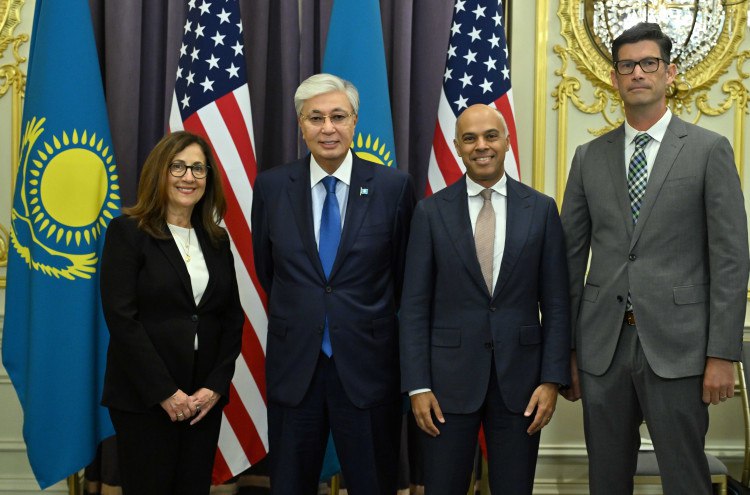
Kazakh President Kassym-Jomart Tokayev arrived in New York on September 21 for a working visit scheduled to last until September 23. Diplomatic and Business Engagements According to the presidential press service, Tokayev is set to deliver a speech during the general debate of the 80th anniversary session of the UN General Assembly. His agenda includes bilateral meetings with foreign leaders and heads of international organizations, as well as a roundtable discussion and a series of engagements with representatives of transnational companies. These meetings aim to highlight Kazakhstan’s investment opportunities. Expanding Cooperation with Cameco Tokayev’s first official meeting was with Tim Gitzel, President and CEO of Canada’s Cameco Corporation. The discussion focused on prospects for expanding cooperation in the uranium sector, particularly through the Inkai joint venture, which has been developing the Inkai deposit in the Turkestan region for over 25 years. The president commended Cameco’s long-standing partnership with Kazatomprom, noting over $500 million in investments and the successful transfer of nuclear technologies. “Kazakhstan is entering a new stage of energy development, with plans to build three nuclear power plants. Our country is interested in the innovative methods used in the nuclear industry,” Tokayev stated. Focus on Education and Testing Reform A major component of the visit centered on human capital development. In talks with Amit Sevak, President of Educational Testing Service (ETS), Kazakhstan expressed interest in updating its national assessment systems. Sevak emphasized the importance of tailoring solutions to Kazakhstan’s specific needs and highlighted the role of artificial intelligence in this transformation. Kazakhstan’s Minister of Science and Higher Education Sayasat Nurbek confirmed the country’s intention to elevate national exams to international standards. “GRE, SAT, and TOEFL are globally recognized, and they were developed in this scientific environment. Our goal is not to replace the Unified National Testing system but to enhance its quality. A large team of ETS researchers will arrive in Kazakhstan next month,” he said. Cultural Cooperation with the Smithsonian Institution Tokayev also met with representatives of the Smithsonian Institution, the largest scientific and cultural complex in the United States. Discussions focused on academic exchanges and the international promotion of Kazakhstan’s cultural heritage. Beginning next year, Kazakh researchers will be able to undertake internships and conduct studies at the institution. Helle Bjetvin, Head of Folk Art Programs, expressed personal admiration for Kazakh applied arts: “I truly admire Kazakh ornaments and design. They beautifully combine tradition and craftsmanship. For me, it’s something very special.” Digital Transformation and Artificial Intelligence Digital development was another key topic of the visit. Joint projects involving data centers, infrastructure expansion, and the establishment of agencies for artificial intelligence implementation were explored. Minister of Digital Development Zhaslan Madiev noted that Kazakhstan is steadily transitioning to a digital state model and seeks robust technological and financial partnerships. “We are discussing major joint projects in digital infrastructure and AI development. Kazakhstan’s market is attractive to global investors, and Goldman Sachs is being considered as a potential partner,” he said.

Book Launch at the U.S. Capitol: New Uzbekistan: The Path of Shavkat Mirziyoyev

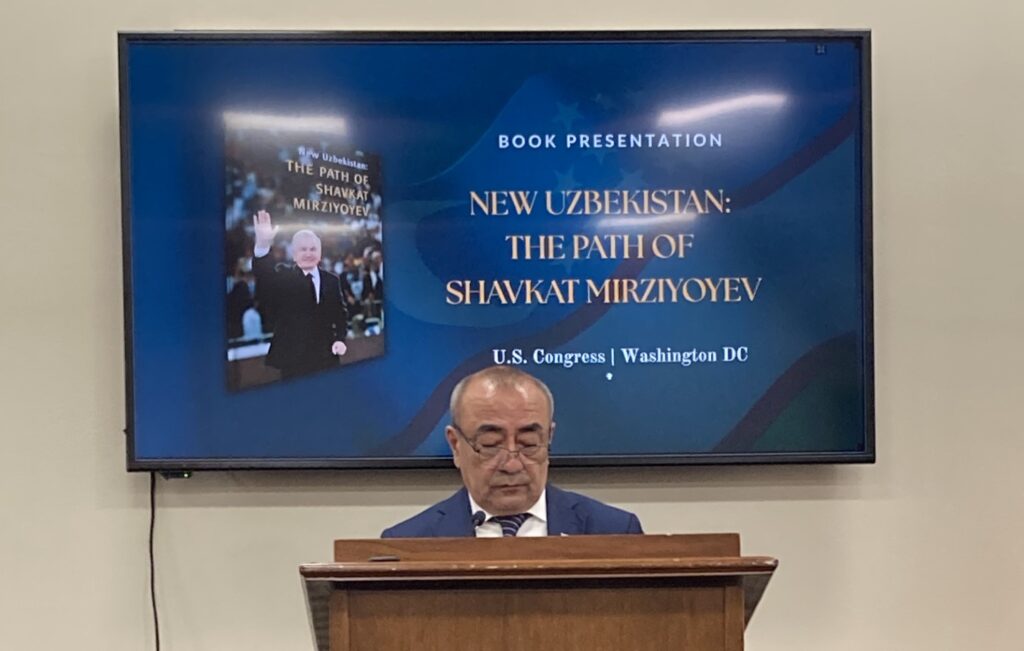
On September 16, the Embassy of Uzbekistan in Washington, D.C., hosted a book launch at the Rayburn Building on Capitol Hill for New Uzbekistan: The Path of Shavkat Mirziyoyev. The event drew diplomats, congressional staff, and representatives from companies such as General Motors and Boeing. The keynote address was delivered by Sodyq Safayev, First Deputy Chairperson of Uzbekistan’s Senate. Other speakers included Husan Ermatov, the book’s Uzbek-language editor and advisor to Uzbekistan’s Ishonch newspaper; Eldor Aripov, Director of the Institute for Strategic and Regional Studies under the President of Uzbekistan; Lisa Choate, President and CEO of American Councils; and Elena Son, Executive Director of the American-Uzbekistan Chamber of Commerce. Speakers highlighted Uzbekistan’s recent trajectory, noting shifts from a state-controlled economy and limited international engagement (1993–2016) to more market-oriented policies and broader foreign relations (2017–present). They also framed today’s Uzbekistan as shaped by historical experiences and cultural development, which some described as an “Uzbek Renaissance.” According to the speakers, President Mirziyoyev has promoted reforms in areas including governance, socio-economic development, and international outreach. Safayev remarked: “this [book signing] is not just about diplomacy but about shared values, mutual understanding, and a common vision of the future. The book before you, authored by Qudratilla Rafiqov, Uzbek scholar and political scientist, is a chronicle of change, resilience, and hope. The most difficult part of this book is a [description of the] transformation of hearts and minds. Its central message is simple and powerful: the history of Uzbekistan is written by people through their interactions and aspirations. And justice lies at the heart of reform.” By justice, he clarified, he meant fairness—ensuring that citizens have opportunities for family stability, safety, and employment. While the book presents Uzbekistan’s current government agenda in a favorable light, it also introduces new readers to the President’s stated priorities: attracting investment, promoting rule of law and fairness, liberalizing the economy, restructuring social policies, contributing to global peace efforts, and maintaining pragmatic security and foreign policy strategies. Aripov emphasized that the book is “not really about reforms, or about a leader who has been able to initiate and implement large-scale transformation in a very short period of time. It is a testimony to a new era into which Uzbekistan is entering. Today, hopes are rising in Uzbekistan, a sense of national pride is strengthened, and ambitions are being achieved that only recently seemed unattainable. These changes are being felt by ordinary citizens. They see how their lives are improving, how opportunities are expanding, and how confidence in the future is becoming a reality. That is why this book is not only a chronicle of, but also a symbol of faith that Uzbekistan can become one of the centers of sustainable development, openness and cooperation in Eurasia and the wider world. Why do I believe this to be the case? Because, under my President, the country has moved from ‘guarded isolation’ to ‘post-purposeful openness,’ from managing risks to exporting stability, and from ad hoc transactions to rules-based cooperation.” The Uzbek Embassy,...

Rail, Water, and Helicopters – Uzbekistan’s “Limited Recognition” of the Taliban

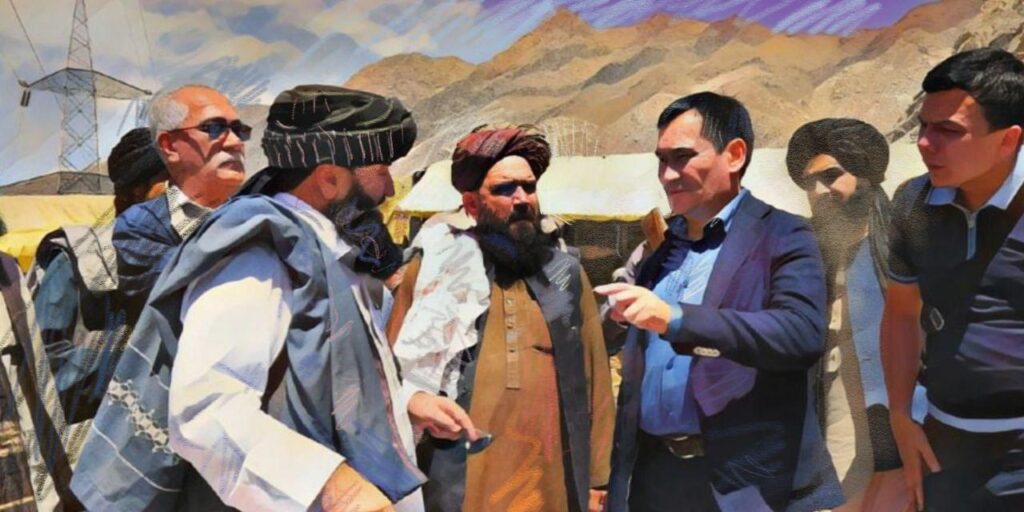
Uzbekistan has spent the middle of September embroiled in an increasingly tetchy press battle over an unusual topic: helicopters. The Taliban, who run the de facto government in Kabul, have long claimed that several dozen military aircraft and helicopters currently residing in Uzbekistan are rightfully theirs. On September 11, a Taliban official announced publicly that Uzbekistan had agreed to hand them back. This was reported widely in the regional media, with the Uzbek foreign ministry slow off the mark in denying these claims. The dispute goes back to the fall of Kabul in August 2021, when a total of 57 aircraft were flown from Afghanistan to Uzbekistan and Tajikistan as Ashraf Ghani’s government collapsed. “The helicopters came from the Afghan territory to Uzbek territory illegally, so actually we had the right to confiscate them,” Islomkhon Gafarov, an Afghanistan expert at the Center for Progressive Reform, a Tashkent think tank, told the Times of Central Asia. However, Gafarov adds that the aircraft were the property of the U.S. military loaned to the previous government of Afghanistan, and therefore, Washington will have a say in their return. This has not stopped the Taliban from continuing to demand the helicopters back for use in “humanitarian operations,” in the words of Foreign Minister Amir Khan Muttaqi. Such wrangling is part of the daily diplomatic in-tray for Tashkent when dealing with a neighbor whose government has not been recognized by almost the entire world. “Afghanistan is our neighbor,” said Gafarov. “According to the geopolitical situation, we have to conduct a dialogue with this government. It’s true, Uzbekistan hasn’t recognized the Taliban government, but de facto, we work with them; we’ve had diplomatic relations with them since 2018.” Tashkent certainly has reasons to work with the Taliban. Helicopters are a mere sideshow compared to two far larger issues that will define their relations for years to come: rail and water. Railway On the positive side of the ledger, the Taliban have brought to Afghanistan a reasonable degree of stability - enough to start contemplating large-scale infrastructure projects. In July, an agreement was struck between Pakistan, Afghanistan, and Uzbekistan to conduct a feasibility study for a trans-Afghanistan railway, with 647 kilometers of new track being laid to link Uzbekistan with Pakistan’s Indian Ocean ports. This railway could bring significant benefits to Uzbekistan, one of only two double-landlocked countries in the world. Currently, sea-bound exports must travel via Turkmenistan to Iran. Other routes almost all rely on going via Kazakhstan. The China-Kyrgyzstan-Uzbekistan railway, currently being constructed, should remove some of the need for sea-bound routes, but the Pakistan route would be faster. “The trans-Afghan route is the shortest way to the seaports of Karachi and Gwadar,” Gafarov told TCA. With a line from Termez, Uzbekistan, to Mazar-i-Sharif in Northern Afghanistan already operational, this only leaves two sections unbuilt - from Mazar to Kabul, and then from Kabul to Peshawar in Pakistan. The teams are still only at the feasibility stage right now, and have, with some chutzpah, predicted...

Shared Values, Shared Voices: An Interview With Spain’s Ambassador to Kazakhstan

In recent years, cultural cooperation between Spain and Kazakhstan has gained new momentum. Although the two countries are separated by a vast geographical distance, their cultural ties are growing closer through shared values. The Embassy of Spain in Kazakhstan has implemented a number of major projects in this regard. TCA spoke with the Ambassador of Spain to Kazakhstan, Luis Martínez Montes. TCA: It’s been several months since you became the Ambassador to Kazakhstan. What aspects of our culture do you enjoy? LMM: In fact, this is my second diplomatic posting to Kazakhstan. The first was from 1999 to 2002, when Spain opened its embassy in Almaty before moving to Astana. Twenty-five years later, I’ve returned as Ambassador to a country I consider my second home. There are so many things I love about Kazakhstan, including its nature and its gastronomy, that it’s hard to choose. But if I had to pick one, it would be the people, especially the younger generations. I spend much of my time visiting schools and universities, where I see a tremendous energy and thirst for knowledge among Kazakh students. I organize weekly lectures, debate clubs, and informal lunches at my residence with students and Kazakh intellectuals. Their conversations enrich me and help me better understand the direction this country is taking. TCA: You once mentioned that you visited the Mausoleum of Khoja Ahmed Yasawi. What impression did it leave on you? LMM: I visited Turkistan in 1999, and I have a memorable anecdote from that trip. While visiting the mausoleum, the local guide found out I was from Spain and enthusiastically mentioned Ibn Arabi, the great Sufi poet from Al-Andalus [the name for Spain during its Islamic period]. She spoke of him as a near-contemporary of Ahmed Yasawi. I’m grateful for that moment because it was through this cultivated Kazakh woman who could recite at length poems by both Sufi sages that I developed my lifelong admiration for Ibn Arabi. I found it truly fascinating that two poets, Ibn Arabi and Khoja Ahmed Yasawi, living at opposite ends of the Eurasian continent, could produce such profound and beautiful poetry, inspired by the same spiritual quest for God. TCA: Abai Kunanbayuly, like Cervantes, elevated a nation’s literature and culture. We translated Cervantes into Kazakh many years ago, and Don Quixote has been reprinted many times. We also heard that Abai’s works have been translated into Spanish. How has the Spanish readership received him? LMM: As you know, the late Pope Francis, who was from Argentina, quoted Abai more than a dozen times at the opening of the Seventh Congress of Leaders of World and Traditional Religions in 2022. Some works by Abai were translated into Spanish in 2020 by María Sánchez Puig, who received the Order of Dostyk for her work in bringing Kazakh literature closer to Spanish-speaking audiences. Another project is currently underway to translate selections from Abai’s Book of Words into Spanish this year. We’re also developing the first Kazakh-Spanish dictionary to make it...