Viewing results 1 - 6 of 5
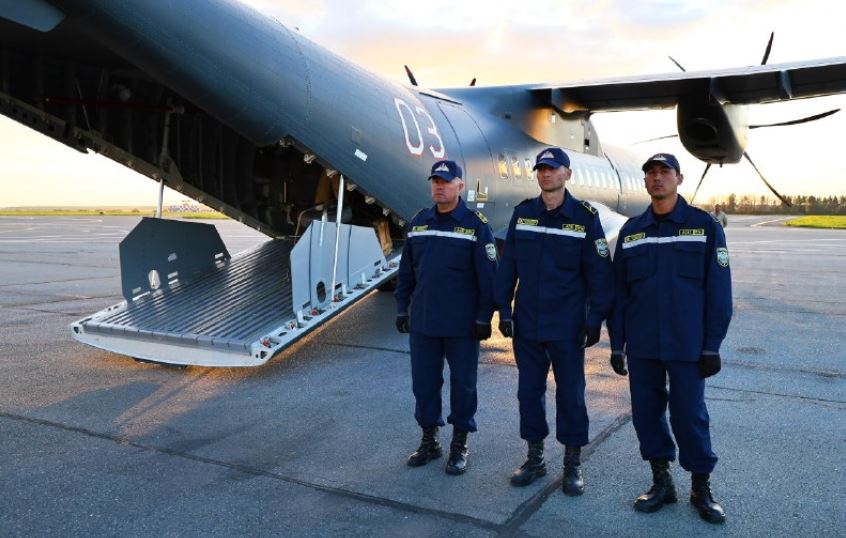
The bodies of eight Uzbek construction workers who were killed in a drone strike in the Russian region of Tatarstan were repatriated on Wednesday, according to Uzbekistan’s Ministry of Foreign Affairs. Uzbekistan’s ministries for emergency situations, internal affairs and health, as well as migration authorities, were also involved in the repatriation, the press service of the foreign ministry said. It posted photos of the operation, including a wooden coffin being carried onto an Uzbek Air Force plane. The ministry said it was coordinating with Russian officials to help injured Uzbek citizens who were hospitalized after the August 10 attack in the industrial city of Nizhnekamsk, which Russia blamed on Ukraine. Rustam Minnikhanov, head of Tatarstan, had said 25 people were hospitalized, although he didn’t provide their nationalities. Minnikhanov said some people were killed at a hostel, describing them as “ordinary workers, having breakfast before the start of their workday.” Many labor migrants from Central Asia travel to Russia to seek work, filling job shortages and sending money back to their home countries. They often live in cheap hostels and other communal living arrangements. Citing Tajikistan’s Ministry of Foreign Affairs, the Asia-Plus news agency reported that a Tajik citizen also died in the attack on Nizhnekamsk. Asia-Plus later quoted the ministry as saying two Tajik nationals were injured. A total of 13 people, including a child, died, according to Russian officials. Russia said Ukraine carried out the attack on several locations, including residential areas and industrial facilities. The Ukrainian military said it struck an oil refinery in Nizhnekamsk and caused a fire, in what was part of a campaign to target Russian energy infrastructure in the war against Moscow.
Kazakhstan's Trade and Integration Minister Arman Shakkaliyev has encouraged consumers to shop on domestic online marketplaces, urging them not to base their purchases solely on the lowest prices offered by foreign platforms and invoking what he called “economic patriotism.” Speaking to reporters, Shakkaliyev advised consumers to use marketplaces they trust, saying that domestic platforms offered greater assurance that purchases would be delivered. He was responding to questions about the disruption affecting Wildberries after drone attacks on its Russian facilities. On August 2, Ukrainian drones struck a Wildberries warehouse in Novosemeykino, in the Samara region, causing a fire. The following day, Wildberries said a separate logistics facility in the Vladimir region had also caught fire following an attack. No casualties were initially reported at either site. Shakkaliyev's remarks come amid reports that Wildberries is seeking additional warehouse capacity in Kazakhstan. According to sources familiar with the discussions, the company is looking for approximately 100,000 square meters of warehouse space in Kazakhstan, although no single vacant facility of that size is currently available on the local market. The issue has also drawn attention in Moscow. Speaking on the sidelines of the Third Russia-Kazakhstan Media Forum, Russian Deputy Foreign Minister Mikhail Galuzin said efforts to integrate Russian and Kazakhstan-based online marketplaces had begun well before the recent attacks on logistics infrastructure and were continuing. He noted that more than 100,000 suppliers from Kazakhstan were registered on the Russian marketplaces Wildberries and Ozon, another e-commerce giant. Kazakhstan's Ministry of Trade and Integration has previously stated that it has not yet received an official request from Wildberries to establish additional warehouse facilities in the country. The ministry said that any such proposal would be reviewed in accordance with Kazakhstan's legislation and national interests. It added that all market participants would be subject to the same rules, without special preferences or exemptions.
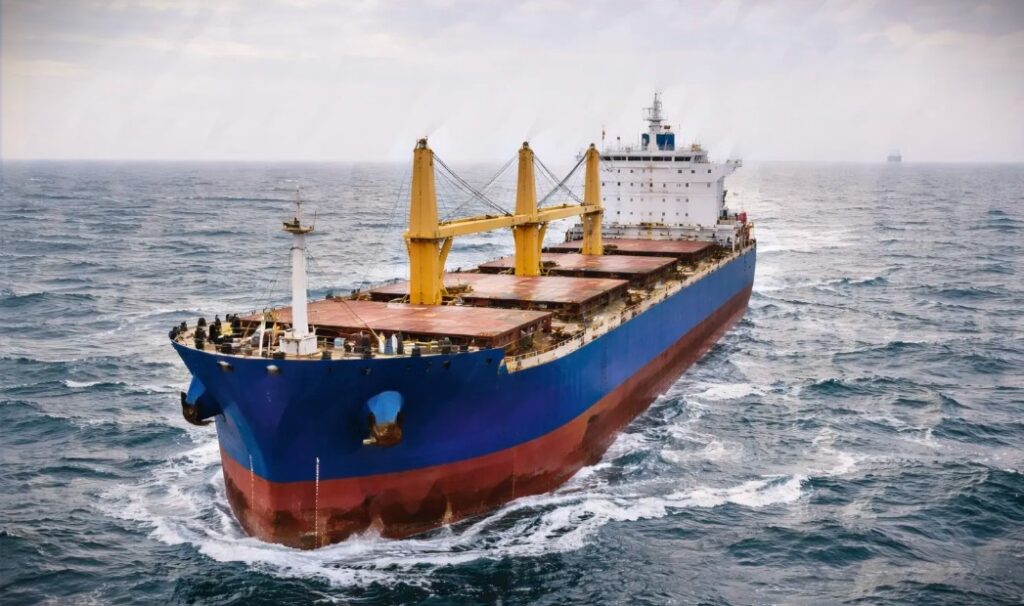
Oil loadings at the Caspian Pipeline Consortium’s Black Sea terminal have been suspended again after a fourth tanker was struck by a drone on July 20. The NELSA was loading at single-point mooring SPM-1 when the drone hit the stern on its starboard side, between the superstructure and engine compartment. A fire broke out on the deck and inside the vessel but was extinguished after several hours. CPC said 22 crew members were evacuated aboard its tugboats, while the captain and chief officer remained on the tanker. NELSA stayed afloat. No oil spill occurred, and the crude in its cargo tanks did not ignite. Loading had resumed briefly on the evening of July 19 before the latest attack forced another suspension. Kazakhstan had previously condemned drone attacks on three tankers near the Caspian Pipeline Consortium’s Black Sea terminal on July 17 and 19, two of which were hit while loading Kazakh oil. The Liberia-flagged ASIA and the Marshall Islands-flagged NISSOS IOS were attacked at single-point moorings SPM-1 and SPM-3 near Novorossiysk. ASIA was loading Tengizchevroil crude. The Marshall Islands-flagged NISSOS IOS was loading oil from Kashagan B.V. and Maten. A fire broke out on ASIA and was extinguished with CPC emergency support. No crew members, CPC employees, or contractors were injured. Both tankers remained afloat, no oil entered the sea, and the moorings were not damaged. Loading was suspended while specialists assessed the damage. Following the attack on ASIA, a spokesperson for Chevron, whose Tengizchevroil crude was being loaded onto the vessel, told TCA: “Chevron is aware of reports of an incident involving a vessel loading at Caspian Pipeline Consortium (CPC) facilities near Novorossiysk. All crew are safe, and the vessel remains stable. The vessel has been moved to a safe anchorage, and we are coordinating with the ship operator and relevant authorities. There has been no impact to TCO operations or exports. Further questions regarding CPC operations should be directed to CPC.” The Kazakh Foreign Ministry described the strikes as an unacceptable infringement on Kazakhstan’s economic interests and a deliberate attempt to disrupt lawful international trade. “Kazakhstan demands an immediate halt to these attacks,” the ministry stated. The ministry said an agreed system for sharing information on civilian vessels entering the Black Sea to load CPC oil had been deliberately ignored. It said the failure endangered crews, called for practical security measures, and reserved Kazakhstan’s right to seek full compensation under international law. Ukraine’s General Staff said its forces struck two tankers in the Black Sea overnight on July 19. It said the vessels were used to transport Russian oil, petroleum products, and fuel for Russia’s armed forces. The post did not name the tankers. CPC said both ships at its terminal were loading oil produced in Kazakhstan and did not publicly identify the attacker. The July 19 incident followed an attack on Nordic Zenith on July 17. The Suezmax tanker was empty and approaching the terminal when two drones hit it. The crew extinguished a fire. Nearby CPC...
Drone attacks on Russian Baltic ports have heightened concerns about potential risks to Kazakhstan’s oil export routes. Ukrainian drone strikes targeted the ports of Primorsk and Ust-Luga in Russia’s Leningrad Oblast earlier this week, disrupting operations at both major oil export hubs. Primorsk has an estimated capacity of around one million barrels of crude oil and approximately 300,000 barrels of diesel fuel per day. Large fuel storage facilities are also located at both ports. Further strikes were reported on March 25, when drones again targeted both ports. Media reports indicated that shipments of oil and petroleum products were suspended, and that fires broke out at Ust-Luga. As of March 26, loadings at both ports were reportedly still suspended following the latest strikes, with no confirmed return to normal operations. Kazakhstan has increasingly used Baltic routes for part of its oil exports following periodic disruptions to the Caspian Pipeline Consortium (CPC) system. Commenting on the situation, Kazakh oil and gas journalist Oleg Chervinsky said that the port of Ust-Luga has been used to export Kazakh crude marketed under the KEBCO brand, with volumes rising after earlier challenges affecting CPC shipments. Kazakhstan’s national pipeline operator, KazTransOil, transports crude through Russian pipeline infrastructure under agreements with Russia’s Transneft. From there, oil can be delivered to Germany, shipped via Baltic ports such as Ust-Luga, or exported through Black Sea terminals, including Novorossiysk, which has also been targeted by drone attacks in the past year. According to open-source intelligence analysts cited in international media, energy infrastructure in the Ust-Luga industrial zone, including facilities linked to NOVATEK’s gas processing complex, was affected by the latest strike. The Ust-Luga site is located roughly 850 kilometres from the Ukrainian border. A similar attack on infrastructure in the Ust-Luga area was reported in August 2025. At that time, Kazakhstan’s Ministry of Energy stated that Kazakh oil exports had not been affected. As of March 26, the ministry had not publicly commented on the latest incidents. Officials have previously emphasized the importance of diversifying export routes amid geopolitical risks and infrastructure disruptions.
The Maltese government has officially condemned recent attacks on commercial vessels in the Black Sea after a second ship flying the Maltese flag was damaged in a missile strike. This marks the second such incident within a week involving Maltese-registered ships. A spokesperson for Malta’s Ministry of Transport confirmed that the latest vessel, a Malta-flagged commercial ship, sustained minor shrapnel damage during a missile strike targeting port infrastructure in the Black Sea. The ship remains seaworthy, although one crew member was injured. The earlier incident involved the Matilda, an oil tanker also registered in Malta and chartered by the Kazakh shipping company Kazmortransflot, a subsidiary of state-owned KazMunayGas. On January 13, according to a statement from the Russian Foreign Ministry, the Matilda was struck by two Ukrainian drones. In 2025, Kazmortransflot increased its transport volumes by more than 15% compared to 2024, reaching 51,400 DFE. The growth was attributed to rising demand for shipping along the Trans-Caspian International Transport Route. Both incidents occurred near the CPC marine terminal outside Novorossiysk. In a statement, Malta’s Ministry of Transport emphasized that attacks on commercial shipping present a serious threat to civilian seafarers, global shipping safety, and the uninterrupted flow of legitimate international trade. The ministry also noted that commercial vessels operating in conflict zones are increasingly exposed to elevated operational and insurance risks, even when transporting cargo fully compliant with international sanctions. The attacks near the CPC marine terminal have already had a measurable economic impact on shipping and energy exports. As of December 2025, insurance rates for merchant ships operating in the Black Sea had risen to 1% of a vessel’s value, up from 0.75% and 0.25% during more stable periods. Ships operating in areas of active military conflict are typically insured per voyage rather than annually, significantly raising operating expenses. Shipping and insurance analysts say the rise in insurance premiums is reducing profit margins on oil and petroleum product exports in the region. Although Kazakhstan’s export volumes have not yet been directly affected, traders and shippers are increasingly factoring geopolitical and logistical risks into their strategies. Repeated disruptions near one of Eurasia’s critical energy hubs are heightening concerns about the reliability of supply routes, especially given limited alternatives. Kazakhstan has already begun restructuring its oil export network due to disruptions at the CPC, its primary crude oil export channel. Authorities have turned to alternative infrastructure to maintain output and avoid production slowdowns.